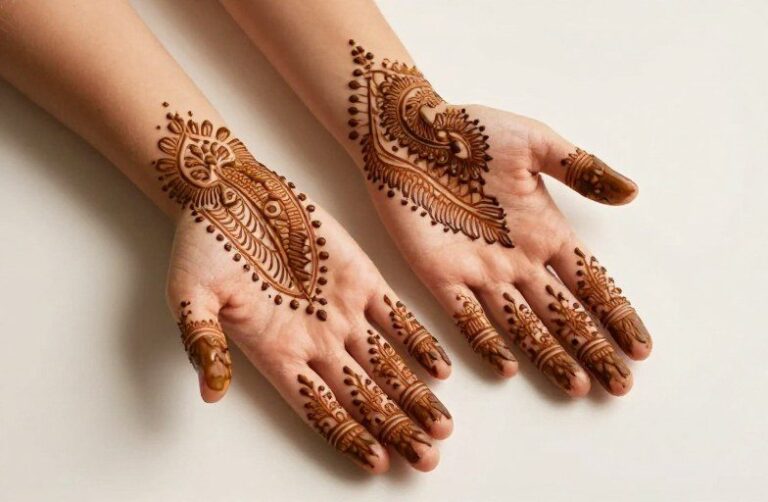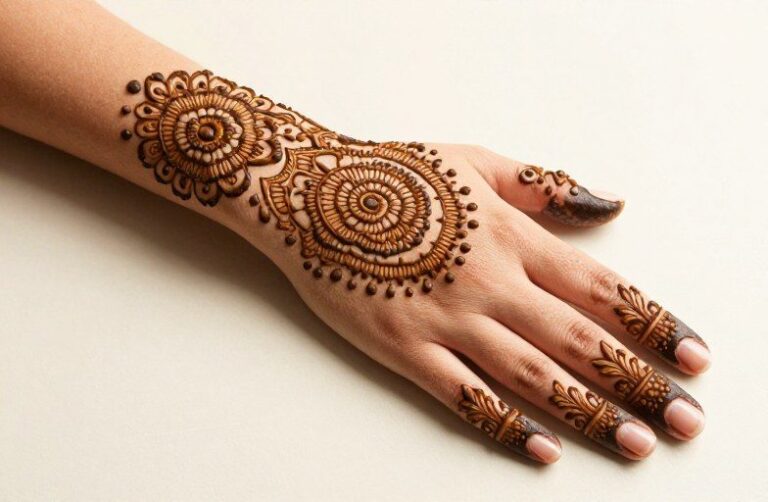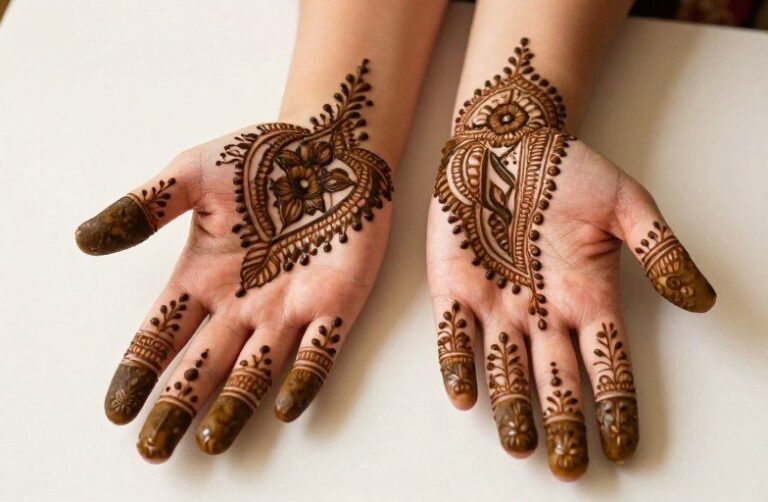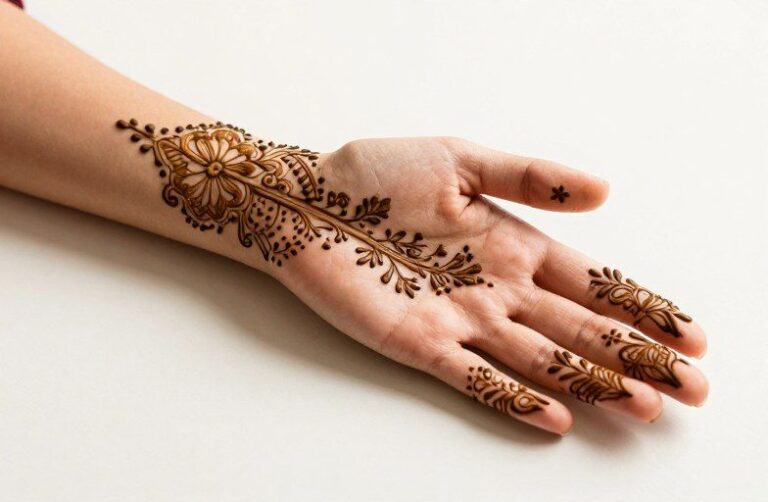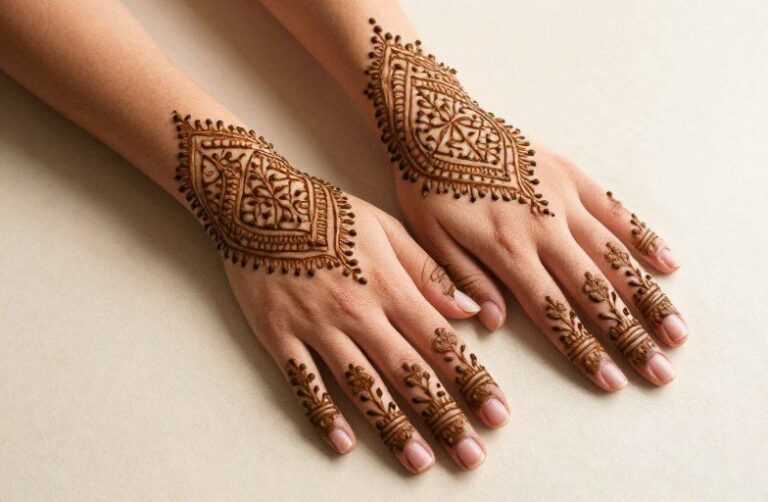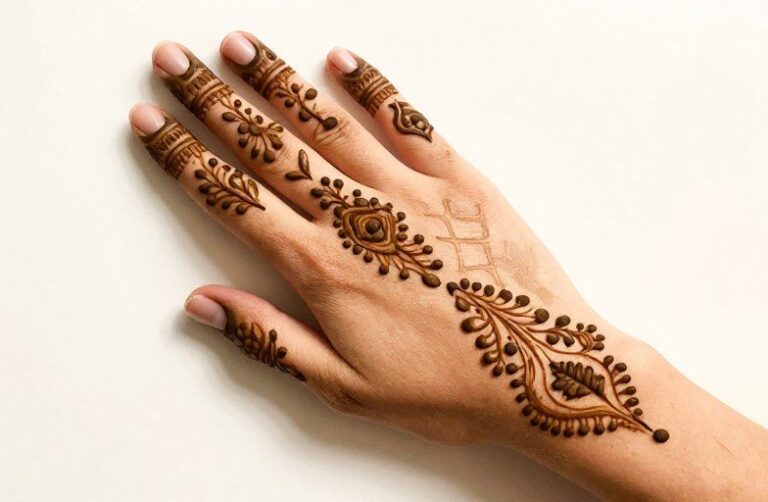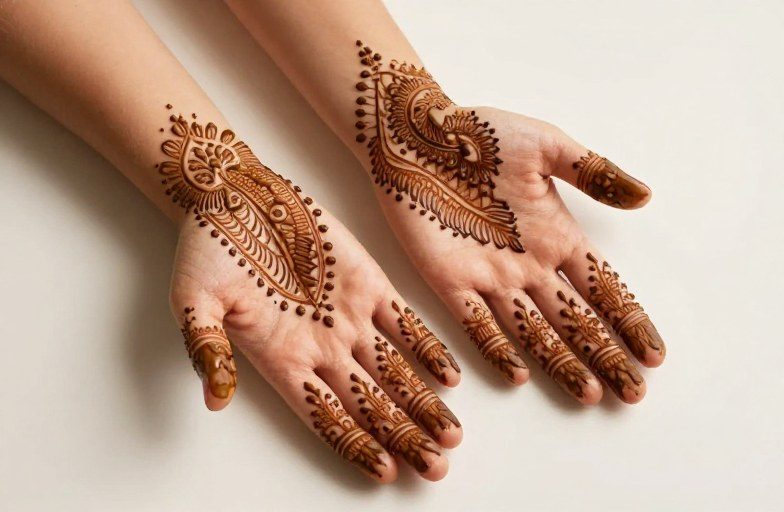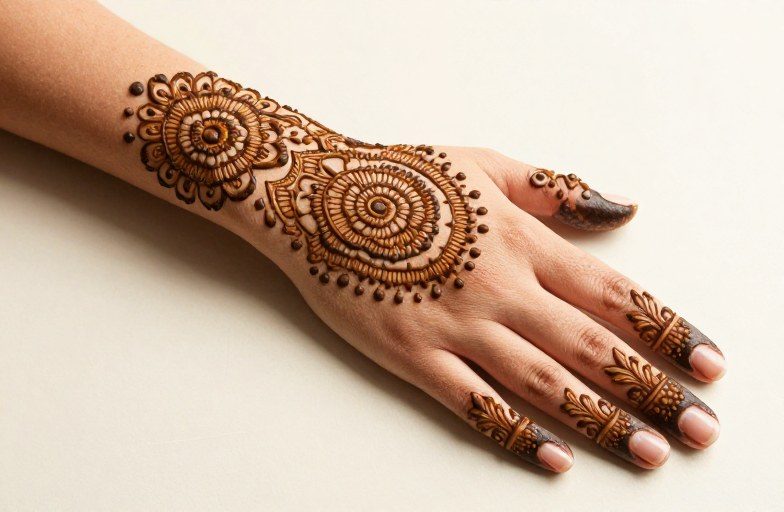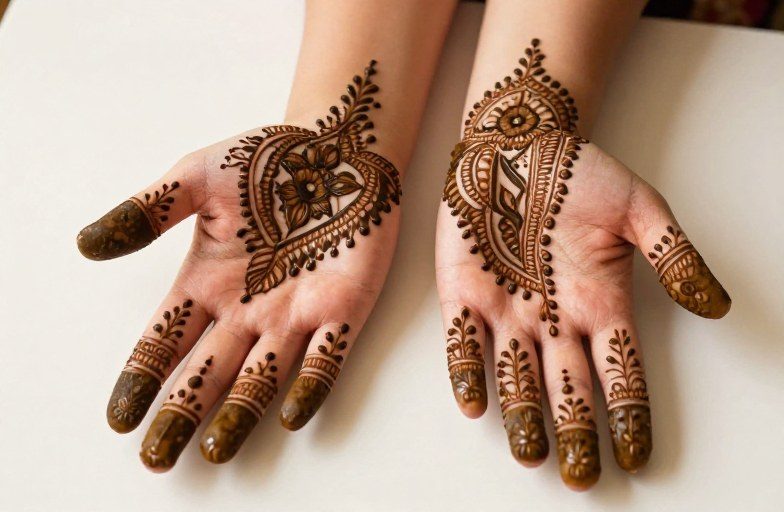
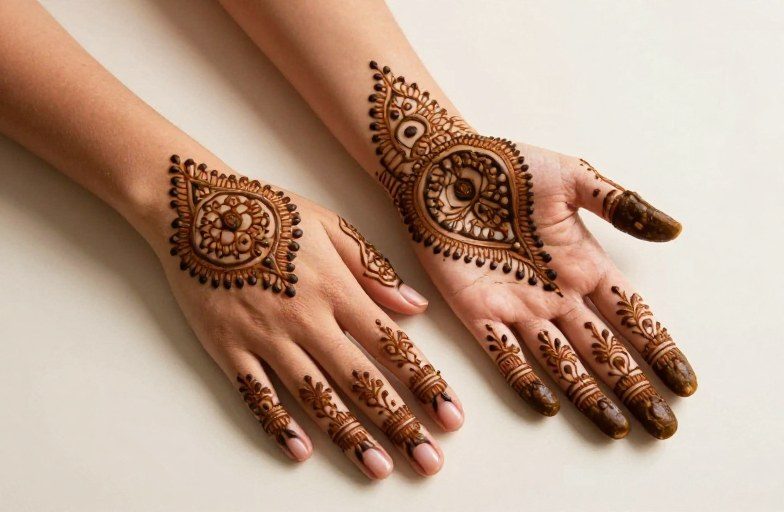
An Indian henna tattoo on a girl typically represents joy, beauty, spiritual protection, and celebration, most commonly associated with brides and festivals. As a permanent tattoo design, it captures the ornate, flowing patterns of mehndi while carrying layered meanings of femininity, luck, and cultural connection. The specific symbolism shifts based on which traditional motifs appear: paisleys for fertility, flowers for joy, peacocks for grace, and the sun for awakening.
History & Cultural Roots
Mehndi, the art of staining skin with henna paste, has decorated hands and feet across South Asia, North Africa, and the Middle East for thousands of years. In India specifically, the practice became deeply woven into rites of passage, especially for women. The night before a wedding, the mehndi ki raat remains a bold gathering where female relatives apply elaborate designs, sing folk songs, and bless the bride.
Permanent tattoos replicating these patterns emerged as diaspora communities sought to carry cultural identity beyond the temporary stain. Unlike actual henna, which fades in one to three weeks, inked versions preserve the aesthetic for life.
From Stain to Ink
The transition from paste to needle involved adaptation. Traditional mehndi relies on the natural dye lawsone, which bonds with keratin and produces that distinctive reddish-brown. Tattoo artists translating these designs must choose between:
- Authentic brown tones using iron oxide-based inks, which age toward orange
- Black ink for sharper contrast and longevity, though less true to the original color
- Red pigments that mimic fresh henna but require more frequent touch-ups
Each choice affects how the tattoo reads culturally and how it ages on skin.
Best Placements
Henna-inspired tattoos follow the body’s natural topography in ways other styles rarely attempt. The designs wrap around joints, trail along bone edges, and fill spaces between fingers with deliberate precision.
Hands and Fingers
The classic placement mirrors actual mehndi application. Palm centers, finger sides, and the webbing between digits carry dense patterning. Line-heavy designs here age poorly, hand skin sheds rapidly, and finger tattoos often blur within two to five years. For longevity, experienced artists recommend:
- Thicker line weights on fingers and knuckles
- Avoiding extremely fine details below the first finger crease
- Placing the most meaningful motif on the back of the hand, not the palm
Feet and Ankles
Bridal mehndi traditionally covers feet completely, with the belief that darker stains indicate deeper love from the husband’s family. As permanent ink, foot placement presents challenges: shoes cause friction, ankle skin stretches with movement, and sun exposure fades pigments unevenly. The payoff is intimate visibility, revealed in sandals, hidden in professional settings.
Upper Back and Shoulders
These areas offer flat, stable canvases for the most elaborate compositions. A mandala-centered back piece can incorporate dozens of traditional elements without the distortion that hand and foot placement create. The skin here ages gracefully, and the tattoo remains easily concealable.
Symbolism & Core Meaning
Individual motifs within henna designs carry specific significance. Understanding these elements helps in choosing or interpreting a tattoo.
- Paisley (mango/boteh): Often linked to fertility and new beginnings, this teardrop shape appears in nearly every traditional design.
- Lotus: Purity rising through difficulty, commonly associated with spiritual awakening in Hindu and Buddhist contexts.
- Peacock: Grace, beauty, and the monsoon season, also connected to the deity Saraswati.
- Sun/mandala center: Cosmic order, the bindu as focal point of meditation, and the awakening of consciousness.
- Vines and leaves: Growth, vitality, and the interconnectedness of life.
The density of patterning matters too. Sparse, open designs suggest breathing room and simplicity. Packed, intricate work communicates abundance, protection, and the warding off of evil eye through visual complexity.
Similar & Related Symbols
Henna-inspired tattoos sit within a broader visual language of South Asian body marking. Understanding adjacent traditions clarifies what distinguishes this specific style.
Mandala Tattoos
While henna designs frequently incorporate mandala structures, pure mandala tattoos derive more directly from Tibetan Buddhist and Hindu tantric practices. The henna variant tends toward organic, asymmetrical flow rather than perfect geometric radiance. Both share the concept of sacred center, but mehndi patterns meander, vine-like, across the body rather than holding rigid circular form.
Mehndi vs. Arabic Henna Styles
Arabic henna typically features bolder, more spaced-out floral patterns with less fine fill. Indian mehndi crams detail into every millimeter. When choosing a tattoo style, this distinction matters: Indian-inspired work demands more sitting time, more ink saturation, and typically more maintenance as fine lines blur.
Bindi and Tilak Markings
These forehead markings share spiritual territory with henna but serve different functions, daily devotion versus special occasion. Some women incorporate a permanent bindi-like dot within a larger henna-inspired composition, merging these traditions.
Mythology & Folklore
Several origin stories circulate about mehndi’s beginnings, though none are definitively historical. One narrative traces the practice to the marriage of Shiva and Parvati, where henna was applied to celebrate divine union. Another links it to the story of Radha and Krishna, with Krishna’s name sometimes hidden within bridal designs for the groom to find.
The darkness of the stain generated its own folklore. Brides slept with lemon juice and sugar paste to deepen color. Some families interpreted pale results as inauspicious. These beliefs transferred imperfectly to permanent tattooing, ink cannot be coaxed darker through ritual, though some choose touch-up sessions before significant life events.
Protective functions appear across traditions. Henna applied to palms and soles was thought to cool the body and calm the spirit, but also to create a barrier against malicious forces. The intricate patterns themselves, difficult to replicate, supposedly confused evil spirits who might otherwise harm the wearer.
Personal & Modern Meanings
Contemporary wearers layer personal significance onto traditional frameworks. For women with South Asian heritage, these tattoos often function as permanent cultural anchors, visible resistance to assimilation, or quiet connection to ancestry. The choice to ink rather than stain also speaks: permanence where tradition prescribed transience.
Reclamation and Critique
Some feminist readings interpret bridal mehndi as historically marking women’s bodies for male gaze and family honor. Reclaiming these patterns as self-directed permanent art inverts that dynamic. Others critique the commercialization of sacred patterns, particularly when non-South Asian wearers choose designs without understanding their contexts.
Memorial and Transition
Specific motifs mark life passages beyond marriage. Lotus designs accompany recovery from illness. New mothers sometimes incorporate children’s names in Devanagari script within flowing patterns. The paisley, with its seed-like interior, resonates with those who have experienced pregnancy loss or fertility struggles.
The Takeaway
An Indian henna tattoo on a girl carries weight beyond its visual appeal. The meaning lives in the specific motifs chosen, the placement on the body, and the wearer’s relationship to the tradition it references. Line weight and ink color determine how well the design ages, fine finger details blur, while bolder back pieces hold. Whether connecting to heritage, marking a personal transition, or simply drawn to the aesthetic, understanding the symbol’s layers allows for more intentional choice. The best work results from honest conversation with an artist about which traditional elements to preserve, which to adapt, and how the design will live on skin decades after the initial application.
Frequently Asked Questions
Does an Indian henna tattoo have to be brown to be authentic?
No. While real henna paste stains brownish-red, permanent tattoos use standard tattoo inks. Black and dark red are common choices, though black lasts longer and stays crisper over time.
How well do finger henna tattoos hold up over the years?
Poorly, generally. Hand and finger skin regenerates rapidly, and constant use causes significant fading and blur within two to five years. Many people plan for regular touch-ups or place the most important elements on more stable areas.
Is it culturally appropriate for someone without South Asian heritage to get this tattoo?
This depends on context and execution. Researching specific meanings, avoiding sacred religious symbols, and choosing an artist who understands the tradition all help. Some within the community welcome appreciation; others find appropriation in uncritical copying. Direct conversation matters more than assumption.
What’s the difference between Indian and Arabic henna styles for permanent tattoos?
Indian mehndi uses extremely dense, fine patterning with paisleys, peacocks, and fill work covering nearly every surface. Arabic styles feature bolder, more open floral designs with significant negative space. Indian-inspired tattoos require more sitting time and typically age faster due to finer detail.