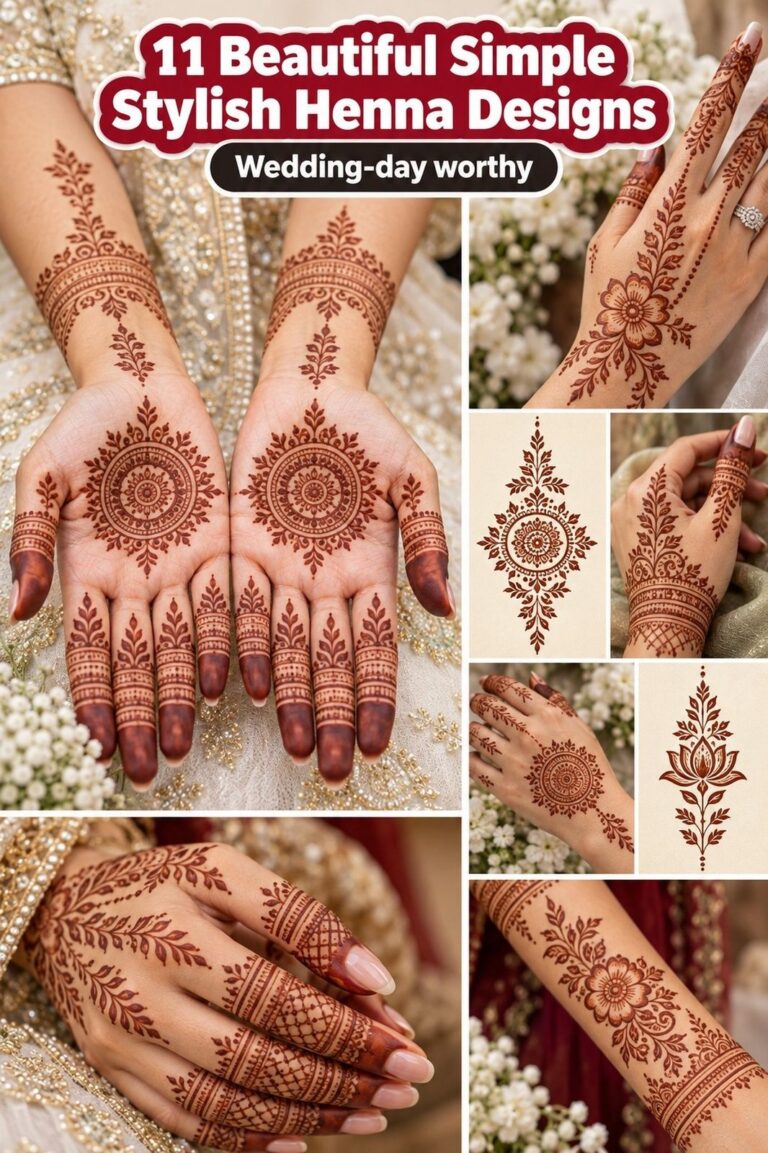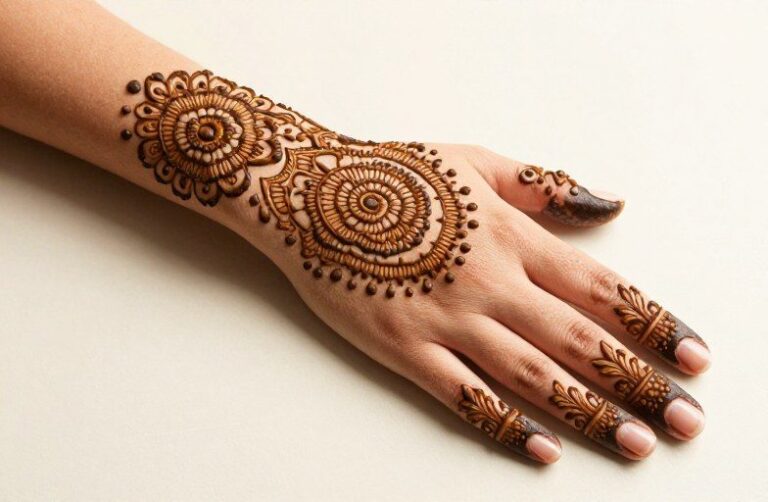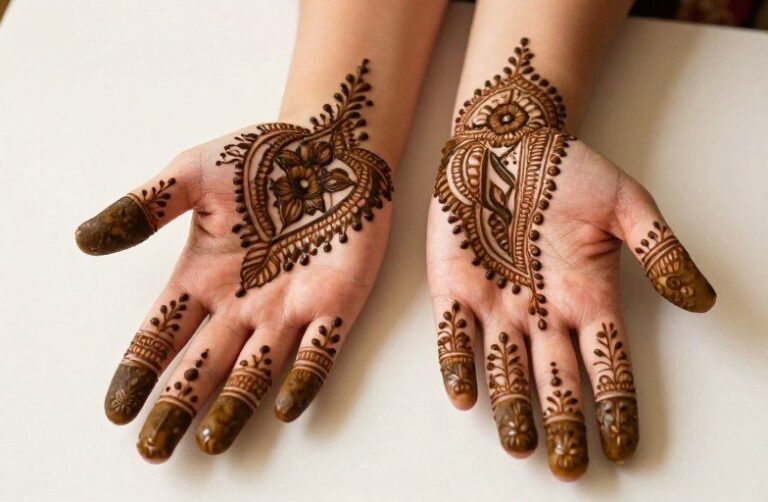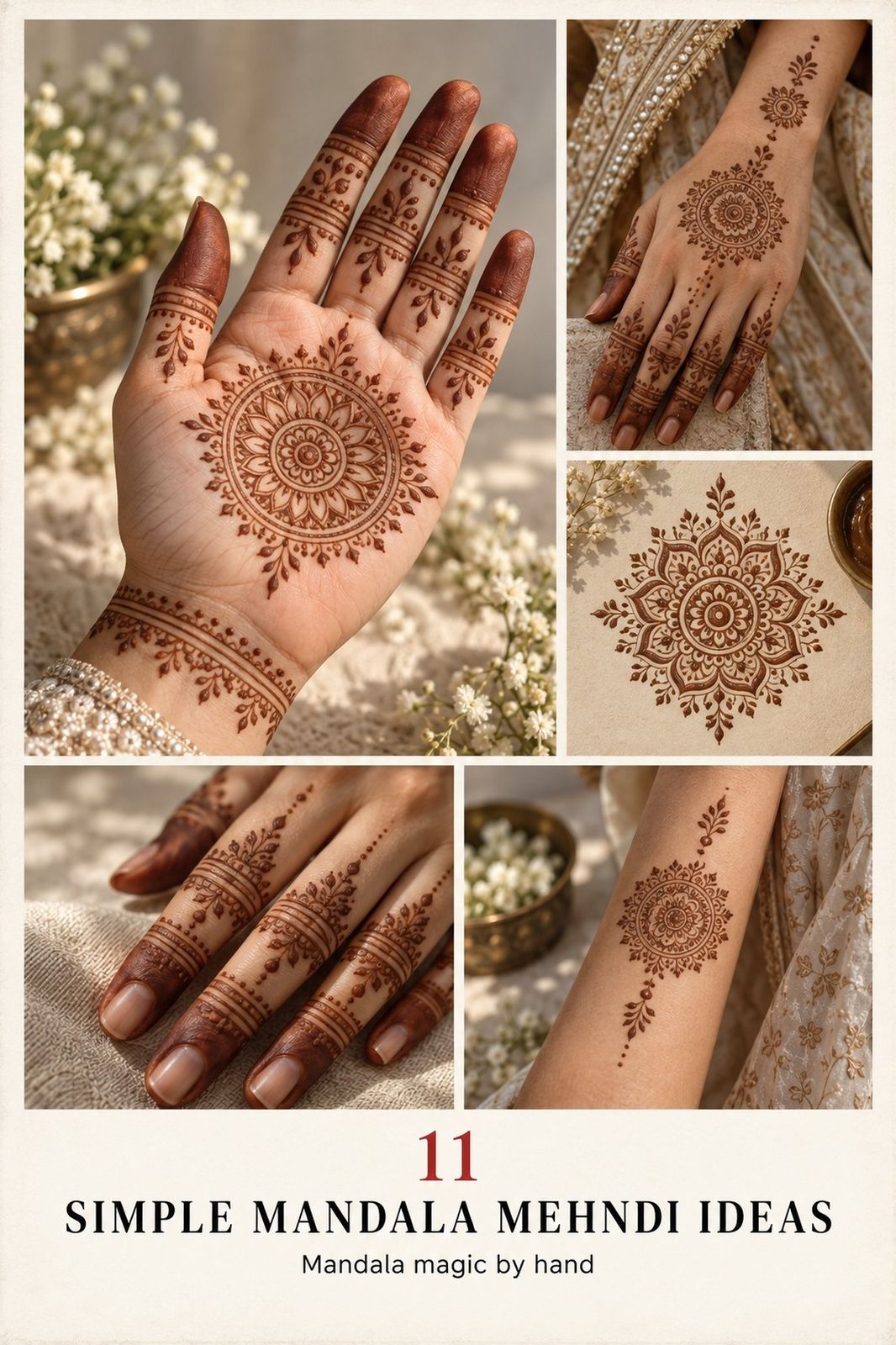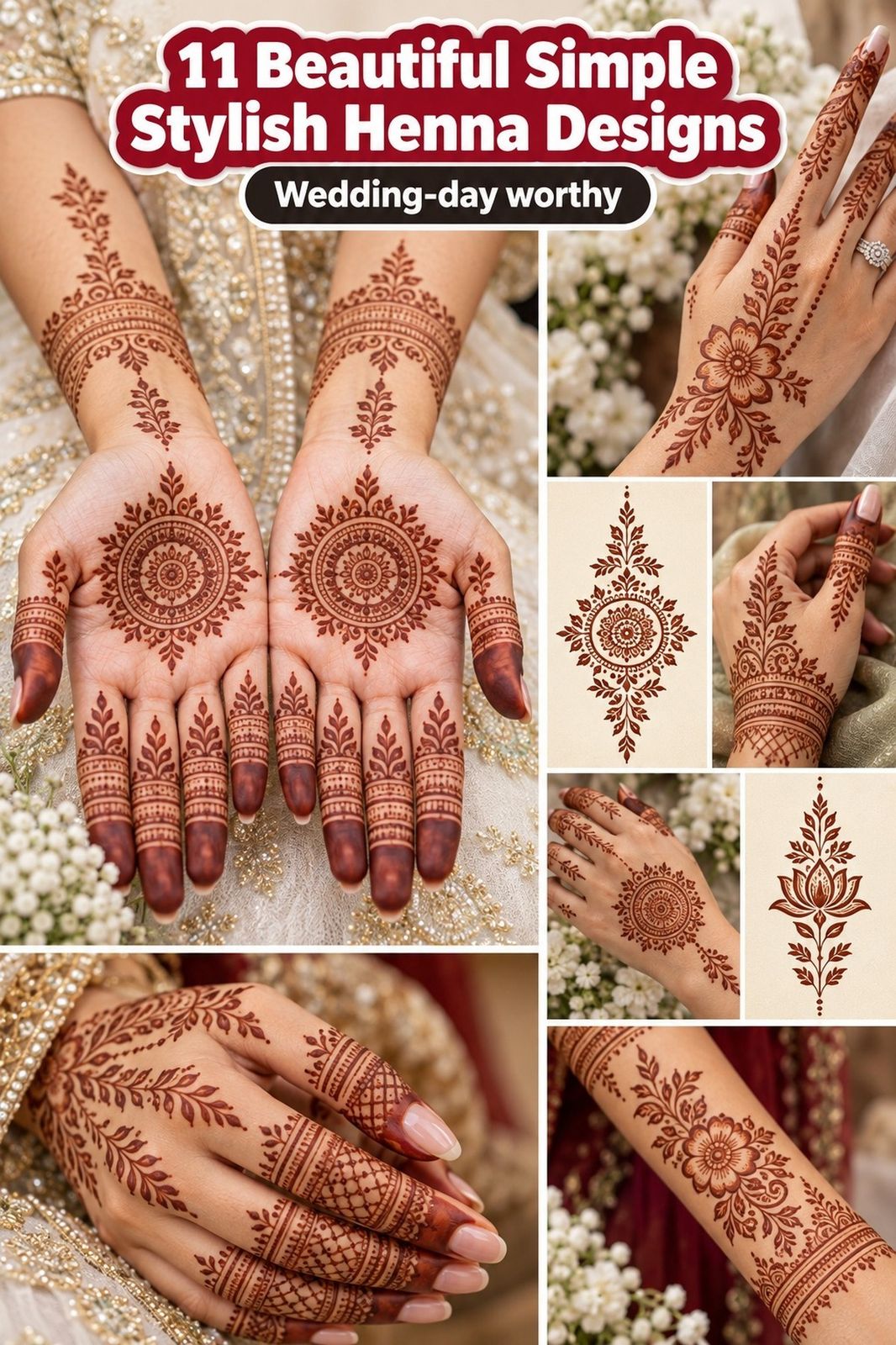
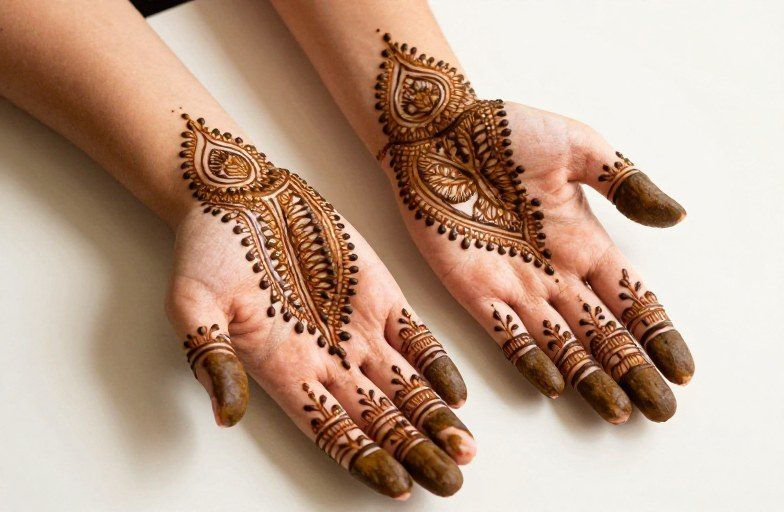
Henna wedding tattoos, most commonly practiced as mehndi in South Asian and Middle Eastern traditions, carry layered meaning. They mark a rite of passage, invoke blessings for the marriage, and serve as decorative protection for the bride during her transition into a new life. The darkness of the stain is traditionally read as a sign of the couple’s bond strength, and specific motifs encode wishes for fertility, prosperity, and warding off evil.
Understanding the Symbols Around Henna
Bridal henna does not exist in isolation. Seeing how it differs from neighboring practices helps clarify what makes it distinctive and why it matters.
Mehndi vs. Permanent Wedding Tattoos
Western couples sometimes choose permanent ink for their wedding: dates, rings, quotes. Henna operates on entirely different principles. It is temporary, applied by a family member or specialist rather than a tattoo artist, and functions as ritual more than personal statement. The painlessness matters symbolically too. The bride remains receptive, open to blessing rather than enduring ordeal. Where permanent tattooing claims individual identity through permanence, bridal henna surrenders the individual to communal blessing and transformation.
Other Temporary Body Marks
- Huito (jagua): Used in Central and South American indigenous ceremonies, producing blue-black rather than reddish-brown stains. Less specifically tied to marital rites, though still ceremonial.
- White henna: A modern cosmetic invention with no actual henna content. Purely decorative, carrying no traditional symbolic weight despite the borrowed name.
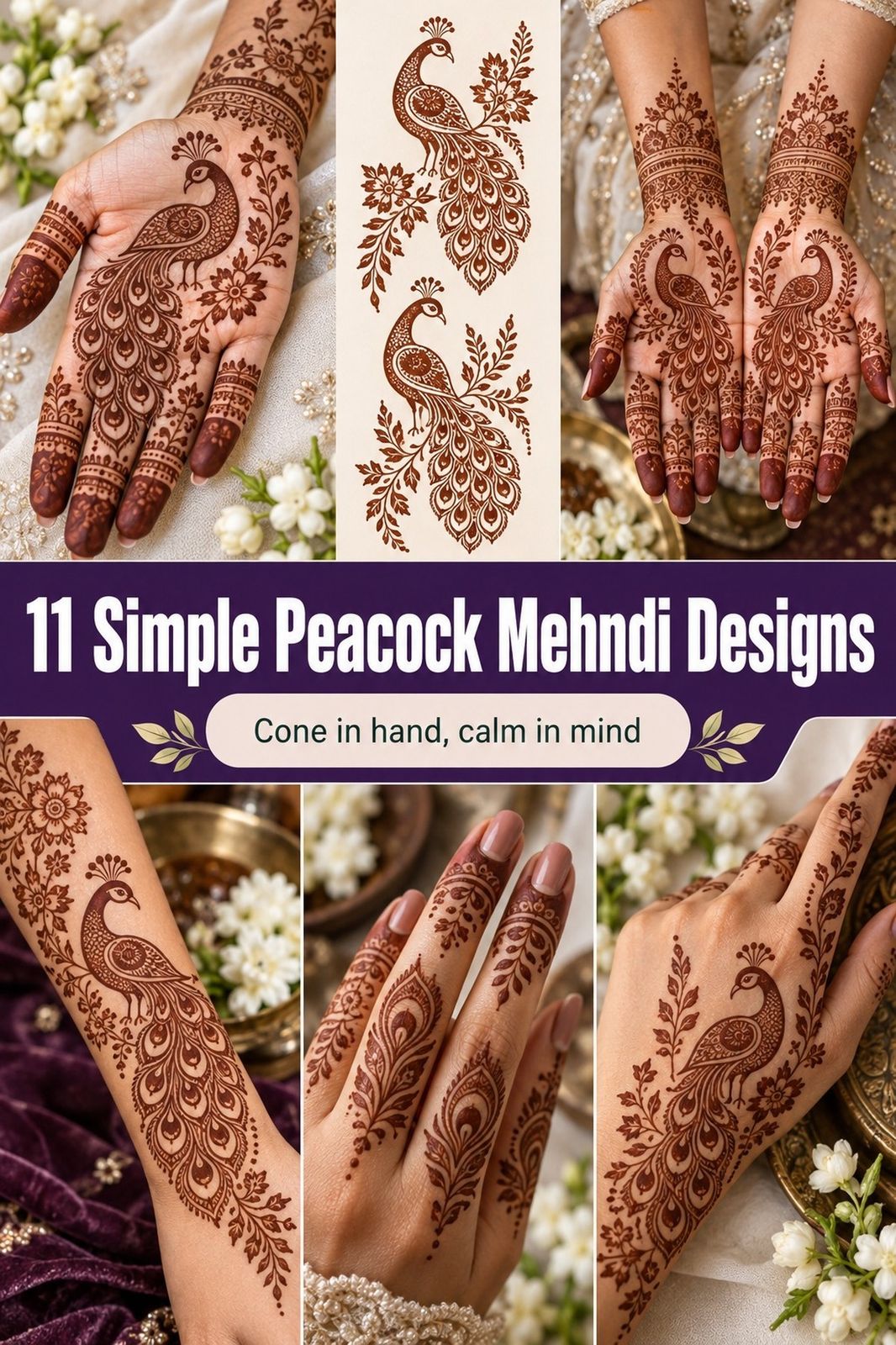
- Wedding henna variations: Moroccan fessi style features dense geometric architecture; Indian Rajasthani favors peacocks and floral vines; Sudanese girlsheh emphasizes bold hand coverage with minimal ankle detail. Each regional style encodes local aesthetic preferences and symbolic priorities.
Mythology and Folklore
Stories embedded in henna practice give the designs resonance beyond mere ornament. These narratives are living tissue, not museum pieces, they shape how contemporary families understand what they are doing when they sit for application.
The Legend of Henna’s Origin
One narrative often linked to the tradition traces henna to the era of the Prophet Muhammad, where it was used to cool the body in hot climates and gradually accrued ceremonial significance. Another strand connects it to the story of Cleopatra, though this is commonly associated with popular imagination rather than documented history. In South Asian folklore, the mehndi night (mehndi ki raat) derives from the belief that henna’s cooling properties calm the bride’s nerves before the wedding stress. Whether these origins are historically verifiable matters less than their function: they provide a coherent narrative that practitioners can hand to younger generations asking why this matters.
Symbolism in Specific Motifs
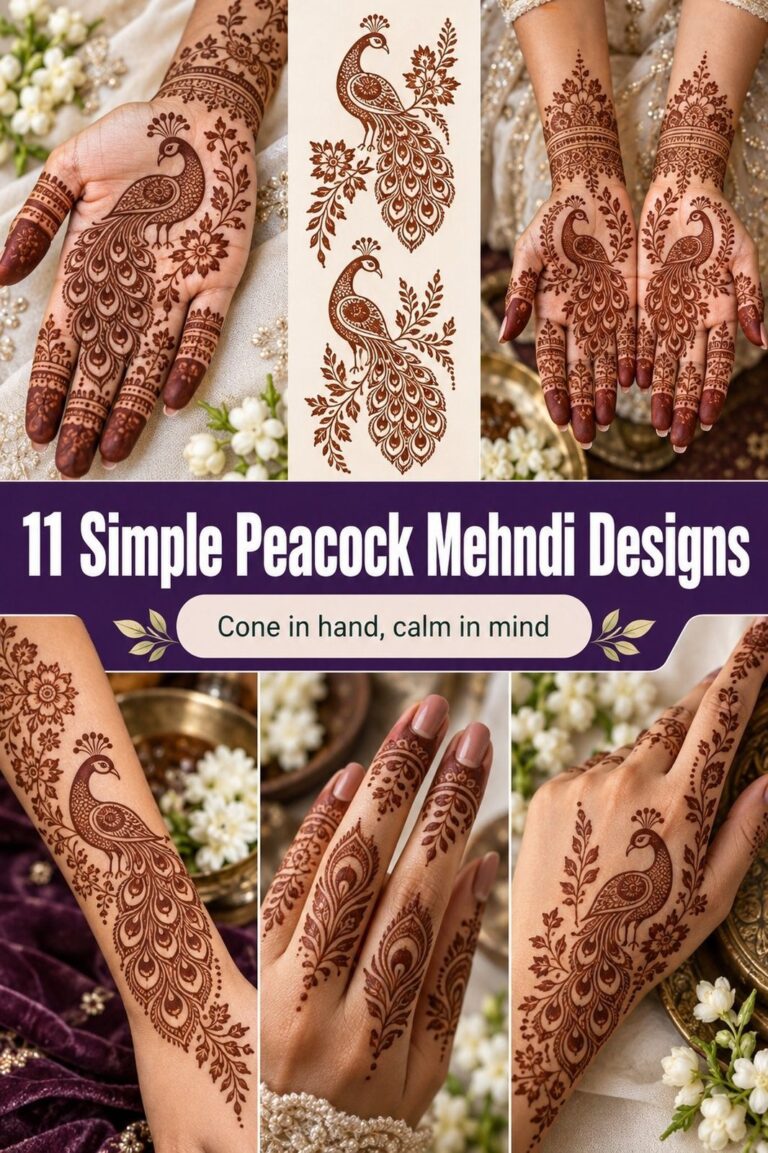
- Peacock: Beauty, grace, and the soul’s immortality; often placed where it will be most visible during the ceremony.
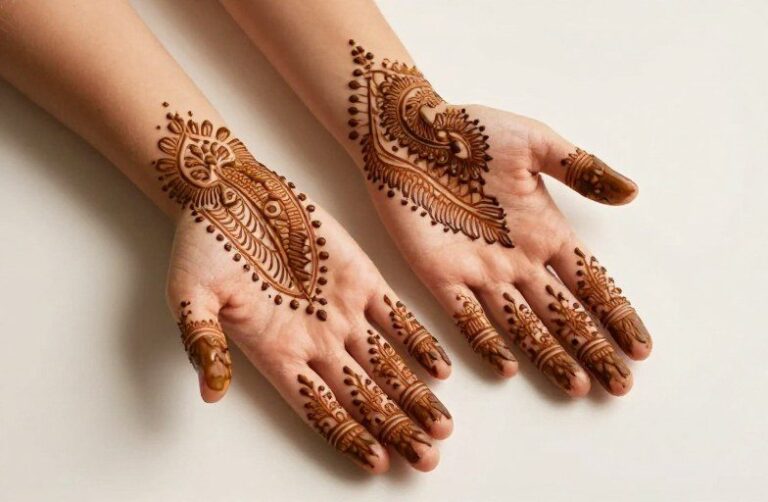
- Paisley (mango shape): Fertility and abundance, one of the most ancient and widespread henna elements across regions.
- Lotus: Spiritual awakening and purity emerging from difficulty, particularly resonant for brides navigating the intensity of wedding preparation.
- Eye patterns: Direct protection against nazar (evil eye), particularly important for a bride attracting unusual attention and envy.
- Hidden initials: A playful tradition where the groom searches for his initials hidden in the design. Failure supposedly brings bad luck in some tellings; in lighter versions, it costs him a forfeited favor or small gift.
History and Cultural Roots
Henna’s use in wedding contexts stretches across millennia and continents, though precise origins resist pinning to a single moment or location.
Geographic Spread
Archaeological evidence places henna use in ancient Egypt for mummification and possibly for adornment. Some scholars trace wedding-specific application to Bronze Age communities in the Levant and Mesopotamia, though this is often linked to inference rather than direct documentation. The practice traveled trade routes: to India by at least the medieval period, to North Africa through Berber and Arab networks, and into Southeast Asian Muslim communities via maritime trade. Each region adapted the core practice to local aesthetic and symbolic systems rather than importing it unchanged.
Colonial and Modern Distortions
British colonial administrators in India sometimes dismissed henna as primitive decoration, while simultaneously extracting the plant for commercial dye production. The twentieth century saw mehndi nights become increasingly elaborate as South Asian diaspora communities used the practice to maintain cultural continuity across distance. More recently, the henna tattoo tourism boom in Western countries has stripped much symbolic content, reducing intricate bridal traditions to quick ankle swirls at beach resorts. The meaning drains when the context disappears.
Color, Chemistry, and Safety
Henna is inherently colored, not black and grey. Understanding its color behavior and how it relates to permanent tattoo aesthetics matters for brides considering both, or for those simply wanting to plan their wedding look with accuracy.
The Chemistry of Henna Stain
Natural henna, from Lawsonia inermis leaves, produces lawsone, which binds to keratin in skin. Fresh paste yields orange when first removed, darkening over twenty-four to seventy-two hours to deep reddish-brown through oxidation. The final color depends on body chemistry, paste quality, and aftercare. Black henna containing PPD (para-phenylenediamine) is dangerous. It is a known allergen that can cause chemical burns and permanent scarring. Any artist offering black henna for weddings should be refused immediately. This is not a matter of preference. It is a safety imperative.
Henna Adjacent to Permanent Ink
Some brides with existing tattoos request henna that complements or flows around permanent work. The contrast is striking: henna’s organic, slightly blurred edges against tattoo crispness. Others get henna first to test placement before committing to permanent wedding-related ink. The temporary nature lets you live with a design through the honeymoon before deciding if it deserves permanence. This is practical wisdom, not mere aesthetics.
Personal and Modern Meanings
Contemporary wearers layer new significance onto traditional foundations. The practice lives because it adapts without entirely dissolving.
Diaspora and Reclamation
For second- and third-generation immigrants, bridal henna often becomes a deliberate reconnection gesture, sometimes learned from video tutorials when family knowledge was interrupted by migration. The meaning here is not purely traditional. It is about asserting continuity in displacement. Some brides incorporate elements from their partner’s heritage, creating hybrid designs that did not exist historically but serve real present-day function. This is not corruption of tradition. It is tradition doing what it has always done: traveling, adapting, surviving.
Non-Traditional Wearers
Queer couples, non-South Asians marrying into the tradition, and secular brides all adapt the practice. The ethical line runs between appreciation and appropriation. Learning from a practitioner of the tradition, understanding the symbols you wear, and avoiding sacred religious motifs for purely aesthetic purposes separates respectful adoption from extraction. A genuine mehndi artist will typically guide this conversation if asked directly. If they do not, that is itself a signal worth noting.
Design Tips and Practical Planning
Practical guidance for brides actually planning their application. These details accumulate into the difference between a meaningful experience and a stressful afterthought.
Placement and Timing
- Hands and feet: Traditional focal points. Palms stain darkest due to thicker skin; backs of hands lighter and more delicate.
- Forearms to elbows: Modern extension that photographs well with sleeveless or short-sleeve dresses.
- Application timing: Two to three days before the wedding for peak color. Same-day application looks pale in photos and disappoints.
- Duration: Three to six hours undisturbed for deep stain. Overnight wrapped in tissue and medical tape, or a light cloth, for maximum oxidation.
- Aftercare: Avoid water for the first twelve hours. A lemon-sugar seal applied once the paste dries helps keep it attached. Scrape rather than wash the paste off. Apply natural oil after removal to protect the developing stain.
Coordinating with Wedding Aesthetics
Consider your metals. Gold jewelry pops against warm henna tones; silver creates cooler contrast. The dress neckline matters. Henna extending up the neck can compete with heavy necklaces or complement simple ones. For beach or humid destinations, know that chlorine and salt water fade stains faster. Schedule accordingly. Some brides arrange touch-up sessions for multi-day celebrations.
Line weight in henna differs from tattooing. The paste pipe, or cone, produces naturally varying thickness as pressure changes, giving organic flow that machine linework cannot replicate. Embrace this. Attempting to force geometric precision against the medium’s nature usually looks strained and unsatisfying.
What to Remember
Henna wedding tattoos carry genuine cultural weight: protection, fertility blessing, and liminal marking of a life transition. The specific symbols, peacocks, paisleys, hidden initials, encode wishes rather than functioning as mere decoration. Natural henna only. PPD-laced black henna risks serious harm. Color develops over days, so plan application well before the ceremony. For those outside the tradition, engagement requires education and ethical sourcing rather than casual adoption. Whether temporary complement to permanent ink or sole body adornment, bridal henna rewards understanding its roots rather than treating it as interchangeable with any other tattoo.
Frequently Asked Questions
How long does wedding henna actually last?
Natural henna typically lasts one to three weeks depending on placement, skin type, and aftercare. Palms and soles fade fastest due to friction and washing. Backs of hands and forearms often hold color longer. Proper aftercare, including avoiding water for the first twelve hours and applying natural oil after paste removal, extends the stain’s life significantly.
Can I get henna if I have sensitive skin or allergies?
Patch test twenty-four hours in advance on a small area like the wrist. Natural henna is generally well-tolerated, but PPD-laced black henna is dangerous and should be avoided entirely. If you have known plant allergies, consult a dermatologist before proceeding. Even natural henna can cause mild irritation in rare cases.
How do I find a qualified bridal henna artist?
Look for artists who show photographs of fully developed stains, not just wet paste application. Ask about their paste ingredients; they should list natural components without hesitation. Request references from recent brides. A qualified artist will discuss design symbolism with you and refuse to use black henna. Prices vary widely by region and complexity, but experienced bridal specialists typically charge more than casual festival artists, and this usually reflects genuine skill.
Is it appropriate to get bridal henna if I am not from South Asian or Middle Eastern heritage?
It can be appropriate if you are marrying into the tradition, have established genuine connection and education, and work with a practitioner from that tradition. Avoid treating it as costume or trend. The key is relationship: learning from within, not borrowing from outside. Ask directly. A respectful question is always better than silent assumption.