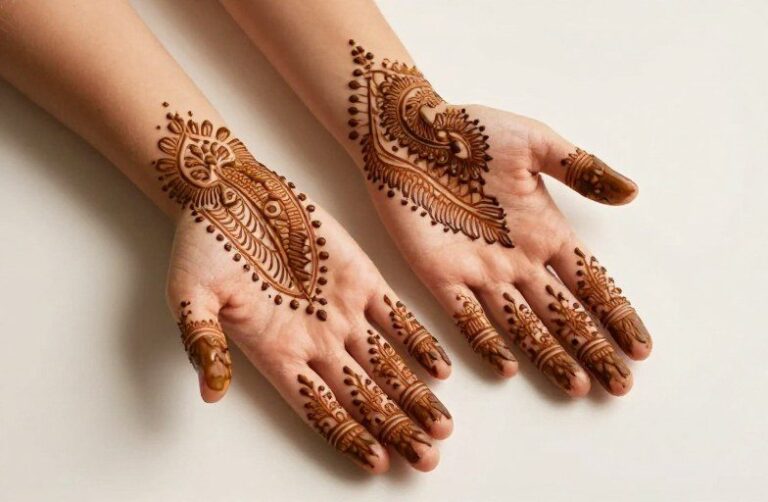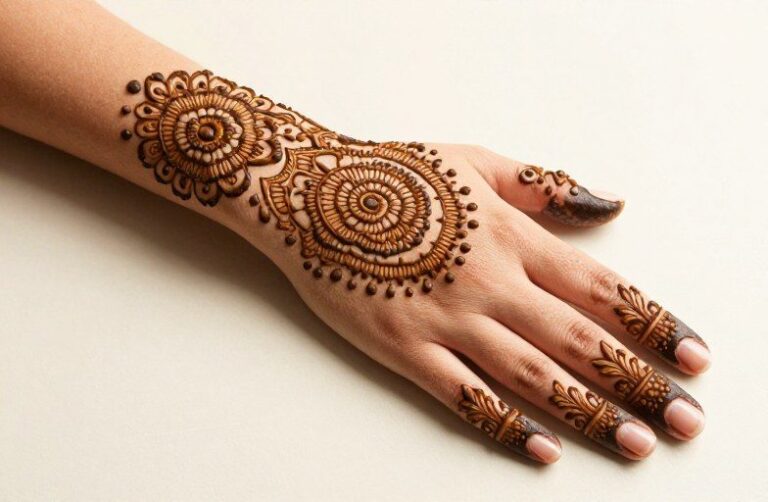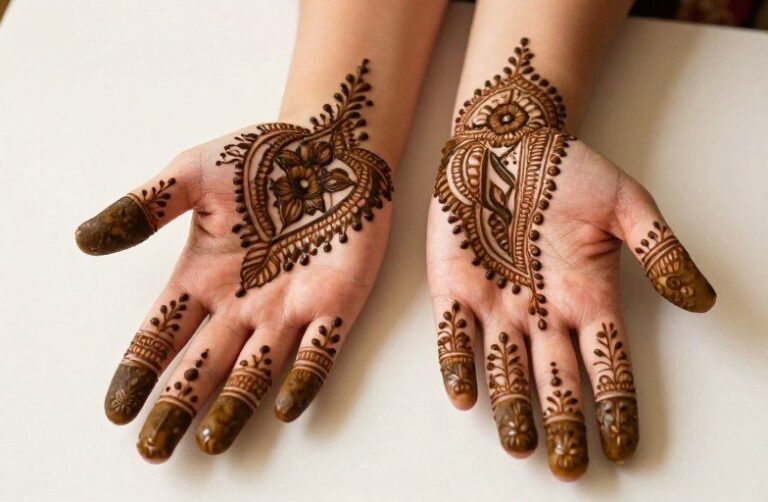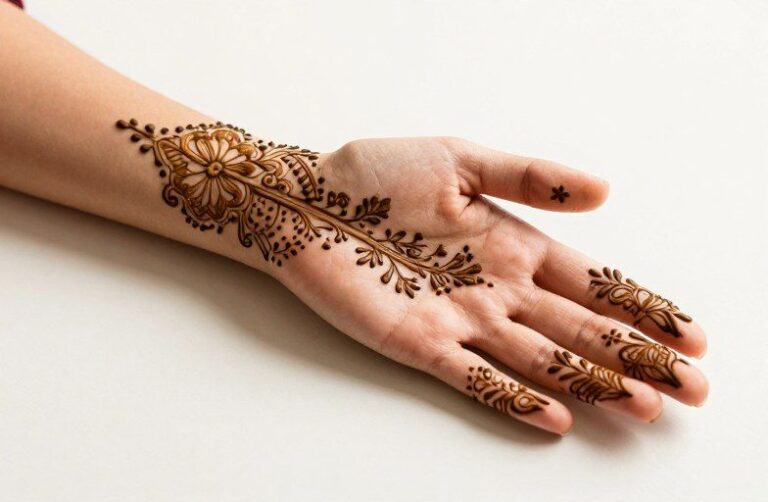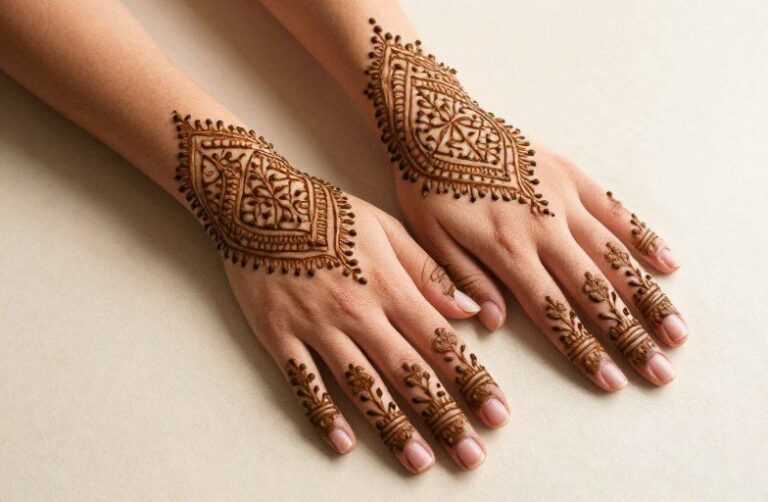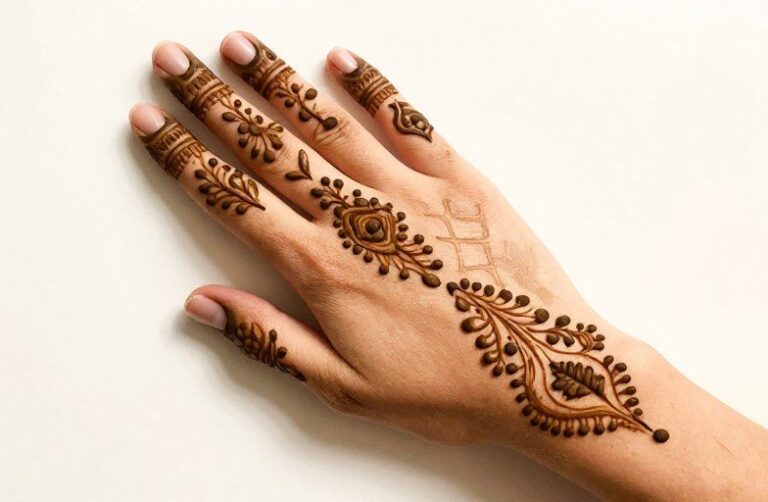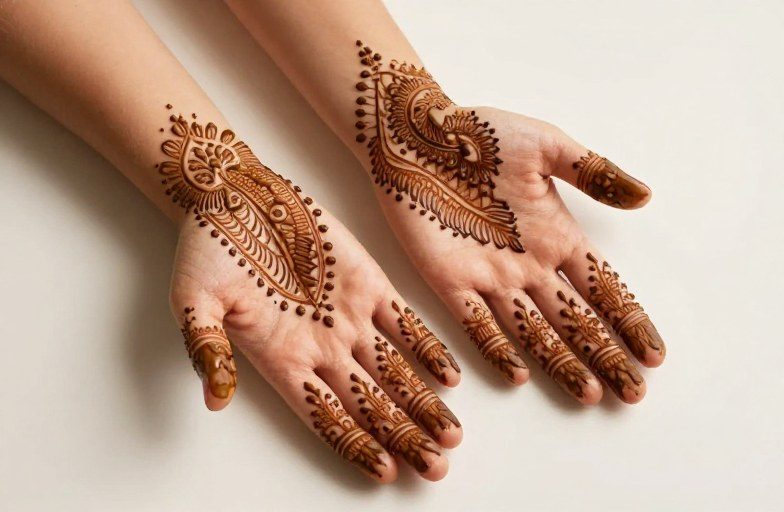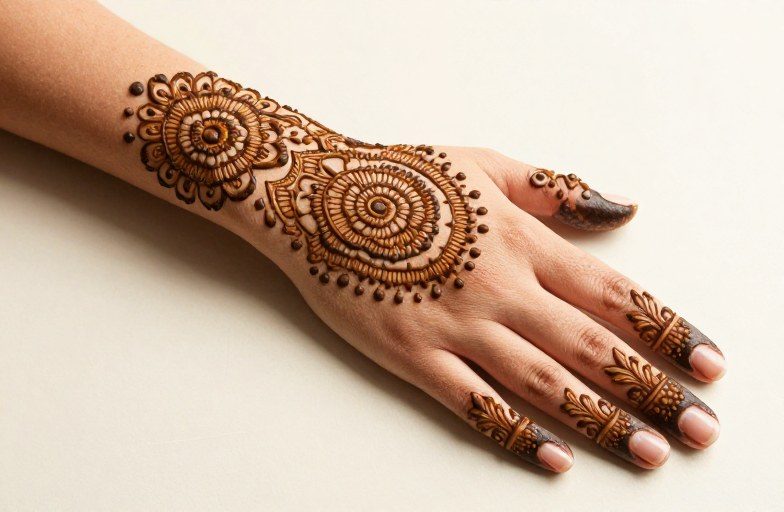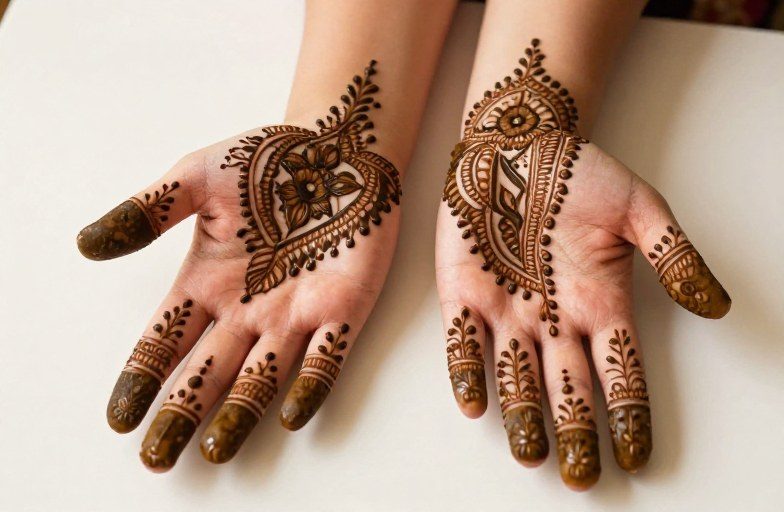
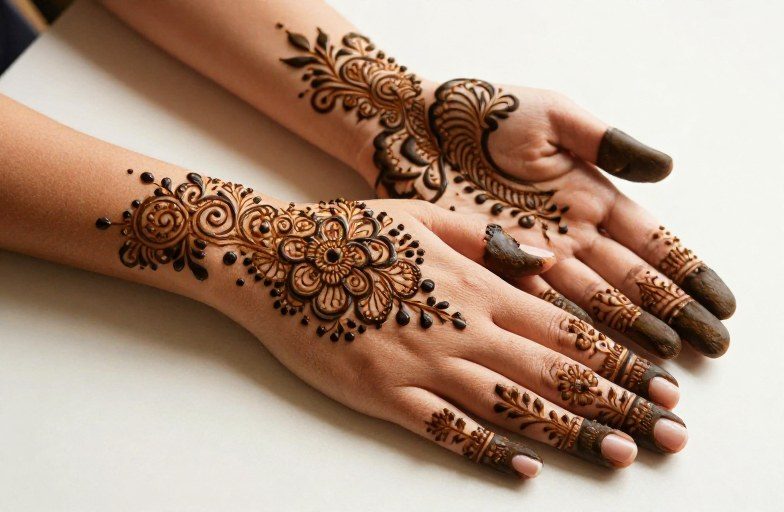
A well-maintained henna tattoo can last one to three weeks with rich, reddish-brown color. The key is keeping the paste on as long as possible, protecting it from water and friction during the first day, and moisturizing once the stain sets. Here’s everything you need to know to get the most from your design.
What to Expect Step by Step
Fresh henna paste goes on as a thick, dark green or brown paste that looks almost like cake frosting. It dries slowly, often staying tacky for thirty minutes to an hour, and will crack and flake as it sets. The color underneath starts pale orange, then deepens to its final tone over the next two days.
The First 24 Hours
Leave the paste alone. Don’t touch it, don’t brush at the flakes, and definitely don’t pick it off. The longer the paste stays in contact with your skin, the darker the stain becomes. Most experienced artists recommend keeping it on for at least four hours, and ideally six to twelve. Overnight is common for intricate bridal work.
- Scrape off dried paste with a butter knife or credit card edge, never wash it off
- Avoid water for the first twelve hours after paste removal
- Expect the stain to look bright orange at first; this is normal
Days Two Through Seven
The color matures from pumpkin orange to deep burgundy or brown. This happens through oxidation, not because you’re doing anything special. Keep the area warm if possible, heat helps the stain develop. By day three, you’ll see the final color that will slowly fade over the next two weeks.
Aftercare Essentials
Good henna aftercare is simpler than most people make it. The goal is protecting the stain while it develops, then slowing exfoliation once it has.
Sealing the Paste
Many artists use a lemon-sugar sealant spray to keep the paste from crumbling off too early. You can make this at home: dissolve one tablespoon sugar in two tablespoons lemon juice, warm slightly, and dab on with a cotton ball. This creates a light, sticky shell that holds the paste against your skin. Some people wrap the area in tissue and then loose plastic wrap for sleep, though this risks smudging detailed work.
Post-Paste Care
Once the paste is off, apply a thin layer of natural oil, coconut, olive, or jojoba work well. This creates a barrier against water and helps the stain darken. Reapply oil before showering or washing dishes. Avoid petroleum jelly; it can trap moisture and cause the stain to blotch.
- Pat dry after any water contact; never rub
- Skip exfoliating products on the area
- Natural oils before bed help prolong the stain
Healing Timeline
Henna doesn’t “heal” like a needle tattoo because there’s no broken skin, but it does go through distinct phases. Understanding this timeline helps you set realistic expectations and avoid panic when the color shifts.
Hour zero to six: Paste sits on skin, releasing lawsone dye molecules into the upper epidermis. The longer this contact lasts, the deeper the stain.
Hour six to forty-eight: Paste removed, oxidation begins. Color lightens briefly, then darkens. This is when most people worry their henna “didn’t work.”
Days three to fourteen: Peak color holds steady. The stain resides in the dead skin layer that naturally sloughs off.
Week two to four: Gradual fading as your skin exfoliates. Fingertips and palms fade fastest due to constant cell turnover. Backs, thighs, and upper arms hold color longest.
Common Mistakes
Plenty of good henna gets ruined by avoidable errors. Most stem from impatience or misinformation circulating online.
Water Damage
Washing the paste off with water is the single biggest mistake. Water interrupts the dye release process and dilutes the stain before it sets. Even after paste removal, prolonged soaking, baths, swimming pools, hot tubs, will prematurely fade your design. Quick showers are fine; just oil the area first and pat dry after.
Over-Handling and Scrubbing
Exfoliating scrubs, loofahs, and even aggressive towel-drying strip away the stained skin layer. Shaving over the design removes it entirely. If you need hair removal, do it before your henna appointment, not after.
- Black henna containing PPD is not real henna and can cause chemical burns, avoid it entirely
- Freezing leftover paste doesn’t revive it; mix fresh for best results
- Heat helps development, but direct sun while paste is on can cause uneven staining
When to See a Professional
Most henna reactions stem from additives, not the plant itself. Real henna (Lawsonia inermis) rarely causes problems, but “black henna” often contains paraphenylenediamine (PPD), a hair dye chemical that can blister and scar.
Warning Signs
Seek medical attention if you experience intense itching, burning, swelling, or fluid-filled blisters within hours or days of application. These indicate contact dermatitis, possibly from PPD. A professional henna artist can show you their ingredient list and should never guarantee “black” results from natural paste.
For fading concerns or patchy color, a professional artist can assess whether the issue was paste quality, application technique, or aftercare. Some artists offer touch-up sessions within the first two days if the stain developed poorly.
Cost Factors
Henna pricing varies more by artist skill and event type than by design complexity alone. Understanding what drives cost helps you budget appropriately and spot red flags.
Session Types
Walk-in festival booths typically charge $15-$50 for simple hand or ankle designs, applied in fifteen to thirty minutes. Private appointments for detailed work, full bridal mehndi covering hands to elbows and feet to knees, can run $200-$500 and take three to six hours. The paste itself is cheap; you’re paying for the artist’s steady hand, design knowledge, and time.
- Travel fees for home or venue appointments
- Rush bookings or peak wedding season premiums
- Organic or specially sourced paste blends
Beware prices that seem too low. Quality artists use fresh paste mixed with lemon juice, sugar, and essential oils. Stale or pre-mixed paste from unknown sources gives weak stains and may contain undisclosed additives.
The Bottom Line
Maintaining henna comes down to patience and gentle handling. Keep the paste on for hours, not minutes. Protect it from water during the critical first day. Moisturize with natural oils, avoid friction and exfoliation, and accept that fading is inevitable, it’s literally your skin renewing itself. A well-cared-for henna stain offers a temporary commitment with traditional roots, no needles required. Treat it right and you’ll enjoy two to three weeks of beautiful, natural color.
Frequently Asked Questions
Can I shower with fresh henna paste still on?
No, water dissolves the paste and stops the staining process. Wait until the paste is fully dry and ideally keep it on for several hours before gently scraping it off. Once removed, you can shower, but apply oil first and pat the area dry afterward.
Why did my henna turn out orange instead of dark brown?
The color deepens over 48 hours through oxidation. Freshly removed paste always looks bright orange at first. If it stays pale, the paste may have been old, the application too thin, or the paste removed too early. Heat helps darkening, so keep the area warm.
Does henna work on all skin tones the same way?
Henna stains the top layer of skin, so the final color shows differently depending on your natural undertone. On darker skin, the stain appears as a warm reddish-brown highlight rather than the deep burgundy seen on lighter skin. The stain is equally real and lasting on all tones.
How can I make henna last longer on my hands?
Hands fade fastest due to constant washing and cell turnover. Apply natural oil before every hand-washing, wear gloves for dishes, and avoid hand sanitizer directly on the design. Sleep with light cotton gloves if you’re prone to rubbing your hands at night.