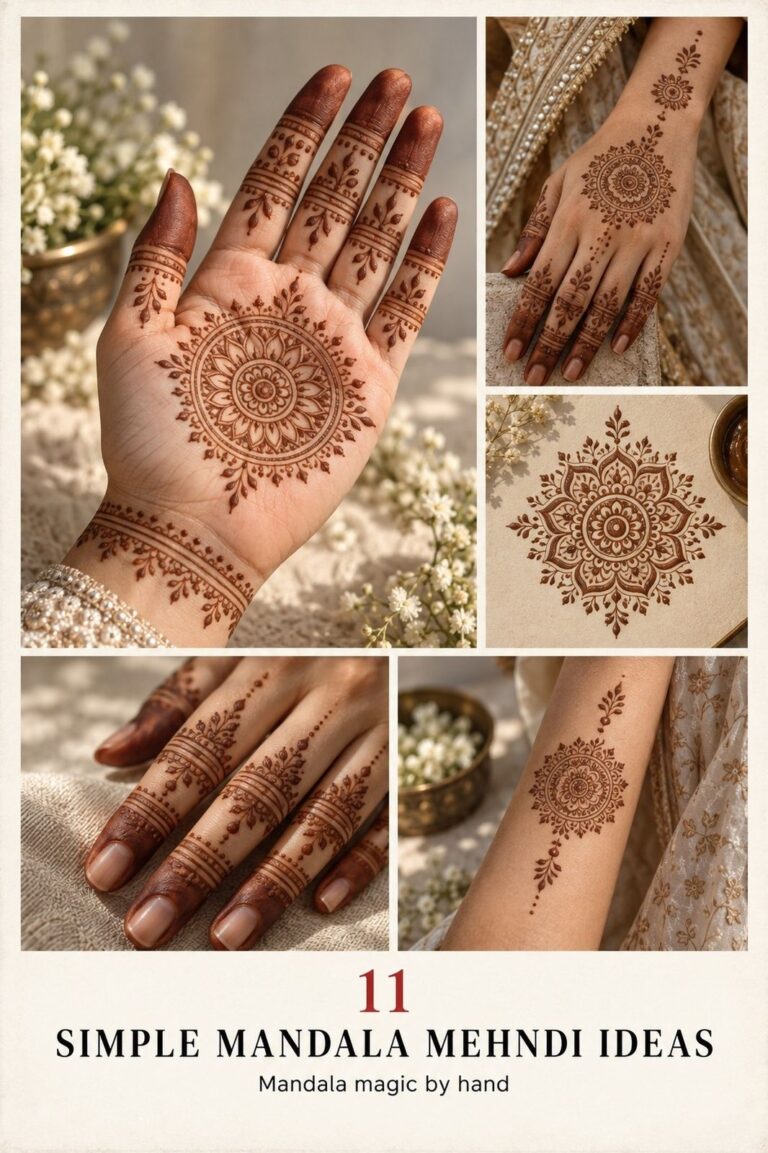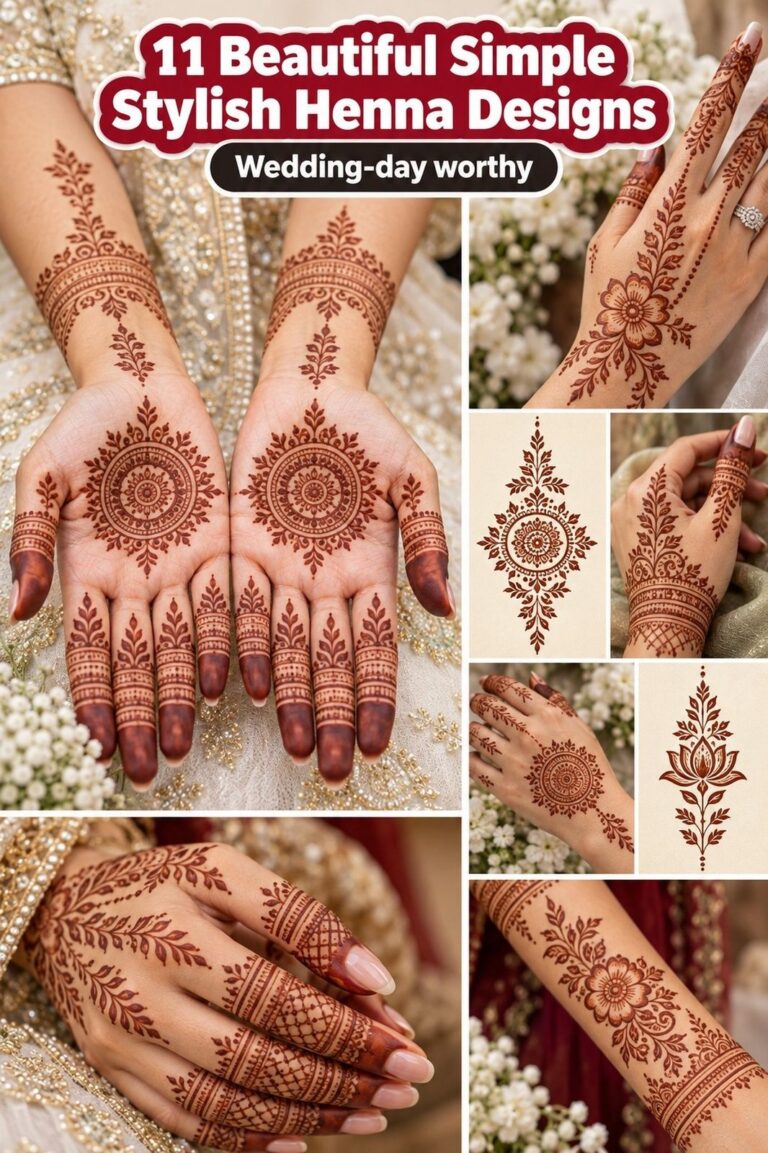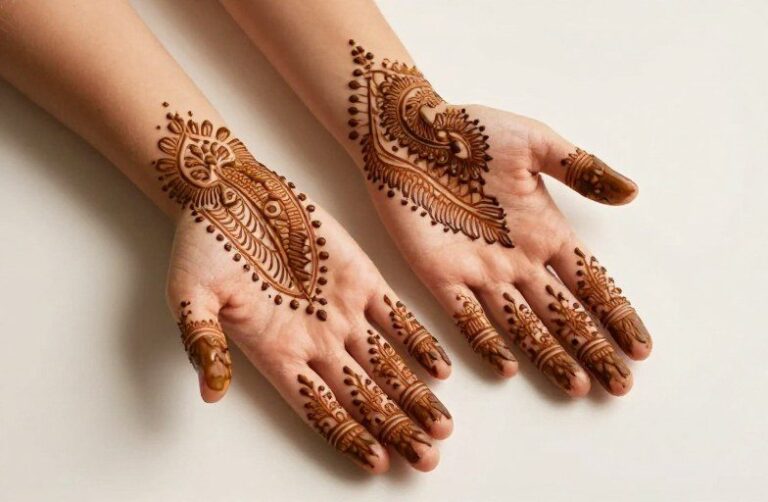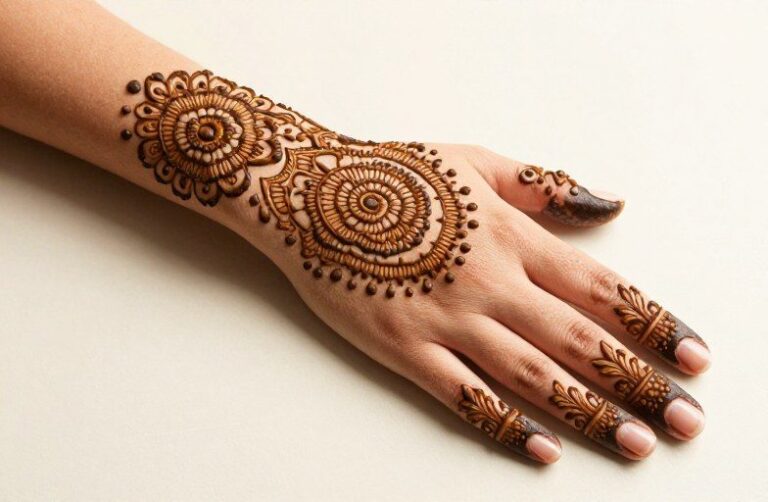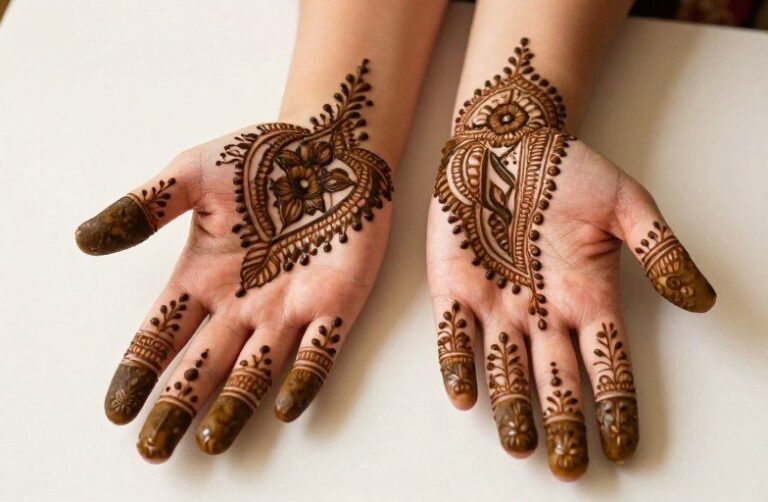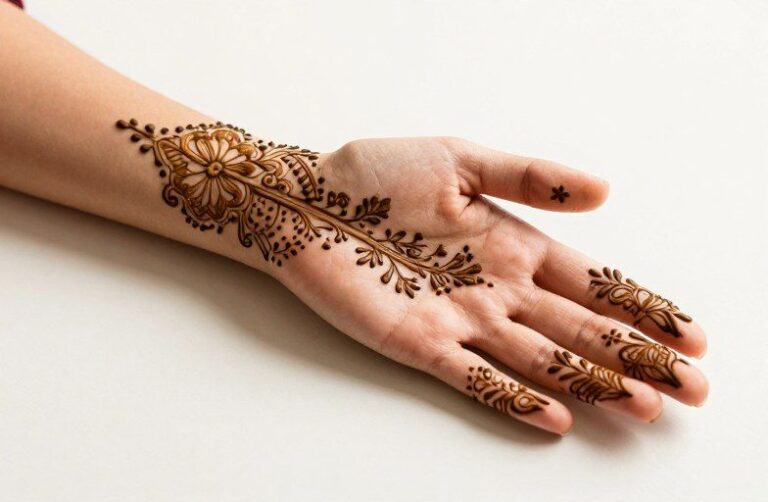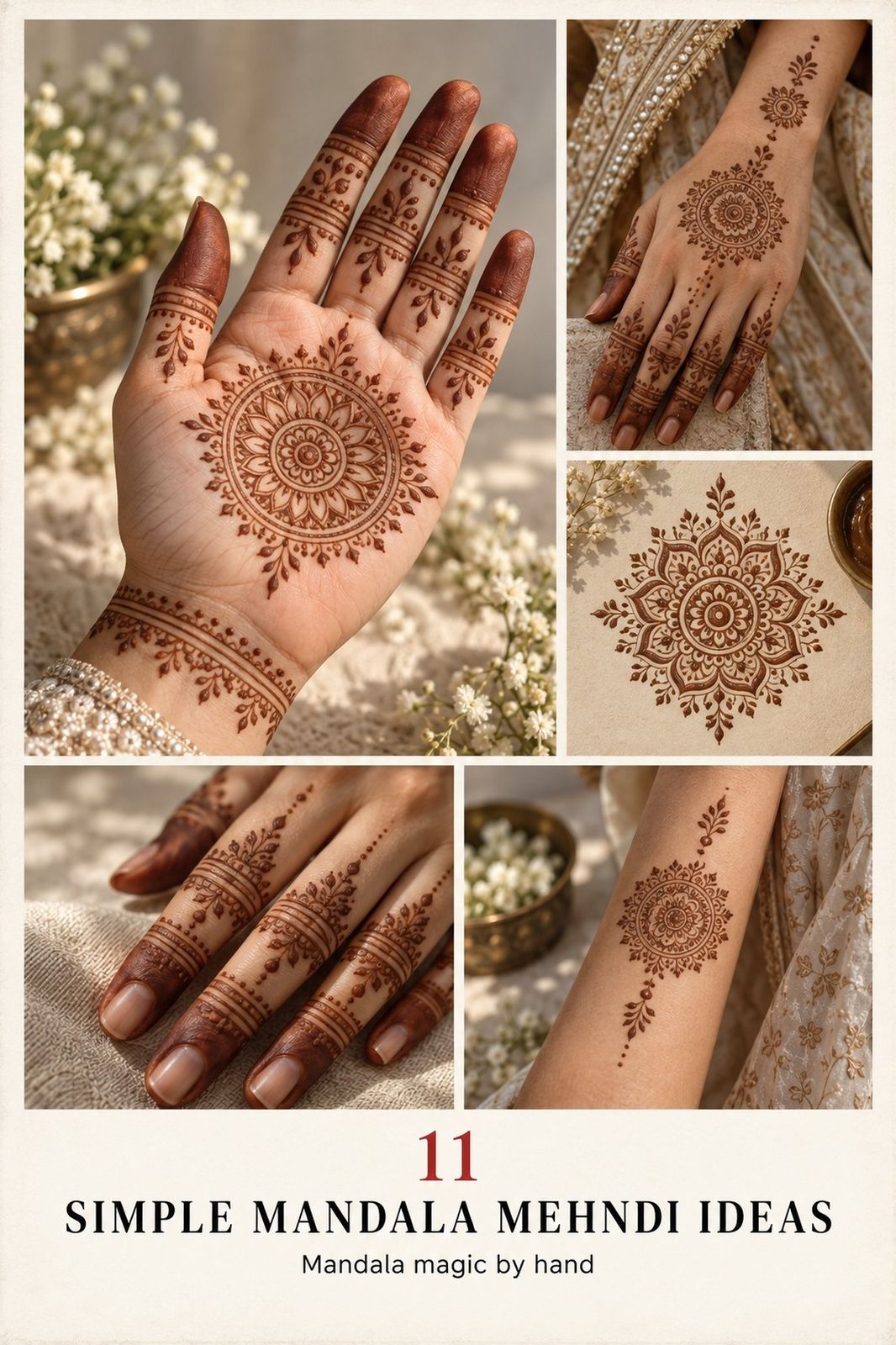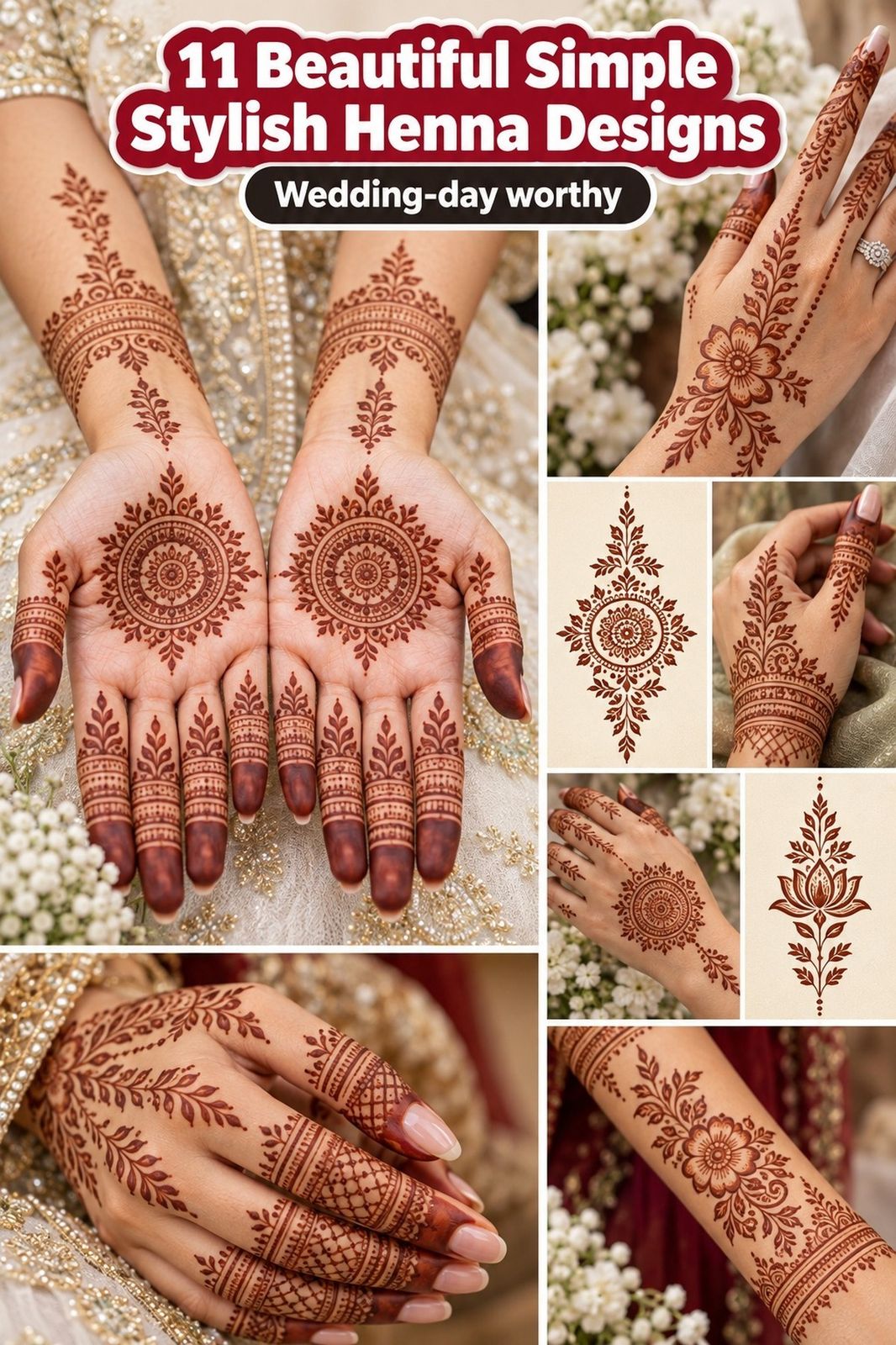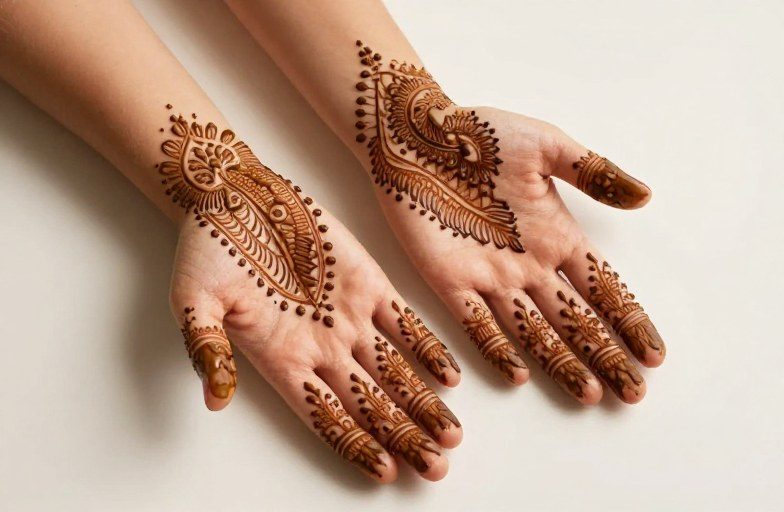
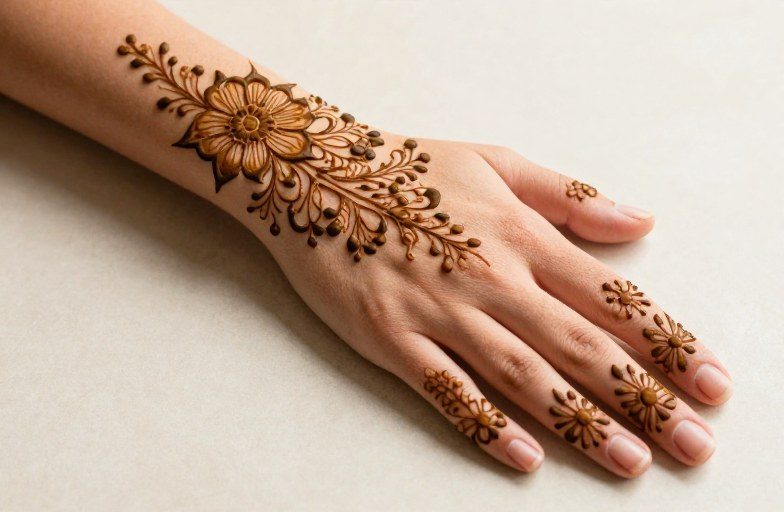
A mehndi flower tattoo carries meaning rooted in South Asian henna traditions, where floral motifs mark weddings, festivals, and rites of passage. The design fuses that cultural weight with permanent ink, so the symbolism lands somewhere between honoring heritage and marking personal transformation. Most people gravitate toward it for its visual density: petals unfurling in tight, repetitive patterns that read as both decorative and deeply intentional.
Common Variations and Styles
Not every mehndi flower looks the same. The style shifts dramatically depending on which tradition you pull from and how much the artist modernizes the linework.
Traditional Indian and Pakistani Motifs
These lean heavily on the lotus and marigold, two flowers central to henna ceremonies. Lotus mehndi flowers emphasize layered petals radiating from a tight center, often with teardrop accents and dotwork filling the negative space. Marigold interpretations favor rounder, fuller blooms with scalloped edges. Line weight stays consistently thin, single needles or tight three-round liners, mimicking the paste-flow precision of actual henna application. Shading is minimal; the design relies on pattern density to create depth.
Contemporary Fusion Styles
Some artists merge mehndi linework with watercolor washes, geometric framing, or dotwork mandalas that extend beyond the flower itself. Others strip the motif down to a single bloom with exaggerated, elongated petals that read more Art Nouveau than traditional henna. Blackwork versions exist too, solid black petals with mehndi-style filigree crawling through the negative space. The meaning stays intact even as the visual language shifts; what changes is how boldly the piece announces itself on skin.
- Single-needle linework: closest to authentic henna texture, ages delicately
- Heavy black fill with fine-line detail: higher contrast, bolder statement
- Color integration: rare in traditional mehndi but emerging in fusion pieces
- Ornamental extensions: vines, paisleys, or mandala halos surrounding the central bloom
Best Placements
Where you put a mehndi flower changes how it reads. The intricate linework demands real estate; too small and the details blur together within a few years.
High-Detail Zones
The forearm, outer upper arm, and calf offer flat, stable surfaces where fine lines hold crisp. These areas also mirror traditional henna placement: hands and feet in actual mehndi practice, but in tattoo form the forearm becomes the accessible equivalent. A mehndi flower sleeve-side or wrapping the wrist bone flows naturally, following the body’s curves without distorting the radial symmetry.
Challenging but Striking Locations
Ribcage and sternum placements work for larger, more mandala-like compositions, but the stretching and compression of torso skin means those tight dotwork patterns will soften faster. Ankle and foot tattoos nod directly to henna tradition but face constant friction from shoes and socks, so expect more frequent touch-ups. Behind the ear and along the hairline can hold a single, simplified bloom, though the detail ceiling is low.
How It Ages on Skin
Mehndi flower tattoos age differently than bold traditional or heavy blackwork. Understanding this keeps expectations grounded.
The single-needle linework that makes these designs elegant is exactly what makes them vulnerable. Thin lines spread over time, ink migrating under the skin’s collagen structure. A line that starts razor-thin will read noticeably softer after five to seven years. Dotwork blurs into soft grey smudges. The tight patterns that read as texture when fresh can become muddy if the original spacing was too aggressive.
Contrast saves aging mehndi tattoos. Pieces with intentional negative space, or designs where thick outline anchors thin interior detail, hold their structure longer. Sun exposure accelerates fading across the board; UV breaks down ink particles regardless of style. A mehndi flower on a frequently sun-exposed forearm without protection will grey out faster than one on an upper arm usually covered by sleeves.
Touch-up culture around this style is practical, not failure. Plan for a refresh at year five or six if the original was fine-line heavy. Some collectors intentionally let the piece soften, embracing the ghosted quality as part of the aesthetic. Actual henna fades naturally, so the parallel feels appropriate.
Who Chooses This Tattoo
The appeal crosses demographics more than some assume. People with South Asian heritage often choose mehndi flowers as permanent markers of cultural practice they grew up with, the Eid and Diwali gatherings, the wedding seasons where henna was applied communally. The tattoo becomes a way to carry that ritual forward without the temporary nature of paste.
Others arrive through aesthetic attraction rather than cultural connection. They see the visual complexity, the way the design occupies space without dominating it. Some have studied or traveled in regions where henna is common; others found the style through tattoo portfolios and responded to its graphic qualities.
There is ongoing tension here about appropriation versus appreciation. If you are outside the South Asian tradition, the design can still work, but the meaning deepens with genuine understanding rather than surface appreciation. Avoid sacred or exclusively ceremonial symbols, like certain bridal-only patterns. Research specific motifs rather than treating the design as generic ornament. Working with artists who understand the lineage helps, whether they come from the tradition or have done genuine homework.
Personal and Modern Meanings
Beyond cultural resonance, people assign individual significance to mehndi flowers that the traditional context does not fully cover.
Transformation and Threshold Moments
The flower’s natural cycle, bud, bloom, decay, maps onto personal transitions. Someone marking recovery from illness, a career change, or the end of a relationship might choose a mehndi flower for its implied temporariness made permanent: the reminder that beauty exists in phases, not static states. The henna connection to celebration adds weight; this is not a mournful symbol but one that acknowledges difficulty while facing toward joy.
Feminine Identity and Reclamation
For some wearers, the mehndi flower represents a reclamation of feminine-coded art forms that were dismissed as merely decorative. Henna has historically been categorized as craft rather than fine art, domestic rather than public. Permanent ink raises the same visual language into a declared, unerasable statement. The meaning becomes about refusing to let beauty be trivialized.
Similar and Related Symbols
Mehndi flowers sit within a broader family of ornamental and botanical tattoos that collectors often consider alongside them.
The mandala shares the radial structure and dotwork vocabulary, though its spiritual origins are more explicitly Buddhist and Hindu. A mandala centers on cosmic geometry; a mehndi flower centers on organic growth. Some pieces merge the two, with mandala frames surrounding floral centers.
Peonies and cherry blossoms offer alternative floral symbolism with different cultural weights, Japanese and Chinese traditions, respectively. They tend toward softer, more painterly execution compared to mehndi’s linear precision. The lotus, already present in traditional mehndi, also appears independently in Buddhist and Egyptian-inspired tattooing, often with more overt spiritual messaging.
Paisley patterns, frequently paired with mehndi flowers as ornamental filler, originated in Persian textile design and traveled through South Asian visual culture. Alone, a paisley reads as decorative abstraction; paired with a mehndi flower, it extends the celebration context. Some collectors build full ornamental sleeves combining all these elements.
What to Remember
A mehndi flower tattoo succeeds or fails on linework precision. Choose an artist whose portfolio shows actual healed fine-line pieces, not just fresh photos where swelling makes lines look sharper than they will settle. Ask about needle groupings: single needle for authentic texture, three-round for slightly more durability with minimal sacrifice to delicacy.
Consider the cultural weight honestly. If you are outside the South Asian tradition, the design can still work, but the meaning deepens with genuine understanding rather than surface appreciation. Avoid placing a mehndi flower next to unrelated symbols, dreamcatchers, random Sanskrit, in ways that treat traditions as interchangeable aesthetic stock.
Plan for maintenance. This is not a one-and-done style. Budget for touch-ups, protect from sun, and choose placement with aging in mind. The forearm looks stunning fresh but will need more care than an upper arm tucked under a sleeve.
Finally, sit with the design before committing. Mehndi flowers reward patience: the best pieces come from artists who have studied the tradition, not just copied Pinterest references. Your skin deserves that level of care.
Frequently Asked Questions
How long does a mehndi flower tattoo take to complete?
A small single bloom might take two to three hours. Larger compositions with ornamental extensions, mandala frames, or multiple flowers can require six to eight hours across multiple sessions. Fine-line work demands slower needle movement than bold traditional styles, so the time investment surprises some first-time collectors.
Does a mehndi flower tattoo hurt more than other styles?
The pain depends on placement, not style. A mehndi flower on the forearm feels comparable to any other tattoo in that spot. The difference is duration: fine-line sessions often run longer because of detail density, so you spend more time in the chair. Bring snacks, charge your phone, and break the session if your artist recommends it.
Can I get a colored mehndi flower tattoo?
Traditional mehndi is paste-brown, so color departs from authenticity. That said, some fusion artists integrate muted reds, oranges, or soft pinks to suggest marigold or lotus hues. Bright, saturated color reads as modern illustration rather than mehndi lineage. If cultural connection matters to you, ask your artist how color choices affect the tradition’s visual language.
How do I find an artist who understands mehndi tattooing?
Look for portfolios with healed fine-line botanical work, not just fresh photos. Ask directly about their relationship to the tradition: have they studied South Asian art history, worked with henna artists, or traveled in regions where mehndi is practiced? Avoid artists who cannot name specific motifs or who treat the style as generic ‘tribal’ ornament. Cultural literacy shows in the linework precision and motif accuracy.