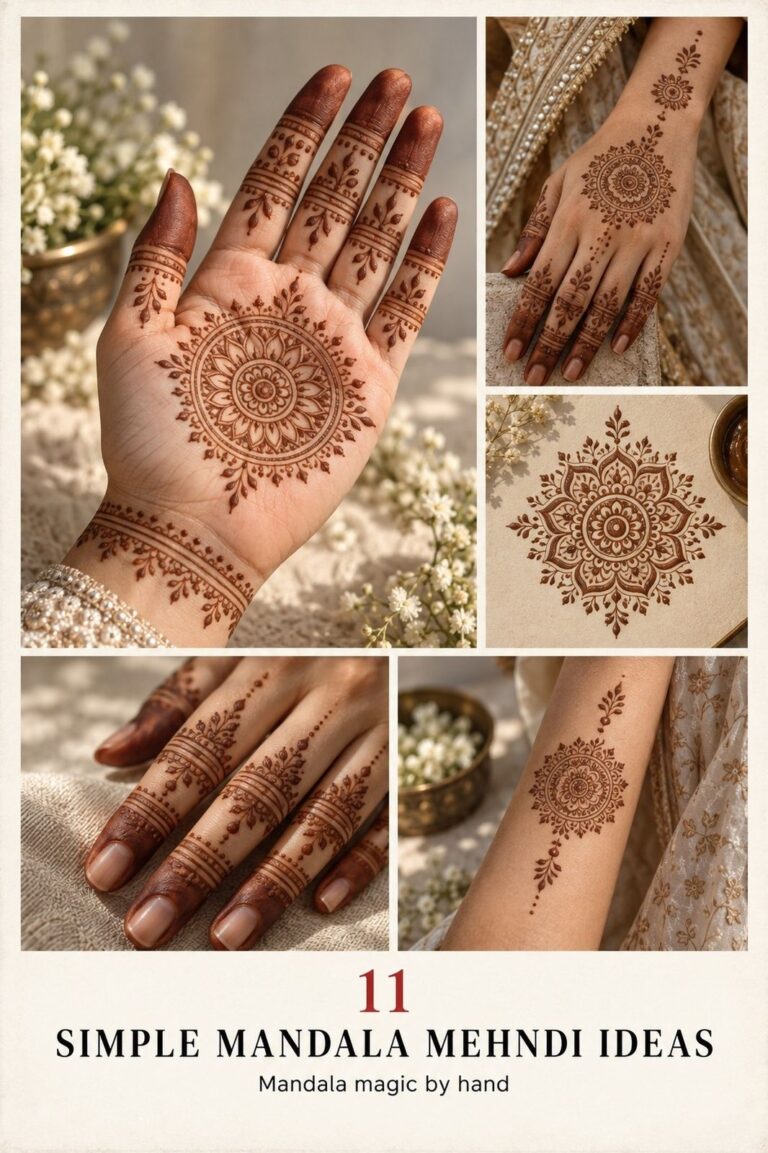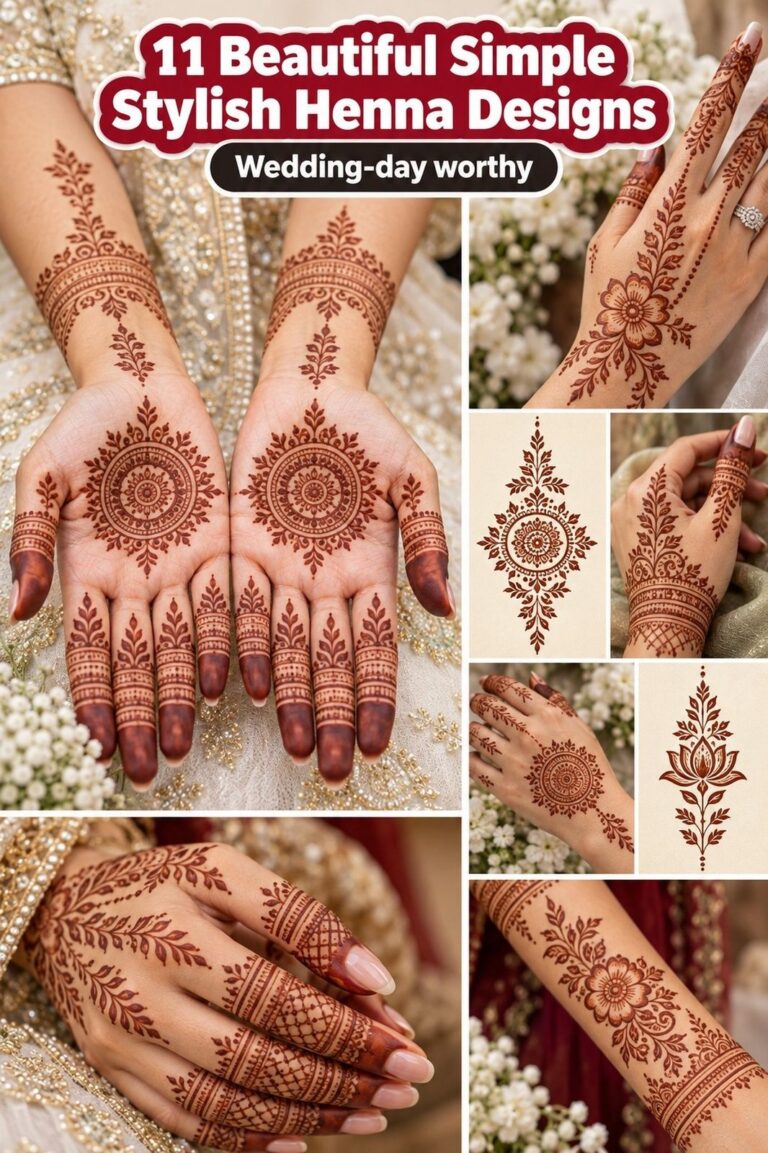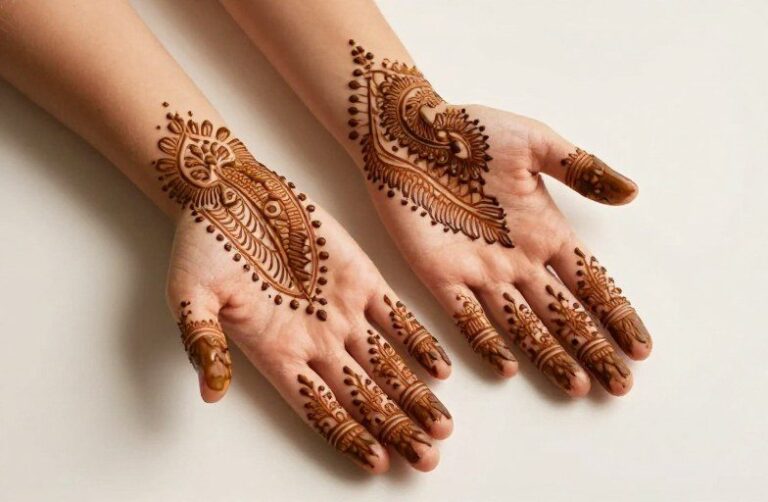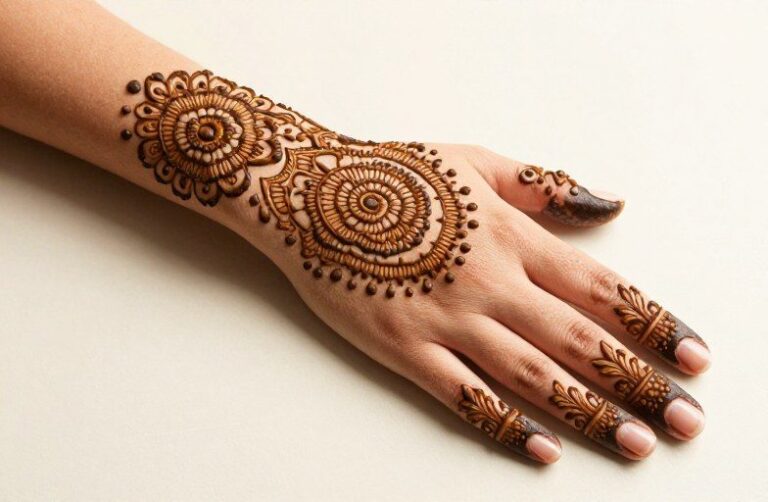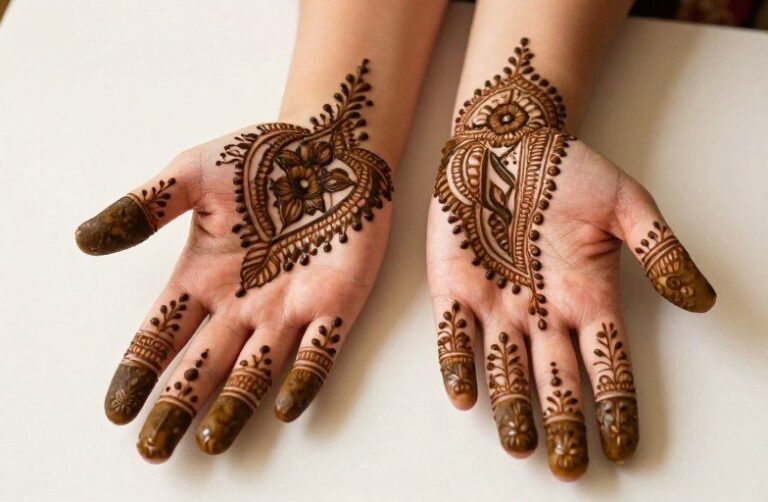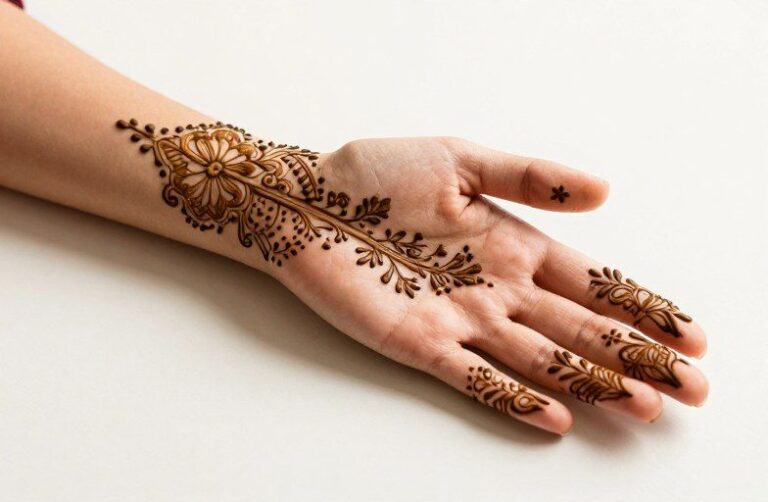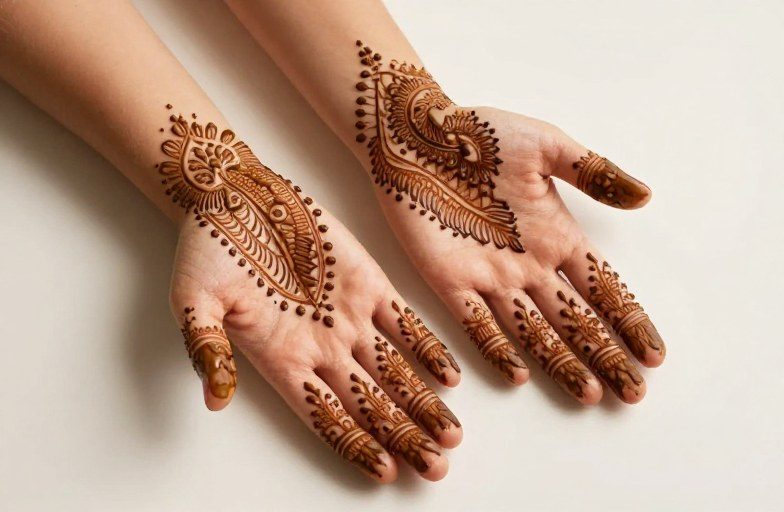
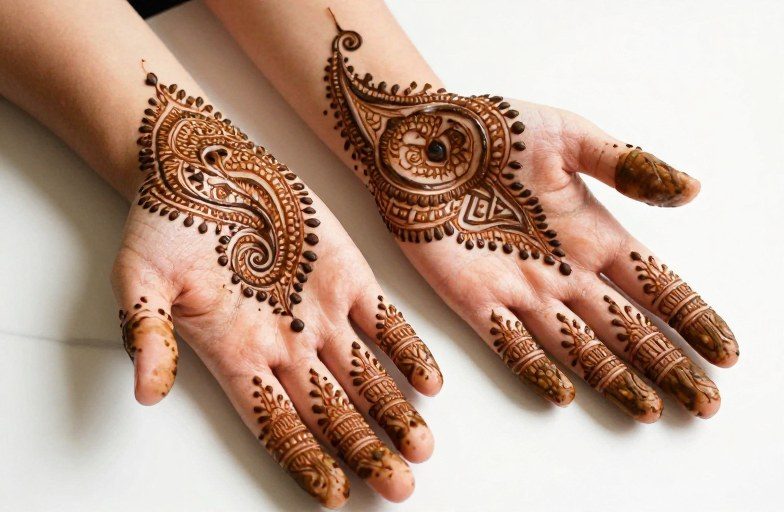
A paisley henna tattoo carries layered meaning rooted in centuries of South Asian and Middle Eastern tradition. The distinctive teardrop or mango-shaped motif, called boteh in Persian, represents fertility, life, and the cyclical nature of growth. When rendered in henna style, with its dense linework, dot clusters, and flowing vines, the paisley becomes a meditation on impermanence, since henna itself fades while the skin beneath continues its cycle of renewal.
Design Tips & Pairings
Placement shapes how a paisley henna tattoo reads visually and symbolically. Dense, all-over paisley patterns suit the back of hands, tops of feet, and the nape of the neck, areas where traditional mehndi concentrates. A single large paisley with trailing vines works beautifully on the inner forearm, ribcage, or thigh, where the shape can stretch and breathe without distortion.
Complementary Elements
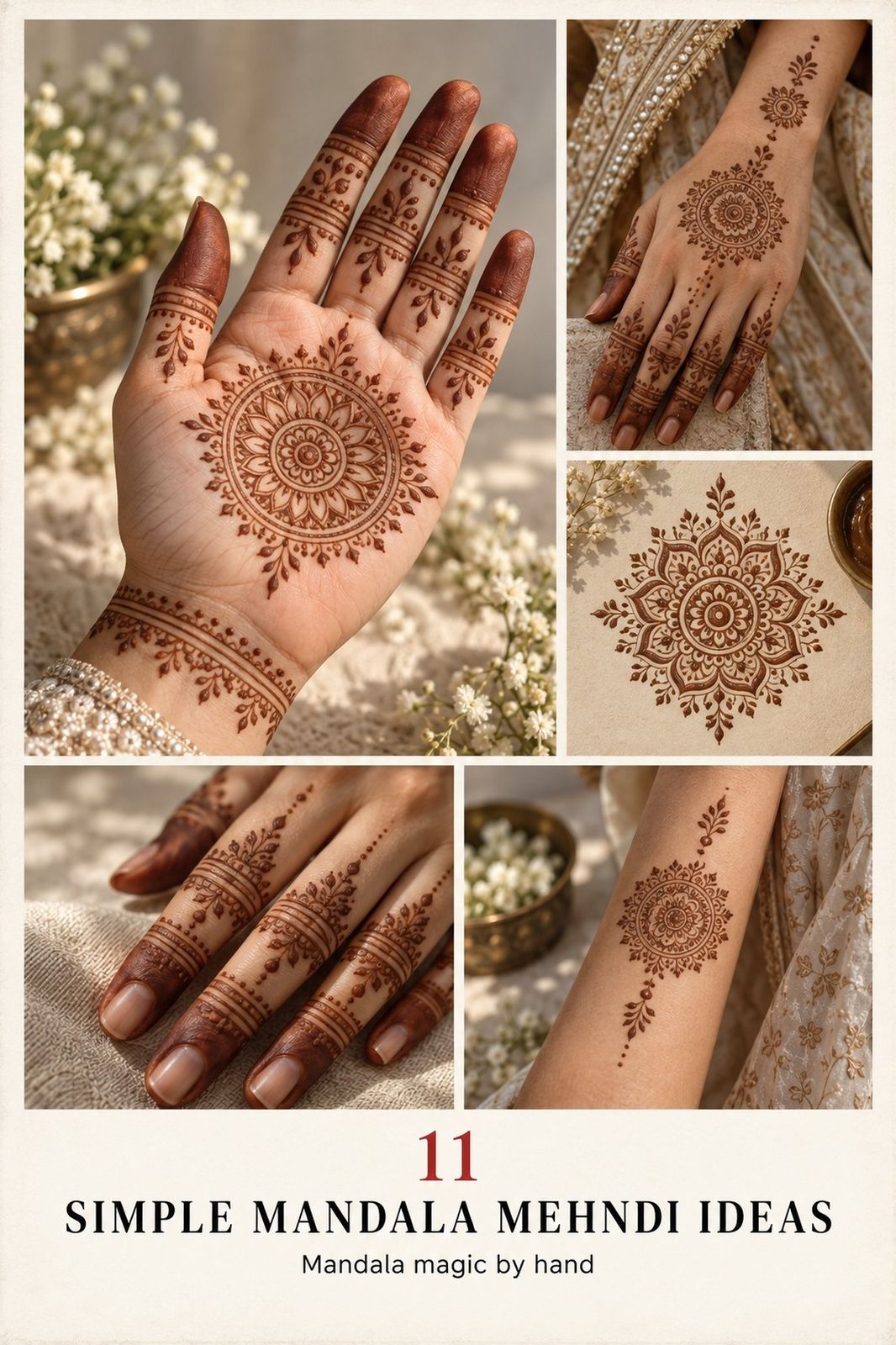
- Dot clusters and mandala centers: These fill negative space and echo the henna tradition of warding off evil eye through visual complexity.
- Peacocks and lotus flowers: Both carry their own symbolic weight, peacocks for beauty and watchfulness, lotus for purity emerging from murky conditions, and their curves harmonize with paisley’s drooping form.
- Arabic calligraphy: Flowing script tucked into paisley negative space bridges decorative and devotional functions without cluttering the composition.
Line weight matters enormously. The paisley outline should carry the heaviest line; interior details stay lighter, typically single-needle or tight three-round-liner work. Shading inside the paisley traditionally stays minimal in henna style, crosshatching or stippling rather than smooth gradients, to mimic how actual henna paste deposits pigment darkest at the skin’s surface and lightens toward the edges of each stroke.
Color vs Black and Grey
Actual henna stains skin in orange-brown tones that oxidize to deep burgundy over 48 hours. Translating this to tattoo ink presents choices that shift the meaning subtly.
Black and Grey Approaches
Most paisley henna tattoos stay black and grey, and for good reason. The high contrast mimics fresh henna’s stark darkness against untanned skin, and the design ages more gracefully than color. Black ink holds its saturation in fine lines better than any pigment; a paisley’s delicate interior details remain readable for years rather than blurring into muddy abstraction. Greywash can suggest the tonal variation of henna as it fades, with lighter areas implying the paste’s natural oxidation process.
Color Options
Some clients request the ruddy brown of natural henna, achievable with warm sepia or light brown inks. This reads immediately as “henna” to viewers but fades faster than black, requiring touch-ups every few years. Others incorporate jewel tones, deep maroon, indigo, gold accents, associated with wedding mehndi and festive occasions. These shift the meaning toward celebration and abundance rather than the more austere spiritual associations of monochrome work. One practical note: warm reds and oranges in paisley interiors tend to blur faster than cool tones, so keep color fields larger and simpler than black linework details.
History & Cultural Roots
The paisley shape predates its name by millennia. Some trace it to ancient Babylonian representations of the date palm, a tree of life symbol; others link it to the mango in Indian iconography, or to the cypress tree in Persian art, often associated with mourning and eternal life. The term “paisley” itself comes from the Scottish town whose textile mills mass-produced shawls with the motif in the 1800s, copying Kashmiri originals.
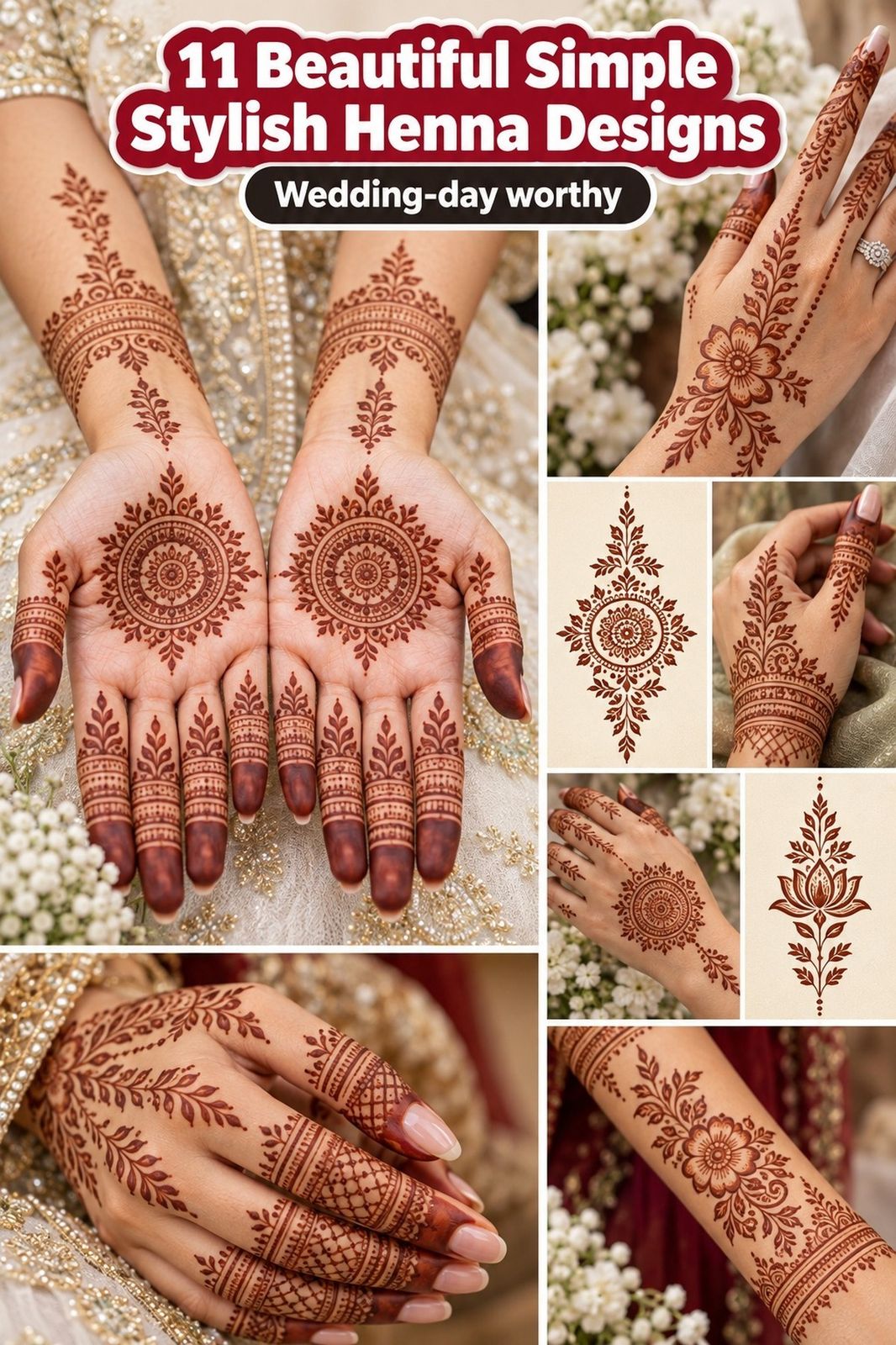
Henna as body art, meanwhile, carries documented use across the Middle East, North Africa, and South Asia for at least five thousand years. The combination of paisley motif with henna application technique represents a convergence rather than a single origin story. In wedding traditions across these regions, henna application often occurs the night before the ceremony, the darkness of the stain believed to indicate the strength of love between partners. Paisley patterns dominate because their enclosed, eye-like shape was commonly associated with protective function, trapping the evil eye within its curves before harm could reach the wearer.
Colonial Appropriation and Modern Reclamation
Western fascination with “henna tattoos” as temporary festival adornment has drawn justified criticism for stripping context from a ritual practice. A permanent paisley henna tattoo sits differently: it requires commitment to the form, acknowledges its origins through permanence rather than disposable consumption, and typically involves research into meaning that temporary applications often skip. Still, placement matters culturally. Reproducing bridal mehndi patterns on hands or feet without understanding their ceremonial function can read as costume rather than homage. Many artists and clients now intentionally modify traditional patterns, incorporating personal symbols that create genuine hybrid identity rather than imitation.
How It Ages on Skin
Paisley henna tattoos age according to their line density and placement. The finest details, individual dots, hair-thin interior lines, the sharp point where the paisley teardrop narrows, are first to blur. Skin’s natural cellular turnover, combined with sun exposure, gradually spreads ink particles outward from their original deposit.
On high-friction areas like palms and fingers, even the boldest paisley outline degrades noticeably within five to seven years. The ribcage, upper back, and outer thigh preserve detail longest due to stable skin with minimal stretching and sun contact. A paisley henna tattoo on the inner bicep faces moderate risk: the area tans easily, and the natural fold of the arm can distort the teardrop’s symmetry over time.
Designing for aging means embracing negative space. A paisley with solid black interior and no internal detail becomes an unreadable blob; one with open centers, strategic gaps, and varied line weights maintains its structure even as individual elements soften. The traditional henna aesthetic of “breath” between elements serves longevity as much as visual appeal.
Religious & Spiritual Angles
In Hindu tradition, the paisley’s mango-like form connects to Lakshmi and fertility rituals, while the same shape in Islamic art often appears in illuminated manuscripts and mosque tilework, where geometric and vegetal abstraction avoids figurative representation. The henna plant itself carries baraka, blessing power, in Moroccan Sufi practice, with application sometimes preceding spiritual retreat or pilgrimage.
Contemporary Spiritual Use
Modern wearers frequently detach paisley henna tattoos from specific religious affiliation, using the form as a general symbol of spiritual awakening or protection. The enclosed, womb-like shape suggests interiority and contemplation; the outward-flaring tip implies emergence or expression. Some interpret the repeated paisley patterns of traditional mehndi as meditation aids, the eye following curves into centering focus. This functional spirituality, tattoo as contemplative object, differs from doctrinal symbolism but carries genuine meaning for practitioners of eclectic or reconstructed spiritual paths.
Personal & Modern Meanings
Beyond inherited symbolism, paisley henna tattoos accumulate individual significance through context. A design commemorating pregnancy might emphasize the fertility associations; one marking recovery from illness could stress the cyclical renewal implied by both henna’s fading and the paisley’s life-symbol shape. The form’s adaptability, scalable from thumbnail-sized to full-back, combinable with infinite interior variations, makes it a container for projection rather than a fixed statement.
Contemporary artists have pushed the form into unexpected territory: paisley outlines containing realistic portraits, biomechanical interiors, or abstract expressionist brushwork. These hybrids test whether the paisley shape retains its symbolic resonance when emptied of traditional content, or whether it becomes mere decorative frame. The most successful maintain some visual echo of henna’s characteristic density and rhythm, preserving the connection to craft tradition even as content transforms.
For diaspora communities, paisley henna tattoos often function as permanent anchor to heritage practices that circumstances prevent regular participation in. The tattoo doesn’t replace living tradition but extends its visual vocabulary into contexts where henna application itself may be impractical or unavailable.
The Bottom Line
A paisley henna tattoo carries genuine symbolic weight, fertility, protection, cyclical renewal, spiritual attention, while remaining visually flexible enough for personal adaptation. The form rewards research into its multiple cultural origins and ages best when designed with the negative space and line-weight variation that traditional mehndi practice developed over centuries. Whether approached as heritage reclamation, spiritual tool, or purely aesthetic choice, it succeeds when the permanence of tattoo ink respects the temporary nature of the henna tradition it references.
Frequently Asked Questions
How long does a paisley henna tattoo take to complete?
A small single paisley might take 1-2 hours, while a full hand or foot pattern with traditional density can require 4-6 hours across multiple sessions. The fine linework and dotwork demand patience from both artist and client.
Can I get a paisley henna tattoo if I’m not South Asian or Middle Eastern?
The form is widely practiced and appreciated, but approach it with genuine understanding of its origins. Avoid copying specific ceremonial bridal patterns, and consider working with an artist knowledgeable about the tradition to create respectful hybrid work.
Will sunscreen help preserve the fine details?
Absolutely. UV exposure degrades tattoo ink faster than any other factor, and paisley henna tattoos rely heavily on crisp lines. SPF 50 on the tattooed area whenever it’s exposed significantly extends readability of fine interior details.
What’s the difference between a paisley henna tattoo and actual mehndi?
Actual mehndi uses temporary henna paste that stains skin for 1-3 weeks. A paisley henna tattoo is permanent ink applied with a tattoo machine, using the visual language of mehndi, paisley shapes, dot clusters, vine work, without the temporary, ritual, and botanical aspects of the original practice.