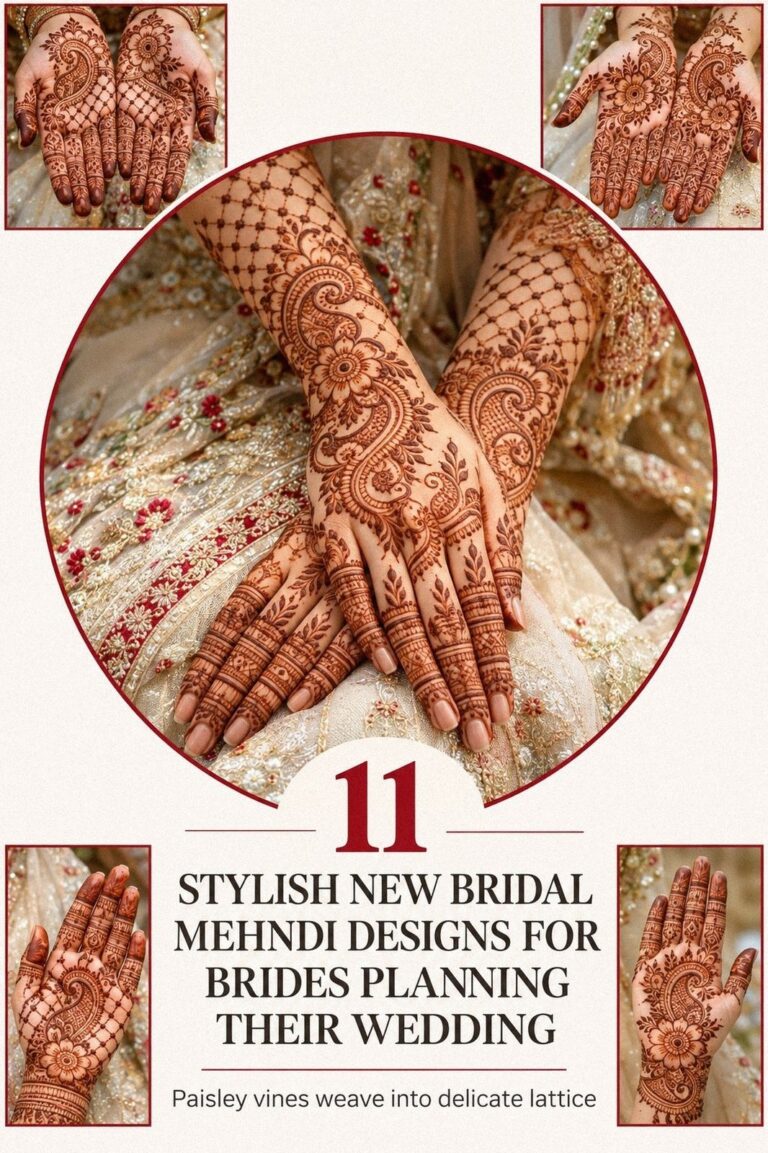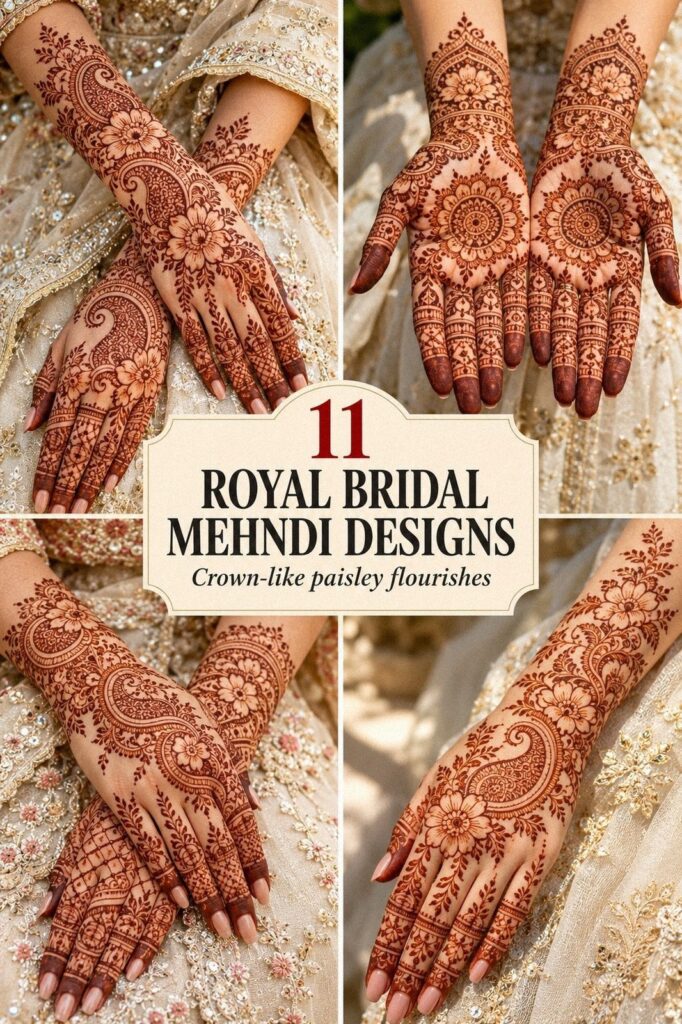
*Royal bridal mehndi can stay rich for one to three weeks when the paste is fresh, the stain gets time to deepen, and your aftercare is gentle. I once judged a design too early, before the second-day color arrived. That was my mistake. These ideas keep the pattern intricate, personal, and celebration-ready!
- Start With Simple Royal Bridal Mehndi Designs For Hands
- Why Peacocks Make Royal Bridal Mehndi Feel So Expressive
- Build Full Hand Coverage Without Losing Contrast
- Can Fingertip Detailing Carry the Whole Design?
- Mandala Centerpieces: Sacred Detail For Feet And Ankles
- Tell a Story With Bridal Portraits
- Let Arabic Flow Create A Daring Diagonal
- Choose The Back Hand For Visible Bridal Detail
Editor’s Note: Let the Stain Mature
Fresh mehndi often looks orange before it becomes a deeper reddish-brown. Don’t compare the first hour with someone else’s second-day result. Fresh henna paste needs time, warmth, and patience before you can judge the final tone.
You’ll also get a better result when the design suits your hands, feet, clothing, and schedule. A striking pattern isn’t always the densest one. Sometimes a delicate border or an understated focal point gives you more value across every wedding function!
- Start With Simple Royal Bridal Mehndi Designs For Hands
- Why Peacocks Make Royal Bridal Mehndi Feel So Expressive
- Build Full Hand Coverage Without Losing Contrast
- Can Fingertip Detailing Carry the Whole Design?
- Mandala Centerpieces: Sacred Detail For Feet And Ankles
- Tell a Story With Bridal Portraits
- Let Arabic Flow Create A Daring Diagonal
- Choose The Back Hand For Visible Bridal Detail
- Go Bold With Traditional Motifs
- Negative Space Or Dense Coverage?
- Personal Symbols Make Royal Mehndi Yours
1Start With Simple Royal Bridal Mehndi Designs For Hands
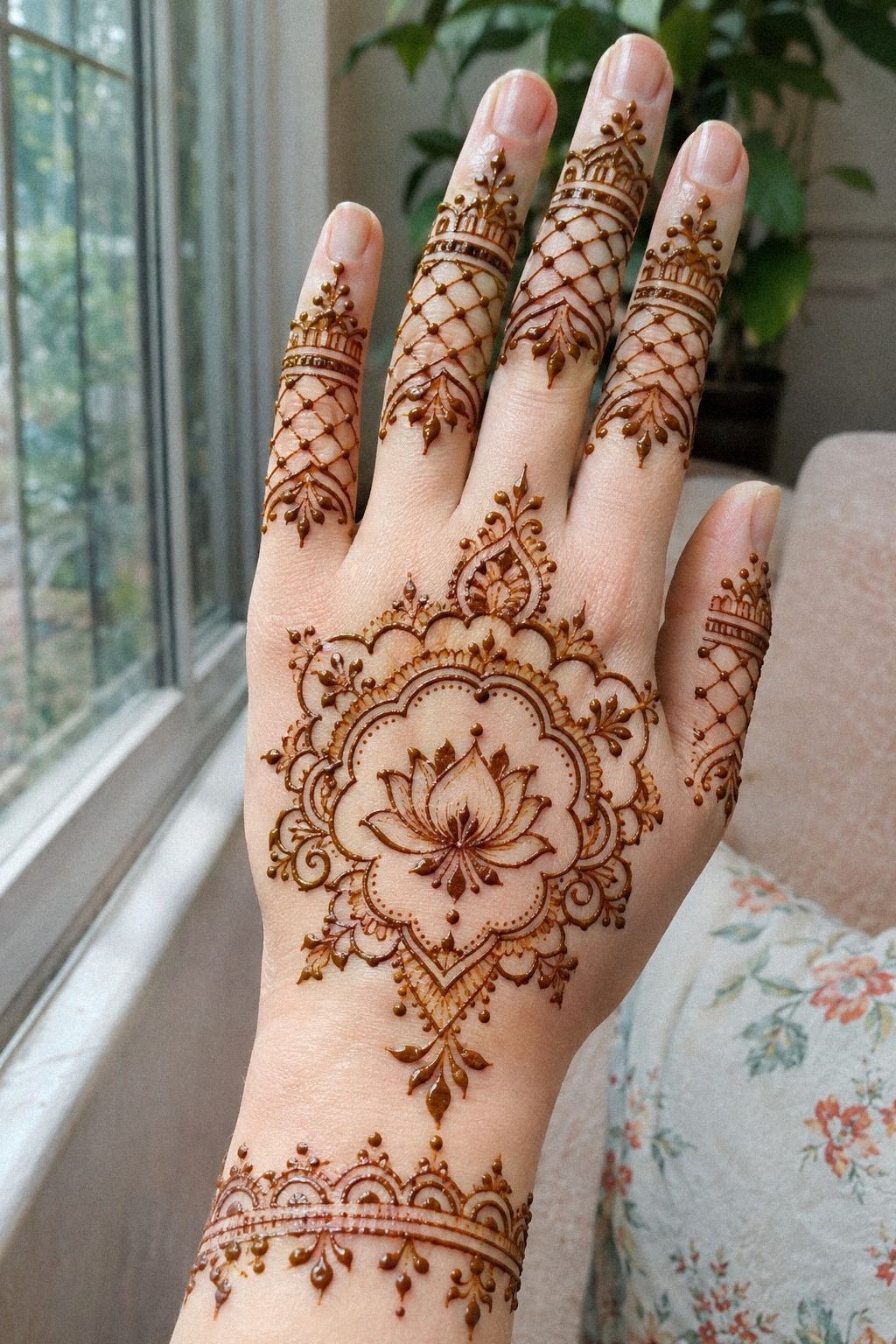
For simple royal bridal mehndi designs, start with a clean central motif on the back of your hand. Let fine paisleys travel toward your fingers. A fresh paste cone with a narrow tip can create crisp curves without forcing every inch into decoration.
A small floral center, two looping paisleys, and three decorated fingers can look more expressive than a solid field of repeated marks. You don’t need every fingertip covered to make the design feel royal. Your eye needs somewhere to rest.
Ask your mehndi artist to leave open skin around the central form. That spacing keeps the pattern graceful, polished, and easy to recognize while you’re greeting guests or holding flowers. It’s a smart choice when your budget favors one memorable motif over full coverage.
Keep the paste on your skin for one to two hours while it dries. Follow the artist’s removal advice, and don’t scrub at the first orange phase. The color may deepen on the second day, which is part of the process!
For more references, compare these simple bridal mehndi designs with royal simple mehndi designs. If you’re choosing between dense palms and a lighter back-hand arrangement, I’d pick the open design for a daytime function.
2Why Peacocks Make Royal Bridal Mehndi Feel So Expressive
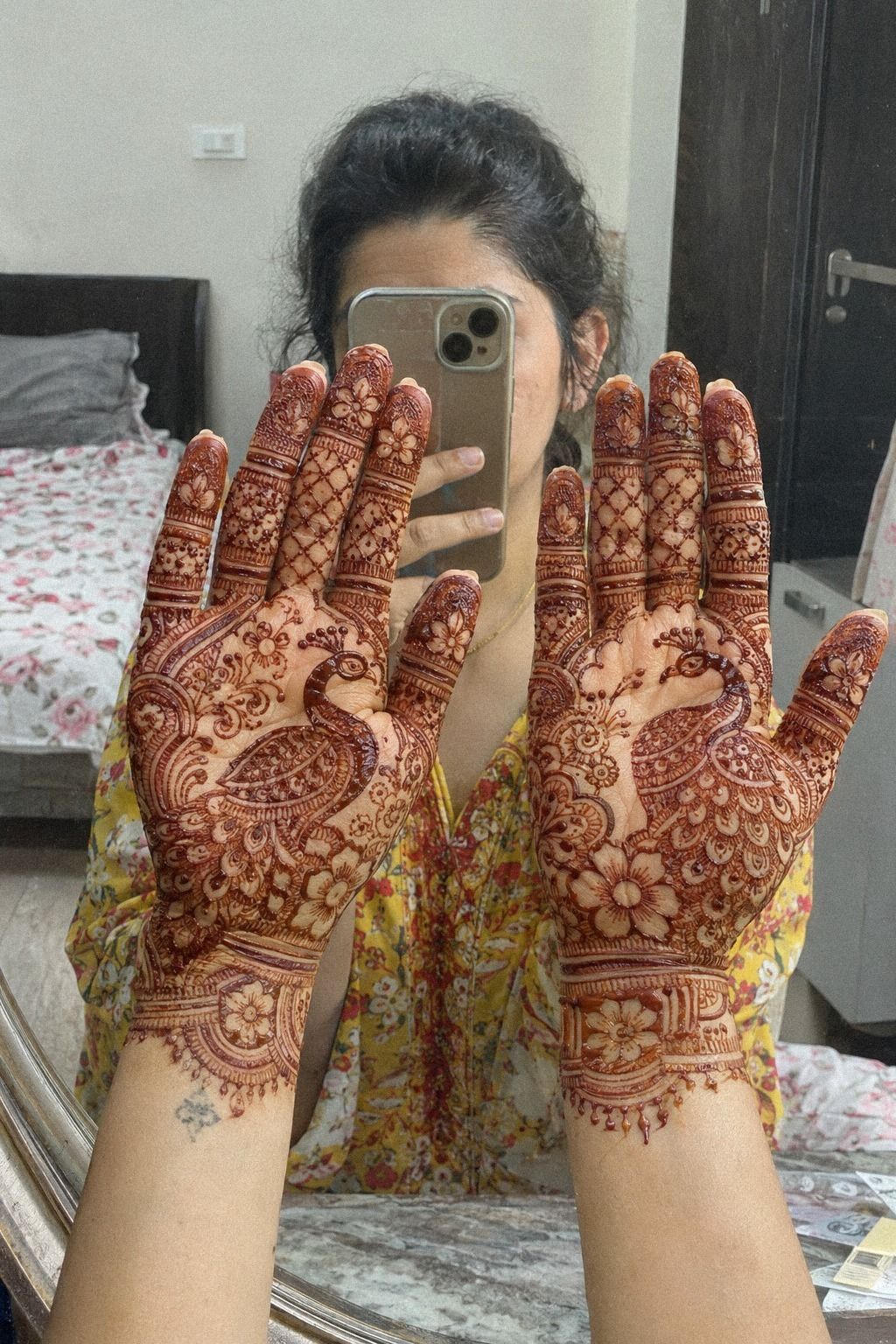
Peacock motifs bring a flowing, vibrant quality to both palms. The bird’s curved neck can follow the natural shape of your hand, while the feathers create a vibrant focal point. Large peacock detailing is worth it when you want one symbol to carry the strongest visual moment.
Ask for one larger peacock instead of several tiny birds competing for attention. Your artist can surround the body with paisley shapes, leaf curls, and scalloped borders. Small pockets of skin will keep the pattern crisp rather than heavy.
The palm design should connect visually to the fingers, but it shouldn’t become a solid block. A few crisp finger bands near the knuckles can echo the feathers. You’ll get a more elegant flow if the fingers finish the story instead of starting five separate ones.
Fresh paste matters because feather details need a clean line. If the cone drags or skips, you’ll lose the rhythm that makes this motif feel polished. Ask whether the artist has created peacocks for bridal work before you confirm the booking.
Save latest new bridal mehndi designs beside Indo-Arabic new bridal mehndi designs. If you’re torn between a peacock and a floral centerpiece, choose the peacock motif when you want your palms to feel iconic.
3Build Full Hand Coverage Without Losing Contrast
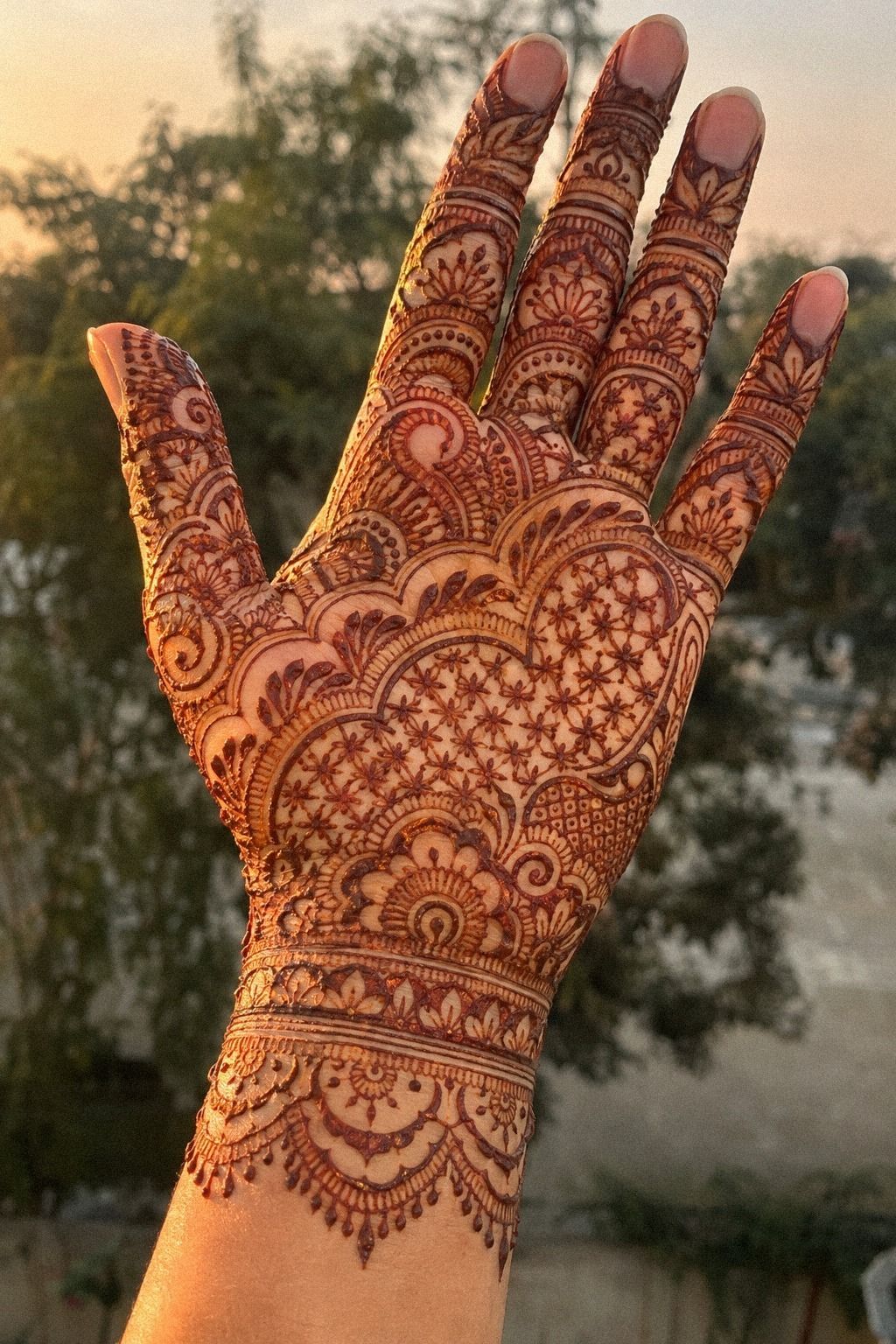
Full hand coverage works when your design has a rhythm, not when every empty spot gets filled. Full hand coverage should still include varied motifs, deliberate spacing, and a clear focal point.

4Can Fingertip Detailing Carry the Whole Design?
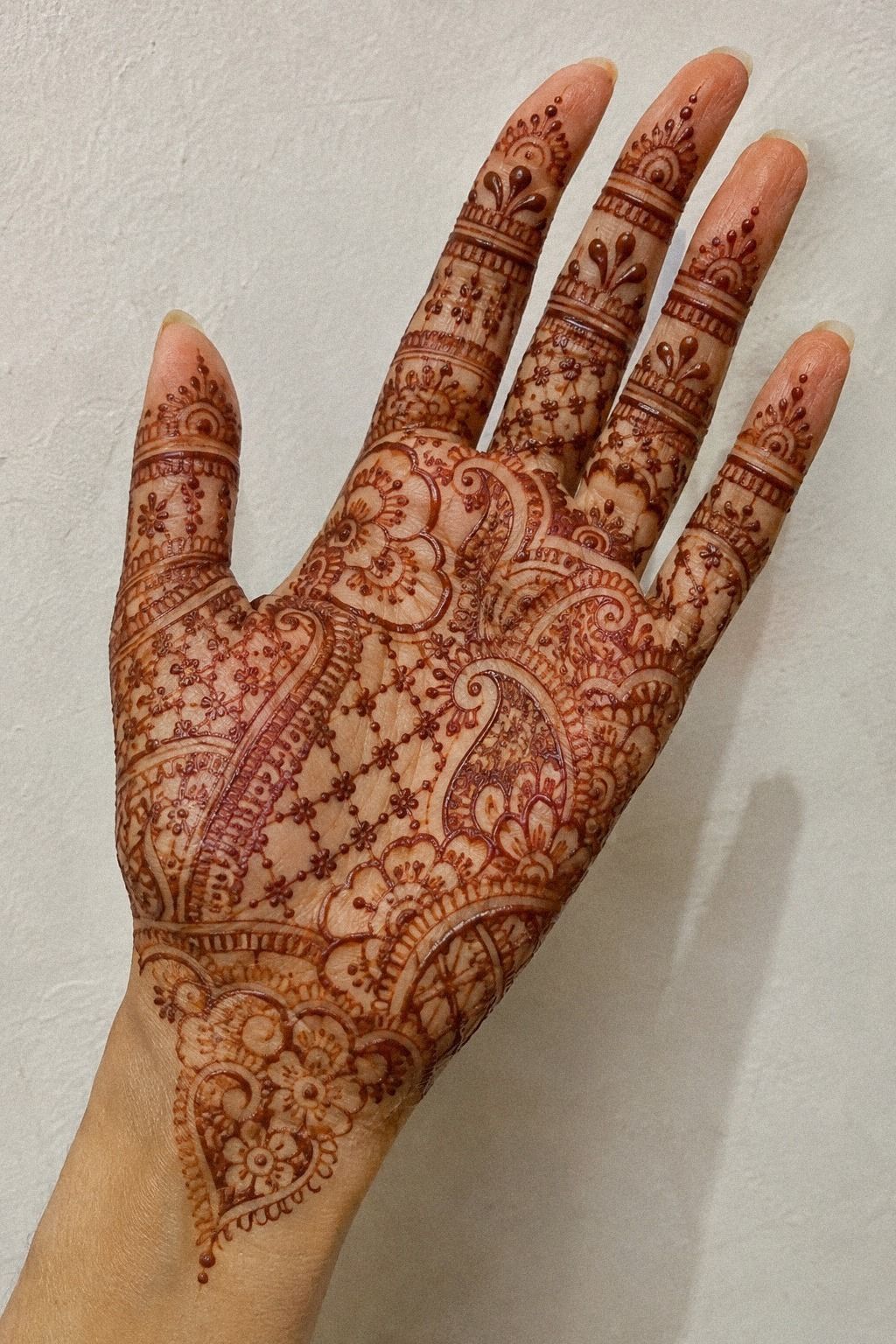
Fingertip detailing creates a crisp, sharp finish that changes the entire hand. Narrow bands, tiny petals, and fine marks can make the design feel dainty but still royal. Decorated fingertips are a strong value choice when you want detail without covering every inch of your palm.
Ask for repeated patterns that match across both hands, but don’t demand perfect symmetry if the natural shape of your fingers differs. A slightly varied line can look more personal and less stamped.
I’d keep the palm center simpler when your fingertips carry this much detail. Too many competing motifs will flatten the effect. Let the fingers act as a border around one graceful flower, mandala, or symbolic mark.
The cone should produce a smooth cone stream rather than a thick ridge. You’ll get better definition if the paste is fresh and the artist works patiently. Those tiny marks can look refined during the ceremony and still read clearly when guests are close by.
For comparison, look through simple new bridal mehndi designs and latest new bridal mehndi designs. Fingertip work is worth choosing when you want a sophisticated-looking finish with a moderate budget.
5Mandala Centerpieces: Sacred Detail For Feet And Ankles
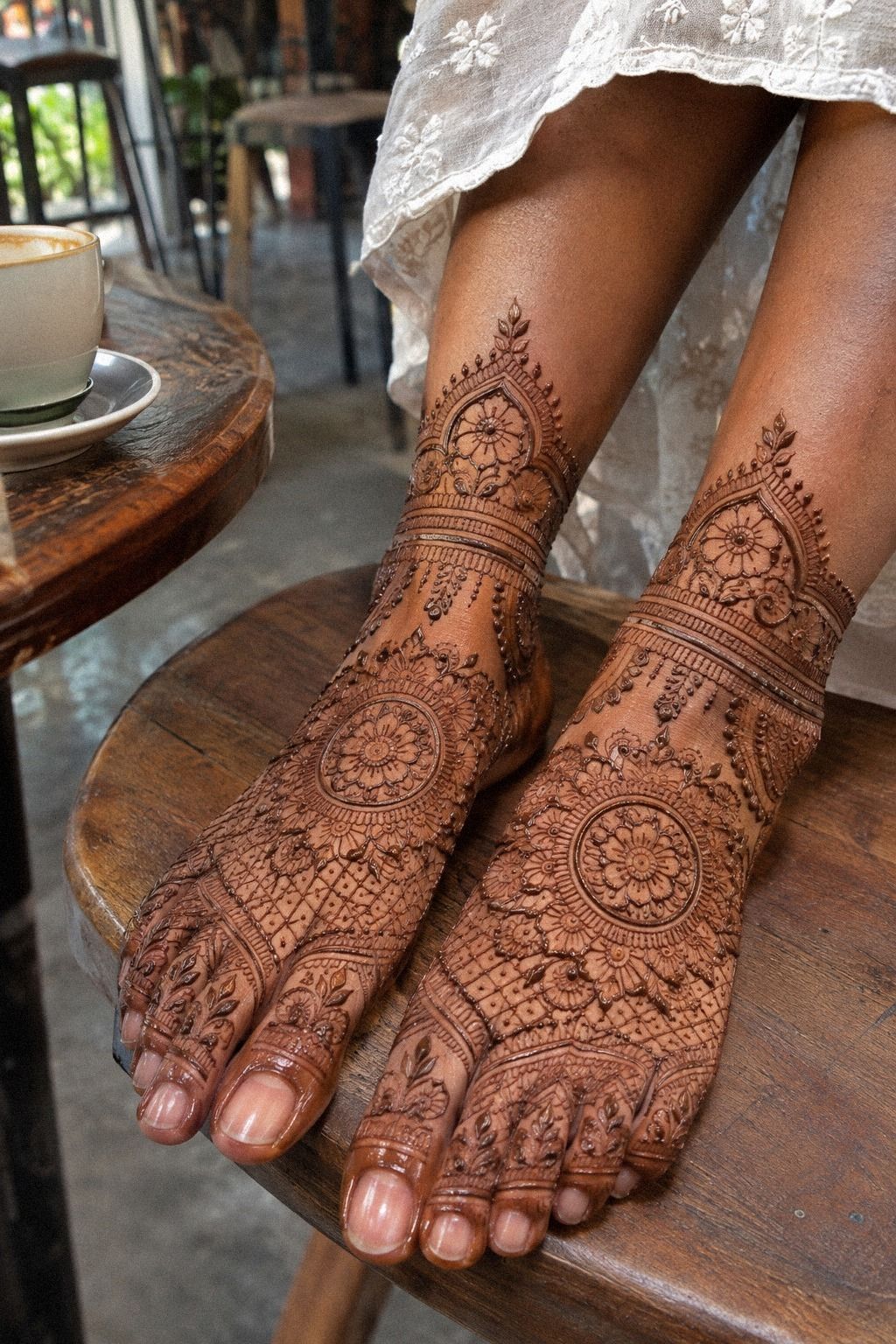
A mandala centerpiece gives your feet and ankles a sacred, balanced focal point. A mandala centerpiece can use concentric petals, fine dots, and a graceful border without overwhelming the placement.
6Tell a Story With Bridal Portraits
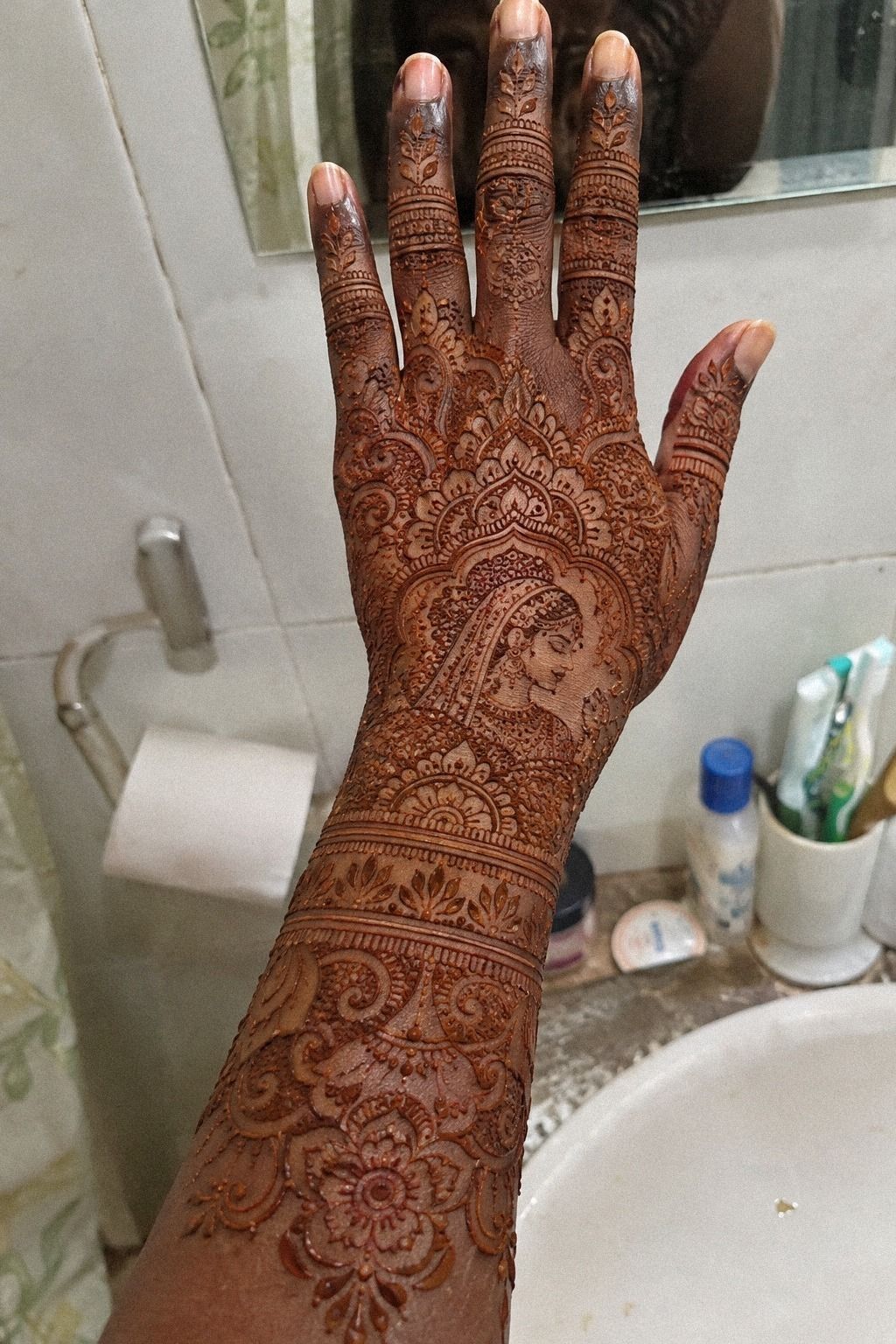
A bridal portrait turns your mehndi into a small story. The effect can feel romantic, iconic, and slightly haunting when the face, veil, and surrounding symbols are clear. A portrait centerpiece is best for someone who wants personal meaning to lead the design.
Your artist needs room to draw the face clearly, so don’t squeeze a portrait into a tiny section of your hand. A larger forearm placement gives the figure enough space for a recognizable veil, jewelry, or profile.
Choose one relevant scene with meaning instead of several unrelated portraits. You might prefer a bride beneath a canopy, a couple in traditional clothing, or a symbolic procession.
What would you still want to explain years from now? That answer should guide the design.
Portrait work is where an artist portfolio matters most. Look for finished examples of similar scenes, not only quick application videos. You’ll want to see whether facial proportions stay expressive after the paste dries and the stain deepens.
Compare Indo-Arabic bridal mehndi designs with latest new bridal mehndi designs. Don’t choose a portrait simply because it looks elaborate. Choose one that makes your personal story visible.
7Let Arabic Flow Create A Daring Diagonal
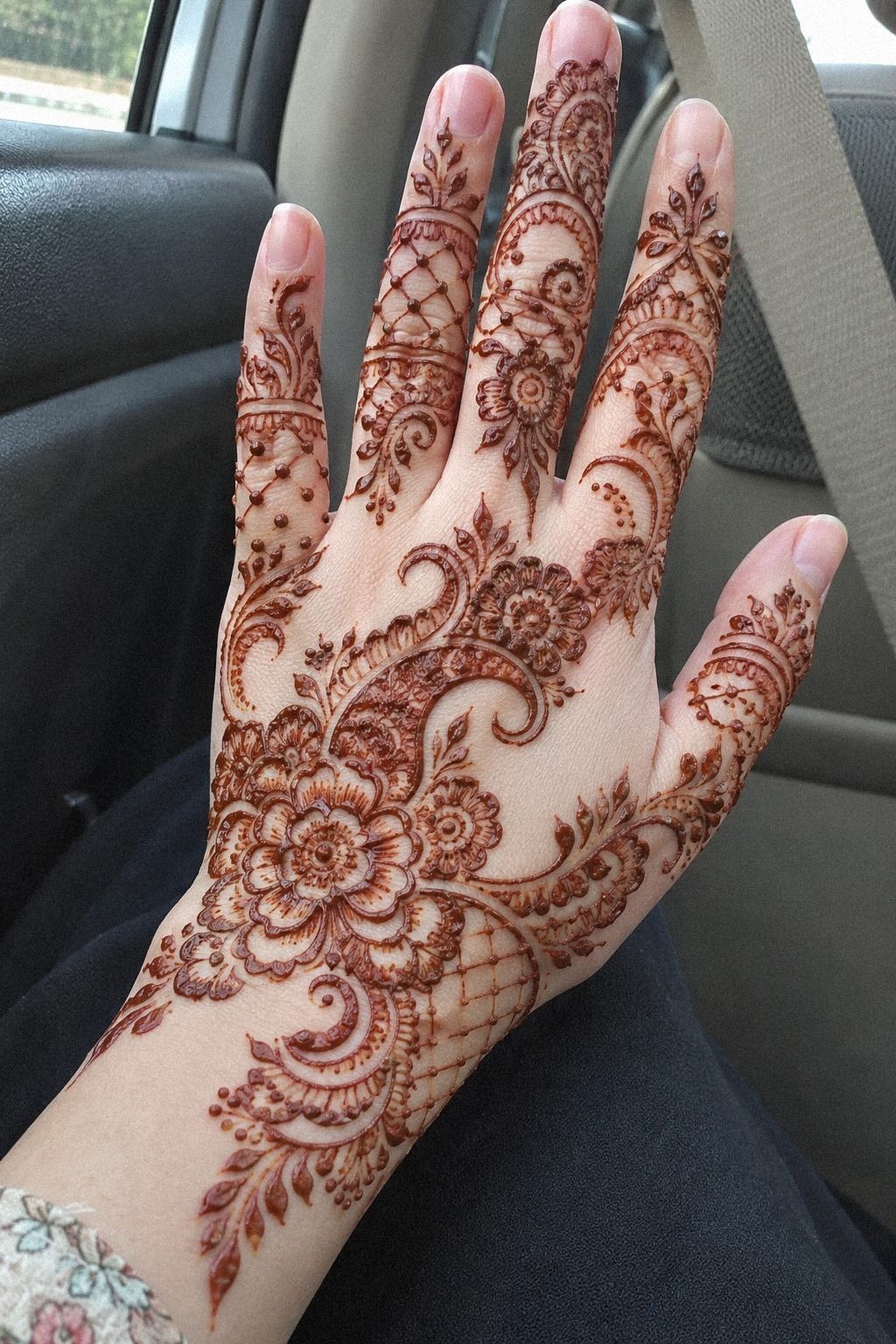
Arabic flow gives your hand movement through sweeping leaves, bold florals, and open channels of skin. A paisley and floral vine can travel diagonally from the wrist toward the fingertips.
Ask for one strong diagonal rather than several disconnected clusters. Your eye should move along a single graceful path. I’d skip a completely filled background here because the open areas are what make the flowing structure feel edgy.
A large flower can anchor the composition, while smaller leaves soften the edges. You’ll get a more refined result when the biggest motif appears only once or twice. Repetition is useful, but too much repetition makes the hand feel mechanical.
This style works well when you need a design that stays clear through different hand positions. Your hand can rest on fabric, hold a ring, or turn toward guests without hiding the full pattern. That flexibility is a real advantage during several wedding functions.
Study royal Arabic mehndi designs and Indo-Arabic new bridal mehndi designs. If you like dramatic movement more than dense symbolism, this is the design I’d put first on your shortlist for flowing movement.
8Choose The Back Hand For Visible Bridal Detail
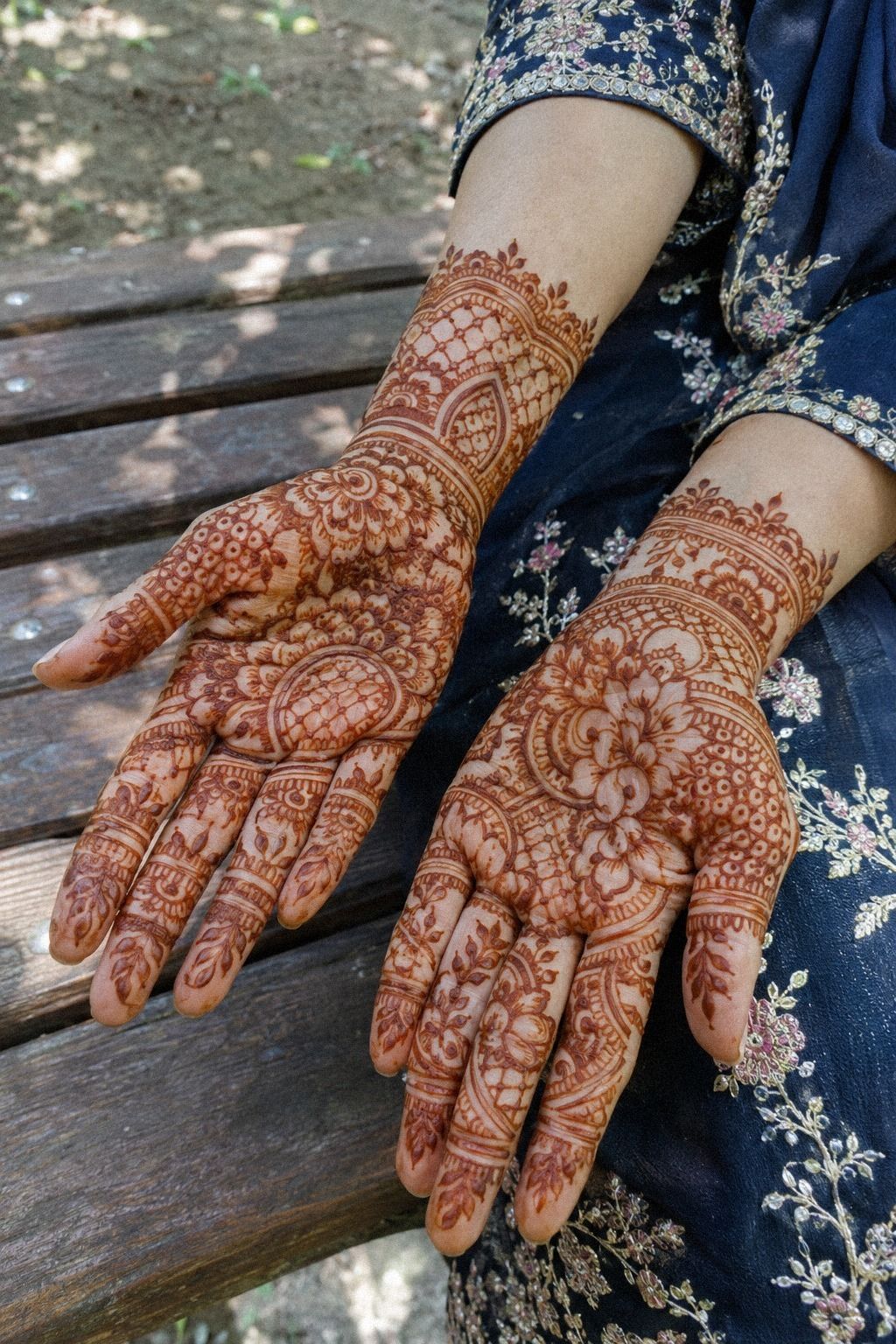
Back-hand designs give you an elegant place for rings, bangles, greetings, and bridal detail. A central back-hand motif can be large enough to read from a short distance without swallowing the finger pattern.
Start by deciding whether your wrists should connect the two hands visually. A narrow floral border can create continuity without making the design feel heavy. Your artist can then keep one hand slightly more detailed for a natural, hand-drawn difference.
The back of the hand is a good place for a focal point guests can see immediately. I prefer a balanced flower or paisley over a crowded collage. It looks polished beside ornate jewelry and colorful bridal clothing.
Remember that daily movement matters while the paste is drying. Avoid rubbing the backs of your hands against fabric, and ask your artist about the best removal method. The stain should deepen gradually rather than being judged in its first hour.
For more placement ideas, visit royal back hand mehndi designs and simple bridal mehndi designs. If your jewelry is already ornate, a clean back-hand pattern keeps the full look stylish instead of crowded.
9Go Bold With Traditional Motifs
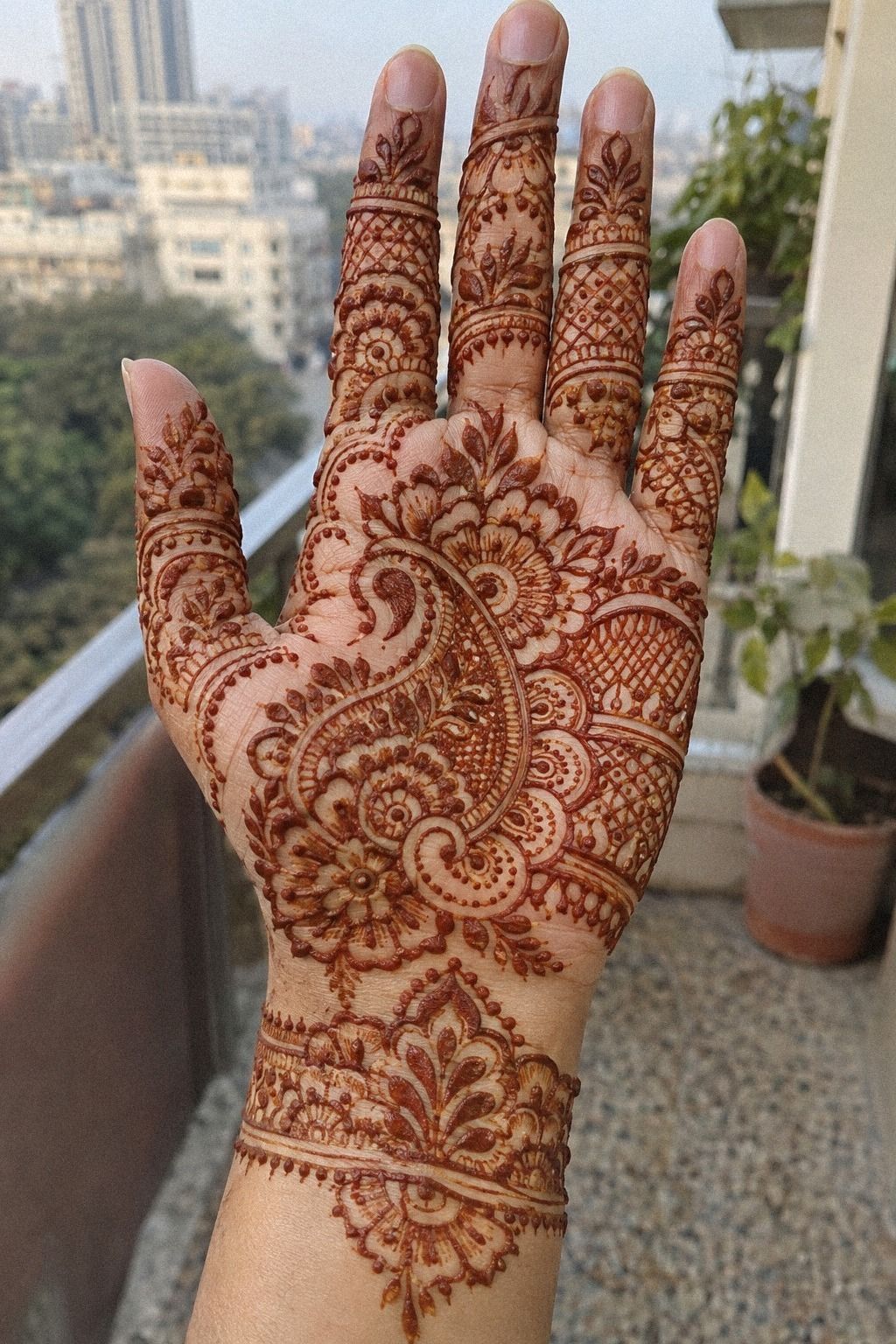
Bold traditional motifs make a strong statement through larger flowers, confident borders, and darker filled sections. Bold traditional motifs work best when one symbol leads and the smaller marks support it.
10Negative Space Or Dense Coverage?
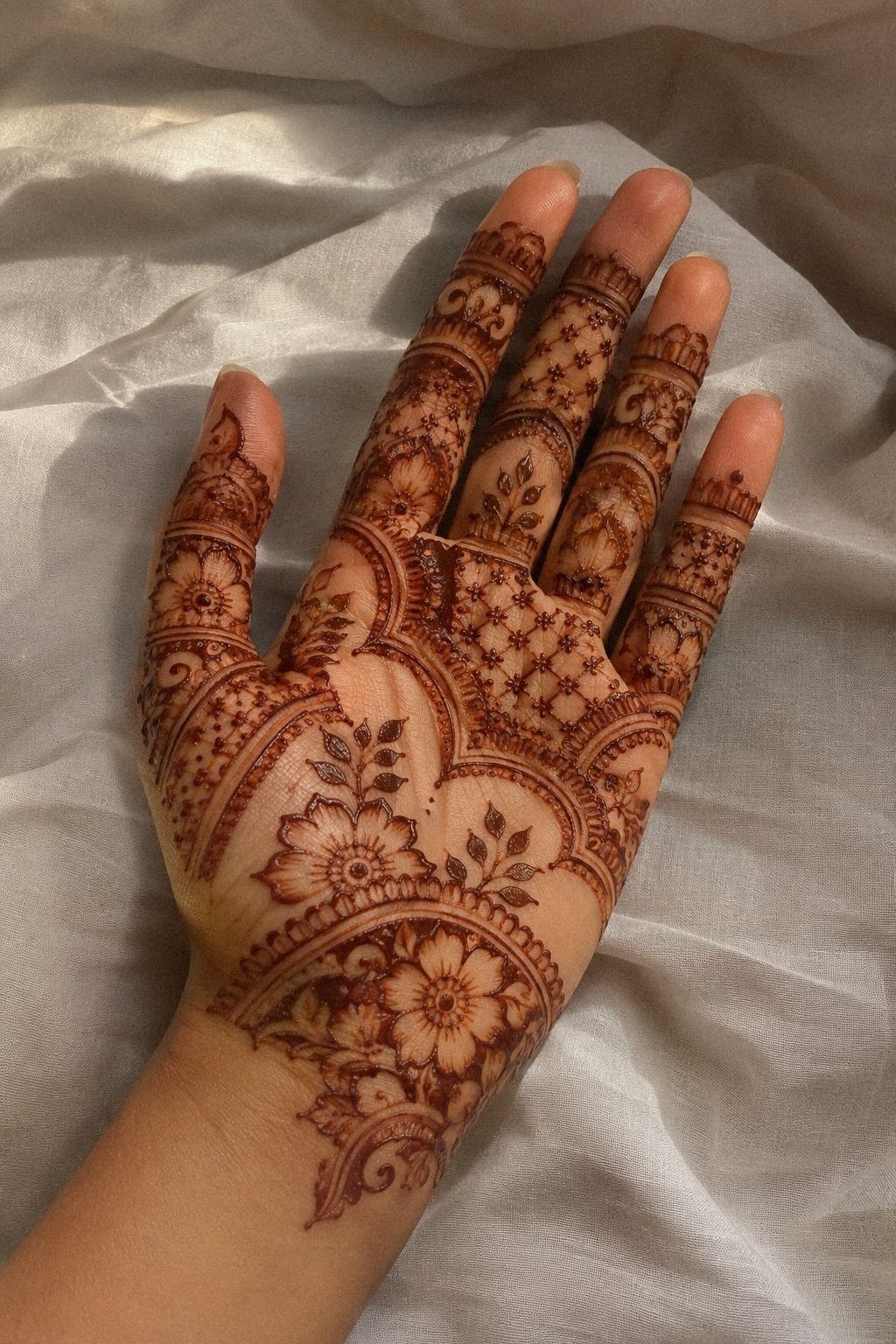
Negative space makes the reddish-brown paste look sharper by giving every motif a clear border. A negative-space lattice can surround a flower while open channels separate the fingers from the palm.
Ask your artist to plan the empty areas before adding the main forms. The design will look more polished when those spaces have a deliberate width instead of appearing wherever the cone happened to stop.
You’ll see more depth when the darkest elements sit beside untouched skin. I’d choose this approach over dense coverage if you want the pattern to stay readable in bright outdoor light. It feels minimal, sleek, and quietly daring.
The style also gives your hands visual breathing room during a long celebration. Your palms won’t look overloaded beside bright fabric, jewelry, or ceremonial details. That contrast can make a simple ring or bracelet stand out beautifully!
Browse simple new bridal mehndi designs and royal Arabic mehndi designs. If you’re nervous that a royal design must be dense, this negative-space design may change your mind.
Negative space can also improve value when your booking includes several functions. The pattern remains readable as the stain softens, so you’re less likely to feel that the original cost went toward details nobody can see. A readable pattern gives you more lasting value.
11Personal Symbols Make Royal Mehndi Yours
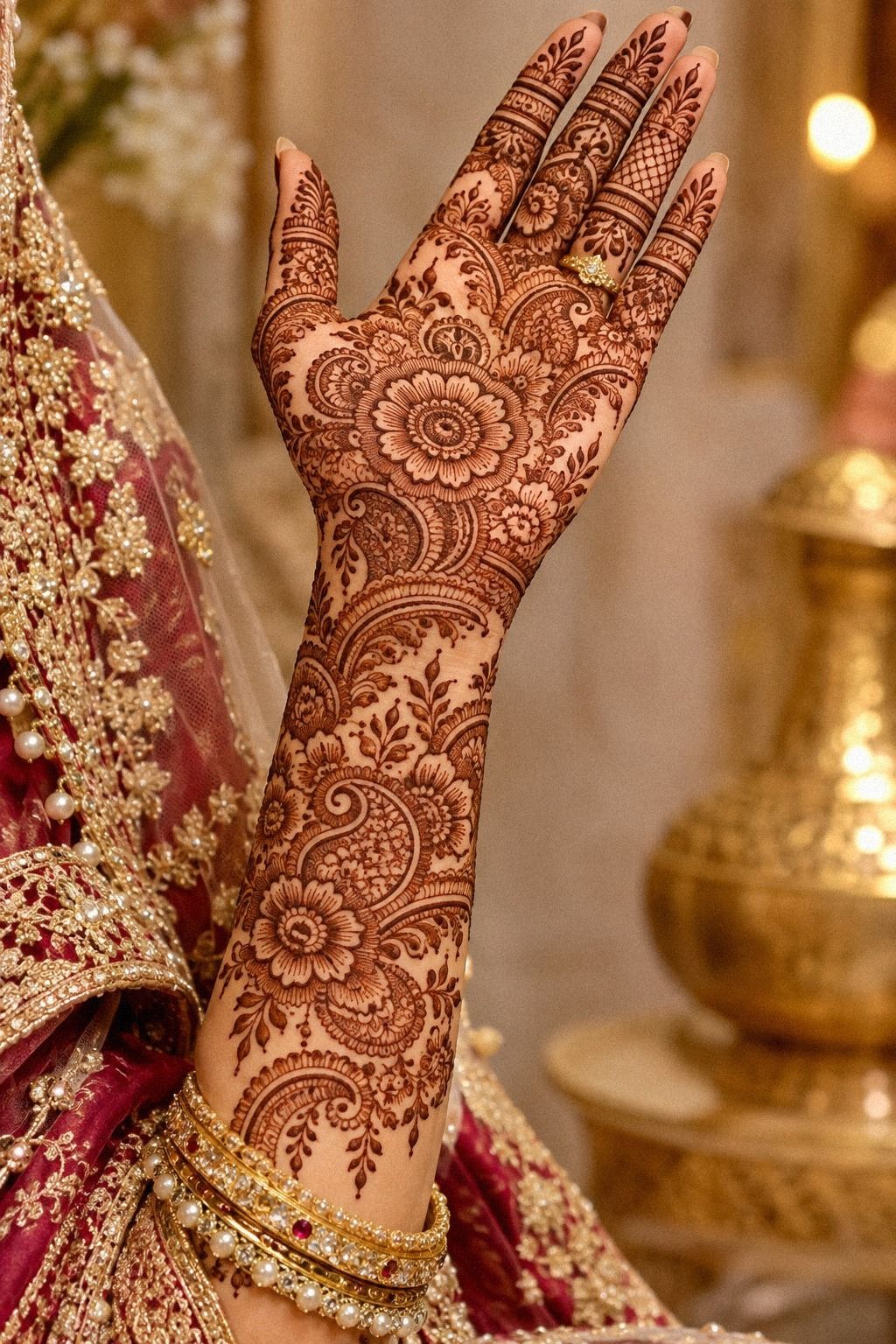
Personalized symbols give your feet, hands, or ankles a story that belongs to you. Personalized symbols might include initials, a floral emblem, a family reference, or a meaningful date.
Why Royal Bridal Mehndi Still Feels Personal
I’ve seen bridal mehndi become less meaningful when the bride tries to copy every reference she saves. The strongest designs usually make one clear decision, such as a peacock centerpiece, a portrait, or generous negative space. A personal design plan gives the rest of the pattern a clear direction.
Color also needs patience. Fresh paste can look bright orange when it first comes away, so you shouldn’t judge the final result immediately.
The stain often deepens on the second day, while the visible design can last about one to three weeks. The final stain deserves time.
I once watched someone scrub away dried paste because she thought the pale first color meant the application had failed. It hadn’t.
The richer reddish-brown tone arrived later, after she stopped interfering with it. Dried paste needs gentle handling.
The royal feeling doesn’t come from maximum coverage. It comes from contrast, symbolism, and a pattern that respects your natural shape. Pick the design that gives your eye a place to land, then make the detail unmistakably yours.
Your natural hand shape should guide the arrangement.
How To Compare Mehndi Value Before Booking
Start by comparing the full service, not only the quoted number. A written booking estimate should state the placement, coverage, number of people, application time, travel fee, and aftercare guidance.
Ask whether the design is custom or selected from a standard set. Custom work may cost more, but it can be worth it when you want a portrait, family symbol, or unusual combination of motifs. Custom mehndi work can offer stronger personal value.
Look at finished work after the stain has developed. Fresh paste can hide uneven spacing or weak contrast. Clear examples of matured color will help you judge whether the artist’s style matches your expectations.
Your budget should also include time. A very intricate design may require several hours of stillness. If you have multiple functions on the same day, a polished medium-detail design may give you better practical value for the application time involved.
What Changes The Cost Of Bridal Mehndi?
The main cost factors are coverage, detail, placement, travel, and the artist’s experience. A detailed bridal package will usually cost more than a simple back-hand design because it requires more time and paste.
These are planning ranges, not fixed promises. Location, timing, artist demand, and the complexity of your reference can change the final cost. Ask for the complete total before sending a deposit.
If your budget is limited, choose one hero area. Full back hands, one portrait, or a pair of mandalas can create a bold result without spreading the money across too many small details. One hero area keeps the design focused.
A Simple Booking Timeline For Wedding Functions
Book your artist after you know the dates, locations, and approximate coverage. A confirmed appointment message should include the function date, start time, placement, agreed cost, and any travel details.
For a major bridal application, leave enough time for the color development before the ceremony. Many brides prefer applying the paste one or two days ahead, depending on their schedule and the artist’s advice.
If you have several functions, choose a design that will remain readable as it softens. Negative space, bold motifs, and clear borders often age visually better than extremely tiny details.
Send references early, but don’t send twenty unrelated designs and expect one exact result. Select two or three examples that share the same mood. Your artist can then create a cohesive, expressive plan.
Aftercare That Protects The Stain
Keep the dried paste on for the time your artist recommends. Gentle paste removal is usually better than aggressive rubbing, especially when the pattern includes narrow fingers or delicate borders.
Avoid judging the color immediately after removal. The stain often develops from orange to reddish-brown stain over the next day. Warmth may help the color mature, but follow advice suited to your skin and paste.
Try to limit unnecessary soaking, harsh washing, and pool exposure while you want the stain to remain clear. Moisturize as advised, and don’t pick at the dried surface before removal.
Your stain will fade naturally over one to three weeks. Hands usually fade faster because they are washed more often, while ankles or feet may hold color differently. That gradual change is normal for mehndi.
The Questions Worth Answering First
How long do royal bridal mehndi designs last?
Royal bridal mehndi usually remains visible for one to three weeks, depending on your skin, placement, paste, and aftercare. Your color may look lighter at first and deepen on the second day. Gentle washing, moisturizing, and less pool exposure can help the pattern stay readable.
How do I choose a mehndi artist for a bridal design?
Review a portfolio showing clear finished patterns, not only fresh paste. Look for clean curves, balanced spacing, and experience with bridal coverage. You’ll also want a hygienic setup and an artist who can explain the cone ingredients, drying time, and aftercare before your appointment.
What color should royal bridal mehndi be?
Fresh paste often leaves an orange mark before developing into a richer reddish-brown stain. Your final color depends on the paste, skin, placement, and timing. Don’t compare your first-hour result with someone else’s second-day result, because the stages aren’t equivalent.
Can I wear royal bridal mehndi for several wedding functions?
Yes, you can plan it across several functions because the stain generally remains visible for one to three weeks. Schedule the application early enough for the color to deepen before the main ceremony, and choose a design that still reads clearly as it softens.
What should I do while the mehndi paste dries?
Keep your hands or feet still, avoid rubbing the paste against fabric, and follow your artist’s removal instructions after one to two hours of drying. You shouldn’t rush into washing or heavy activity if you want the pattern to develop evenly.
Which placement works best for a royal bridal design?
Back hands and palms give you high visibility, while feet and ankles create a more ceremonial, grounded placement. Your choice should match your clothing, jewelry, schedule, and comfort. Ask the artist to account for how the pattern will look while you’re standing and moving.
Where I’d Start First
If I had to pick one, I’d start with the negative-space design. The open skin keeps every reddish-brown motif readable beside bridal jewelry, and it won’t turn muddy beside ornate details. A negative-space bridal pattern offers strong value when you want a dramatic result with clear visual breathing room.
Pin the idea for later and compare it with these royal back hand mehndi designs. If your personal story matters more than coverage, add one meaningful symbol and let the rest of the design stay crisp, flowing, and unmistakably yours.