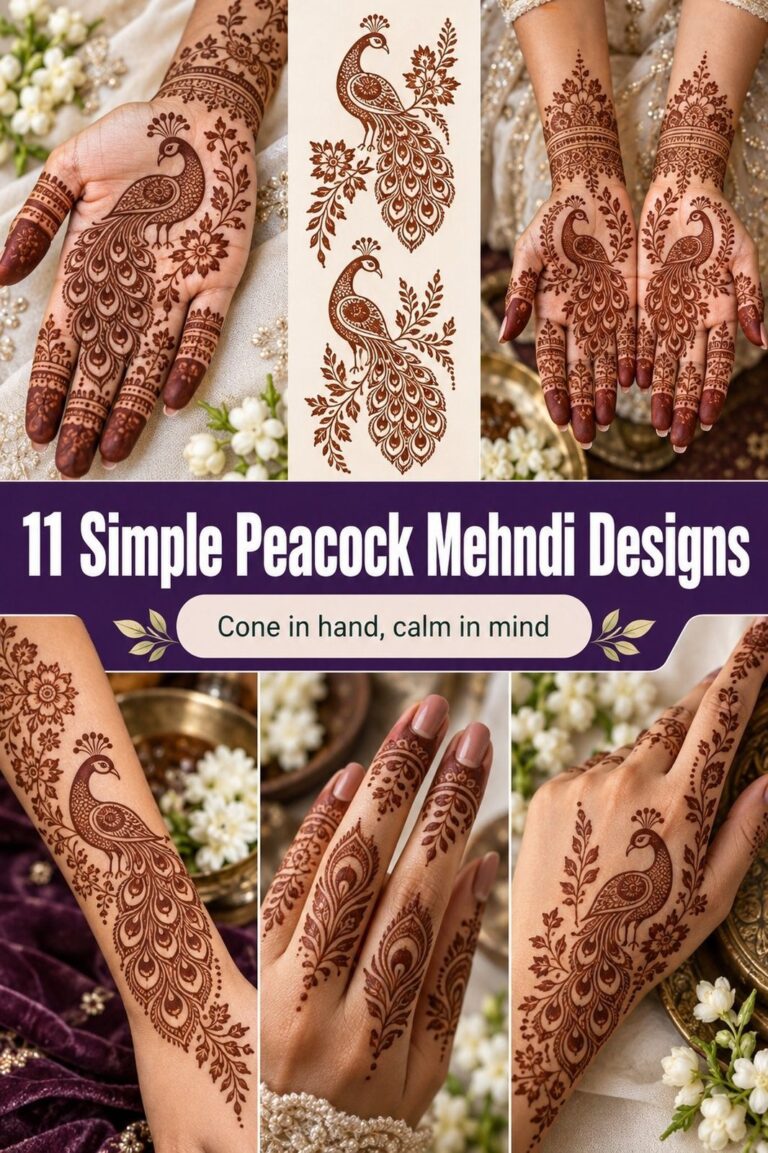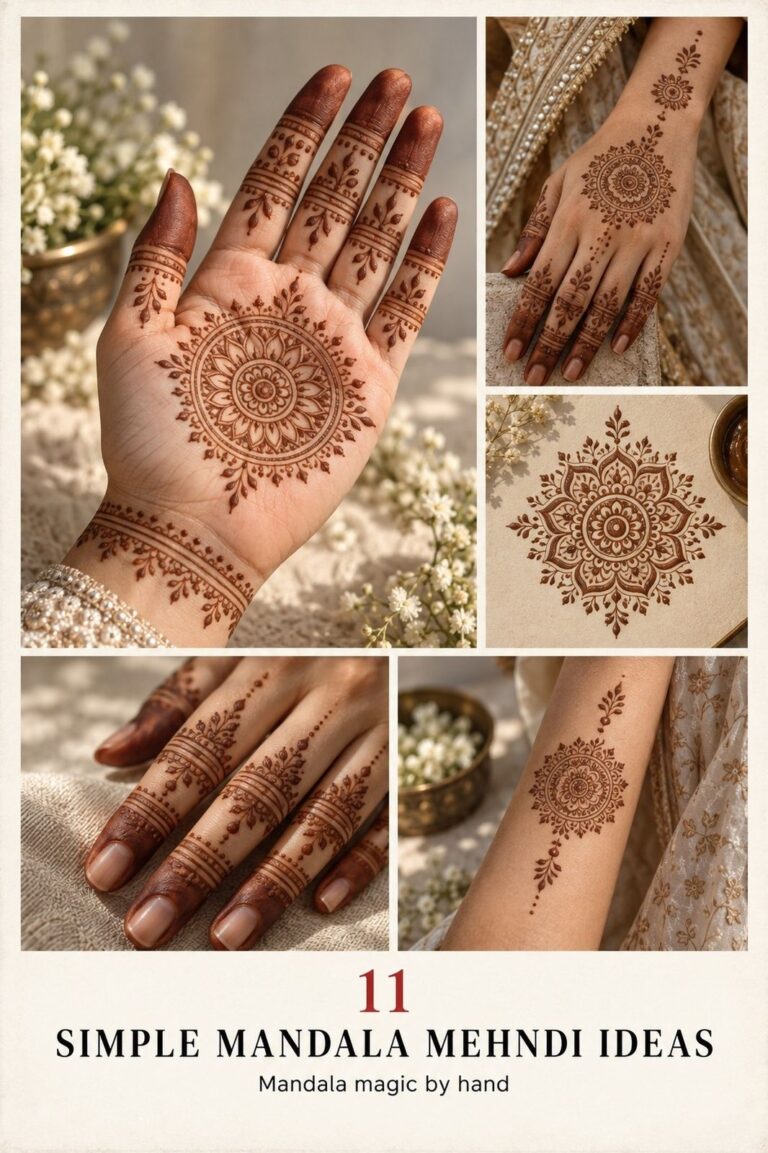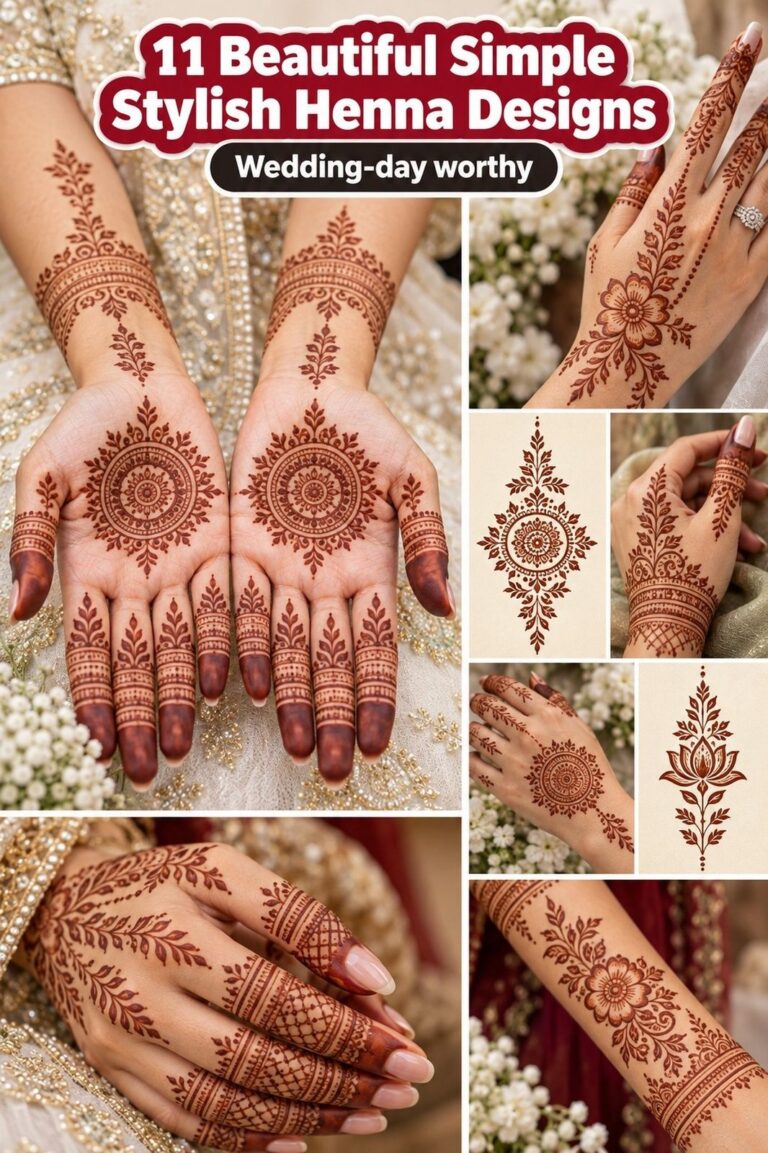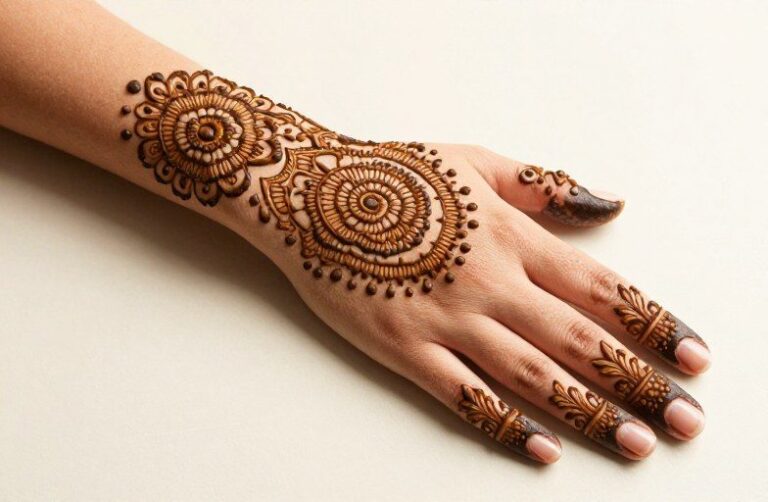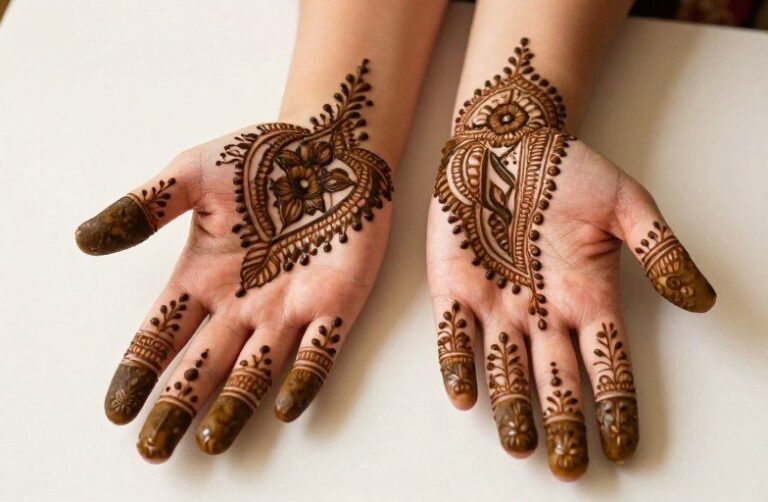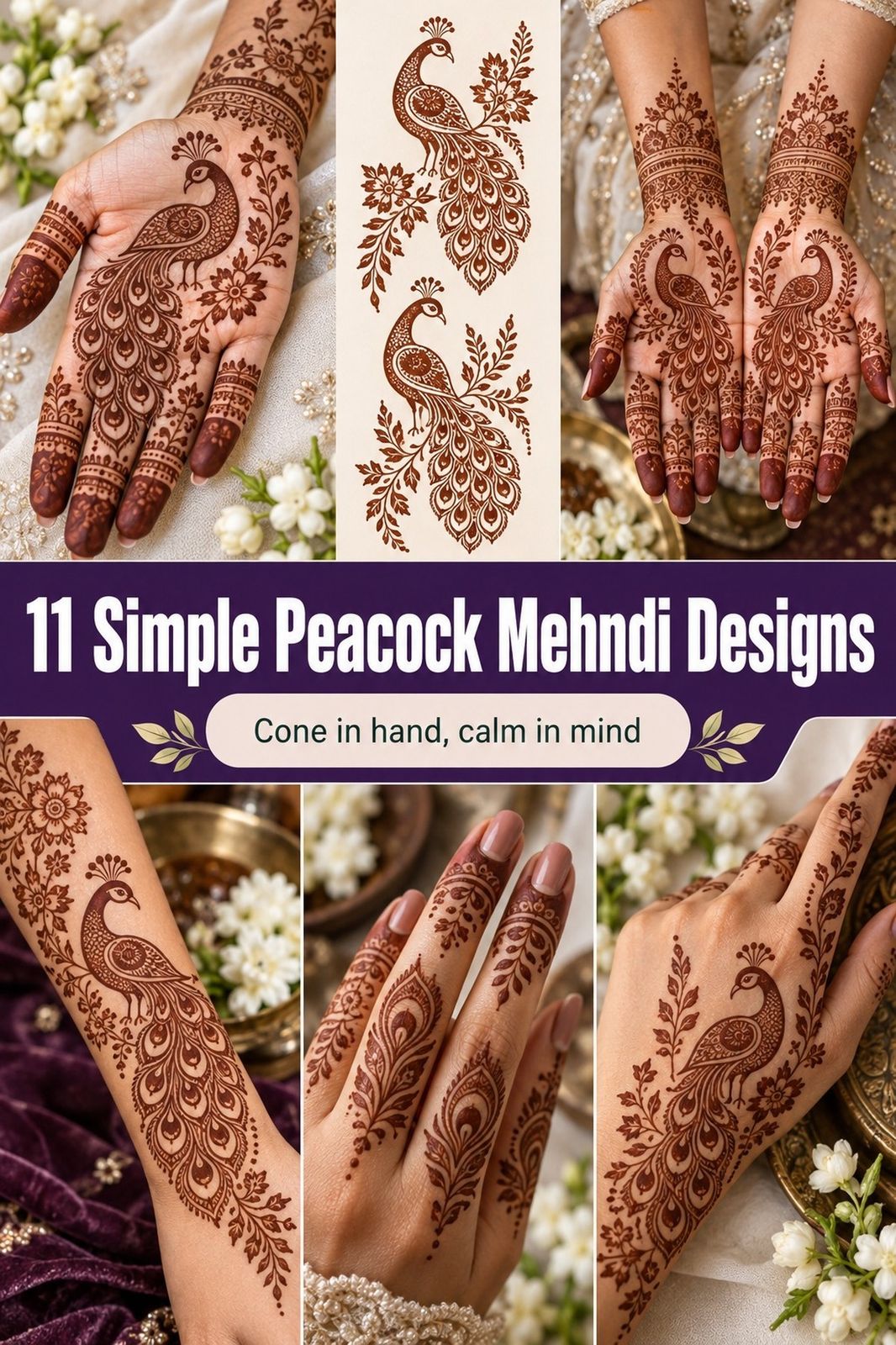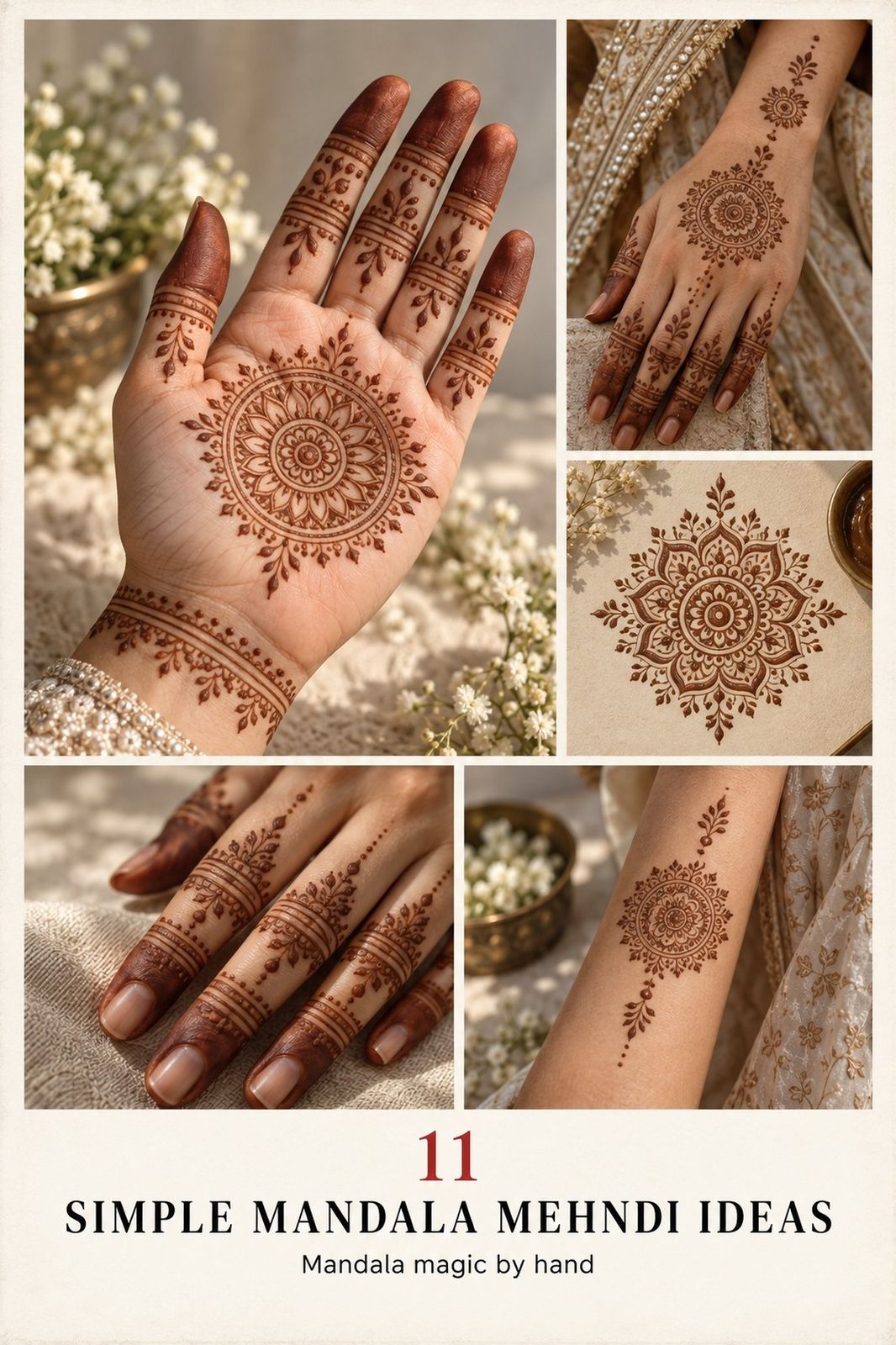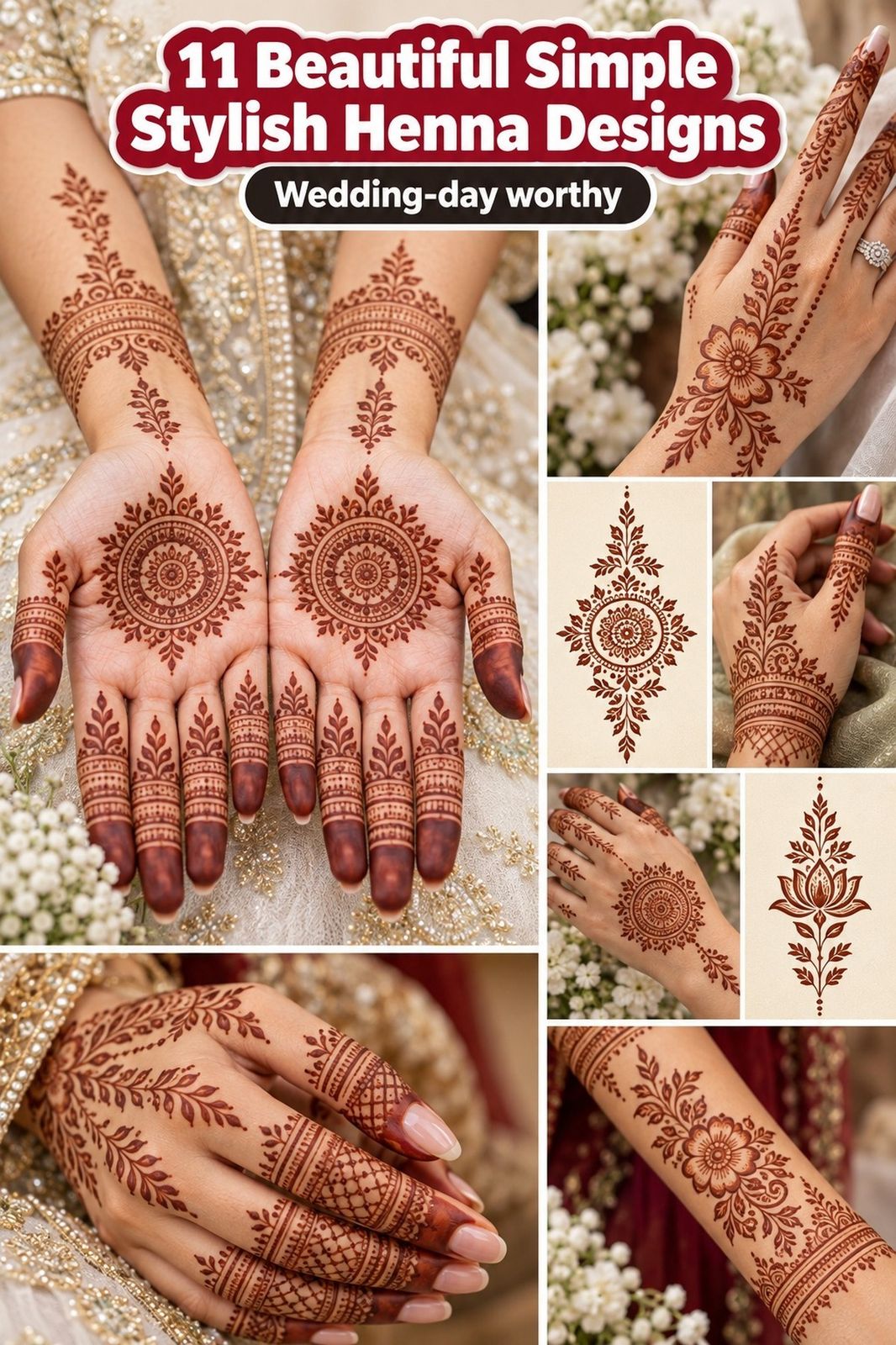
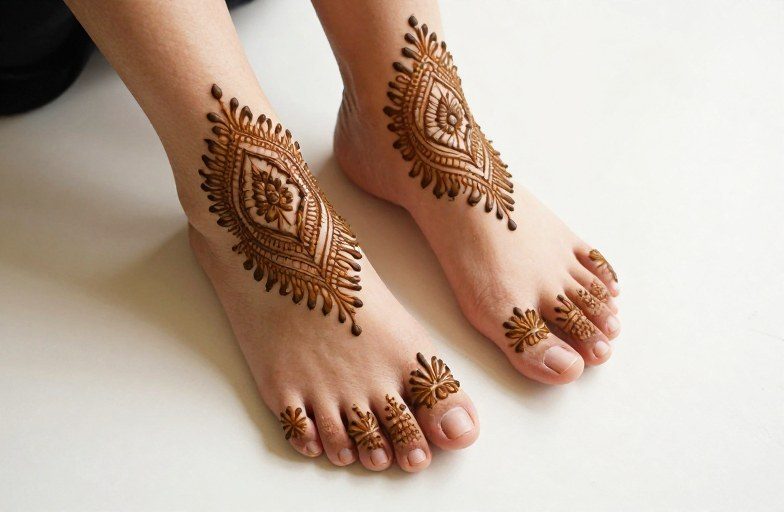
Foot mehndi designs strip away the dense, bridal-level complexity and leave something lighter: open linework, small repeats, and negative space that lets the foot’s shape do half the work. These aren’t copies of henna paste art. They’re tattoos that borrow the visual language, flowing vines, tiny florals, dot clusters, and fingertip-sized mandalas, and translate it into permanent ink that ages well on a tricky part of the body.
Size & Scale
The foot punishes large, saturated pieces. Skin here is thin, moves constantly, and sheds faster than your back or arm. Simple mehndi tattoos work because they stay small enough to hold their edges and avoid the blowout that turns crisp lines into fuzzy ropes.
Micro to Medium: The Sweet Spot
Think dime-sized lotus outlines on the top of the foot, single-line vines tracing from the big toe toward the ankle, or a quarter-scale mandala centered on the arch. These sizes heal flat, don’t scab heavily, and don’t require the aggressive touch-ups that palm-sized foot pieces often do. Line weight matters more than coverage. A design with three or four distinct line weights, a hairline for detail, a medium line for structure, maybe one bold accent, reads as finished even when it’s physically tiny.
When to Go Slightly Bigger
A band wrapping the ankle or a design spanning from the base of the toes to mid-foot can work if the pattern stays open. Dense black fill across the foot top almost always falls out or blurs within a few years. If you want presence without the maintenance, opt for scattered elements with skin between them rather than continuous coverage.
Best Placements
Not all foot real estate behaves the same. Some spots hold ink beautifully; others are touch-up magnets.
- Top of the foot (dorsal): The flattest, most stable canvas. Ideal for central mandalas, symmetrical vines, or toe-line accents. Avoid the area directly over tendons if you want crisp healing.
- Ankle and ankle bone: Classic placement that frames the foot. Works for cuff-style bands, small dangling elements, or wraparound patterns. The bone itself can be tender and may need a slightly heavier line to compensate for swelling during healing.
- Toes and toe knuckles: High fallout zone. Single dots, tiny teardrops, or minimal line accents work; anything more usually blurs within two to three years. Many artists won’t tattoo past the first knuckle.
- Sole and arch: Extremely rare for good reason. The skin is thick, callused, and regenerates rapidly. Any tattoo here fades fast and unevenly. Simple mehndi designs almost never belong on the sole.
- Side of the foot: Underrated placement for small vertical elements, single stems, small geometric ticks, or minimalist paisley shapes. Less sun exposure than the top, so colors stay truer longer.
Standout Design Ideas
Simple doesn’t mean generic. The best foot mehndi tattoos borrow from traditional henna motifs but adapt them for ink longevity and personal taste.
Negative-Space Mandalas
A mandala built from outline only, no fill, no solid petals, centers beautifully on the foot top or ankle. The negative space becomes part of the design. As the tattoo ages and softens, the shape remains readable because the eye fills in the pattern. Contrast this with solid mandalas, where aging turns dense black into gray mush and the geometry gets lost.
Single-Vine Flow
One continuous line starting at the big toe base, curving across the foot top, and terminating at the ankle or wrapping behind it. Add tiny leaves, dots, or micro-florals at intervals. This follows the foot’s natural length, elongates the appearance, and heals well because there’s no clustered ink in one spot. The line itself can vary from hair-thin to medium weight for rhythm.
Dot Clusters and Finger-Style Accents
Small groupings of three to seven dots, placed at the toe bases, along the foot’s outer edge, or framing a central motif. In henna, these fill gaps; in tattoo form, they become the main event. They’re fast to apply, heal cleanly, and create a rhythmic, musical quality that reads as intentional rather than sparse.
Popular Styles
The mehndi aesthetic crosses into several tattoo languages. Knowing which style you’re drawn to helps you find the right artist and communicate clearly.
- Fine-line ornamental: The closest to traditional henna. Uses single-needle or tight liner work, no shading, maximum precision. Best for small-scale detail and clean healing. Requires an artist with steady ornamental experience, not just general tattooing.
- Illustrative botanical: Slightly looser than strict ornamental, with hand-drawn quality to the vines and florals. May include minimal stipple shading or dotwork for texture. Feels more organic, less geometric.
- Minimalist geometric: Reduces mehndi curves to straight lines, hexagons, or simplified petal shapes. Often black-only, high contrast, extremely clean. Appeals if you want the reference without the decorative density.
- Blackwork with open pattern: Uses heavier line weight and occasional solid black accents but keeps the overall design airy. The black anchors the composition; the open skin keeps it light. Good for ankle bands or foot-top centers that need visual weight without density.
For First-Timers
Foot tattoos have a reputation, and some of it’s earned. Here’s what actually matters if this is your first.
Pain and Healing Reality
The foot top hurts more than most arm or leg placements, thin skin over bone and tendon, plus the psychological awareness that you’re tattooing a part you use constantly. The ankle bone itself is sharp and unpleasant. Most people find the outer foot or top-of-foot center more manageable than the inner ankle or toe areas. Healing takes two to three weeks of careful management: no closed shoes that rub, no soaking, no gym friction. Plan for sandals or open footwear, and choose your timing seasonally.
Artist Selection
Not every artist who does beautiful arm work wants to tattoo feet. The skin behaves differently, the positioning is awkward, and the touch-up rate is higher. Look for portfolios with healed foot or ankle pieces, not just fresh photos. Ask specifically about their experience with ornamental or fine-line work on feet, geometric precision requires different needle choices than bold traditional.
Matching & Pairing Ideas
Simple foot mehndi designs play well with others, if you’re building a collection or coordinating with someone.
For a paired set, both feet, identical or mirrored, keep the design vertically oriented so it reads correctly when your feet are together or apart. Horizontal ankle bands can look off-center if your stance shifts. Mirror-image vines (one flowing left, one right) create balance without rigid symmetry.
Connecting to existing leg work: a foot-top mandala can anchor a calf piece that extends downward, or an ankle band can serve as a transition between shin and foot. The key is line weight consistency. A heavy black calf piece needs a foot design with at least one bold element to hold the visual connection; an all-fine-line foot piece will look disconnected.
Coordinating with a partner or friend: choose a shared motif, same flower type, same dot rhythm, same geometric unit, but vary scale or placement. Identical tattoos on feet rarely look identical in real life due to foot shape differences. Shared language reads better than forced replication.
Final Word
Simple foot mehndi tattoos succeed when they respect the foot’s limitations and its natural geometry. The best designs don’t fight the thin skin or the constant motion; they work with them, using open patterns, varied line weights, and strategic placement to create something that looks intentional on day one and stays readable for years. Start small, prioritize healing, and choose an artist who understands that ornamental precision on a foot is a different skill than bold work on a shoulder. The result should feel like it belongs there, like it grew on your skin, not like it was stamped on top.
Frequently Asked Questions
How long does a simple foot mehndi tattoo usually last before needing a touch-up?
Most simple foot tattoos start softening around the three-to-five-year mark, with faster fading on the toe area and better retention on the ankle. Touch-ups are common every few years for foot work, especially if you wear closed shoes frequently or spend time in sun.
Can I get a foot tattoo if I have to wear work boots or heels daily?
Healing requires two to three weeks without rubbing footwear, so schedule around vacation time or seasons when you can wear open shoes. Long-term, constant friction from tight boots will accelerate fading on the top of the foot.
Do simple mehndi tattoos cost less than complex ones on the foot?
Usually, yes, less time in the chair means lower cost. However, some artists charge a minimum session fee regardless of size, and foot placements sometimes carry a small upcharge due to the difficulty of positioning and higher touch-up likelihood.
Will black ink in a simple mehndi design turn blue or green over time?
Quality black ink stays neutral charcoal or softens to dark gray. Color shifts to blue or green usually indicate low-quality pigment or improper mixing. Ask your artist about their black ink brand if you’re concerned about long-term color stability.