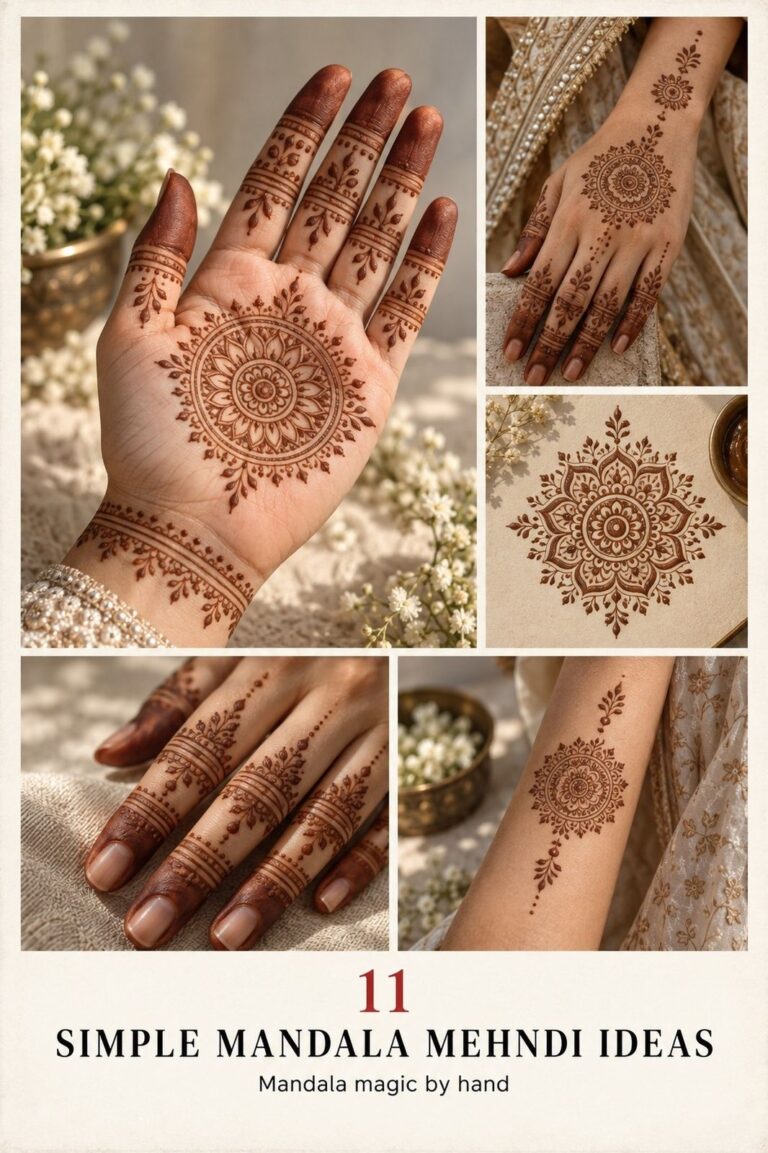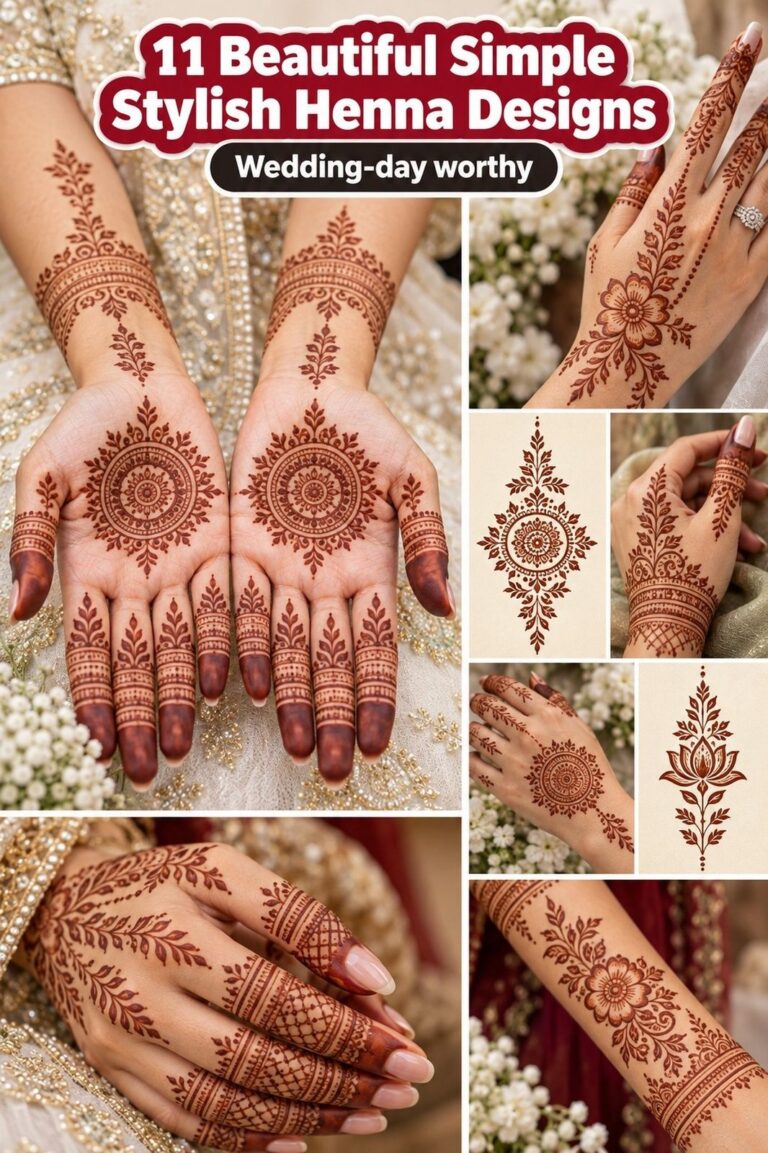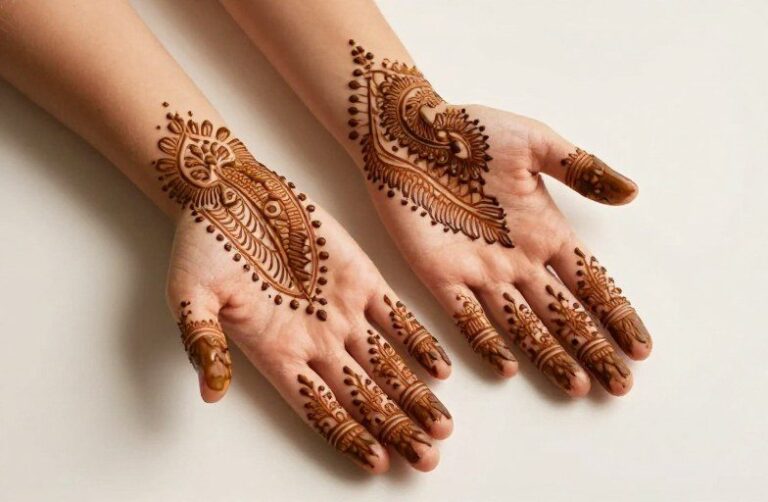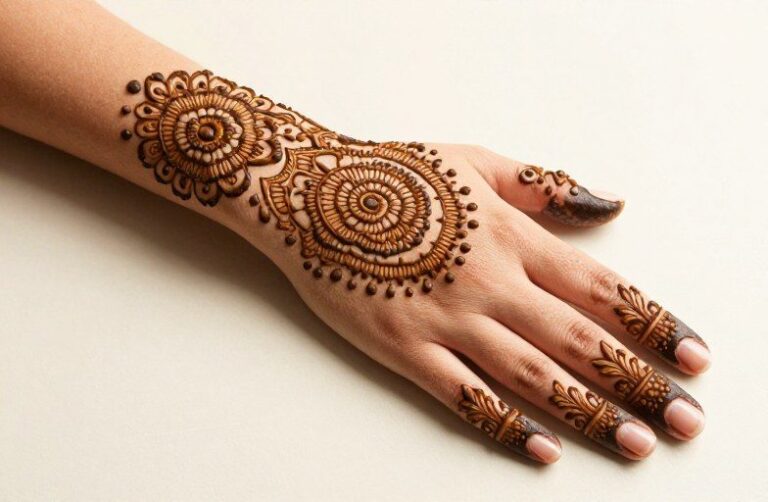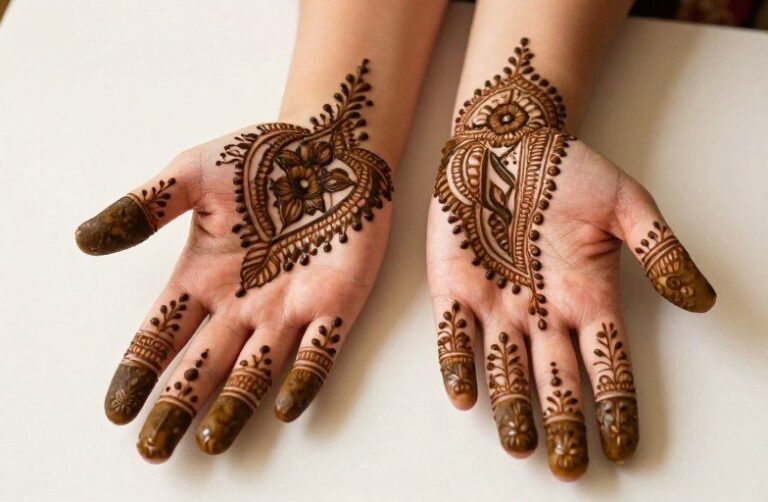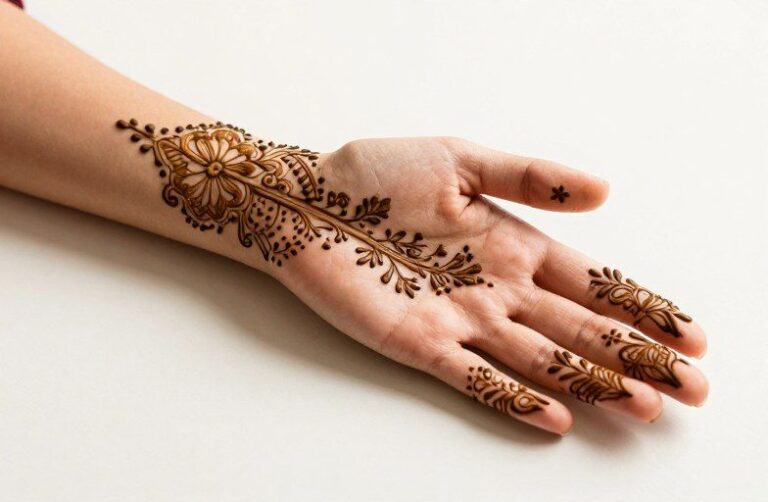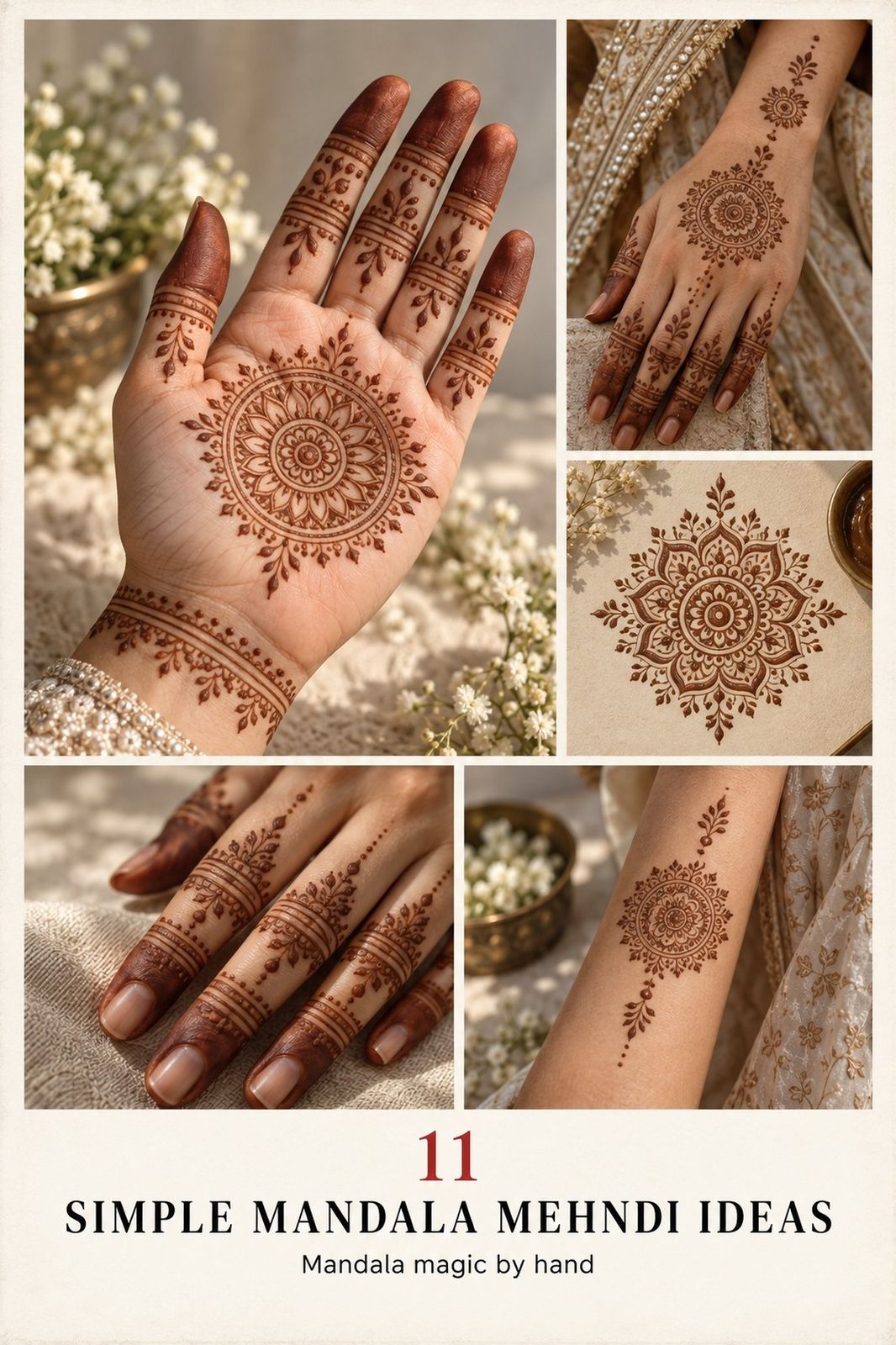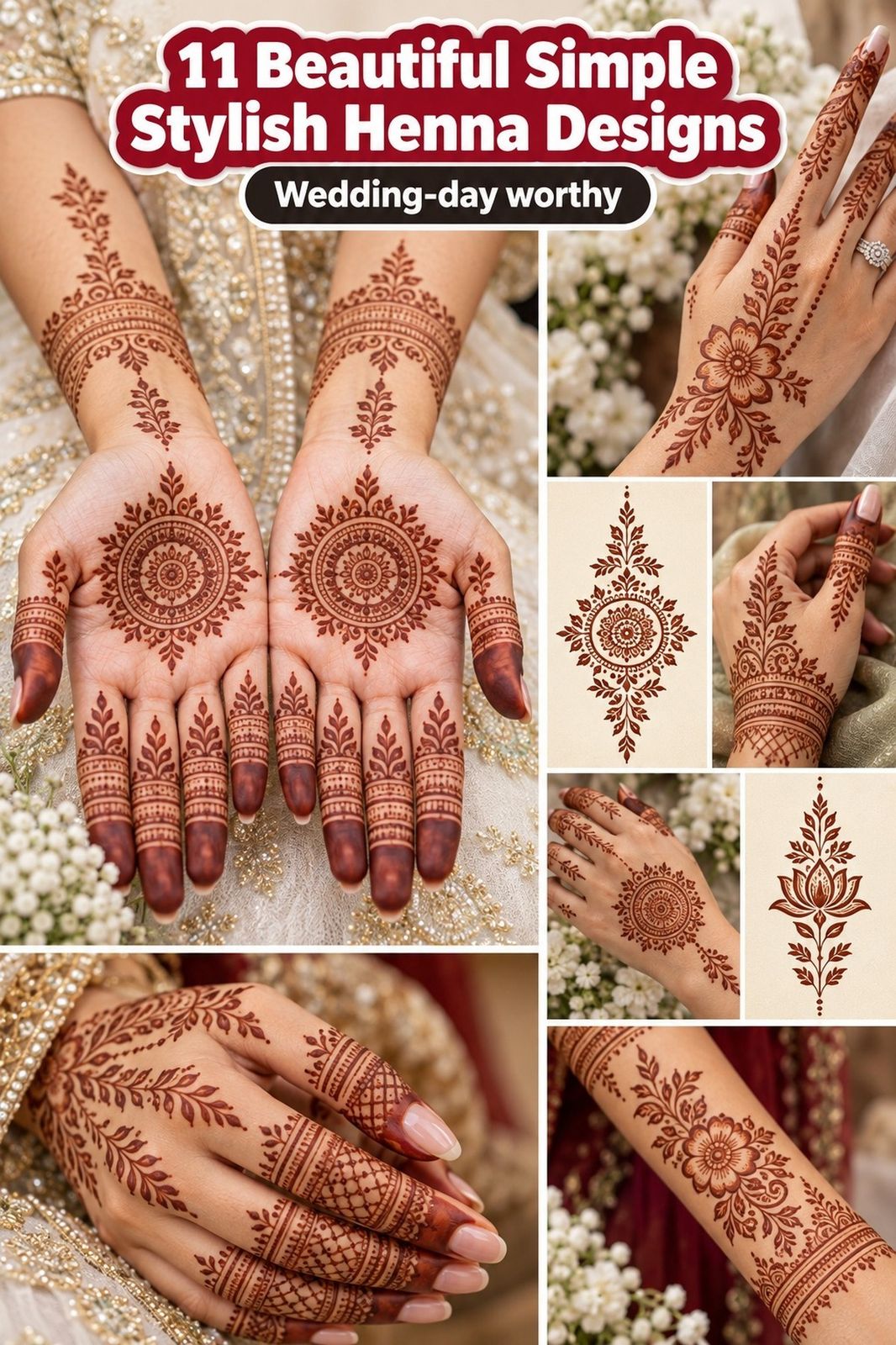
A “where can I get a henna tattoo near me” tattoo isn’t a specific design, it’s a phrase people search when they want temporary henna art, then later consider making it permanent. The meaning here is layered: henna itself symbolizes joy, celebration, and transition, while the search for it reflects a desire for beauty without lifelong commitment. Understanding this helps you decide if you want authentic henna, a permanent tattoo inspired by henna patterns, or both.
Color vs Black and Grey
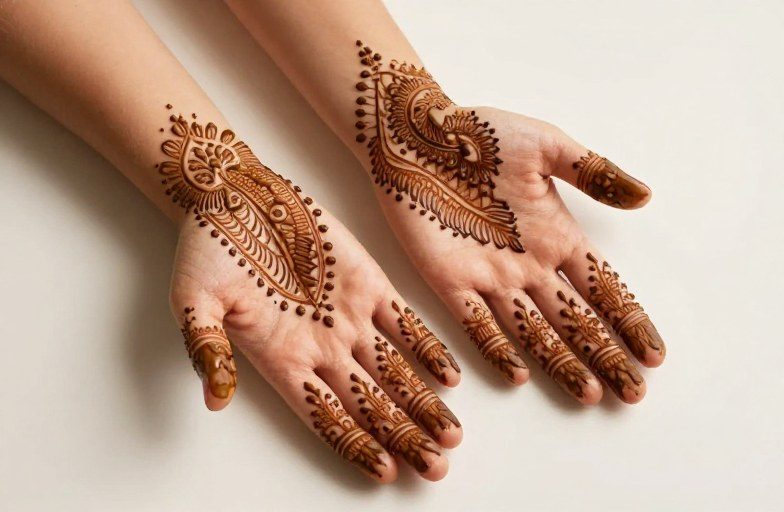
Real henna paste stains skin in shades of burnt orange, rust, and deep mahogany. That warm red-brown is the whole point, it’s the color of celebration in South Asian and Middle Eastern traditions. When tattoo artists translate henna patterns into permanent ink, they face a choice: replicate those earthy tones or strip the design to black and grey.
Color Henna-Style Tattoos
Red and brown inks can mimic henna’s natural stain, but they fade faster than black. Expect touch-ups every few years, especially on hands and feet where ink blurs quickest. Some artists use warm sepia tones that age into a convincing henna-like patina. Others go brighter with crimson or maroon, which shifts the meaning from “traditional” toward “decorative”, not worse, just different.
Black and Grey Adaptations
- Linework stays crisper longer than color, especially in dense geometric patterns
- Shading can suggest henna’s gradient from dark paste to faded stain
- Without warm tones, the cultural signal changes; read more as “pattern” than “ritual”
- Heals to a cool blue-grey on some skin tones, which distances it from henna’s warmth
Black and grey suits someone who loves the visual language of henna but doesn’t claim the cultural practice. It’s honest work if done with that understanding.
Common Variations & Styles
Henna patterns aren’t random, they’re regional vocabularies. Knowing the styles helps you ask for what you actually want, not just “something like that.”
Indian/Pakistani Mehndi
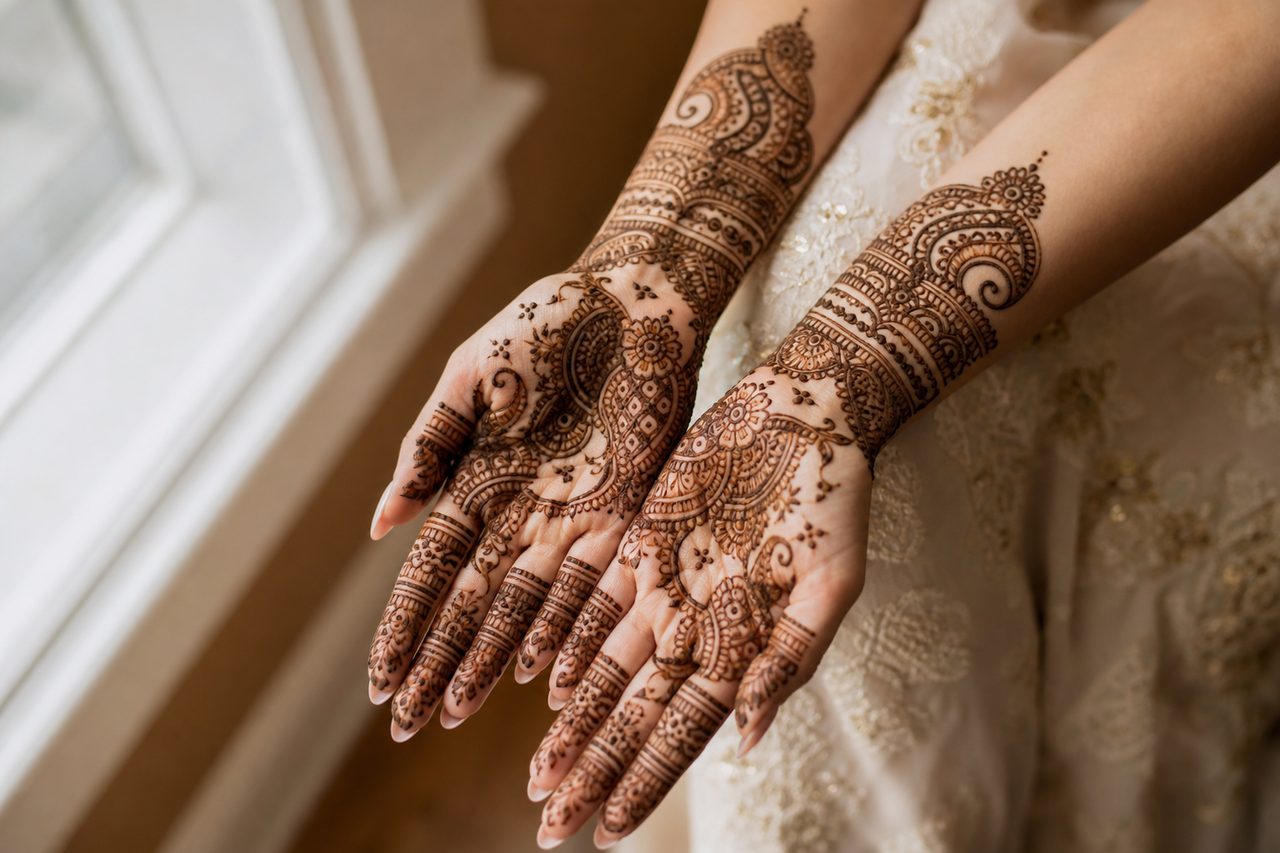
Dense, full-coverage designs with paisleys, peacocks, and floral nets covering palms and feet. The fingertips go solid dark. In bridal mehndi, hidden initials or names get worked into the pattern for the groom to find. As a permanent tattoo, this reads as maximalist and celebratory. It needs large, flat areas, backs of hands, tops of feet, forearms, to breathe.
Arabic/Flowing Style
Negative space matters here. Bold floral vines trail from wrist to fingertip or ankle to toe, with skin showing between elements. Less crowded, more dramatic at a distance. Translates well to permanent tattoo because the open composition ages better than packed detail. Flows naturally along limbs, follows muscle structure.
North African/Moroccan
Geometric and architectural, diamonds, chevrons, tessellations that echo Islamic tilework. Often more symmetrical, sometimes purely abstract. Carries less “bridal” association, more protective or decorative intent. Works as permanent tattoo on shoulders, sternum, thighs where symmetry can be centered.
Religious & Spiritual Angles
Henna sits at a complicated intersection of religious practice, cultural tradition, and secular fashion. The paste itself isn’t sacred, but its use often marks sacred moments.
In Hindu weddings, mehndi is a pre-wedding ritual called the Mehndi ceremony. The darkness of the stain is said to predict marital happiness, darker means deeper love, though that’s folk belief, not doctrine. The practice is cultural, widely observed by Muslims and Christians from the same regions too.
Some Sufi traditions use henna to mark spiritual devotion, dyeing the palms as a sign of service. In parts of Africa, henna is applied before naming ceremonies or after someone returns from Hajj. The common thread is transition, henna marks thresholds, not static states.
As a permanent tattoo, carrying these patterns without the context can feel hollow or appropriative depending on the design and your relationship to the tradition. A generic vine? Probably fine. A specific bridal pattern from a community you’re not part of? Worth asking why you want it.
Mythology & Folklore
Henna’s origins are often linked to ancient Egypt, mummies show henna-dyed hair and nails. Some trace it to the Levant and Arabian Peninsula, where desert cooling properties made practical sense. The plant, Lawsonia inermis, grows across North Africa, the Middle East, and South Asia, so multiple origin stories coexist.
In Indian folklore, mehndi is associated with Shiva and Parvati, with the red color representing the blood of sacrifice transformed into beauty. Some stories say Parvati decorated herself with henna to win Shiva’s attention. These aren’t canonical religious texts but circulating folk narratives.
Arabic traditions sometimes mention henna as a gift from the Prophet Muhammad, though historical evidence for this is thin. More solid: henna appears in pre-Islamic poetry and early Islamic medical texts as a cooling, medicinal paste.
The “henna night” before weddings appears across cultures with variations. In Yemen, the groom’s family might apply henna; in Rajasthan, the bride’s female relatives gather for a night of singing and application. The folklore isn’t uniform, it localizes.
Best Placements
Henna traditionally goes where the stain shows but work doesn’t: palms, backs of hands, feet, ankles. These are also the worst places for permanent tattoo longevity. The paradox is real.
Traditional Locations
- Palms and soles: maximum stain from thick skin, but permanent ink fades fastest here due to constant regeneration
- Fingers and toes: classic, but small detail blurs within years; expect significant aging
- Backs of hands and tops of feet: the compromise, visible, stainable, and tattooable with reasonable longevity
Permanent Tattoo Adaptations
Forearms carry henna-style bands and cuffs well. The flat plane lets patterns wrap cleanly, and ink holds up for decades. Inner biceps work for larger pieces meant to echo a full bridal mehndi sleeve. Sternum and upper back suit symmetrical Moroccan-style geometry.
Avoid: ribcage sides (the pattern distorts with breathing), calves (the curve fights the flat aesthetic of most henna design). Wherever you place it, remember that fine lines, henna’s signature, spread and soften over time. Plan for slightly bolder execution than the temporary original.
History & Cultural Roots
Henna’s history is genuinely ancient but genuinely murky. Archaeological evidence shows use in the Eastern Mediterranean and Egypt around 1500 BCE, possibly earlier. The Ebers Papyrus, an Egyptian medical text from roughly 1550 BCE, mentions henna as a medicinal plant. How quickly it moved from medicine to decoration is unclear.
The practice spread through trade routes, henna’s value as a cooling agent in hot climates made it portable. By the early medieval period, it appears in Persian and Arabic poetry. The Mughal Empire in India (1526-1857) raised mehndi to courtly art, developing the elaborate regional styles still recognized today.
Colonialism and diaspora carried henna to the Caribbean, Africa, and eventually the West. The “henna tattoo” as temporary tourist art, often with synthetic “black henna” containing dangerous PPD chemicals, is a late 20th-century commercial development, not a traditional practice. Real henna is always some shade of brownish-red; black paste that stains quickly is a warning sign.
Searching “where can I get a henna tattoo near me” today yields two very different results: artists offering authentic, temporary natural henna, and tattoo shops offering permanent designs in henna style. The meanings diverge sharply. One is participation in a living tradition; the other is aesthetic reference. Both are valid if entered honestly.
Final Thoughts
The phrase on your skin, whether literal search text or the pattern it led you to, carries meaning about temporariness, about wanting beauty without permanence, about curiosity before commitment. If you make it permanent, that tension becomes the subject: the temporary made lasting, the borrowed made owned.
Choose your artist carefully. Henna-style tattooing demands line precision that mimics paste flow, symmetry that hand application forgives but machine work doesn’t, and cultural sensitivity that not every shop possesses. Look at portfolios for actual healed work, not fresh photos. Ask how they handle the line weight and spacing that lets these patterns age well. The best results come from artists who respect the source while making something that lives on your specific skin.
Frequently Asked Questions
What’s the difference between real henna and black henna at tourist shops?
Real henna paste is made from the Lawsonia inermis plant and stains skin in shades of orange-brown to deep mahogany. ‘Black henna’ often contains PPD, a hair dye chemical that can cause severe allergic reactions and permanent scarring. If the paste is black and stains quickly, it’s not traditional henna.
How long does a real henna stain last compared to a permanent tattoo?
Natural henna stains fade gradually over one to three weeks as skin exfoliates, with palms and soles holding color longest due to thicker skin. A permanent tattoo in henna style lasts indefinitely but will soften and shift over decades, especially in high-wear areas like hands and feet.
Is it culturally appropriate to get a permanent tattoo of henna-style patterns?
It depends on the specific design and your relationship to the tradition. Generic floral vines and geometric patterns are generally acceptable, while specific religious or bridal motifs from communities you don’t belong to may be seen as appropriation. Research the pattern’s origin and consider consulting artists from that tradition.
Why do henna-style tattoos on hands fade faster than other placements?
Hands and feet have the highest skin cell turnover rate on the body, plus constant friction from washing, gripping, and walking. Ink particles in these areas are carried away faster by the immune system. Fine linework, which characterizes henna patterns, is especially vulnerable to this accelerated fading.