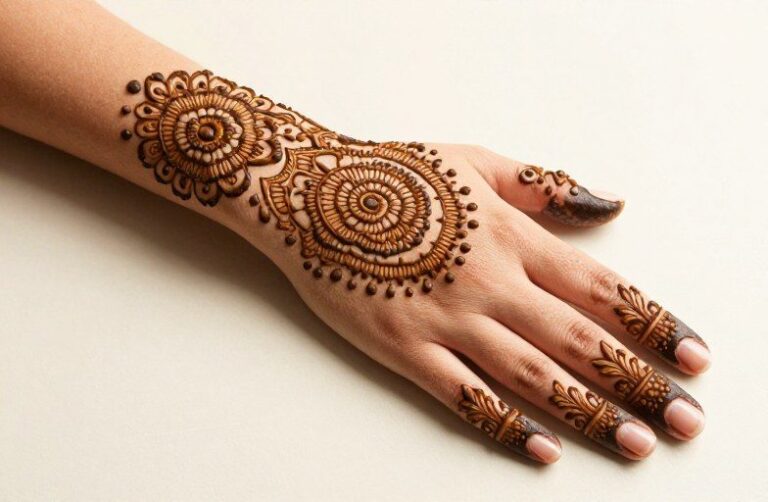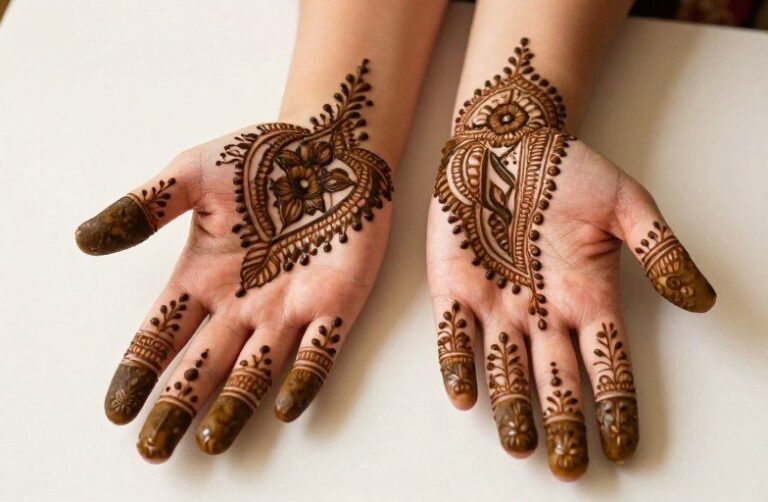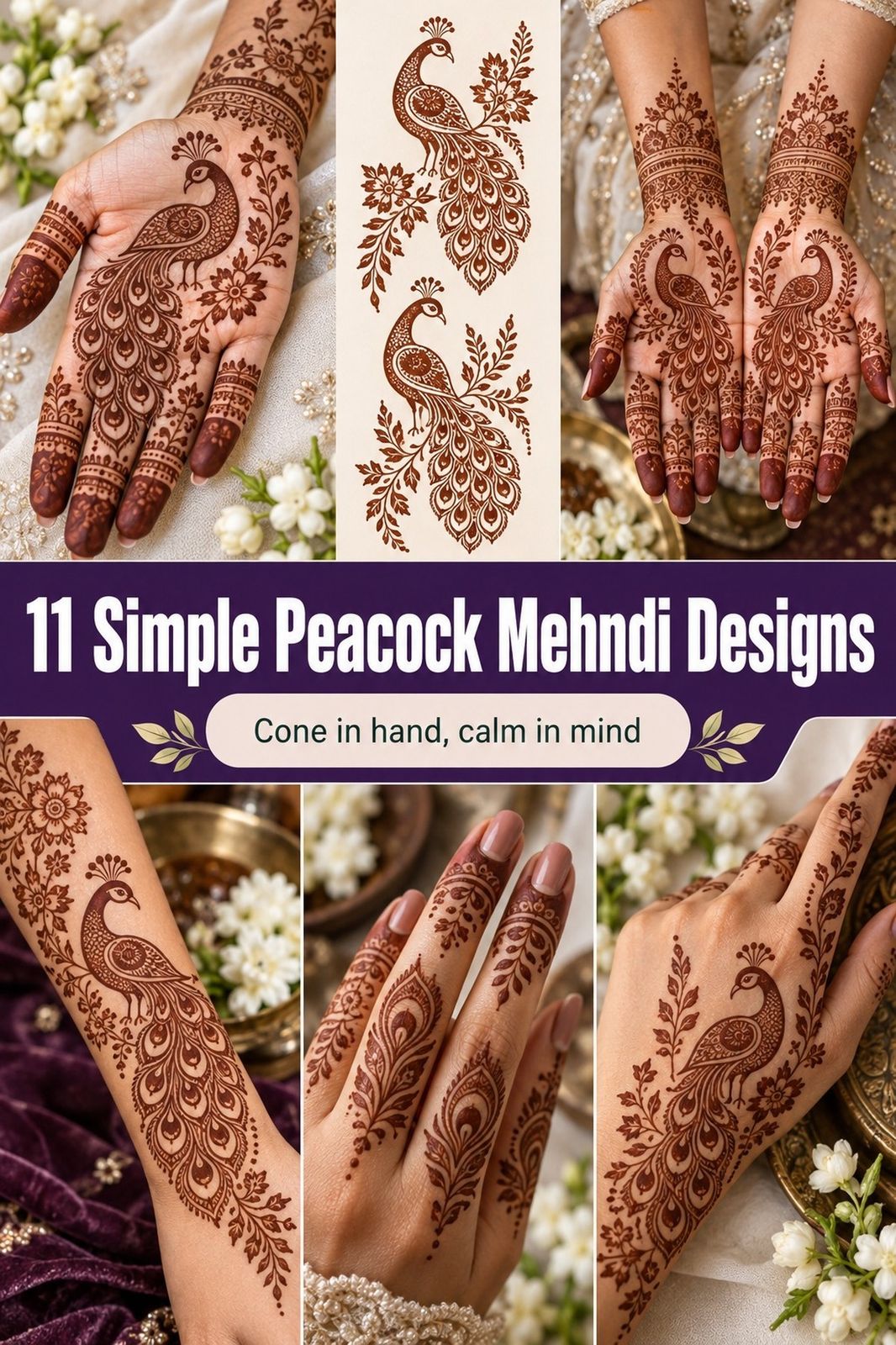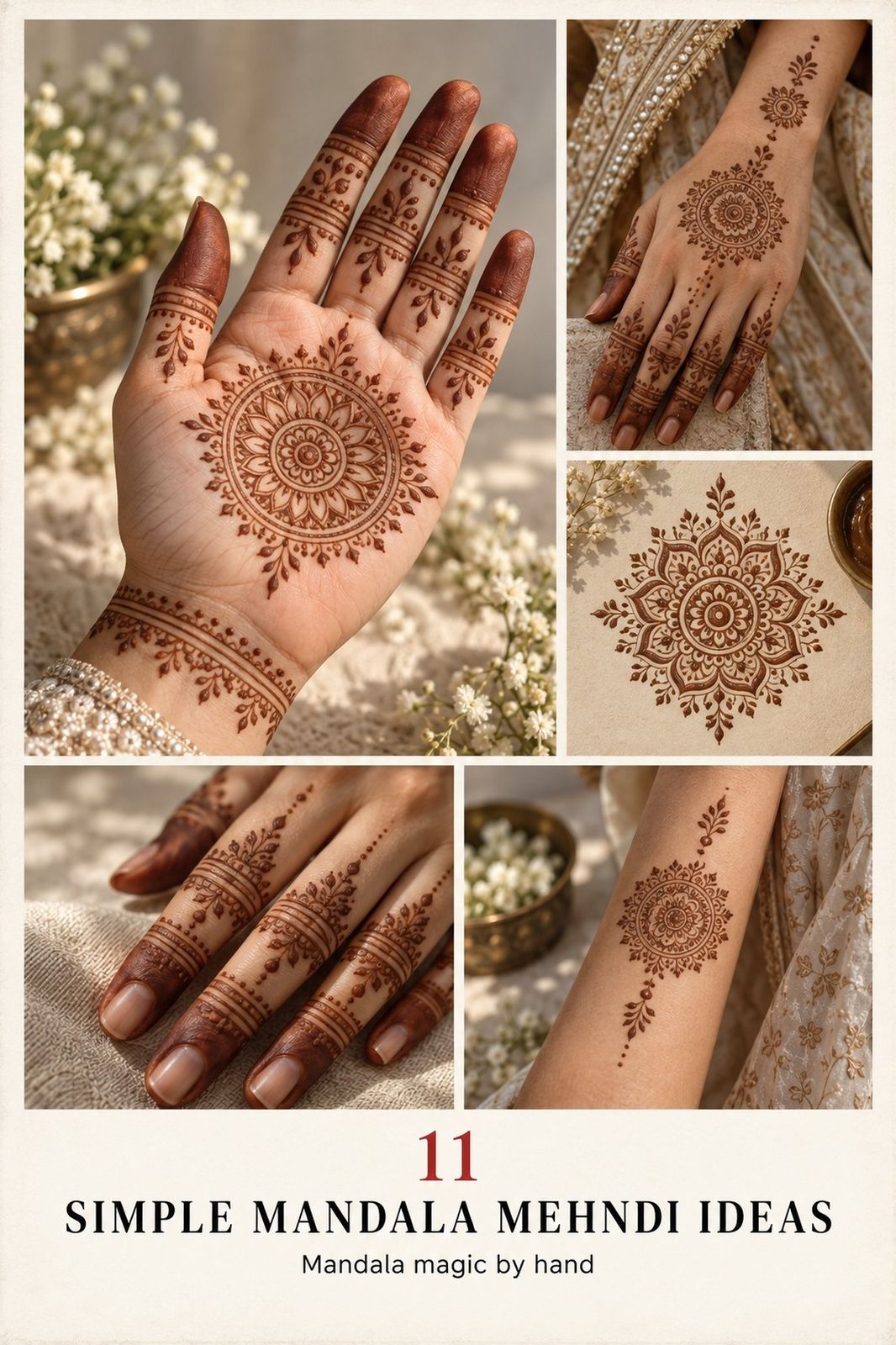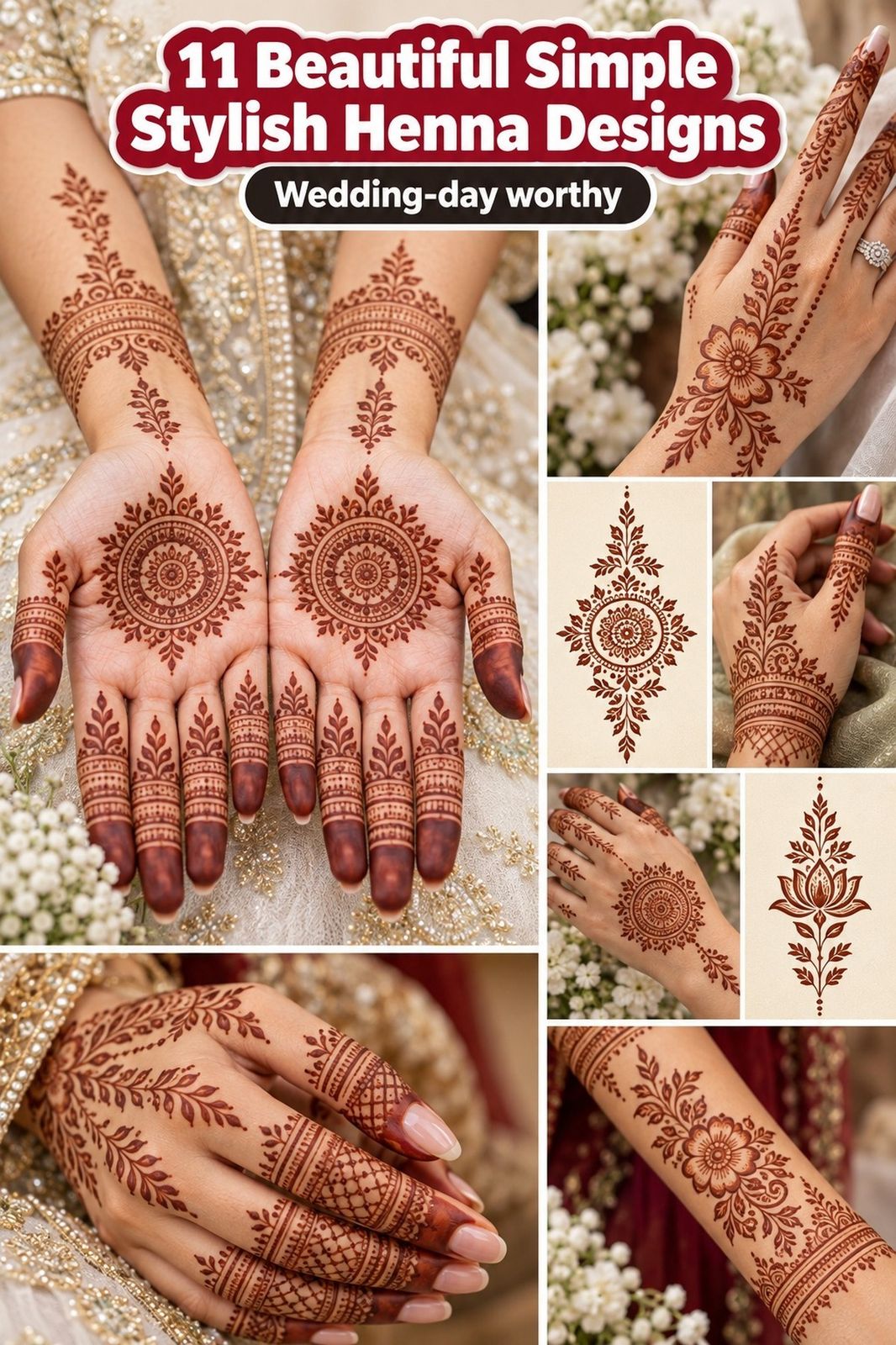
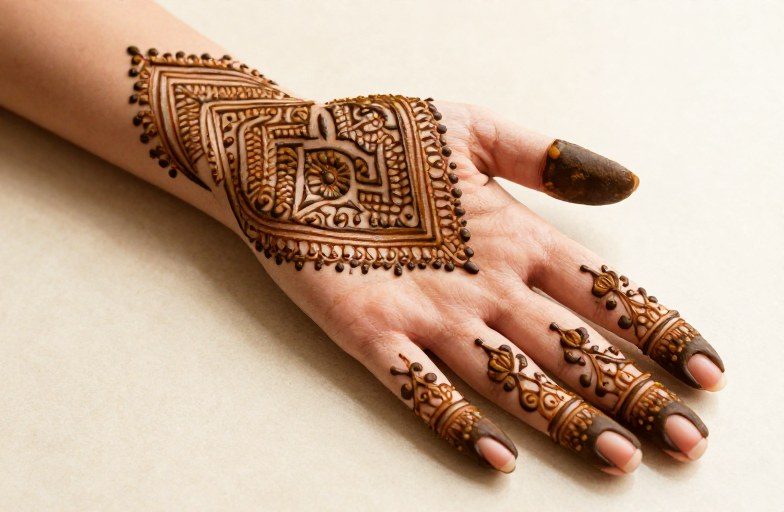
Geometric mehndi tattoos take the flowing, organic patterns of traditional henna and lock them into crisp, repeating structures, triangles, hexagons, mandala segments, and parallel lines that mirror across the skin. The result reads as both ancient and contemporary, decorative without being merely ornamental. If you’re considering one, the real questions are about placement density, line weight, and how those fine details will settle over years. This guide covers what actually matters.
Popular Styles
Strict Geometric Reinterpretations
These strip away the floral fillers common in traditional mehndi and reduce the design to pure geometry. Think nested diamonds running along a forearm, or a wrist cuff built from interlocking triangles with negative space between them. The lines are typically uniform in weight, no tapering, no soft edges. Artists often use a single needle or tight three-needle grouping to keep edges absolutely clean. The look is architectural, almost Islamic in its restraint, and it ages better than designs with heavy internal detail because there’s less to blur.
Hybrid Organic-Geometric
Here, traditional mehndi elements, paisley curves, lotus petals, vine trails, get contained within geometric frames or overlaid with dot grids and straight-line overlays. A paisley might sit inside a hexagon; a vine might terminate in a perfect triangle rather than curling freely. This style demands an artist who understands both traditions. The geometric elements provide structure, while the organic mehndi shapes keep it from feeling cold. Line weight variation becomes important: the frame lines are often heavier, the interior details lighter, so the composition holds together as the tattoo ages.
- Dotwork mandalas with mehndi-style petal divisions
- Bracelet bands combining repeating geometric units with small paisley accents
- Back pieces where a large central mandala radiates into corner ornaments
- Finger pieces using tiny triangles and lines in the style of henna fingertip staining
Best Placements
Flat Surfaces and Natural Cuffs
The forearm’s outer surface, the upper back between the shoulder blades, and the flat plane of the thigh all give geometric patterns room to read correctly. Curved areas like the bicep or calf can distort repeating shapes, though skilled artists compensate by subtly adjusting the geometry. Wrists and ankles work beautifully for band-style pieces because the tattoo naturally wraps a narrow point, mimicking how henna is traditionally applied. The top of the foot, another classic mehndi placement, works for geometric designs but requires accepting faster fade; foot skin regenerates quickly and takes ink unpredictably.
Finger and Hand Considerations
Traditional mehndi centers on the hands, but tattooing there is demanding. Finger skin is thin, prone to blowout, and sheds rapidly. Geometric designs on fingers need to be simple, single lines, small repeating shapes, nothing with fine internal spacing. The back of the hand offers more stability and can support a small mandala or geometric palm-center design. Expect touch-ups; this is simply the reality of hand tattoos regardless of style.
Color Choices
Authentic henna stains skin in reddish-brown tones, but mehndi-style tattoos are almost always executed in black ink. This isn’t a limitation. Black provides the contrast that makes geometric precision visible, and it ages to a softer blue-black or gray rather than the muddy green-brown that colored inks sometimes become.
For those wanting color reference, some artists add sparse red or burnt orange as accent dots or thin outlines, never as fill, which would read as patchy within months. White ink highlights, occasionally used in geometric work, are generally inadvisable; they yellow or disappear entirely within a few years. The strongest geometric mehndi tattoos rely on black density variation: solid black shapes against skin, thin lines against black fill, negative space as an active design element.
How to Personalize It
Scaling and Spacing Adjustments
Personalization in geometric mehndi rarely means adding a name or a symbol that breaks the pattern. Instead, it’s about proportion. A broader wrist might need a six-unit repeating band rather than four. Longer fingers suit elongated triangles; shorter ones need compressed shapes. The spacing between elements, how much skin shows through, is often adjusted to match your skin tone; darker skin can handle tighter spacing because the contrast between ink and skin is already strong, while lighter skin benefits from more negative space to prevent a muddy overall effect.
Incorporating Structural References
Some people bring architectural elements, tile patterns from a specific mosque, the geometry of a family home’s windows, the repeating unit from a textile. An artist can abstract these into a mehndi-compatible vocabulary. The key is starting with a real reference rather than asking for “something meaningful” and expecting the artist to invent significance. Bring photos, measurements, or fabric swatches. The translation into tattooable geometry is the artist’s job; providing the source material is yours.
Matching & Pairing Ideas
Geometric mehndi tattoos pair exceptionally well with other styles when there’s a shared structural logic. A geometric forearm piece can terminate at the wrist, leaving room for a traditional watch-and-bracelet tattoo above it, or it can flow into a dotwork sleeve on the upper arm. The transition works because both styles rely on systematic repetition rather than pictorial realism.
For couples or close friends, matching geometric mehndi bands on the inner forearm or ankle work better than identical large pieces. The design should be a shared module, a specific triangle ratio, a repeating line count, that each person carries in a scale suited to their body. This reads as connected without being identical, which tends to look more sophisticated.
- Pair with ornamental blackwork sleeves that share line weight and density
- Contrast against a single realistic element (a bird, an eye) placed within a geometric frame
- Complement existing script tattoos by framing the text in a mehndi-style border
- Anchor larger pieces: a geometric mandala on the chest with mehndi-style extensions toward the shoulders
Size & Scale
Minimum Viable Detail
The smallest geometric mehndi tattoos that hold up are about two inches in their smallest dimension. Below that, the internal spacing between lines becomes too tight; what reads as crisp at fresh tattooing blurs into soft gray within two years. A finger band with lines spaced 1mm apart will look solid black in five years. For reference, a standard mehndi-style dot in a tattoo should be at least 2mm in diameter to remain distinct.
Large-Scale Compositions
At full back or thigh scale, geometric mehndi designs become environments rather than objects. The challenge shifts from line precision to overall balance, ensuring the densest areas don’t pool visually in one corner, that the eye travels through the piece rather than getting stuck. Large pieces often combine multiple geometric systems: a central mandala with radiating lines, corner ornaments in a different repeating unit, border patterns that frame the whole. The best large-scale work has breathing room; every inch doesn’t need to be filled. Skin itself becomes part of the design.
Key Takeaways
Geometric mehndi tattoos succeed when the geometry is rigorous and the mehndi influence is restrained, reference, not replication. Prioritize clean line work over dense detail, especially in smaller pieces. Black ink on flat, stable skin gives the longest-lasting results. Personalize through proportion and structural reference rather than symbolic add-ons. And accept that hand and foot placements, while traditional to henna culture, require more maintenance as tattoos. The best result comes from finding an artist whose portfolio shows both geometric precision and ornamental fluency, then giving them a real visual reference to translate into your specific piece.
Frequently Asked Questions
How long do fine-line geometric mehndi tattoos last before blurring?
Fine lines in geometric tattoos typically hold crisp edges for five to eight years, depending on placement and sun exposure. Areas with thin skin or frequent movement, like fingers and wrists, blur faster. Wider line spacing and slightly heavier weight extend readability significantly.
Can a geometric mehndi tattoo look like actual henna color?
No tattoo ink replicates the specific orange-brown stain of real henna, and attempting it with colored inks usually yields disappointing, uneven results. Black ink provides the clearest geometric definition and the most predictable aging.
What’s the most common mistake people make with placement?
Choosing highly curved areas like the inner bicep or side of the calf without adjusting the geometry. Repeating shapes need flat surfaces or careful distortion by the artist; otherwise the pattern appears warped when the body is at rest.
Do geometric mehndi tattoos work on darker skin tones?
Absolutely. The contrast between black ink and melanin-rich skin is often stronger than on very fair skin, making bold geometric shapes particularly striking. The main adjustment is spacing, tighter patterns can work beautifully, but artists may open up internal detail slightly to ensure clarity.