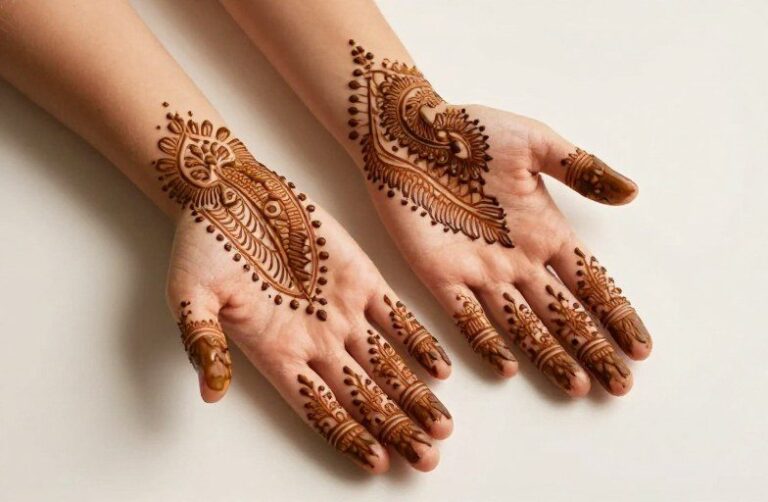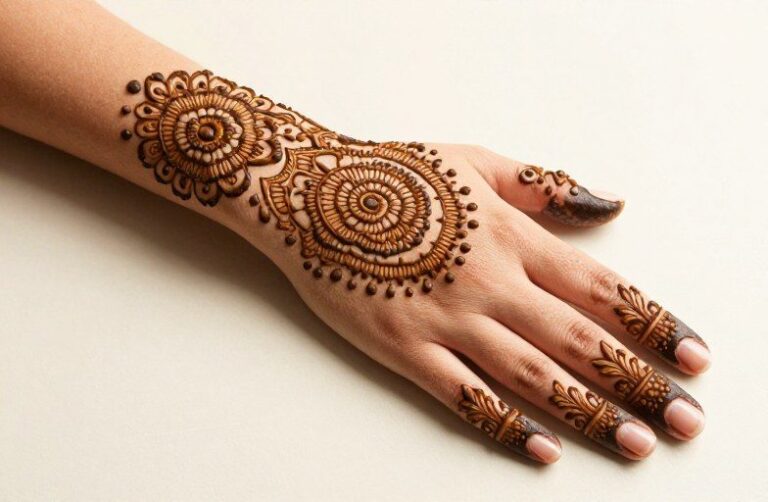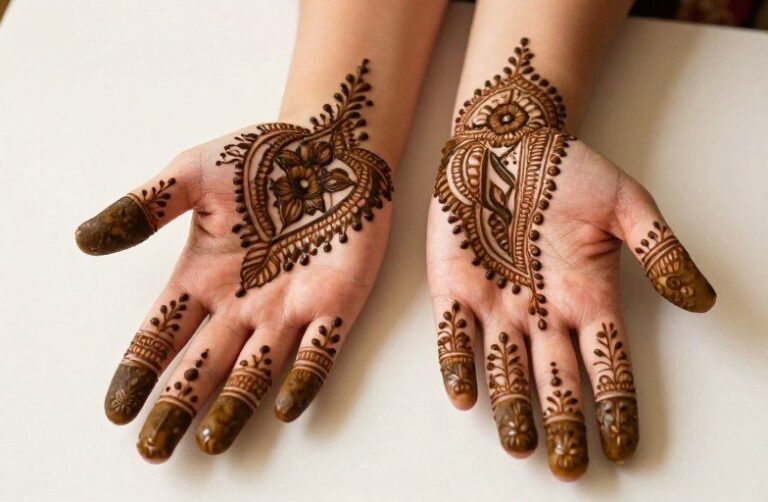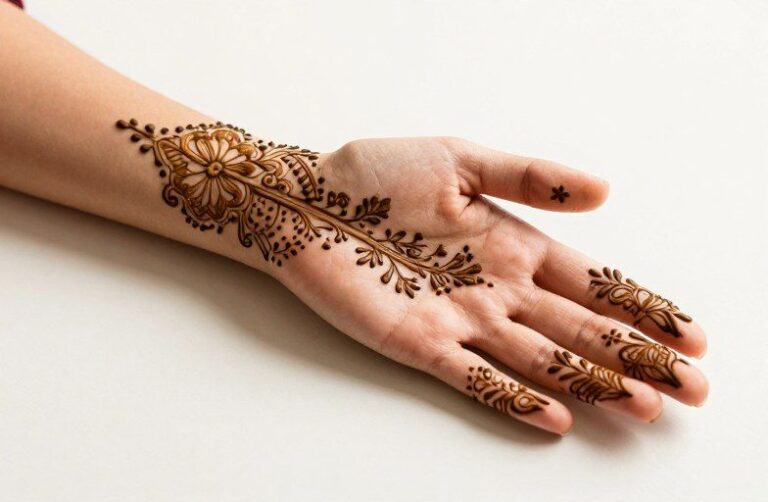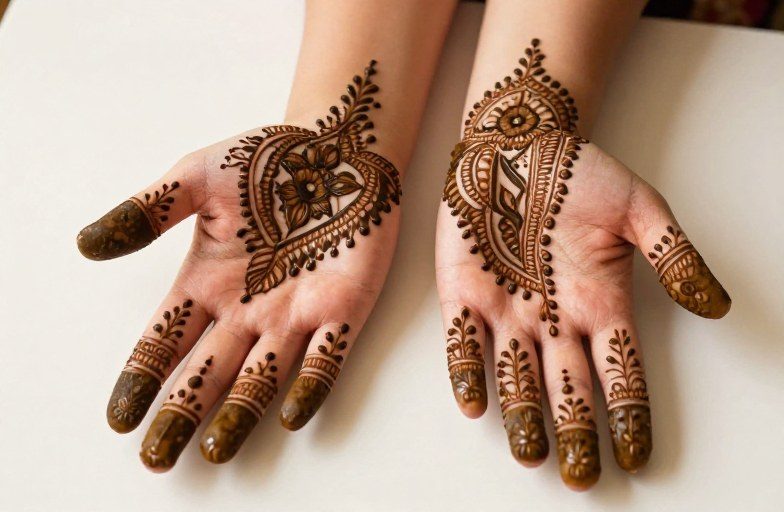
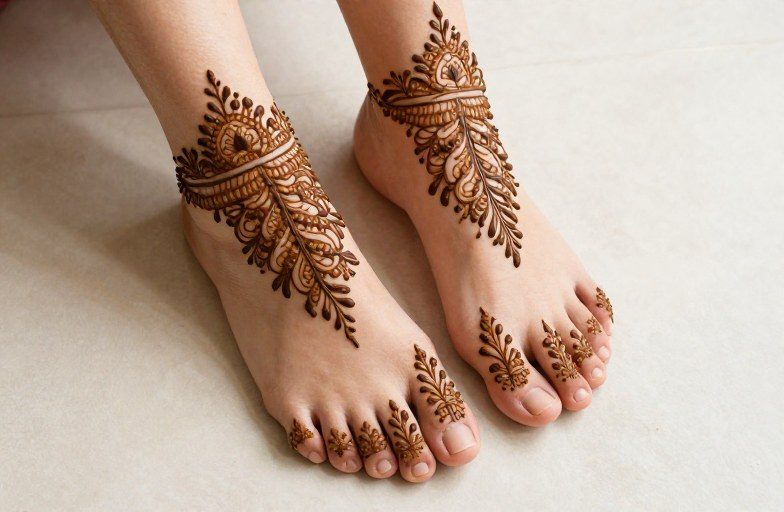
Feet carry the weight of every step, so the mehndi that adorns them ought to feel effortless, not overwhelming. Simple feet mehndi designs strip away the dense bridal density in favor of breathing room, fine lines that follow the arch, sparse florals that peek from sandals, toe-ring accents that circle the second digit like permanent jewelry. These designs suit daily wear, office-appropriate subtlety, or anyone who wants the tradition without the three-hour chair commitment. The skin on feet is thicker and calloused in spots, which changes how henna paste deposits and how long the stain lasts. Understanding that texture helps you choose patterns that age gracefully rather than blurring into muddy shapes.
Matching & Pairing Ideas
Coordinating With Hand Designs
When hands carry something minimal, a single vine winding from wrist to ring finger, feet can echo that language without mirroring it exactly. Try the same motif at a different scale: a delicate stem running from the base of the big toe back toward the ankle, or a small cluster of dots where the hand design has its focal flower. The connection reads intentional, not matchy-matchy. Avoid putting the identical full pattern on both hands and both feet; it photographs flat and feels costume-like. Instead, let one body part carry the bolder statement, the other the whisper.
Pairing With Jewelry and Footwear
Toe rings, anklets, and the cut of your sandals all interact with mehndi placement. A simple toe-ring design, a band of tiny dots or a slim geometric circle around the second toe, sits beautifully under actual metal rings. Anklets translate directly into henna: a single line with small dangling shapes, like teardrops or diamonds, positioned where a real chain would fall. For footwear, strappy sandals expose the top of the foot; a central vine running from toes toward ankle bone frames the straps rather than fighting them. Closed shoes or boots? Keep the design concentrated on toes and sides of the feet, areas that remain visible even in loafers or ankle boots.
Trending Variations
Geometric Minimalism
Straight lines, triangles, and small repeating shapes have moved from finger tattoos into mehndi vocabulary. A single horizontal band across the base of the toes, broken by tiny vertical ticks, reads modern and clean. Chevrons pointing toward the ankle create visual lift. These patterns stain more evenly than florals because the paste deposits uniformly in straight lines; the risk of patchy fading drops significantly. The trade-off is less organic flow, but for architectural tastes, that rigidity is the appeal.
Negative Space Florals
Rather than filling every petal, artists leave gaps, skin showing through the center of a flower, or stems that exist only as implied connections between scattered blooms. On feet, where the stain can go patchy near the heel and outer edge, negative space forgives imperfection. A single open rose on the top of the foot, with two leaves and nothing else, holds more visual power than a crowded garden. The trend draws from Scandinavian textile design and Japanese ikebana: restraint as the statement itself.
Tips for Choosing
Foot skin varies dramatically by zone. The instep and top of the foot stain darkest and longest because the skin is thinner and warmer. The heel, sides, and toes, especially the pinky toe, take stain poorly due to thicker epidermis and constant friction from socks and shoes. Choose accordingly: place detailed work where it will show, use bolder lines where fading happens fast. A design that looks sparse on paper often reads correctly on skin; resist adding “just one more element.”
- Test your paste on a small patch near the ankle bone 48 hours before full application; foot skin reacts more often than hands.
- Schedule application for evening; feet need 6-8 hours undisturbed, and sleeping with paste on is easier than walking carefully all day.
- Exfoliate gently the day before, never the day of; fresh skin grabs stain unevenly.
- Wear open-toed shoes for the first 48 hours post-scrape; pressure and heat from enclosed footwear blur fresh lines.
Size and Placement Logic
A design that wraps the entire ankle reads as a bracelet; one that stops at the ankle bone reads as a top-of-foot piece. The visual weight changes completely. For maximum versatility, keep the main focal point between the toes and mid-foot, leaving the ankle bare. This allows anklets to be worn or removed without visual conflict. If you want ankle emphasis, a single fine band, no wider than a pencil line, creates elegance without the tribal-tattoo associations of thick black bands.
How to Personalize It
Incorporating Initials or Dates
Simple feet mehndi accommodates small text better than dense bridal patterns because the surrounding space lets the letters breathe. A partner’s initial tucked into a leaf’s vein, a wedding date rendered in tiny dots along a stem, these integrate without dominating. The foot’s limited real estate forces discipline; you get one or two such elements, not a paragraph. Position text where the skin is smoothest, typically the instep, for legibility that lasts through the stain’s life.
Cultural Motifs Made Personal
Paisleys, mango shapes, and lotus outlines carry South Asian heritage without requiring full traditional density. A single paisley on the outer edge of the foot, oriented so the curve follows the ankle’s natural line, nods to origin without quotation-marking it. For mixed-heritage wearers, combining one traditional motif with a geometric frame creates dialogue between lineages. The personalization lives in the combination, not in adding more elements.
For First-Timers
First mehndi on feet teaches you things hand application doesn’t. The paste feels colder, the drying takes longer because feet move less and circulate less blood, and the urge to scratch intensifies because socks and shoes tempt you. Start with a toe-focused design: a ring around one toe, a small dot pattern on the next, nothing that requires you to hold an awkward position for hours. You’ll learn how your skin takes stain, how your daily footwear affects wear, and whether the maintenance commitment suits your routine.
What to Expect During Application
Foot application requires sitting with legs extended or slightly bent, which gets uncomfortable. Bring a pillow for lower back support. The artist will likely ask you to flex and point periodically to check how the design settles against moving skin. Speak up if a position hurts; cramping distorts the final result. After the paste dries and flakes, the stain starts orange and deepens over 48 hours. Feet stain slower than hands, so patience matters more here.
Standout Design Ideas
The Single Vine
One continuous line starts at the base of the big toe, curves along the inner arch, and terminates at the ankle bone or continues as a small wrap. No leaves, no flowers, just the line varying slightly in weight, thicker at origin, hairline at finish. It follows the foot’s anatomy like a topographic map. On bare feet, it’s striking; in sandals, it frames the strap gap elegantly. The simplicity is the sophistication.
Scattered Constellation
Tiny dots of varying sizes, placed seemingly randomly across the top of the foot and toes, like stars. Some cluster, some stand alone. No connecting lines. The randomness requires careful placement to feel intentional rather than accidental; an experienced eye spaces them with breath between. This design ages exceptionally well because there’s no line work to blur, only dots that fade uniformly into softer halos.
Final Thoughts
Simple feet mehndi honors the form by not overloading it. The foot’s architecture, its arches, its tendons, its proportion to the leg, provides all the structure a design needs. What you add should converse with that structure, not compete against it. Start with less than you think you want; the skin’s response and your daily habits will teach you what you actually need. The best simple designs are the ones you stop noticing as decoration and start experiencing as part of how your foot exists in the world.
Frequently Asked Questions
How long does simple feet mehndi typically last compared to hand designs?
Foot mehndi usually fades faster, lasting five to ten days versus two weeks on hands, because foot skin is thicker and faces more friction from socks, shoes, and walking. Keeping feet out of enclosed footwear for the first two days helps extend the stain.
Can I get a simple feet design if I have calluses or rough skin?
Yes, but the artist should place detailed work away from heavily callused areas like the heel and outer edge, where stain deposits unevenly. Focus patterns on the instep and top of the foot for the most even, lasting color.
What’s the best time of day to apply feet mehndi?
Evening application works best because you can sleep with the paste on without needing to walk carefully or wear shoes, giving the stain maximum undisturbed development time overnight.
How do I keep the design from smudging while I sleep?
Wear loose cotton socks over the dried paste, or wrap feet lightly in tissue paper and secure with a soft bandage, tight enough to protect, loose enough to not press the pattern into distortion.