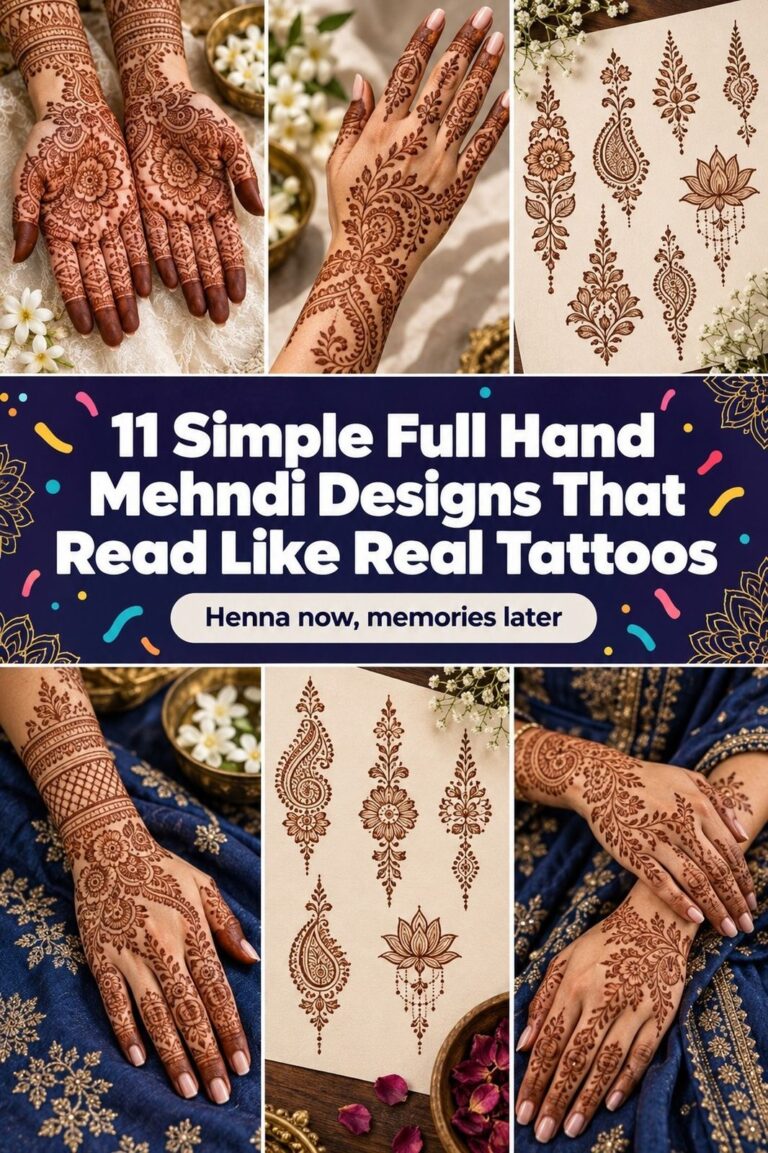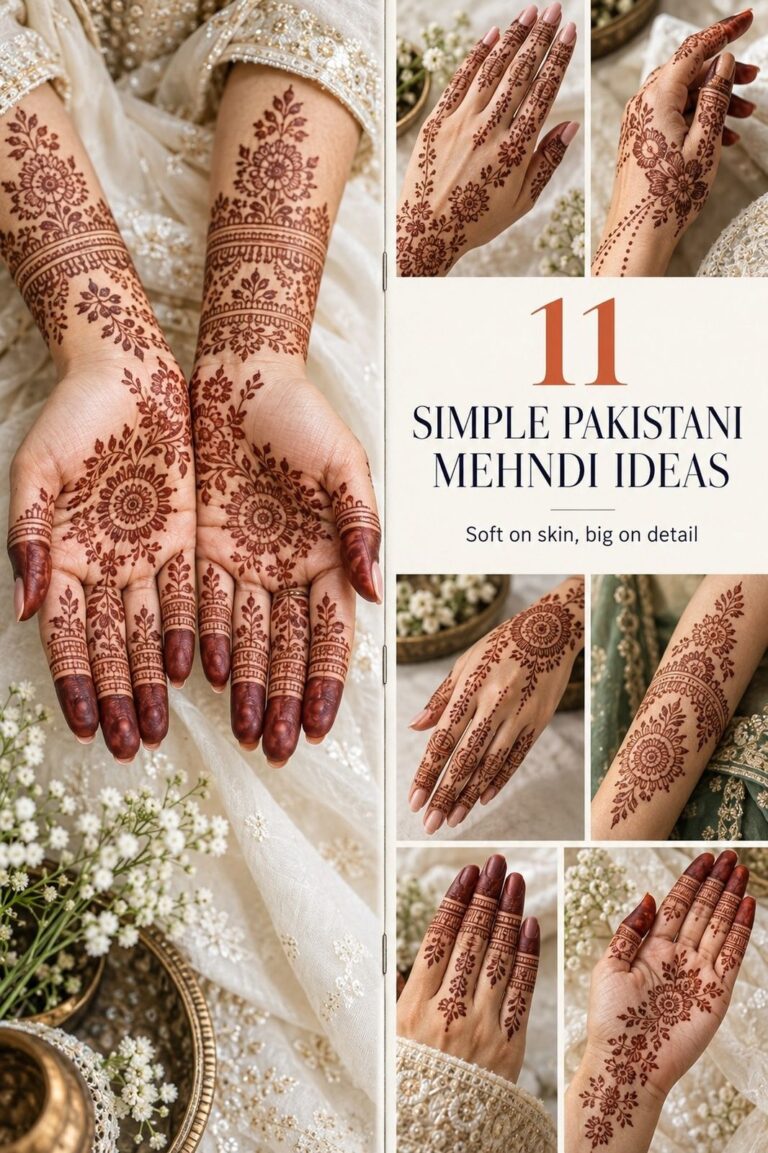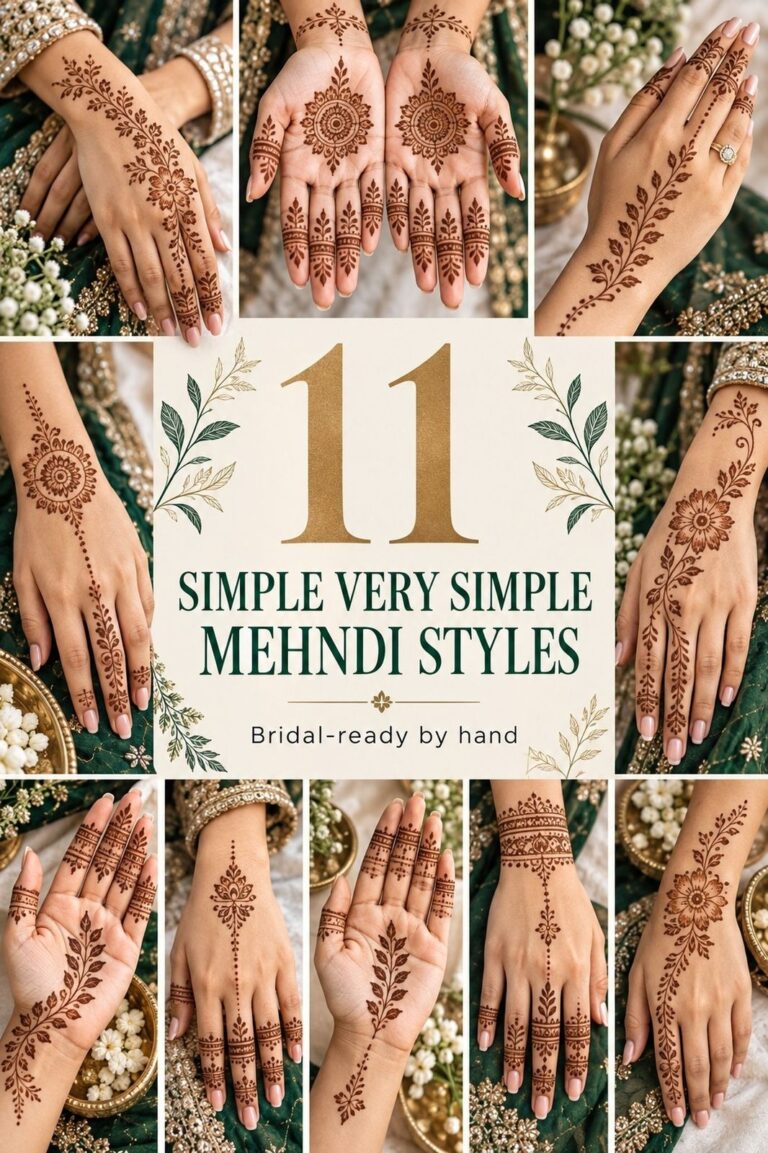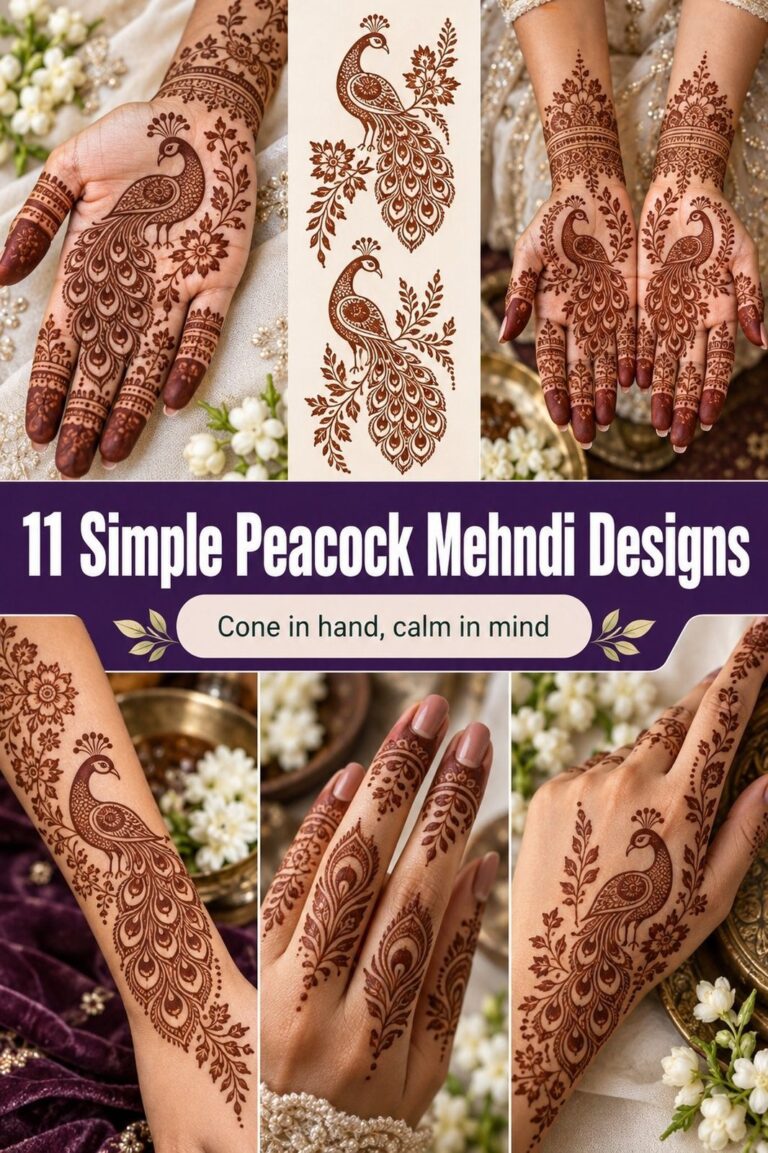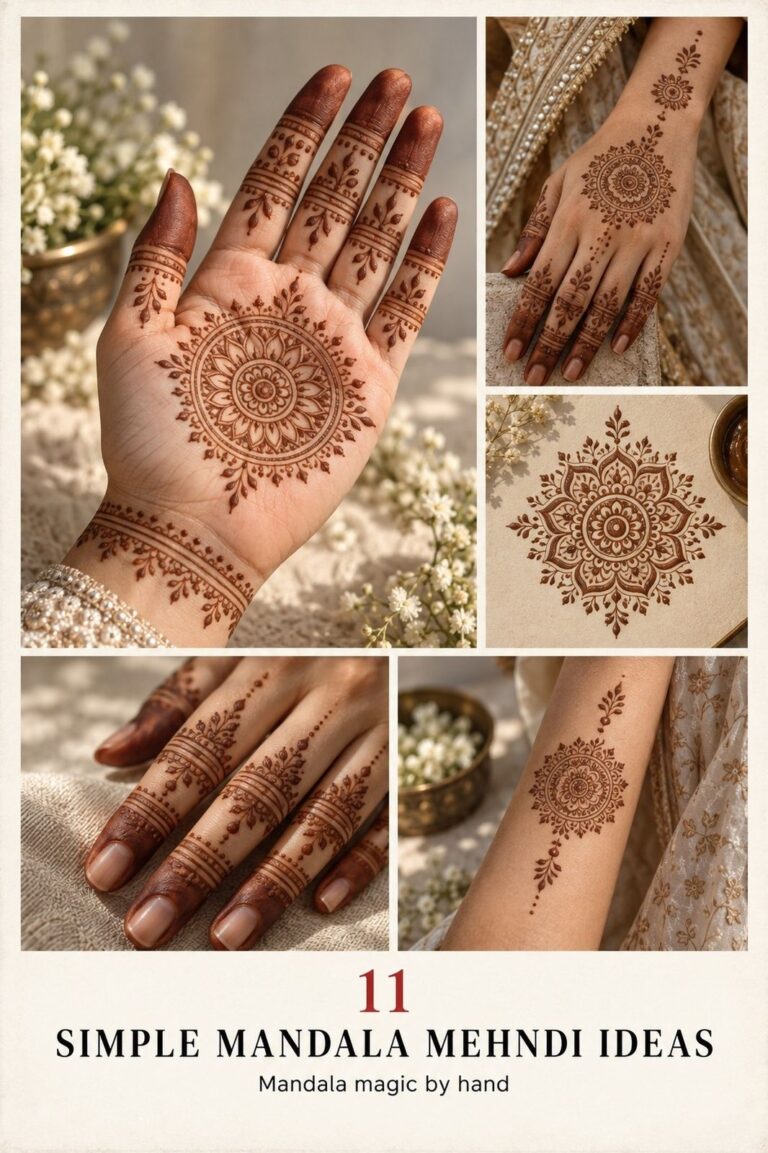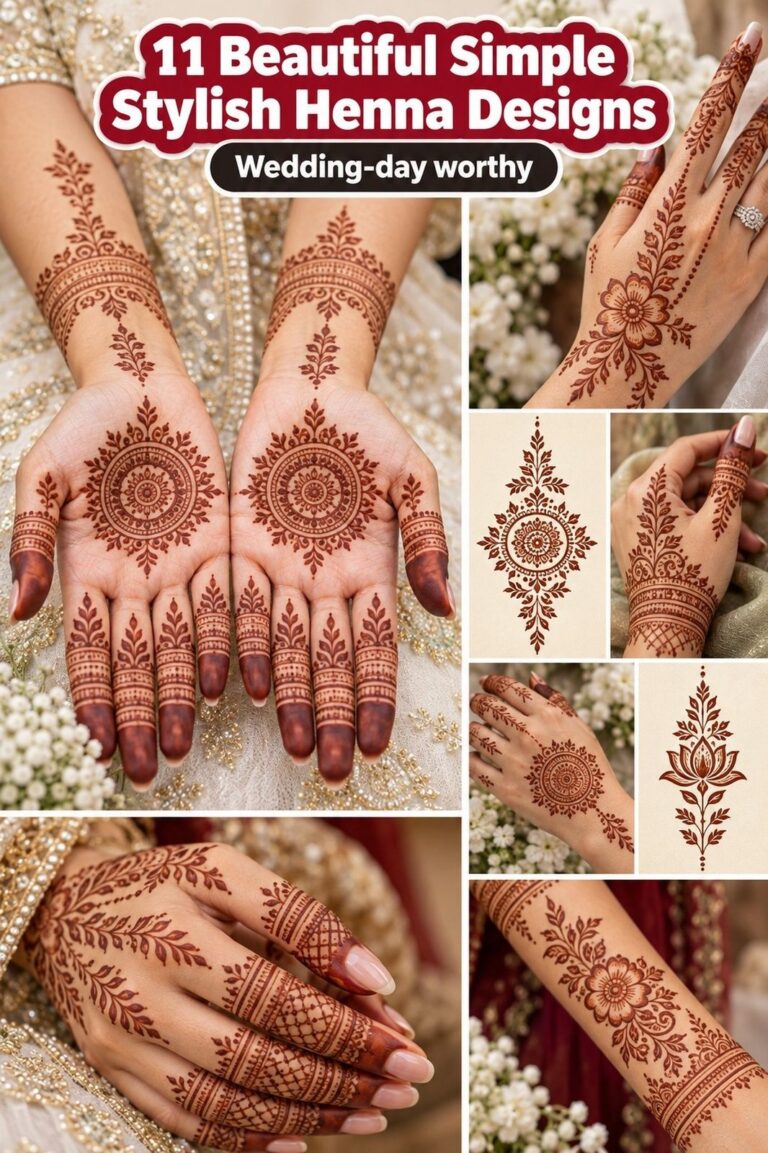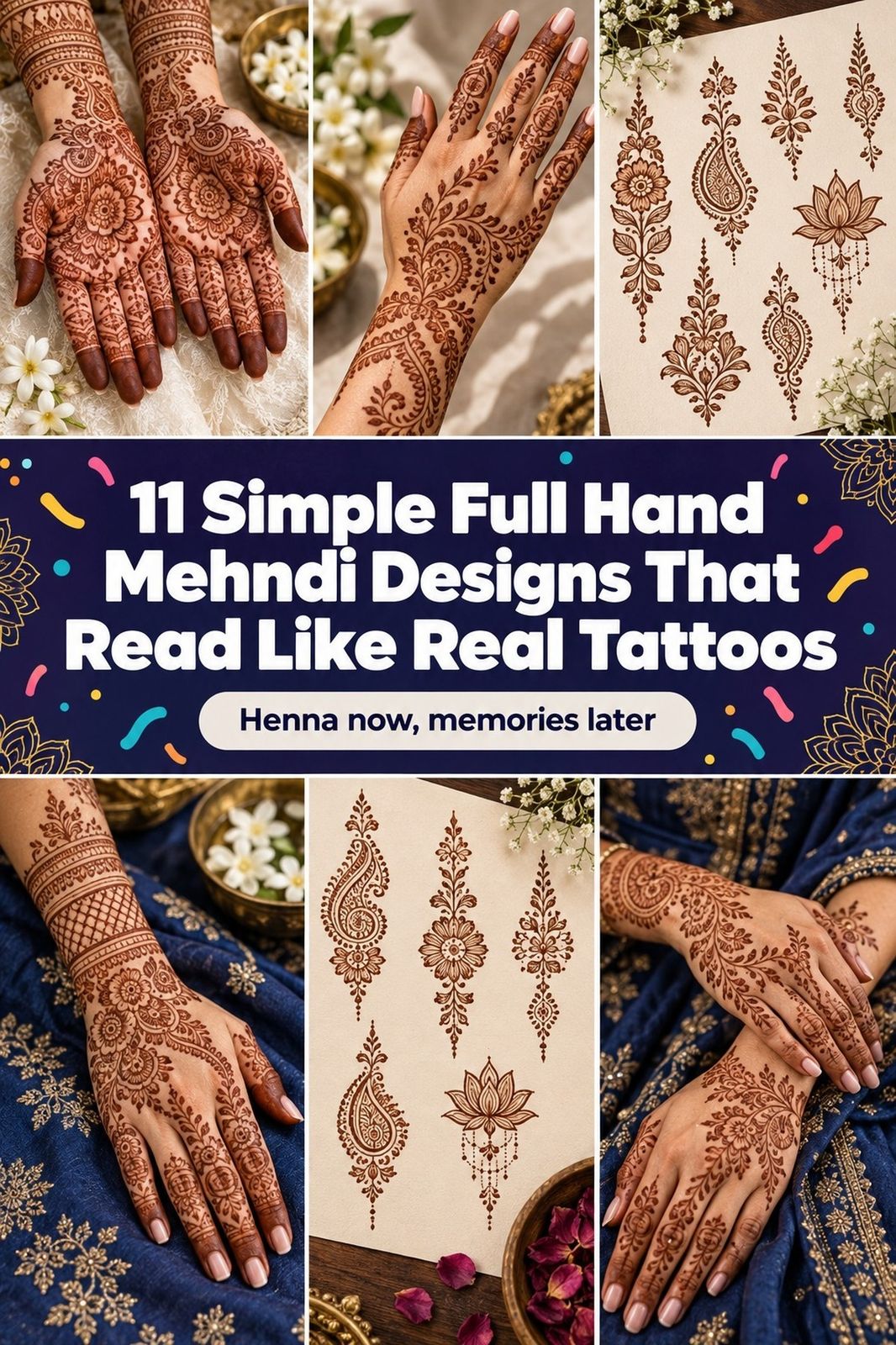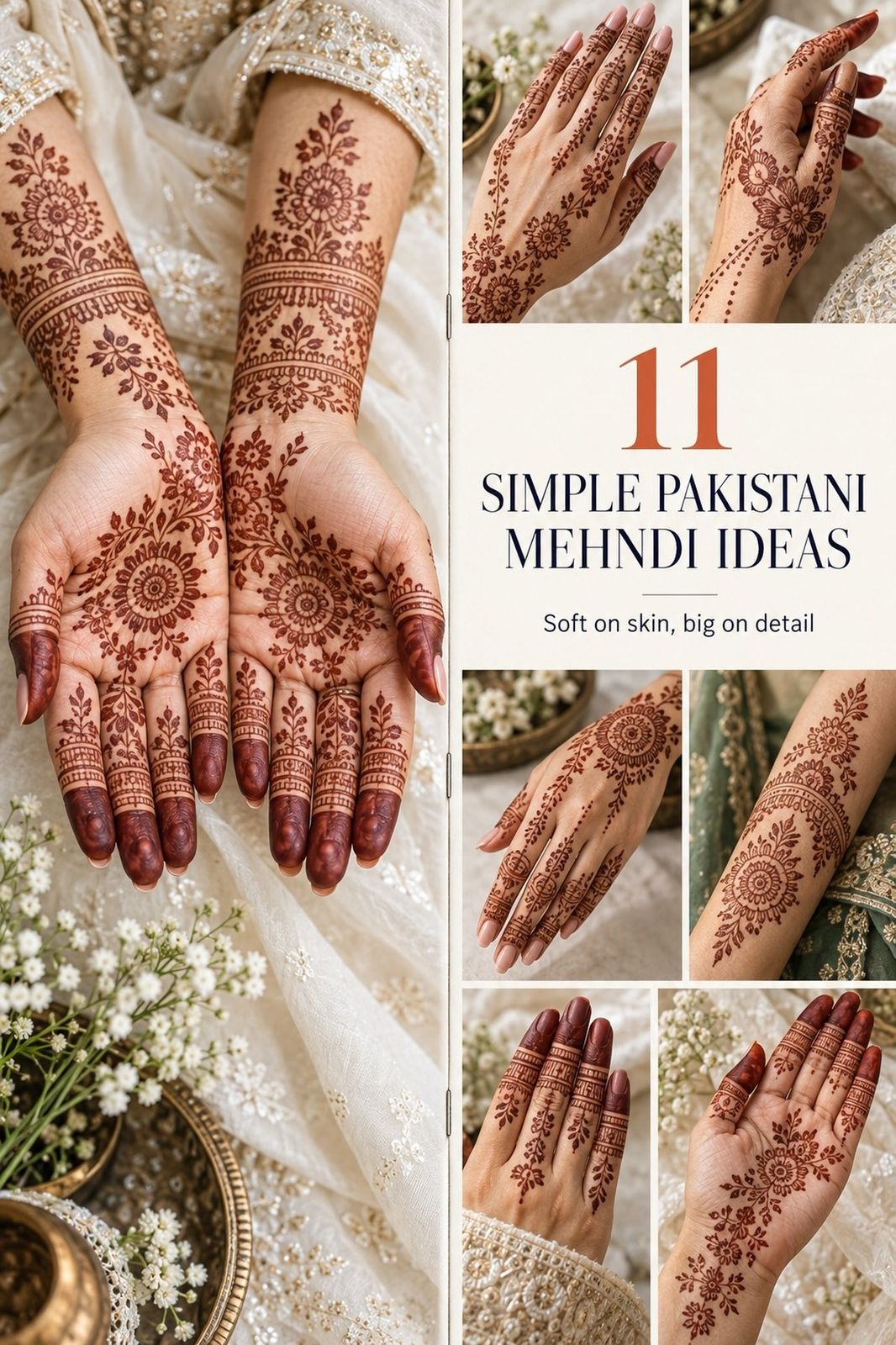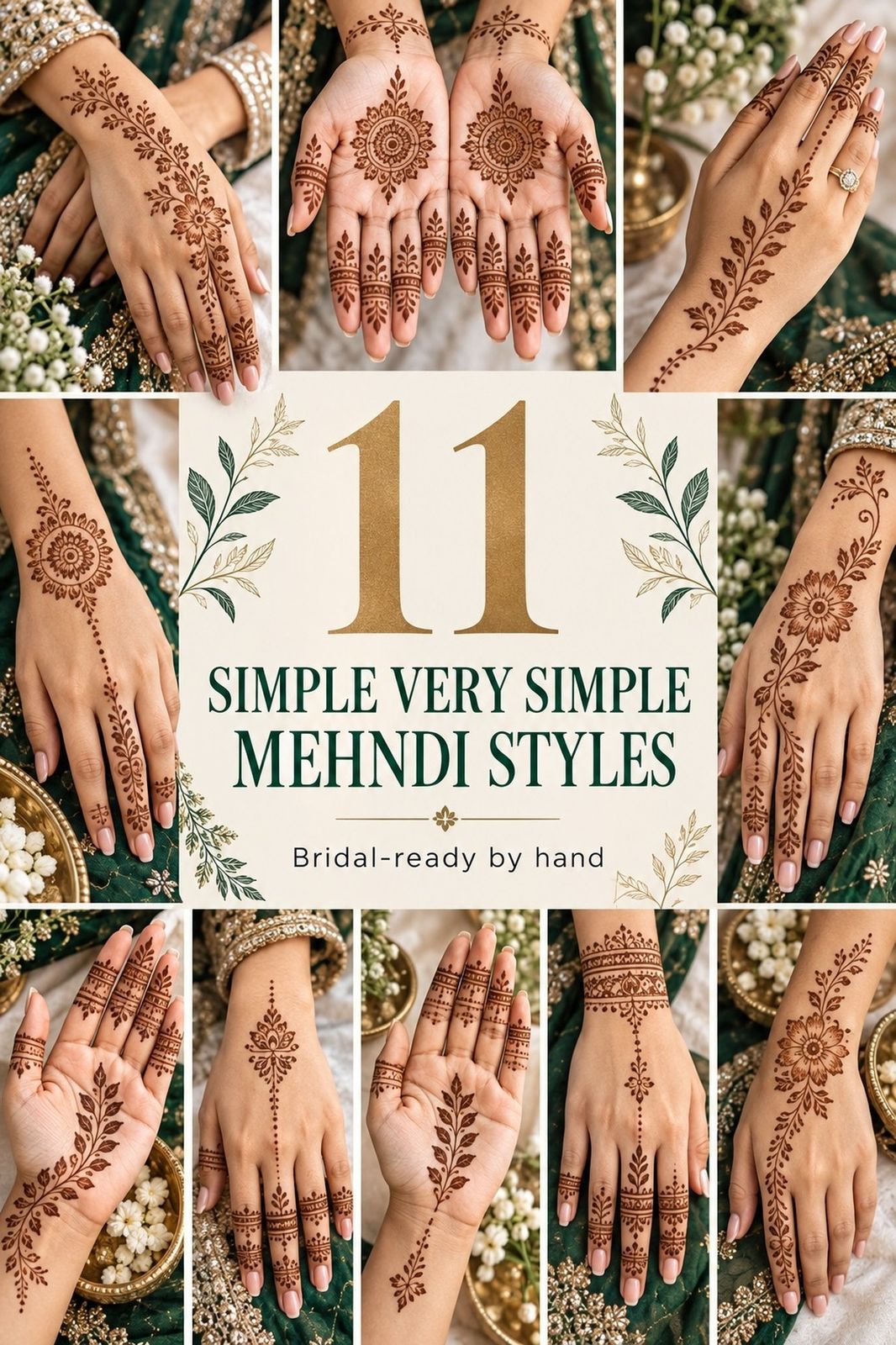
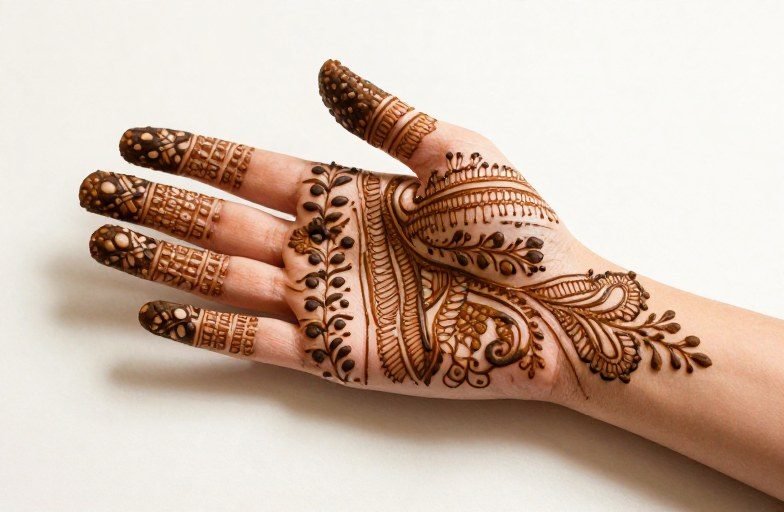
Back hand placement catches attention every time you reach for a glass, gesture while talking, or rest your hand on a table. Simple mehndi designs here hit a sweet spot: visible enough to matter, restrained enough for daily life. The flat, relatively smooth skin on the dorsal side holds fine lines better than finger joints, and the natural architecture of tendons and knuckles gives even sparse patterns a built-in frame.
What Simple Actually Looks Like
Simple mehndi on the back hand is not a smaller version of bridal work. It is a different category entirely, one where the empty skin shapes the design as much as the paste does.
Single Motif Placement
A lotus, crescent, or small mandala placed at the center of the hand, where the metacarpals meet. No trailing vines, no finger extensions. The shape sits alone, framed by the tendons that radiate toward the fingers. This is often linked to North African henna traditions, though the practice of isolated central motifs appears across multiple regions and periods. In tattoo adaptation, this placement minimizes sitting time and ages cleanly because the ink avoids high-movement zones.
Related reading: simple front hand mehndi tattoo | simple full hand mehndi tattoo | mehndi hand tattoo meaning | henna finger tattoo meaning
Negative Space Bands
A line or double line across the wrist, with a small break or accent at the center back hand. The gap is intentional; it keeps the design from looking like a bracelet stamp and acknowledges the hand’s anatomy. Henna artists have used this approach for centuries to create the illusion of jewelry without covering the entire surface. For permanent work, the sparse ink load means less skin trauma and faster healing.
Corner Accents
A small cluster of dots, a partial floral, or a geometric corner placed near the thumb base or pinky edge rather than center. These read as personal marks rather than full decoration. They also fade more gracefully in henna because they avoid the highest-friction areas of palm contact.
Design Languages That Work Here
Certain visual traditions translate particularly well to simple back hand work. Each has practical implications for how long application takes and how the design ages.
Indo-Arabic Open Work
Bold outer lines with interior detail that stays open, not filled. The contrast holds at a distance and the sparse fill means less trauma to the skin during application. For permanent tattoos, this style ages gracefully because the bold lines remain readable even as finer interior work softens over time. The style is often linked to Gulf and Levantine traditions, though specific dating is difficult given henna’s oral transmission history.
Geometric Minimal
Straight lines, dots, and angular shapes following the hand’s natural geometry. Particularly suited to the back hand because the flat plane rewards precision. One caveat: perfectly straight lines across tendons will warp slightly when the hand flexes. Design for the relaxed hand, not the posed one. In henna, this means testing the pattern while the hand is in daily-use positions, not just flat on a table.
Botanical Line
Single-stem flowers, unfurling leaves, seed pods. These flow with the hand’s movement rather than fighting it. A stem that follows the extensor tendon toward the index finger looks natural in motion. The style also forgives minor aging asymmetries because organic forms are not expected to be mechanically perfect. This approach appears in Persian and Central Asian traditions, though attributing it to a single origin oversimplifies its spread.
Trying Before Committing
Back hand tattoos hurt more than many people anticipate. The skin is thin, bone sits close beneath, and nerve density is high. Henna as a trial run is genuinely useful here. You learn whether you like the visibility, the maintenance, and the attention before needles become involved.
Living with the Test
Apply a simple design and live with it for two weeks. Notice when you cover it: job interviews, family dinners, cold weather. Notice when you forget it is there. The back hand is hard to hide casually; sleeves do not reach, gloves look intentional. This is either the point or the problem, and henna lets you discover which before the commitment is permanent.
What Heals Differently
Hand tattoos heal in public. You cannot keep a back hand piece wrapped for ten days without constant explanation. The location also sees more sun, more friction, more washing than almost anywhere else. Plan for touch-ups. Plan for faster fading. Plan to become consistent with sunscreen on this one spot.
- Schedule timing around low-activity weeks, not vacation or moving
- Black ink only for a first hand tattoo; color fades faster and is harder to touch up
- Start smaller than you imagine; the hand amplifies every design
- Discuss hand-specific aftercare with your artist before booking
Making It Personal
Simple does not mean generic. The restraint itself becomes the personalization.
Symbolic Reduction
A lotus with eight petals instead of a hundred. A crescent that matches the actual phase of the moon on a specific date. A constellation reduced to its four brightest stars. The simplicity forces intentionality; every element justifies its presence. Work with an artist who asks what you are leaving out, not only what you are putting in.
Integration with Your Specific Hand
Moles, scars, and vein patterns become part of the design. A small circle placed to incorporate a freckle. A line that curves to follow a visible tendon. Henna artists have worked with body landmarks for generations; tattoo artists who understand this approach can make your specific hand look like the design belongs only there.
Asymmetry and Pairing
Both hands do not need to match. Asymmetry reads as intentional, matching as traditional. Decide before the stencil goes on. One hand can carry the main motif, the other answer with a reduced echo. A full mandala backhand paired with just its central element on the opposite wrist. Or a vine that starts on one wrist and appears to continue, broken, on the other. For couples or close friends, splitting a single design across two bodies works here because the back hand is always visible when hands meet.
Scale and Technical Limits
The back hand is roughly 8-10 centimeters across for most adults. Scale matters disproportionately here because the viewing distance is arm’s length or closer.
Micro designs, under 2 centimeters, risk becoming blurry dots within a few years as ink spreads in the dermis. Overly large pieces that reach toward the fingers compete with joint movement and crease. The workable middle ground for simple mehndi-inspired work is usually a central focal point of 3-5 centimeters, with optional extensions toward wrist or finger bases that stay under 1.5 centimeters in width.
Line weight should vary with size. A single needle at 3RL for hairline details, 5RL or 7RL for main outlines. In henna, the cone tip determines line weight; in tattooing, the machine and needle grouping do. Thinner lines suit the mehndi aesthetic but require more frequent refreshing. Discuss this tradeoff explicitly with your artist before settling on a design.
Before You Decide
Sleep on any back hand design for at least two weeks. The visibility is the feature and the limitation. You will see it every time you type, drive, pay for coffee. Make sure the version you are evaluating is the relaxed-hand version, not a posed photo with fingers spread wide.
Ask your artist to stencil the design and have you move your hand through normal ranges before any ink flows. A pattern that looks balanced at rest may distort uncomfortably when you grip a steering wheel or hold a phone. Good artists expect this; the ones worth booking design for it from the first sketch.
Whether you choose permanent ink or stay in the henna rotation, the back hand rewards simplicity because the placement itself is already the statement. The design does not need to compete. It needs to settle in and look like it has always been there.
Frequently Asked Questions
How long does a simple back hand henna design last compared to a tattoo?
Henna on the back hand typically fades in one to two weeks because of frequent washing and hand use. A tattoo in the same location is permanent but will need touch-ups every few years due to sun exposure and skin regeneration.
Can I get a white ink tattoo that looks like henna?
White ink tattoos are possible but unpredictable; they often yellow with age and can disappear entirely into darker skin tones. Most artists recommend black or dark brown ink for mehndi-inspired designs if you want long-term readability.
Will a back hand tattoo affect job prospects?
Hand tattoos remain highly visible in most professional settings and cannot be covered with standard business attire. Some industries are more accepting than others, but the back hand specifically is impossible to hide casually.
How do I find an artist who specializes in fine-line hand work?
Look for portfolios showing healed hand tattoos at least one year old, not just fresh photos. Ask specifically about their experience with hand skin and whether they offer touch-up policies for high-wear areas. Avoid artists who treat hand tattoos exactly like arm or back work without adjusting technique.