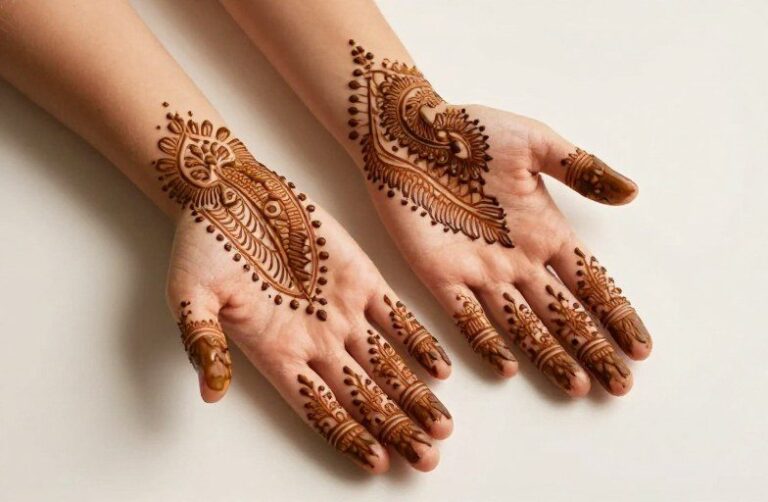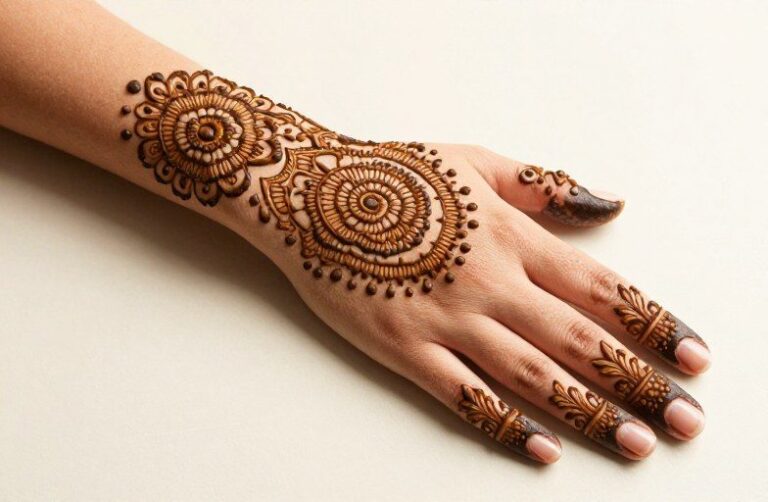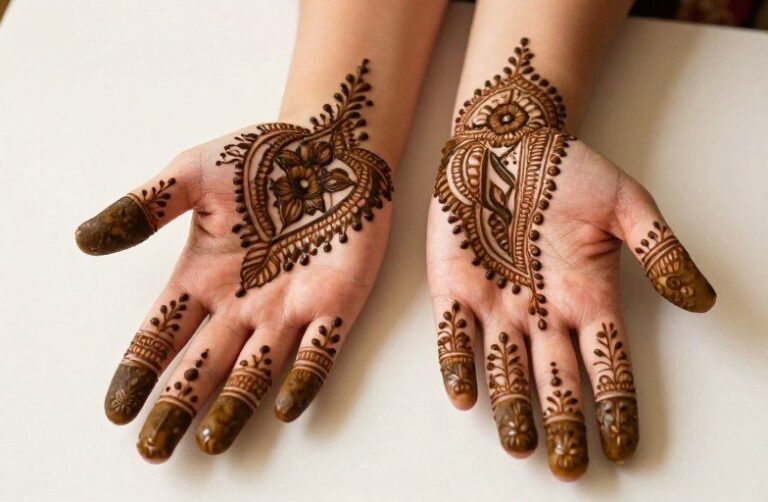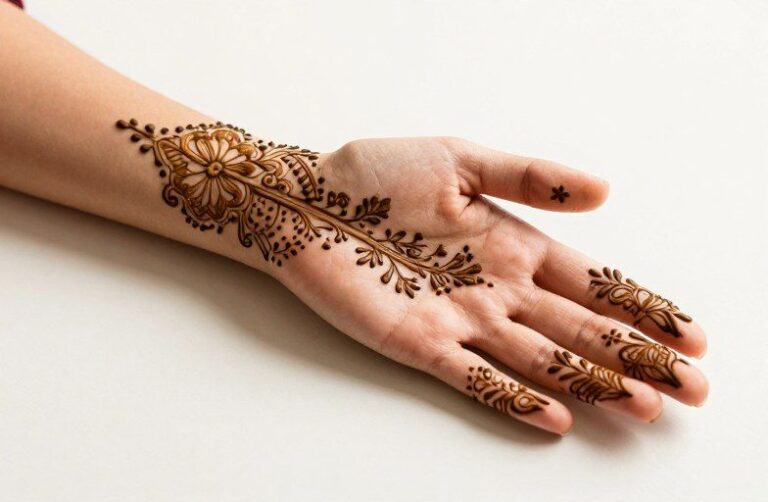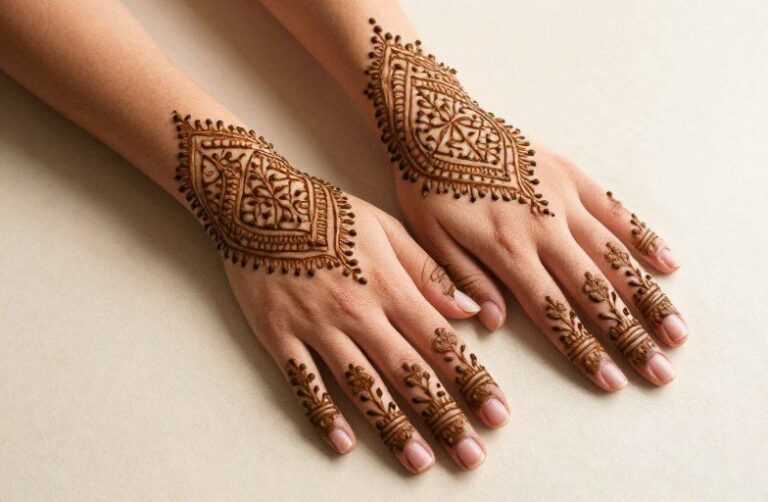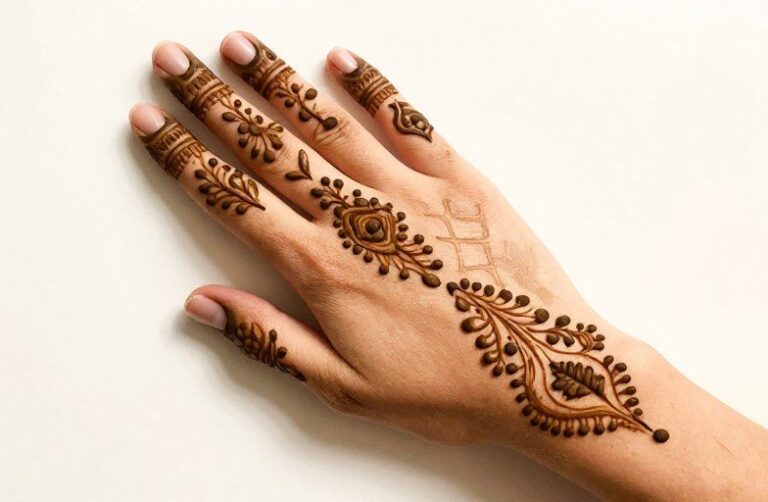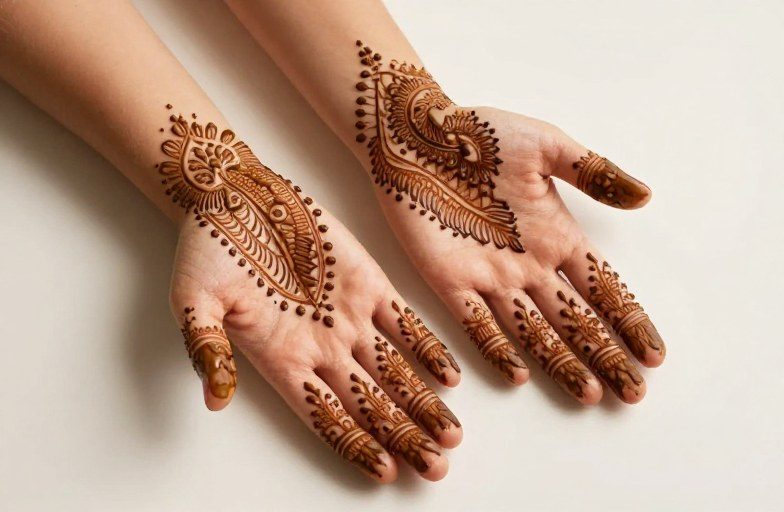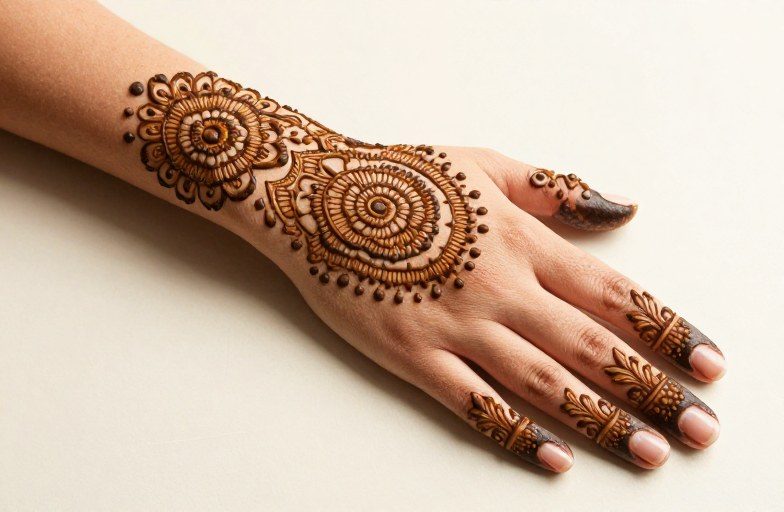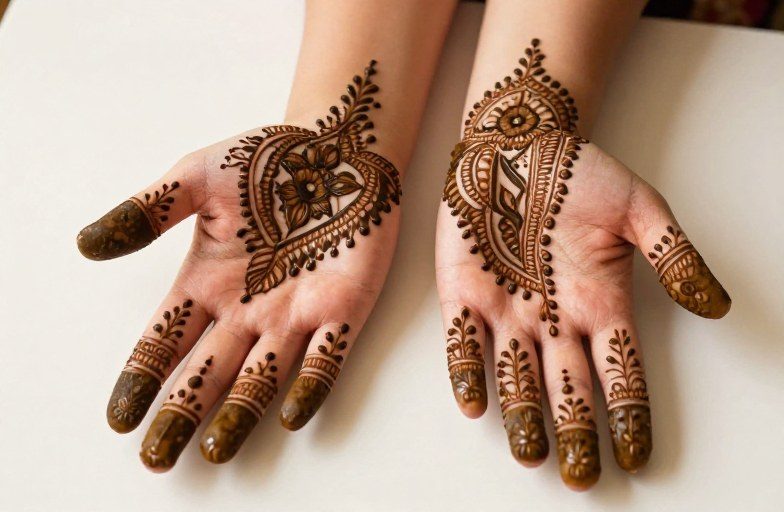
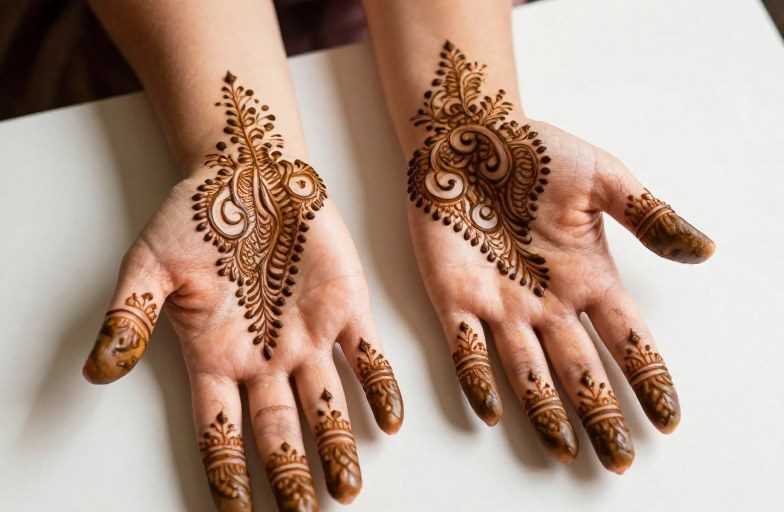
Full hand mehndi-inspired tattoos walk a narrow line. Too dense, and the design collapses into a dark blur within a few years. Too sparse, and it loses the rhythmic, all-over quality that makes henna beautiful. The sweet spot sits somewhere in the middle: bold negative space, strong line weight, and patterns that flow with the hand’s anatomy rather than fighting it. Here’s how to get there.
How to Personalize It
Personalization in mehndi-style work doesn’t mean cramming in every symbol that matters to you. The tradition itself offers structure, floral vines, paisley teardrops, mandala centers, fingertip accents, and your job is to select and modify, not overwrite.
Adapting Traditional Motifs
Swap the standard floral center on the back of the hand for a geometric knot, a small animal silhouette, or a simplified family crest. Keep the surrounding vine work intact; the contrast between organic flow and personal symbol gives the piece its charge. Fingertip patterns can shift from standard dots and teardrops to tiny initials, coordinates, or simplified zodiac glyphs, readable only to you, visible to anyone who looks closely.
Integrating Existing Tattoos
If your forearm already carries work, the mehndi hand piece needs a deliberate transition. A common solution: let the wrist vine work fade into the existing tattoo’s edge, or mirror a color or motif from the forearm piece into the hand’s central mandala. Don’t assume seamless blending; plan it with your artist, mapping the connection on paper before any needle touches skin.
For First-Timers
Hand tattoos hurt more than most spots. The skin is thin, the bone sits close, and the nerves cluster densely around fingers and knuckles. That reality shapes every decision for a first hand piece.
Pain Management and Session Planning
- Request numbing cream application 30 minutes before needle work if your artist allows it, not all do, and some believe it affects skin texture.
- Break a full hand into two sessions: back of hand first, fingers second, or outline first, fill second.
- Avoid booking before events where your hand will be photographed or scrutinized; swelling and plasma weeping last 2-4 days.
- Eat a solid meal beforehand. Hand sessions trigger vasovagal responses more often than arm or leg work.
What First Heals Wrong
Finger tattoos, especially mehndi-style fine lines, shed ink at alarming rates during the first two weeks. The constant bending, washing, and friction strips pigment from the dermis before it settles. Expect to need a touch-up at 6-8 weeks, and budget for it. Some artists include this; others charge separately. Clarify before you book.
Best Placements
The hand isn’t uniform. Each zone accepts ink differently, ages distinctively, and contributes differently to the overall composition.
Back of Hand vs. Palm Side
The dorsal surface, back of hand, offers the most stable canvas. Skin here is thinner than the forearm but thicker than fingers, and it receives less direct friction than the palm. Palm-side tattoos exist but fade extraordinarily fast; the constant contact, sweat, and rapid skin cell turnover erase lines within months. If you want the visual of palm-side henna, consider a lighter, more decorative approach there, with the investment-heavy detail reserved for the back.
Finger and Knuckle Strategy
Knuckles carry symbolic weight but technical risk. The skin stretches and compresses dramatically, and the underlying bone structure creates uneven needle depth. Mehndi-inspired knuckle bands work best as simple, bold stripes or repeated small motifs, dots, tiny teardrops, short lines, rather than intricate patterns. Fingertip caps, the small decorative marks at the nail base, age poorly but can be maintained with occasional refresh sessions. Position them slightly back from the actual nail bed to buy longevity.
Size & Scale
Full hand mehndi lives or dies by scale. The design must read as complete from conversational distance, roughly arm’s length, while rewarding closer inspection. This requires hierarchy: a dominant central element, secondary filler patterns, and tertiary detail that will soften with age.
Building Visual Hierarchy
Start with the focal point, typically centered on the back of the hand or slightly offset toward the wrist. This might be a 2-3 inch mandala, a paisley cluster, or a geometric rosette. From there, vines or lattice work extend toward the fingers and wrist, growing progressively simpler. The finger patterns should be bold enough to read as intentional, not accidental spillover. A common proportion: 40% of visual weight on the central back-of-hand element, 35% distributed across fingers, 25% on wrist transition and negative space framing.
Accounting for Aging
Lines spread. A 1mm line becomes 2mm within five years on the hand, faster if sun exposure is uncontrolled. Plan for this by building in generous spacing between elements now. What looks slightly too open at month three will look balanced at year five. Dense, intricate patterns that touch and interlock will merge into solid black masses. The most enduring full hand mehndi pieces use line weights of 3mm or more for primary elements, with 1mm reserved only for details you’re willing to lose.
Tips for Choosing
Selection isn’t about finding the prettiest reference photo. It’s about matching the design to your specific hand shape, lifestyle, and maintenance capacity.
- Trace your hand on paper and sketch rough coverage zones. Long fingers suit vertical vine extensions; short, wide hands need centralized compositions that don’t emphasize proportion.
- Consider your professional environment. Full hand coverage is harder to conceal than a single finger or wrist piece. Some designs allow a partial glove or fingerless sleeve to cover them; others don’t.
- Ask to see healed photos, not just fresh work. Every artist’s portfolio shows tattoos at their peak; the healed reality determines whether you’ll still love the piece in three years.
- Black ink only for longevity. Colored mehndi-inspired work, red accents, brown tones, fades faster and less predictably on hands.
Popular Styles
Contemporary mehndi tattooing has splintered into several coherent approaches, each with distinct visual rules and technical demands.
Minimalist Line Work
Single-weight lines, sparse placement, maximum negative space. The hand shows more skin than ink. This style ages best but requires precision; any wobble in a lone line has nowhere to hide. Best suited to larger hands where the design can breathe, and to clients who view the tattoo as jewelry replacement rather than full coverage.
Traditional Dense Fill
Closer to actual henna application: patterns cover most of the hand’s dorsal surface, with fingertip caps and wrist bands completing the frame. The technical challenge is maintaining clarity under saturation. Artists achieve this through careful line weight variation, thicker outlines containing thinner internal detail, and by limiting the number of pattern types in any single zone. Too many competing motifs create visual noise.
Geometric Hybrid
Mandala centers with radiating geometric petals, transitioning to organic vine work at the edges. This style bridges traditional mehndi and contemporary ornamental tattooing. It demands an artist comfortable with both symmetrical machine work and freehand flow. The geometric elements provide anchor points that resist aging; the organic elements soften the rigidity. Check that your artist’s portfolio shows both skill sets, not just one.
Final Word
A simple full hand mehndi tattoo isn’t simple to execute. The restraint required, knowing what to leave out, where to let the skin breathe, how to plan for inevitable fading, separates lasting work from trendy mistakes. Go slowly. Choose an artist whose healed hand pieces you can examine in person. Prioritize clarity over complexity. The hand is always visible; it deserves the patience of something built to last.
Frequently Asked Questions
How long does a full hand mehndi tattoo take to complete?
A clean, simple full hand design typically requires 3-5 hours for outline and initial fill. Dense traditional styles can run 6-8 hours, often split across two sessions to manage swelling and client endurance.
Will sunscreen actually help preserve the tattoo’s detail?
Yes. UV exposure accelerates ink breakdown and line spread, especially on thin hand skin. Daily SPF 30+ application on the back of your hand significantly slows fading and blurring over years.
Can I get a mehndi-style tattoo if I have dark skin?
Absolutely. Black ink reads clearly on all skin tones. The key is working with an artist experienced in adjusting contrast and line weight for your specific melanin level, ensuring patterns remain distinct as they heal.
How soon after getting the tattoo can I wash my hands normally?
Wait 24 hours before gentle washing with fragrance-free soap. Full normal hand washing, including scrubbing, should wait until the thin peeling layer has shed, usually day 5-7. Over-washing early pulls out unsettled pigment.