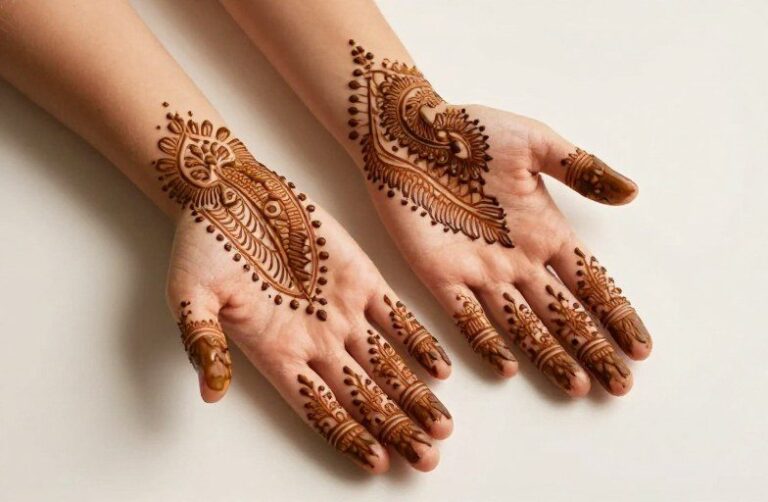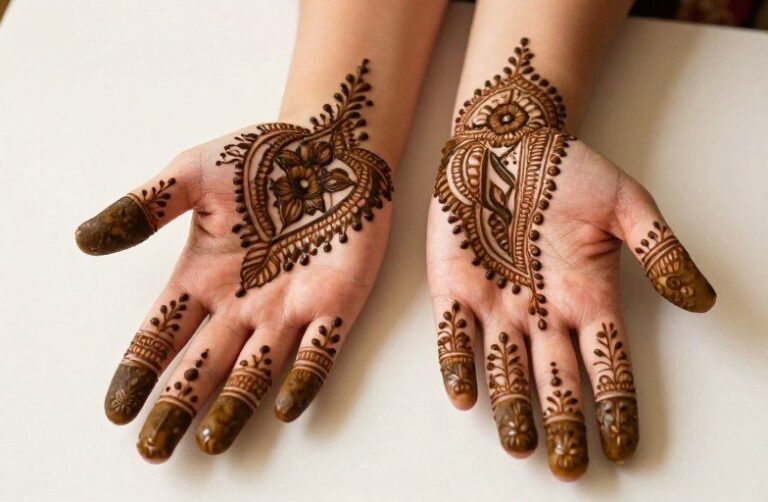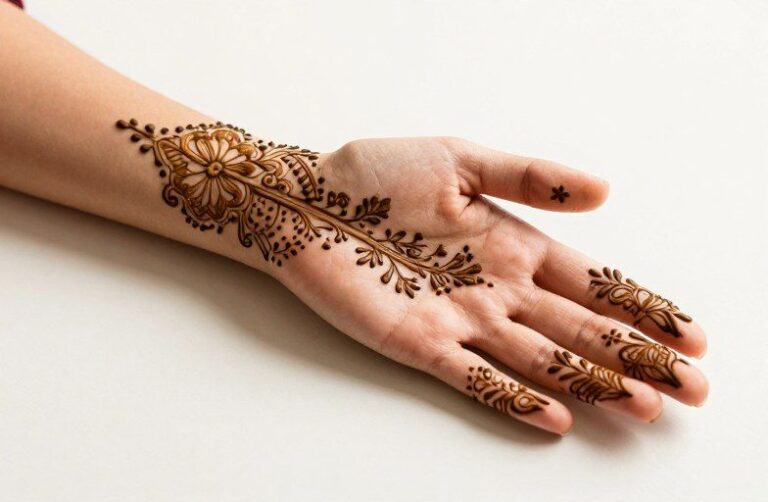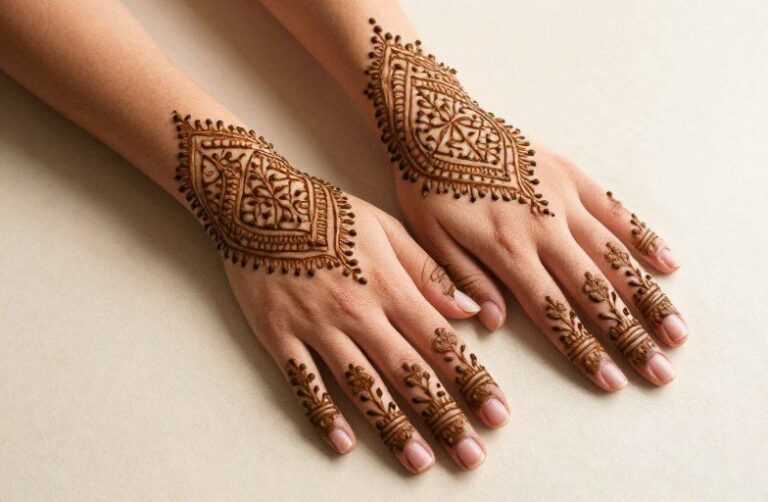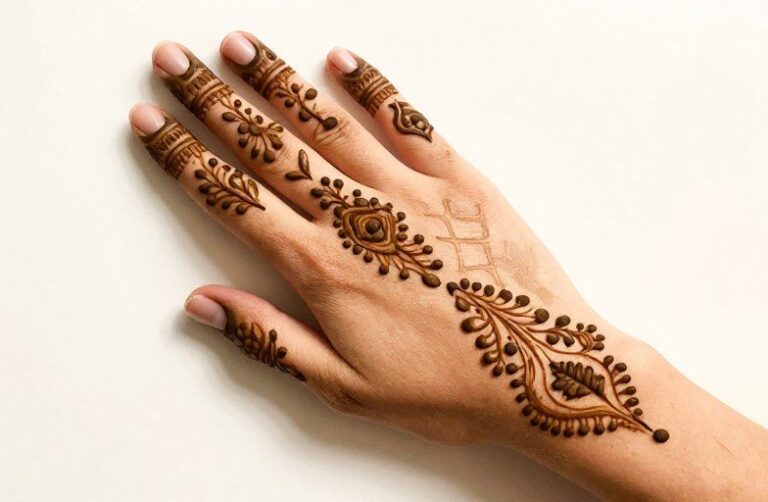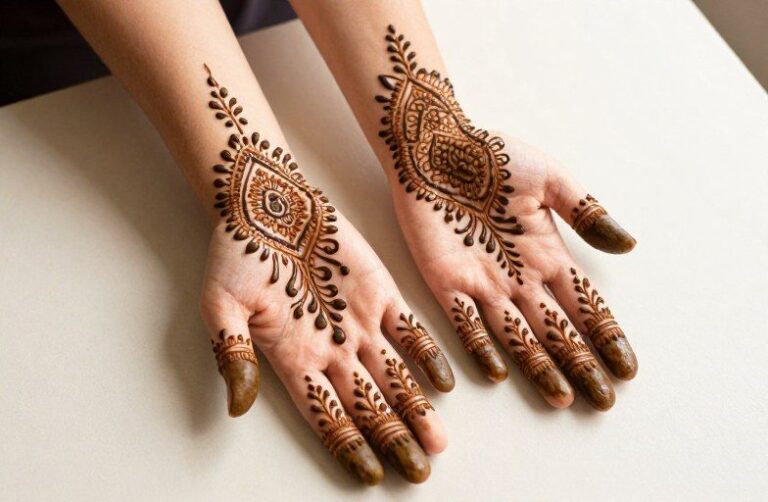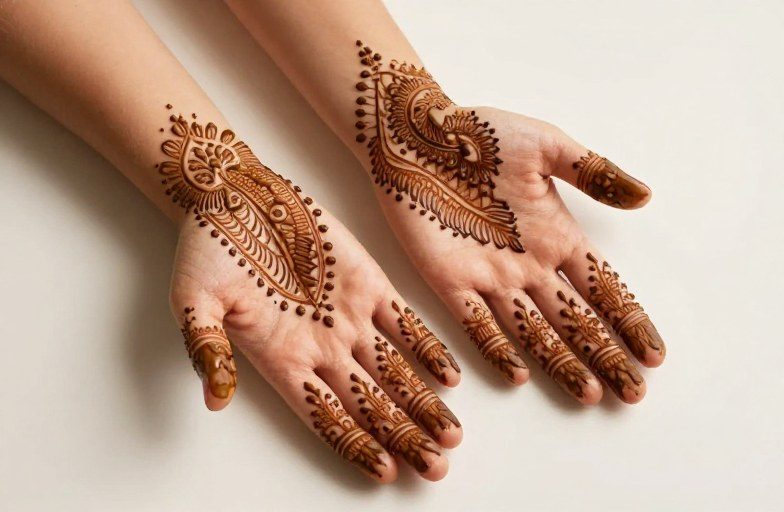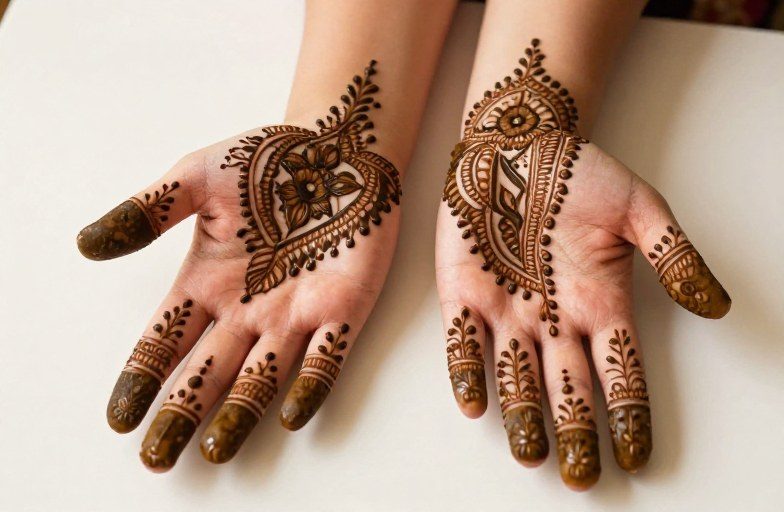
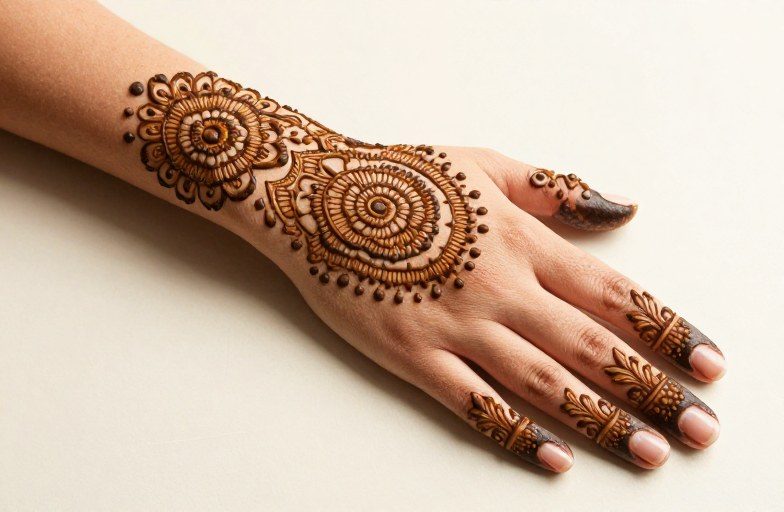
Mandala mehndi tattoos occupy a sweet spot between two ancient traditions: the geometric precision of Buddhist and Hindu mandalas, and the organic, vine-like flow of henna body art. The result is a design that reads as both structured and spontaneous, intricate without feeling cluttered. These pieces work especially well for people drawn to ornamental tattooing but wary of the heavy, dark saturation common in traditional mehndi reproductions. Modern artists have pushed the style toward lighter linework, negative space, and unexpected placements that let the design breathe on the skin.
Popular Styles
Not every mandala mehndi piece looks the same. The style has split into recognizable branches, each with different technical demands and visual outcomes.
Dotwork and Stippled Linework
Instead of solid black fills, artists build density through thousands of tiny dots. This approach softens the mandala’s edge, giving it a weathered, textile-like quality that ages gracefully. Stippled pieces blur slightly over time in a way that looks intentional rather than blown out. The technique demands longer sessions, dotwork is slow, but the result resists the “muddy” look that solid black mandalas sometimes develop after five to ten years.
Ornamental Fusion
Some artists weave in chandelier drops, jewelry chains, or lace patterns extending from the mandala’s core. These pieces read as adornment rather than symbol, which suits clients who want the aesthetic without explicit spiritual reference. The fusion style works particularly well on the forearm, where a central mandala can “drip” toward a wrist mehndi tattoo like a bracelet’s centerpiece.
- Pure geometric: Symmetrical, math-based, often done with a machine or by hand-poking; favors the back, sternum, or thigh where flat surfaces preserve symmetry.
- Floral mehndi hybrid: Incorporates paisley, lotus, and vine motifs; softer, more feminine-coded but increasingly gender-neutral in execution.
- White ink or “ghost” mandala: Subtle, sits just under the skin’s surface; fades faster than black but offers a scar-like texture. For a more durable take on this look, minimalist mehndi tattoo designs use fine black linework with similar visual restraint.
Tips for Choosing
A mandala mehndi tattoo should be chosen with the same care you’d give a piece of permanent jewelry. The wrong scale or placement turns intricate detail into visual noise.
Line Weight Matters
Thin lines (1-3 needle) reproduce mehndi’s delicate quality but blur faster on high-movement areas like wrists and ankles. Medium weight (5-7 needle) holds better over decades. Ask your artist to vary line weight within the design: heavier outlines with finer interior detail create depth that survives aging. Avoid uniform hairline thickness throughout, it’s a common mistake that looks crisp at one year and illegible at ten.
Center Point Placement
The mandala’s center should align with a natural focal point of the body: the sternum notch, the elbow pit, the crown of the shoulder, or the center of the upper back. Offset centers feel visually uncomfortable, like a hanging picture tilted slightly wrong. For side placements (ribs, hips), consider a half-mandala or one that flows asymmetrically rather than forcing full circular symmetry onto a curved, moving surface.
- Bring reference images of mehndi patterns you respond to, but let the artist redraw, direct tracing of henna designs often fails because skin and paper behave differently.
- Consider how the design terminates: fading edges, hard borders, or extending into other tattoos all change the long-term read.
- Darker skin tones: request bolder line weight and higher contrast; very fine stippling can disappear on melanin-rich skin, especially after healing.
For First-Timers
Ornamental tattooing is actually forgiving for beginners because the subject matter carries no facial features, lettering, or realism that demands perfect execution. That said, mandala mehndi has specific pitfalls for the uninitiated.
Start smaller than you think. A palm-sized mandala on the shoulder or upper back lets you test your tolerance. For a hand-placement option, see simple palm mehndi tattoo ideas. and your artist’s precision without committing to a six-hour session. These designs expand well, adding satellite patterns or extending the frame later is straightforward. Shrinking an overlarge mandala is not.
Pain varies dramatically by placement. The sternum and ribs hurt; the outer upper arm and thigh are manageable. The foot, popular for mehndi-inspired work because actual henna goes there, is brutal for machine tattooing, thin skin over bone, high nerve density, and poor healing conditions inside shoes. If you’re set on a foot mandala, consider the top rather than the side, and plan for a longer healing period with limited footwear.
Matching & Pairing Ideas
Mandala mehndi pieces play well with adjacent tattoos when you plan for integration rather than collision.
Complementary Motifs
Unalome symbols, lotus flowers, and moon phases extend naturally from mandala geometry. The key is matching line quality, pairing a dotwork mandala with a bold traditional snake creates visual dissonance. If you have existing tattoos, show your artist photos so they can match needle behavior and ink saturation.
Symmetrical Pairing
Matching mandalas on both shoulders, both hips, or both hands create a deliberate, balanced look. This works best when the designs are true mirror images rather than “similar but slightly different,” which reads as error. For couples or friends, identical mandalas in different placements (one on wrist, one on ankle) avoid the “matching tattoo” cliché while maintaining connection.
- Frame a central back piece with two smaller mandalas on the shoulder blades, connected by fine line work along the spine.
- Pair a mandala with text by treating the lettering as a circular border rather than inserting words into the design’s center.
- Use negative space: a mandala on one forearm, pure un-inked skin on the other, creates balance without doubling the commitment.
Size & Scale
Scale determines whether your mandala reads as detail or decoration. Too small and the interior patterns merge into gray; too large and the design dominates in ways that limit future options.
Minimum viable size for a mandala with interior detail is roughly 2.5 inches in diameter. Below that, individual petals and geometric subdivisions become indistinguishable. Maximum size depends on placement, a full back mandala can work at 12+ inches, but requires either multiple sessions or an artist with exceptional speed and consistency to avoid line swelling from prolonged skin trauma.
Popular scales and their best placements:
- 2-3 inches: Wrist, behind ear, ankle, finger side, minimal detail, often just the outer ring structure.
- 4-6 inches: Shoulder cap, sternum center, thigh front, allows full petal layers and some interior geometry.
- 7-10 inches: Full back center, chest piece, thigh wrap, complex, multi-layered, can incorporate color gradients.
Trending Variations
The style continues to evolve as artists experiment with hybrid techniques and unexpected applications.
Biomechanical Mehndi
Some artists are weaving mandala geometry through muscle and bone imagery, creating pieces that read as both organic and mechanical. The mandala serves as a “joint” or focal point, with mehndi-style filigree extending like circuitry. This variation suits larger placements and clients with existing biomech work who want to soften the aesthetic without abandoning the genre.
Faded and “Aged” Execution
Intentionally light application, sometimes called “coffee stain” or “ghost” mandala, anticipates the fading process and builds it into the design. These pieces look like they’ve been on your body for years from day one. The technique requires an experienced hand; too light and the tattoo disappears entirely, too heavy and the aged effect reads as mistake.
- Color integration: muted terracotta, indigo, or ochre accents within black linework reference actual henna’s natural dye range.
- Scar cover integration: mandala geometry is increasingly used to incorporate or redirect around surgical scars, with the pattern’s symmetry disguising asymmetrical skin texture.
- Hand and finger extensions: micro-mandalas on the proximal phalanges (finger segments closest to palm) connected by fine lines to wrist pieces, high maintenance, high visibility, growing in popularity despite known fading challenges.
Final Word
Mandala mehndi tattoos reward patience in both design and execution. The best pieces result from honest conversations with your artist about how the design will settle, stretch, and fade. Bring visual references, but stay open to adaptation. A mandala that looks perfect on paper may need adjustment for your specific body geometry, skin behavior, and existing tattoos. The tradition you’re drawing from, both mandala geometry and mehndi application, has always been about impermanence and adaptation. Your tattoo continues that conversation in a permanent medium, which is exactly why getting the details right matters so much.
Frequently Asked Questions
How long does a mandala mehndi tattoo take to heal compared to other styles?
Healing time is standard, two to three weeks for surface healing, six to eight for full settling. However, the dense linework common in these designs can produce heavier peeling and longer-lasting redness. Don’t mistake prolonged irritation for infection; the sheer amount of needle passes irritates skin more than a simple line tattoo.
Will the fine lines in my mandala mehndi tattoo blur together over time?
They can if placed on high-movement areas or executed too small. Ask your artist to maintain minimum spacing between lines, roughly the width of a line itself, and avoid going below 2.5 inches for detailed pieces. Sun protection dramatically slows blurring; unprotected mandalas on hands or forearms often need touch-ups within five years.
Can I get a mandala mehndi tattoo if I have darker skin?
Absolutely, but the design should be adapted. Very fine stippling and light graywash can disappear on melanin-rich skin. Request bolder outlines, higher contrast between filled and open areas, and consider scarification or raised techniques if you want subtlety without relying on light ink values.
Is there a spiritual concern with getting a mandala if I’m not Buddhist or Hindu?
Mandala as a geometric form predates specific religious codification, but the term and its sacred associations are meaningful to living practitioners. Most artists and clients treat ornamental mandalas as aesthetic rather than devotional. If you’re concerned, avoid specific sacred symbols (certain syllables, deity imagery) and stick to abstract geometry, the visual language is distinct and generally uncontroversial.