
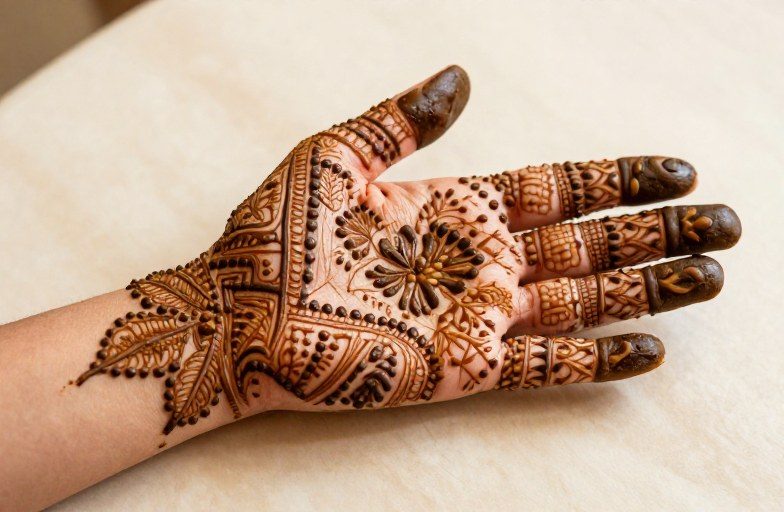
The fastest way to remove a henna tattoo is to speed up your skin’s natural shedding process through gentle exfoliation, oil soaking, and consistent moisturizing. Most henna stains fade significantly within 1-2 weeks and disappear entirely by 3-4 weeks without any intervention. The methods below simply accelerate what your body already does naturally.
Healing Timeline
Henna works by staining the dead skin cells in your stratum corneum, the topmost layer that constantly renews itself. Unlike permanent tattoo ink deposited in the dermis, henna never penetrates living tissue. This difference fundamentally shapes your removal timeline.
Natural Fading Without Intervention
Fresh henna paste typically flakes off after 6-12 hours, leaving an orange stain that darkens to reddish-brown over 24-48 hours. From peak color, expect this progression:
- Days 1-3: Deepest color; stain appears fully developed
- Days 4-7: Noticeable lightening, especially on high-friction areas like palms and fingertips
- Week 2: Faded to light orange or tan on most body areas
- Weeks 3-4: Nearly or completely gone, with residual shadow possible on thick skin
Hands and feet hold color longest due to thicker skin and more keratin. Inner wrists, forearms, and upper back fade faster.
Accelerated Removal Timeline
With active methods detailed below, you can typically compress the visible stain to 3-7 days. Aggressive scrubbing won’t beat biology, your skin needs time to turn over, but consistent care meaningfully shortens the window.
What to Expect Step by Step
Start with the least irritating methods and escalate only if needed. Your skin barrier is your ally here; damaging it prolongs redness and sensitivity without touching the deeper stain.
Method 1: Oil Soaking and Gentle Exfoliation
Apply a generous layer of olive oil, coconut oil, or baby oil to the stained area. Let it sit 10-15 minutes to penetrate and loosen the stained dead cells. Follow with gentle scrubbing using a washcloth, soft toothbrush, or sugar scrub. Rinse with warm water. Repeat daily.
This is the safest baseline approach. Oils dissolve some of the henna’s binding to skin without stripping healthy moisture.
Method 2: Salt and Lemon Paste
Mix coarse salt with lemon juice to form a gritty paste. Apply in circular motions for 2-3 minutes, then rinse thoroughly. The salt provides mechanical exfoliation; lemon’s mild acidity may help break down the lawsone pigment.
Limit this to once daily and stop if skin feels raw. Lemon juice increases photosensitivity, so avoid sun exposure on treated areas for 24 hours.
Method 3: Micellar Water or Makeup Remover
Oil-based cleansers designed to dissolve pigments can lift henna surprisingly well. Soak a cotton pad, hold it against the stain for 30-60 seconds, then wipe gently. Follow with moisturizer to replace stripped oils.
Method 4: Baking Soda Paste
Combine baking soda with water or lemon juice to form a spreadable consistency. Apply, let dry partially (5-10 minutes), then scrub off with damp cloth. This is more abrasive, reserve for stubborn areas and use sparingly.
What to Avoid
- Bleach or chlorine: Causes chemical burns; ineffective on deeper stain
- Household cleaners: Serious skin damage risk
- Excessive scrubbing: Creates raw, inflamed skin that looks worse than the henna
- “Black henna” with PPD: If you reacted to so-called black henna, seek medical evaluation; do not attempt home removal on blistered or weeping skin
Pain & Comfort
Proper henna removal should not hurt. Mild tingling from lemon juice or slight abrasion from salt is normal; sharp pain, burning, or broken skin means you’ve gone too far.
Recognizing When to Stop
Redness that persists more than an hour after treatment indicates over-exfoliation. Give skin 24-48 hours to recover before resuming any removal method. A compromised barrier actually traps pigment longer as your skin rushes to protect itself with inflammation.
Areas with thinner skin, inner wrists, throat, behind ears, need gentler treatment. Thick palm skin can tolerate more abrasion, but cracked palms from over-scrubbing are genuinely painful and slow to heal.
Soothing Irritated Skin
If you’ve overdone it, apply plain aloe vera gel or a fragrance-free moisturizer. Avoid further exfoliation until skin feels normal to touch. Cool (not ice-cold) compresses reduce inflammation. Do not apply antibiotic ointments unless skin is broken; they trap moisture and can cause contact dermatitis in some people.
Aftercare Essentials
Paradoxically, keeping skin healthy helps henna fade faster. Dry, damaged skin clings to stained cells and flakes unevenly, creating patchy, lingering color.
Daily Moisture Maintenance
Apply a plain, fragrance-free lotion twice daily, after showering and before bed. Look for ceramides, glycerin, or shea butter as primary ingredients. Avoid heavy petroleum jelly immediately after exfoliation; it can trap heat and irritation.
Drink adequate water. Hydrated skin from within turns over more efficiently than dehydrated skin.
Shower and Bath Strategy
Hot water and steam soften the stratum corneum, making post-shower exfoliation particularly effective. Use a loofah or exfoliating glove on the stained area during your regular shower. Pat dry, moisturize immediately while skin is still slightly damp.
Swimming pools with chlorine will fade henna faster but dry skin significantly, moisturize heavily after.
Clothing and Friction
Covering henna with tight clothing creates friction that accelerates fading on body areas. For hand henna, gloves during dishwashing or cleaning, already good practice, provide gentle abrasion from the interior fabric while protecting skin from harsh detergents.
The Direct Answer
Here’s the stripped-down protocol that actually works:
- Day 1: Oil soak 15 minutes, gentle washcloth scrub, moisturize
- Days 2-4: Repeat oil treatment daily; add salt-lemon scrub every other day if skin tolerates it
- Days 5-7: Focus on whichever method showed results; maintain moisture
- Ongoing: Normal exfoliation in showers; moisturize; wait
Most people see substantial lightening by day 5 and near-complete resolution by day 10 with active removal. Without intervention, the same result takes 2-4 weeks depending on body placement and individual skin turnover rate.
There is no instant removal. Anything promising same-day complete elimination is either damaging your skin or selling something that doesn’t work.
Cost Factors
Removing henna at home costs essentially nothing, items you likely own already. Here’s the realistic breakdown:
- Oil (olive, coconut, baby): $0-8 for household supply
- Salt and lemon: Under $3
- Baking soda: $1-2
- Basic moisturizer: $4-12
- Exfoliating glove: $3-8
Professional services for henna removal essentially don’t exist as a standalone offering. Med spas offering tattoo removal won’t treat henna, there’s no ink to laser, and lasers on stained superficial skin cause burns without benefit. If you encounter a service advertising henna removal, scrutinize carefully; you’re likely being sold unnecessary microdermabrasion or chemical peels that cost $100-300 per session.
The one scenario warranting professional help: allergic reactions to PPD-laced “black henna.” This requires medical evaluation, not cosmetic removal. Costs then follow standard urgent care or dermatology visit structures.
Final Thoughts
Henna removal is fundamentally an exercise in patience and gentle persistence. Your skin knows how to shed stained cells; your role is supporting that process without causing damage that extends the timeline. The methods above rank from safest to most aggressive, start conservative, observe how your specific skin responds, and adjust accordingly.
Most henna regret resolves on its own within weeks. If you’re considering henna again, remember that placement on faster-turnover areas (forearms, shoulders) and lighter paste application both reduce commitment. For those seeking temporary body art with even shorter duration, jagua (blue-black stain, 1-2 weeks) or cosmetic body paints (1-3 days) offer alternatives, though each carries its own considerations.
The stain will go. Until then, moisturize, exfoliate gently, and give your skin the time it needs.
Frequently Asked Questions
Can I use nail polish remover to get rid of henna faster?
No. Acetone and nail polish remover are far too harsh for skin, causing chemical irritation, dryness, and potential burns without effectively reaching the stained cells beneath your skin’s surface. Stick to oil-based methods and gentle physical exfoliation instead.
Why is my henna still orange after a week?
Henna’s lawsone pigment binds to keratin and oxidizes over time, typically shifting from orange to deep brown in 48 hours. If yours stayed orange, the paste may have been removed too early, the henna was stale, or your skin chemistry simply develops lighter color. Either way, the same removal methods apply, it’ll just fade faster than darker stains.
Does henna removal work differently on dark skin?
The removal process itself works the same across all skin tones, but the visible contrast differs. Lighter stains on deeper skin may appear more prominent during fading, and post-exfoliation redness can linger longer as visible hyperpigmentation. Use extra gentleness and prioritize moisturizing to minimize any irritation-related darkening.
Can I get a permanent tattoo over fading henna?
Wait until the henna is completely gone and skin has normalized for at least a week. Residual lawsone pigment can interfere with how your tattoo artist sees your skin tone for color selection, and freshly exfoliated skin won’t hold ink properly. Most reputable artists will postpone until the area is fully clear.