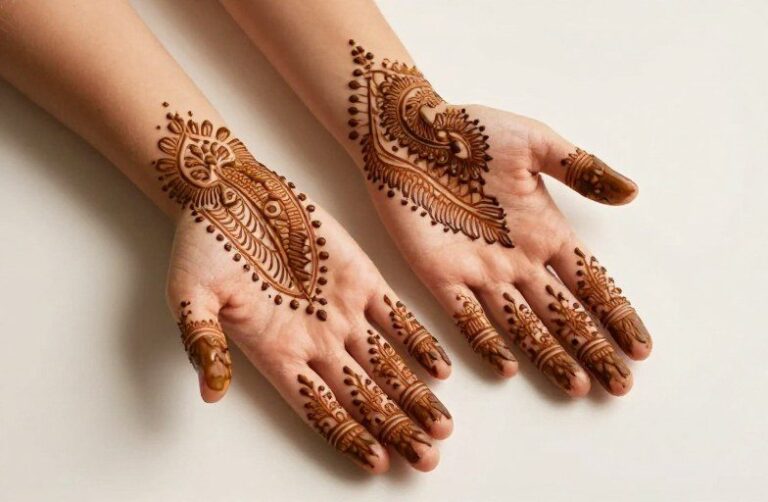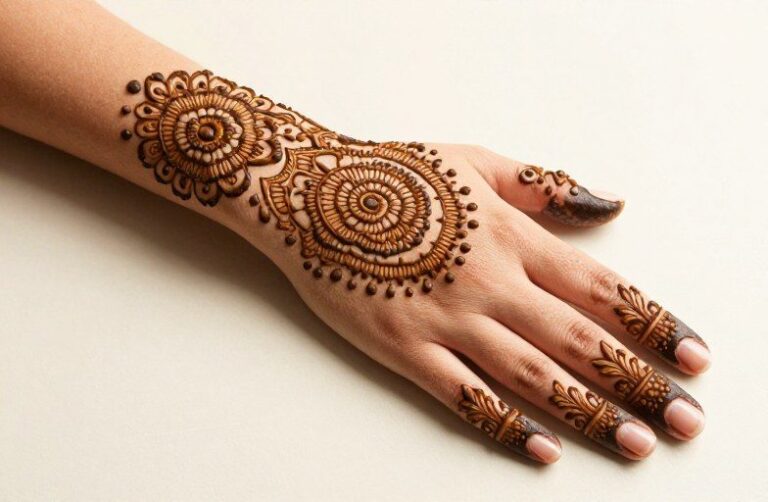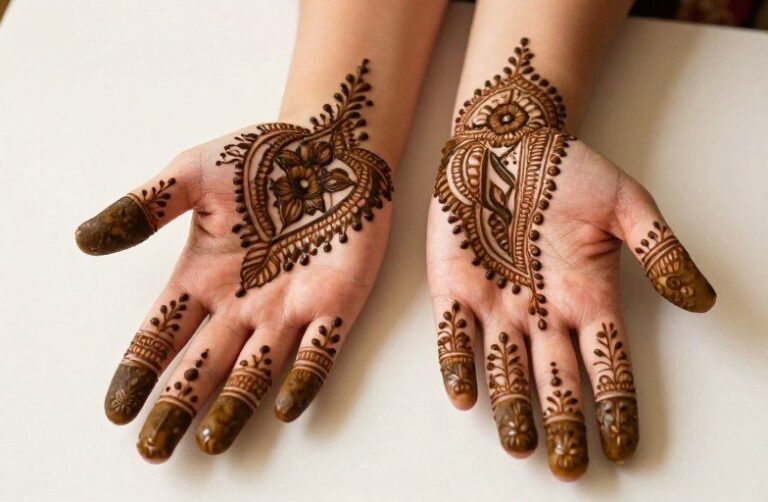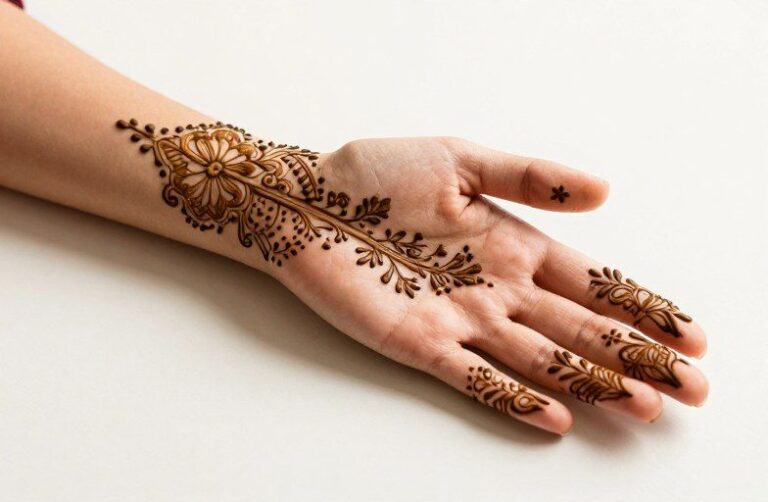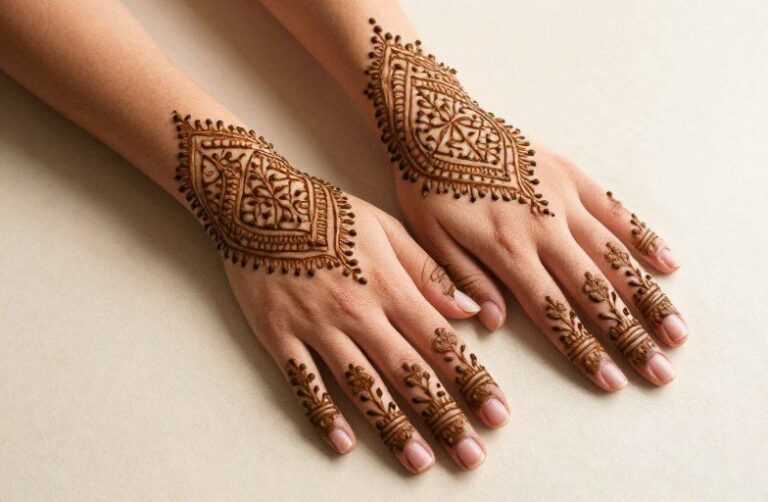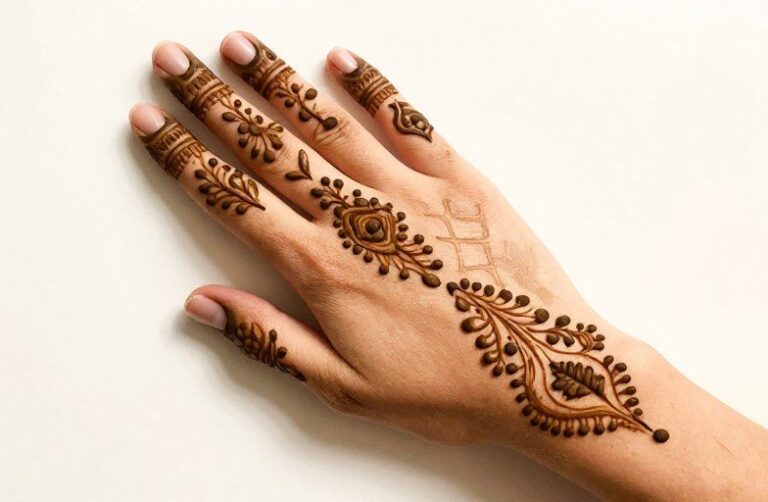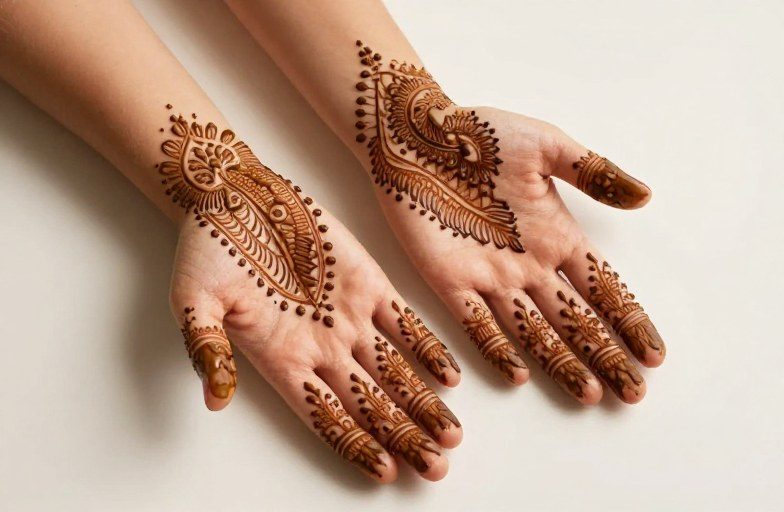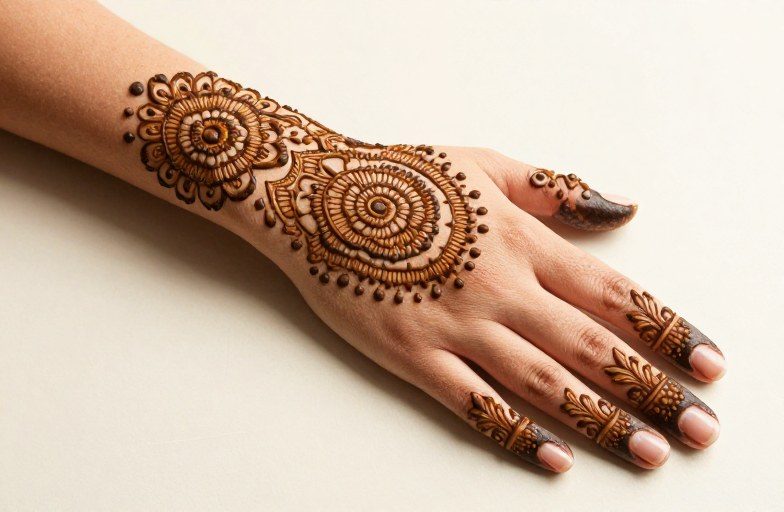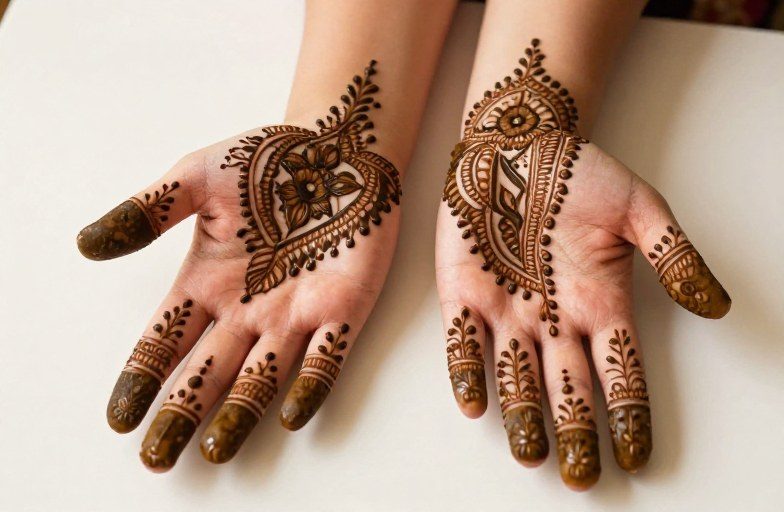
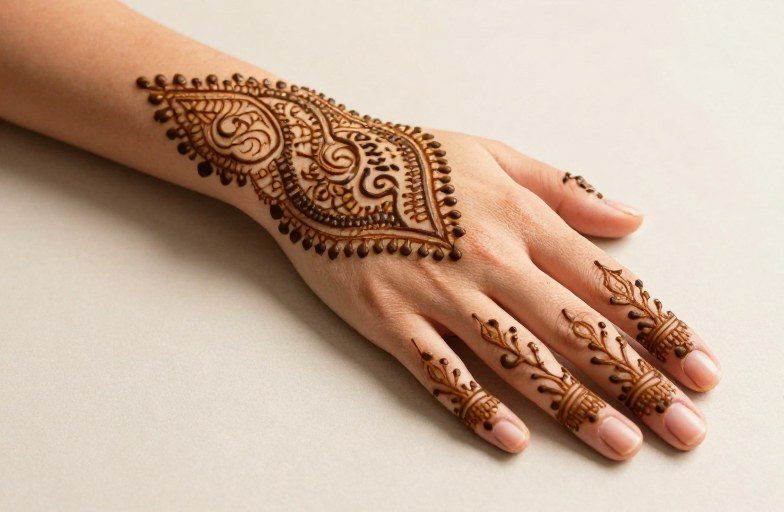
An Arabic henna tattoo takes the flowing visual language of mehndi and commits it to permanent ink. The temporary reddish-brown stains of traditional paste carry symbols of protection, joy, and spiritual connection; in tattoo form, these become black or colored renderings of calligraphy, vines, and geometric frames. What you choose to ink matters intensely. A single word like rahma (mercy) or sabr (patience), a name, a verse, or an attribute shapes the piece’s meaning. The visual grammar of botanical motifs and geometric borders has adorned hands and feet for generations, and that same grammar now migrates to skin permanently.
What Arabic Henna Tattoos Mean Today
People choose these tattoos where heritage, aesthetics, and personal milestone overlap. The script carries weight even if you do not read Arabic. The curves and vertical strokes read as visually striking to unfamiliar eyes, while holding precise significance for those who do.
Names and Protective Words
Single words dominate small placements: wrist inner-folds, collarbones, behind ears. Hubb (love), salam (peace), and hayat (life) appear frequently, often rendered in Thuluth or Diwani script for legibility at small sizes. Parents choose children’s names. Survivors of hardship select qawi (strong) or baqaa (remaining/enduring). Placement matters. Visible locations serve as daily affirmation. Hidden ones preserve intimacy.
Related reading: Arabic henna tattoo meaning | mehndi henna tattoo meaning | henna meaning life tattoo | henna tattoo meaning love
Secular and Spiritual Intent
Some wearers frame the tattoo as cultural pride, particularly Arab and Muslim diaspora communities reconnecting with heritage. Others approach it purely as decorative script, drawn to the aesthetic without religious attachment. Both approaches are common, and the distinction shapes design choices. Spiritual pieces tend toward classical calligraphy rules and content from religious tradition; secular pieces mix Arabic with English, incorporate non-traditional colors, or break baseline alignment for stylistic effect.
- Wrist and forearm: daily visibility, conversation starter
- Ribcage and shoulder blade: private significance, larger script capacity
- Ankle and foot: nod to traditional henna placement, though foot tattoos fade faster
- Behind ear and nape: discreet, works with hair up or down
Design and Technical Choices
Arabic script tattoos demand specific technical considerations that differ from Roman-letter designs. The connected nature of the script means spacing is not adjustable letter-by-letter; it is word-by-word. A competent artist needs to understand baseline alignment, letter height ratios, and which forms change based on position within a word.
Script Selection and Legibility
Thuluth offers the most readable large-scale option with its tall verticals and balanced horizontal extension. Naskh works better for smaller sizes and longer phrases. Avoid overly ornamental scripts like Maghribi for tattoos under three inches; detail blurs. Always have a native reader verify spelling. Mirror-image errors and disconnected letters plague poorly planned pieces. The tattoo should be readable to Arabic speakers, not merely decorative to others.
Complementary Visual Elements
Traditional henna imagery pairs naturally with script. Trailing vines frame vertical calligraphy. Lotus blossoms anchor the baseline. Geometric rosettes fill negative space. These additions serve structural purposes too. Vines can mask minor spelling adjustments. Rosettes balance asymmetrical word lengths. Negative space matters. Dense black script without breathing room ages poorly. A skilled artist leaves hairline gaps within thick strokes, anticipating the spread that happens as ink settles over years.
- Line weight: thick downstrokes, thin horizontals, mimicking reed pen variation
- Color: traditional black, but deep reds and browns reference actual henna stains
- Background: unshaded skin reads cleaner than filled backgrounds over time
- Scale: minimum 2 inches for single words, 4+ inches for phrases
How These Tattoos Age
Arabic script tattoos face specific aging challenges. The fine loops of ayn and ghayn, the dots that distinguish ba from ta from tha, these details blur earliest. What reads clearly in your twenties may require context clues decades later.
High-movement areas accelerate this. Inner wrists, where skin flexes constantly, show faster degradation than upper arms or ribs. Sun exposure without SPF turns black ink blue-gray, making script harder to distinguish from surrounding shading. The dots above and below letters, technically ijam, are first to fade or spread; their loss can alter meaning entirely.
Touch-up strategy differs from other styles. Adding back lost dots risks muddying the original work. Most artists recommend periodic refresh every 7-10 years for highly detailed pieces, or designing with intentional boldness from the start: thicker initial strokes, larger minimum size, fewer dots relied upon for critical distinction. White ink highlights, popular in some ornamental styles, tend to disappear within a few years on most skin tones.
History and Cultural Roots
The connection between henna as body art and Arabic script runs deep through North African and Middle Eastern practice, though the tattoo form is distinctly modern. Henna paste application, mehndi, has ancient roots, with evidence often linked to rituals across the Levant and Egypt long before Islam. The incorporation of Arabic writing into henna designs emerged more prominently with the spread of Islam, as calligraphy became the premier art form in regions where figurative representation faced religious restriction.
Regional Variation in Henna Tradition
Moroccan henna favors geometric precision and floral density, with occasional Amazigh symbols. Sudanese and Egyptian styles run more figurative, incorporating birds and architectural elements. Gulf patterns emphasize bold, large-scale floral work. The Arabic script element varies accordingly: Maghribi script in Morocco, Naskh in Egypt, regional Thuluth variations elsewhere. A tattoo referencing this heritage gains specificity through choosing regionally appropriate script and motif pairings.
From Temporary to Permanent
The shift from paste to needle occurred gradually through the 20th century, accelerating with globalized tattoo culture and diaspora identity expression. Some communities view permanent ink as conflicting with traditional henna’s ephemeral, celebratory nature; others see the tattoo as honoring the art form’s visual legacy while adapting to permanent presence. Neither stance is universal.
What to Remember
Before you commit, verify your text with multiple native readers, not one. Arabic spelling errors in tattoos are common and permanent. Choose an artist with demonstrated script experience, not just ornamental skill. Plan for aging: design for boldness, protect from sun, and budget for future touch-ups. Respect the living tradition you are borrowing from. The tattoo lasts longer than the impulse that created it. Make sure both the words and their visual form will remain meaningful to you when the initial novelty has passed.
Frequently Asked Questions
Is it disrespectful to get an Arabic henna tattoo if I am not Arab or Muslim?
Intent and accuracy matter more than identity. Many non-Arabic speakers choose these tattoos for aesthetic or spiritual reasons. The key is respectful engagement: verify spelling with native readers, understand the meaning of your chosen words, and avoid religious content if you do not practice the faith. Treating the script as purely decorative without regard for its cultural weight tends to draw criticism.
Why do foot tattoos fade faster?
Feet experience constant friction from shoes and socks, plus thinner skin with less subcutaneous fat to hold ink. The ankle and foot also receive more sun exposure in warm climates. For Arabic script specifically, fine details in these high-wear areas blur particularly quickly.
Can I use a Quranic verse in my tattoo?
This is contested. Some historical scholars permitted marking the body with protective text; others discouraged any skin modification as disrespectful to creation. Many contemporary Muslim wearers avoid Quranic verses in tattoos to prevent theological complication, choosing culturally significant but non-religious words instead. If you are not Muslim, religious text is generally considered inappropriate by most communities.