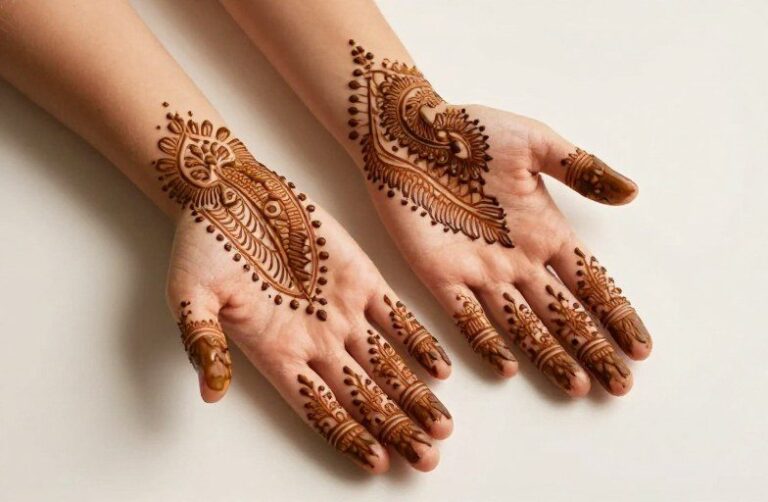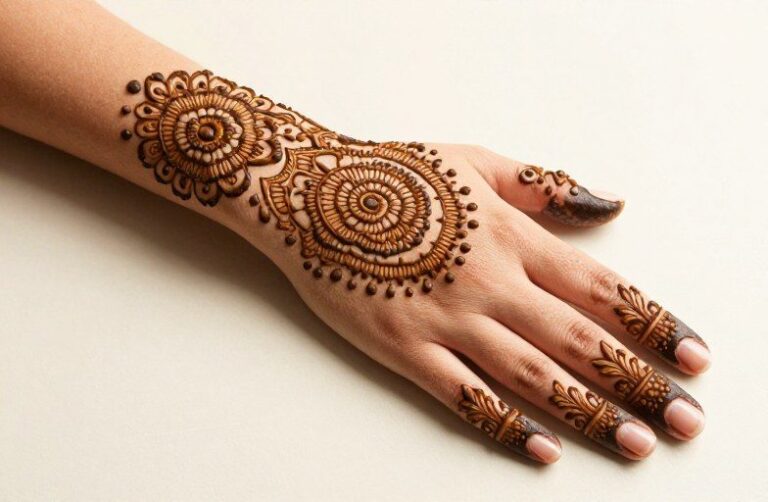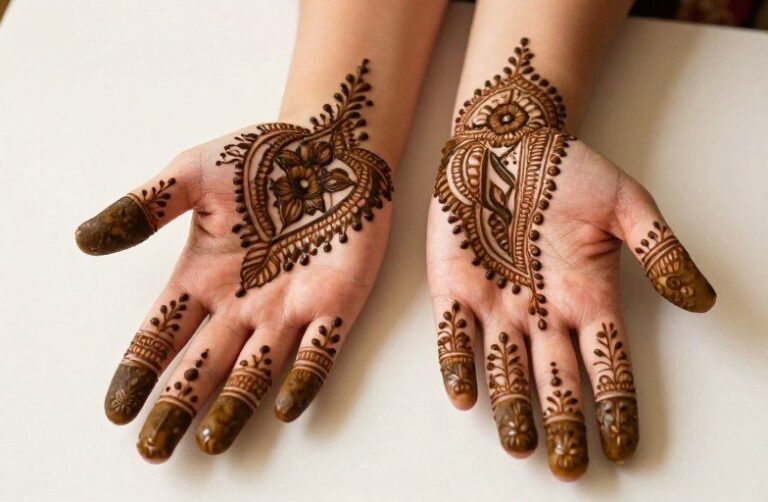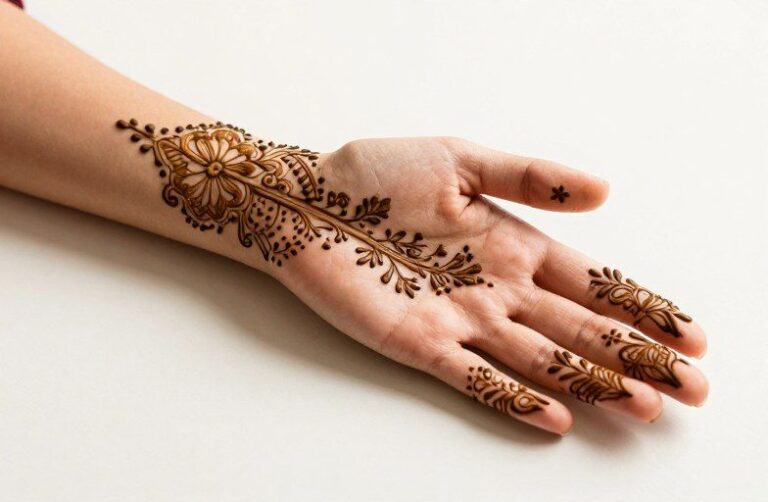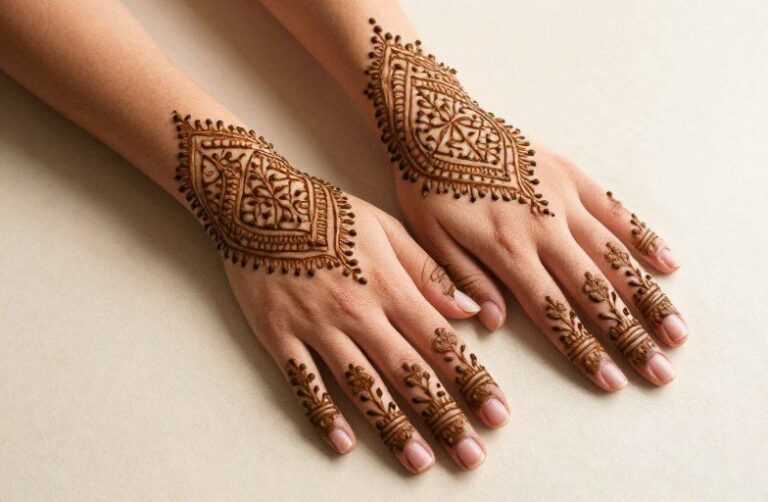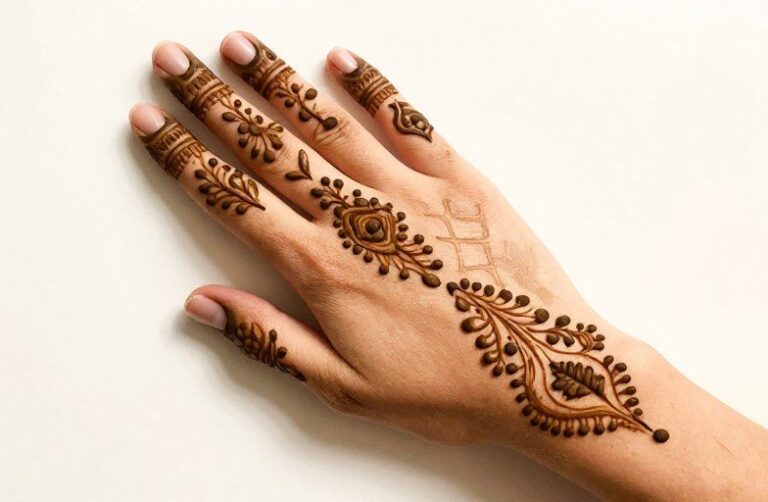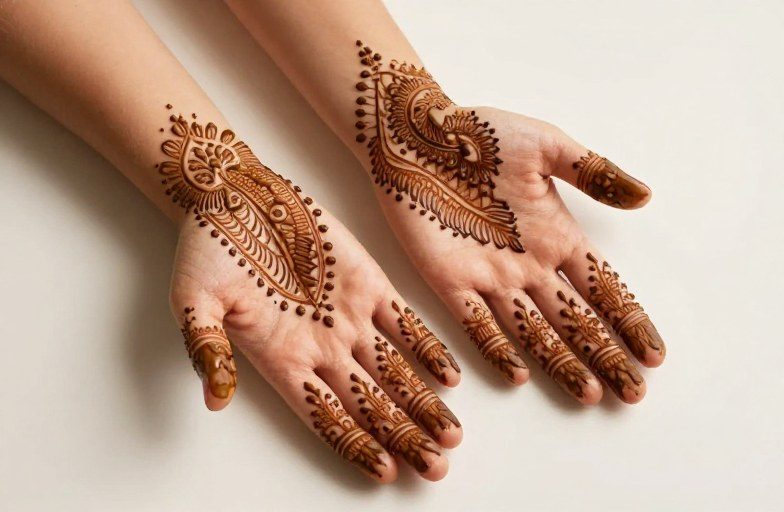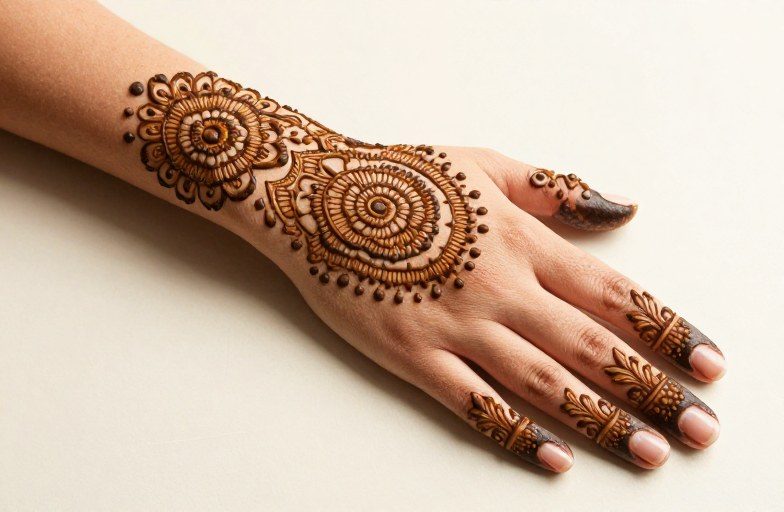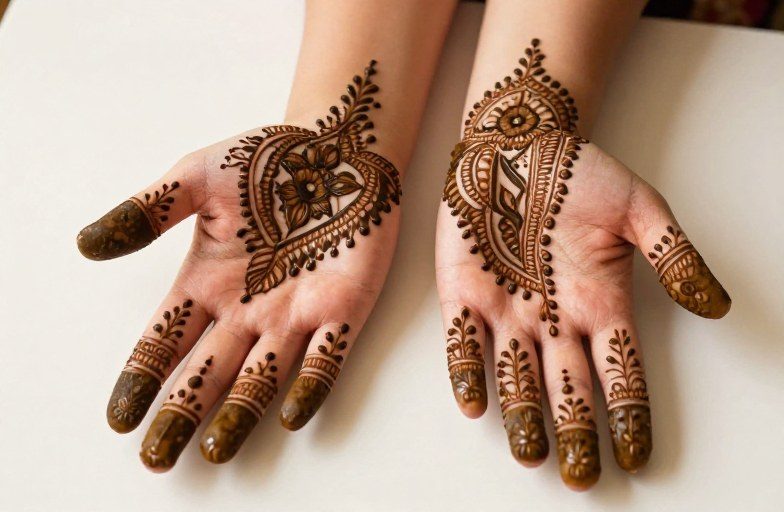

A henna tattoo meaning love represents devotion, joy, and the bond between two people. Traditional mehndi designs applied before weddings carry this symbolism most strongly, with the darkness of the stain often linked to the depth of love between partners. Today, permanent henna-inspired tattoos translate these temporary rituals into lasting body art.
Mythology & Folklore
Love and henna intertwine through centuries of narrative across several cultures. Some trace the practice to stories of divine romance, where gods and goddesses marked their skin to celebrate union. The most widespread folklore connects henna’s red-brown color to the blood of a sacrifice or the heat of passion, both metaphors for love’s intensity.
Bridal Legends
North African and Middle Eastern folklore often features brides whose henna stains predict marital happiness. Dark, long-lasting marks signal a husband’s deep affection. This isn’t medical, it’s symbolic. The application itself becomes a communal ritual: female relatives gather, sing, and bless the union while drawing protective patterns. Vines and flowers, especially jasmine, dominate bridal designs because they grow toward light and intertwine, mirroring how partners lean on each other.
Protective Love Symbols
Some traditions hold that henna wards off evil eye from envious onlookers, protecting the couple’s happiness. The hamsa hand, sometimes incorporated into henna designs, extends this guardian function. Eyes drawn into the pattern literally watch over the beloved. This protective dimension adds layers to love symbolism: the tattoo doesn’t just celebrate connection, it actively shields it.
History & Cultural Roots
Henna’s documented use spans roughly five thousand years across North Africa, the Middle East, and South Asia. The plant, Lawsonia inermis, thrives in hot, dry climates, making it accessible to cultures along trade routes. Its adoption for love ceremonies likely emerged from its availability and the stain’s resemblance to precious metals or blood, both symbols of wealth and vitality.
From Ceremony to Skin
Traditional mehndi remains temporary, lasting one to three weeks. The shift to permanent henna-style tattoos began in Western shops during the 1990s and 2000s as clients sought to capture ceremonial aesthetics without cultural participation. This transition carries ethical weight. Some South Asian and North African artists view permanent replication as appropriation when divorced from context. Others, particularly diaspora artists, actively blend traditions. The meaning shifts based on who applies it, their lineage, and their intent.
Regional Variation in Love Symbolism
Indian bridal mehndi emphasizes peacocks and paisleys, symbols of beauty and fertility. Moroccan patterns favor geometric precision, representing the structured harmony of partnership. Sudanese and Egyptian traditions often include the groom’s initials hidden within the design, which he must find on the wedding night. These regional distinctions matter for anyone choosing a permanent piece. A design’s origin affects its resonance; copying without understanding dilutes the symbolism.
Color vs Black and Grey
Actual henna ranges from orange-brown to deep maroon depending on skin chemistry, application time, and powder quality. Permanent tattoos mimicking this effect face technical constraints worth understanding before you commit.
Brown and Red Inks
Some artists mix warm browns, siennas, and rust reds to approximate henna’s natural tone. These pigments behave differently than black. Red-based inks fade faster, shifting toward pink or orange within five to ten years. Brown inks hold longer but can muddy on cooler skin undertones. Expect more frequent touch-ups than blackwork requires. The trade-off: authenticity of color against longevity of line.
Black and Grey Adaptations
Black and grey henna-style tattoos solve the fading problem while sacrificing color accuracy. Fine linework in black reads crisply for decades. Shading builds depth that brown inks struggle to maintain. The aesthetic becomes more graphic, less organic. For love symbolism specifically, black ink’s permanence arguably suits the subject, love as enduring, not fleeting. Many artists recommend this route for large pieces or detailed finger work where color would blur.
Similar & Related Symbols
Henna love tattoos rarely stand alone. Understanding companion symbols helps build coherent designs.
- Mandala: Represents cosmic order and the universe’s center; paired with henna, suggests love as a stabilizing force in life’s chaos
- Mehndi-style roses: Western romance symbol filtered through Eastern technique; bridges cultural expressions of affection
- Infinity loops: Often woven into henna patterns; straightforward but effective for romantic commitment
- Names in Devanagari or Arabic script: Actual henna sometimes includes hidden text; permanent versions make this explicit
- Matching partner designs: Each carries half a pattern that completes when hands join; technically challenging but visually striking
Closely related motifs include Celtic knotwork (interlaced strands without end) and Japanese enso circles (imperfect, hand-drawn, suggesting acceptance of flaw in love). These share henna’s emphasis on process and imperfection over polished perfection.
Personal & Modern Meanings
Contemporary wearers assign meanings that depart from tradition without invalidating it. The design functions as a personal vocabulary.
Self-Love and Recovery
Some choose henna-inspired pieces to mark self-commitment after difficult relationships or during mental health recovery. The hand placement, visible to the wearer, reinforces this inward focus. Intricate patterns demand attention during application and healing, creating a meditative pause that mirrors self-care rituals. This meaning diverges from bridal tradition but uses the same visual language of devotion applied to self.
Commemorative and Memorial
Parents sometimes incorporate henna patterns into pieces honoring children, particularly daughters. The maternal line transmission of mehndi knowledge, grandmother to mother to bride, translates symbolically even without biological or cultural continuity. Dates, names, or small portraits nested within traditional patterns create hybrid memorials. The love here is familial, not romantic, but the protective, celebratory qualities remain relevant.
Best Placements
Traditional mehndi concentrates on hands and feet because the skin there is thick enough to hold dark stains. Permanent tattooing follows different rules.
- Back of hands and fingers: Most culturally authentic; also most prone to fading and blowout due to thin skin and constant movement. Fine lines blur within years. Bold, simplified patterns work better than delicate tracery.
- Forearms and wrists: Compromise between visibility and technical stability. Inner wrist placement risks faster fade from sun exposure; outer forearm holds detail longer. Sleeve extensions from hand to elbow allow complex storytelling.
- Feet and ankles: Traditional and visually striking; painful due to bone proximity and slower healing from friction with footwear. Best for smaller, bolder designs rather than full-coverage pieces.
- Ribcage and shoulder: Canvas space for large mandalas or flowing vines. Less culturally specific placement, allowing pure aesthetic focus. Curves of the body can mirror organic growth patterns in the design.
- Behind the ear or nape: Intimate, hidden placements suit private love symbolism. Small paisleys or single flowers read as delicate rather than ceremonial.
Healing reality: hand and foot tattoos scab heavily, peel in sheets, and require obsessive aftercare to preserve fine lines. Plan around work schedules; these placements are hard to hide during the flaky phase.
The Takeaway
A henna tattoo meaning love carries weight from centuries of ceremonial use, but its power depends on your relationship to that history. Temporary bridal mehndi binds communities and marks transition; permanent adaptations freeze one moment of that living tradition. The best pieces come from artists who understand both the technical challenges, ink behavior on difficult placements, color fading realities, and the cultural context. Choose designs with knowledge of their origins, placement with respect for how ink ages, and meaning that holds up when the novelty fades. Love, in any form, deserves that consideration.
Frequently Asked Questions
Does a darker henna stain really mean deeper love?
No, that’s folklore, not biology. Stain darkness depends on skin chemistry, application time, and henna powder quality. In traditional contexts, it’s a symbolic wish for strong affection rather than a literal measurement.
Is it cultural appropriation to get a permanent henna-style tattoo?
This depends on context. Many diaspora artists welcome respectful engagement; others find permanent replication problematic when divorced from ceremony. Research the artist’s background, ask about their relationship to the tradition, and avoid sacred or religious motifs unless you’re part of that culture.
Why do henna tattoos on fingers fade so fast?
Finger skin regenerates rapidly and lacks the fat layer that holds ink in other areas. Constant use, washing, and sun exposure accelerate fading. Bold lines hold better than fine detail; expect touch-ups every few years.
Can I use actual henna paste for a temporary trial before committing?
Yes, and it’s wise. Use pure henna without chemical additives, black henna containing PPD can cause scarring. A temporary application lets you test placement, size, and how the color reads against your skin tone before permanent ink.