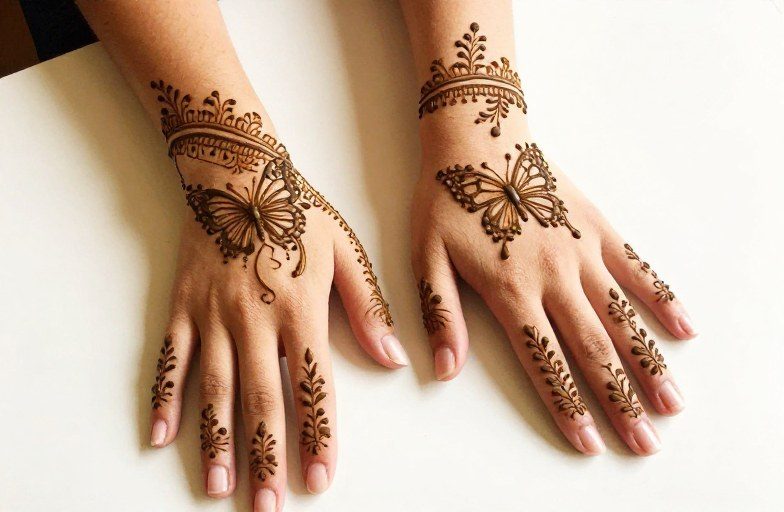
A butterfly rendered in henna carries a layered meaning rooted in two ancient symbol systems. The butterfly itself represents metamorphosis, rebirth, and the soul’s journey across numerous cultures. Henna, applied as a temporary stain rather than permanent ink, adds its own vocabulary of impermanence, celebration, and ritual marking. Together, they create a symbol of change that is itself changeable, meaningful precisely because it fades.
Best Placements
Where you place a butterfly henna design changes how it reads and how long it lasts. Henna stains darkest on thick, warm skin with plenty of blood flow, and fades fastest where skin is thin or frequently washed.
Hands and Feet
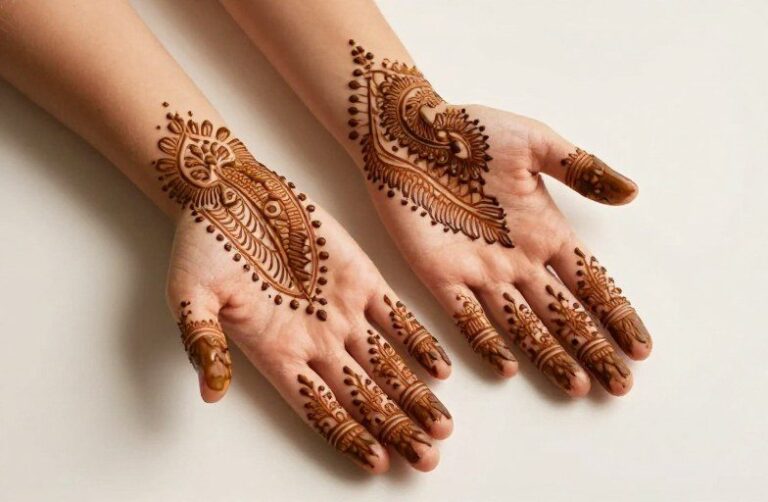
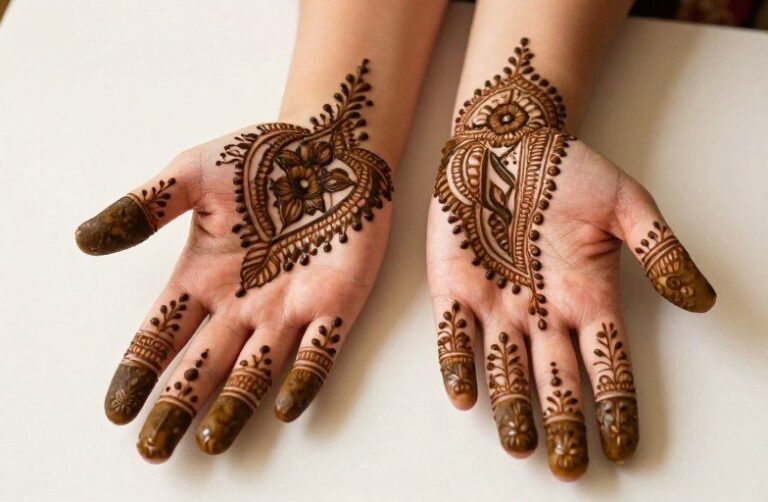
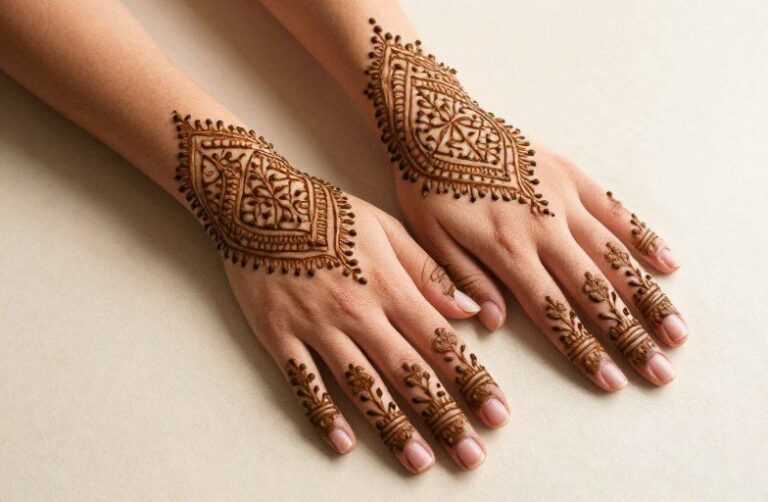
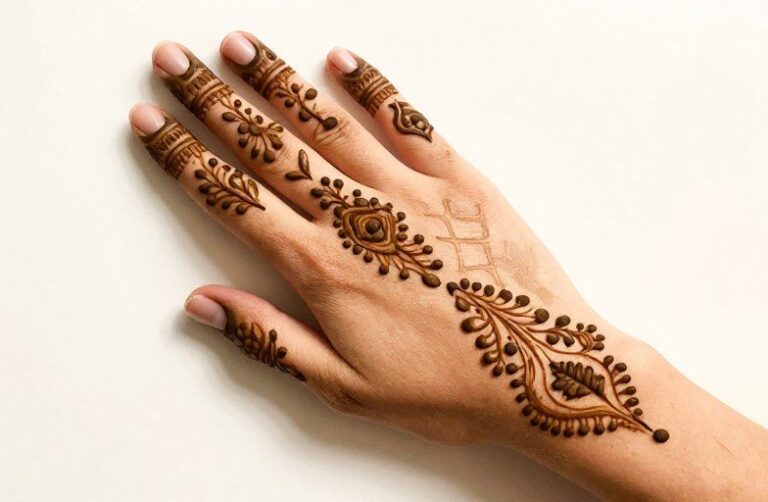
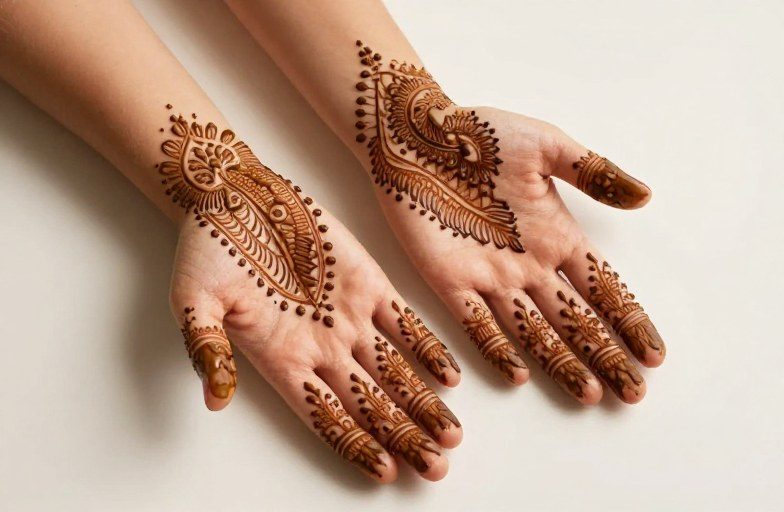
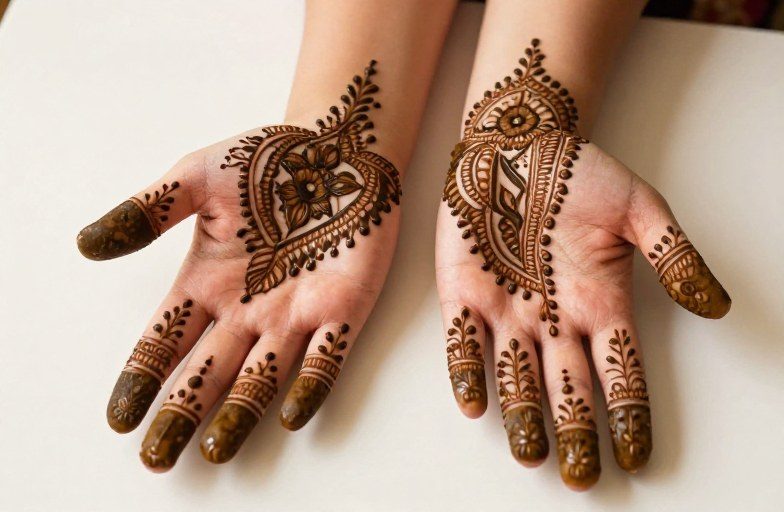
Palms and the tops of feet are traditional for henna across South Asian and Middle Eastern practice. The butterfly here connects to ceremonial contexts, weddings, festivals, rites of passage. The stain goes nearly black on palms, then oxidizes to a deep reddish-brown over 48 hours. On feet, the butterfly can appear to alight or take flight, a placement that has carried bridal significance for centuries. These areas show the design most dramatically but also fade fastest due to constant use and washing.
Upper Arms, Shoulders, and Back
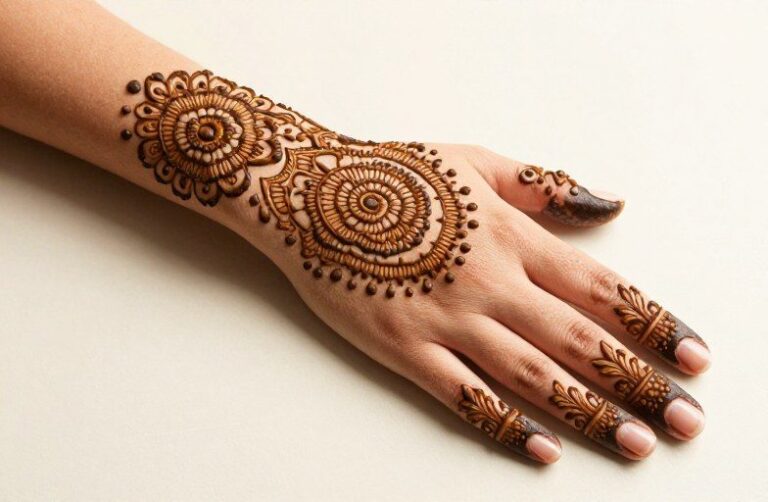
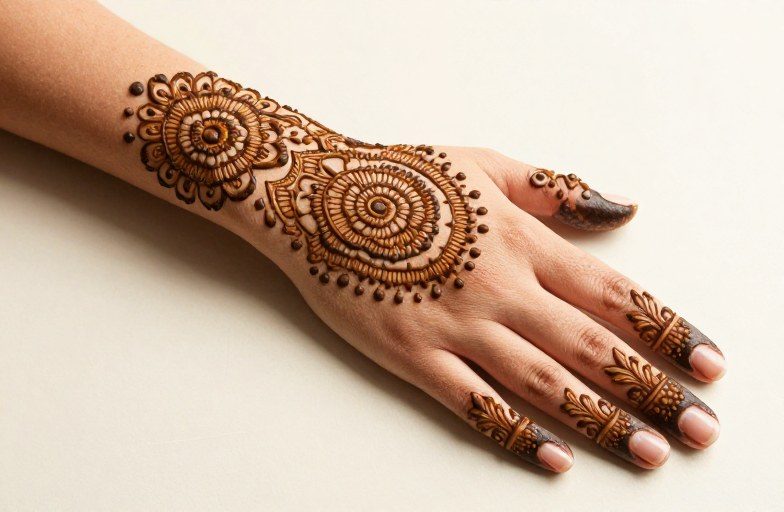
These placements hold color longer, sometimes 2-3 weeks with good aftercare. The butterfly’s wingspan reads well across a shoulder blade or the curve of a bicep. The skin here is less porous than palms, so the stain develops more slowly and reaches a softer terracotta rather than near-black. For someone wanting the symbol without the social visibility of hand placement, these areas offer privacy and longevity.
- Neck and behind ear: trendy but fades in 4-7 days from sweat and hair products
- Lower back: holds stain well, but clothing friction accelerates fading
- Ankles: traditional and practical, less wear than feet but still visible
Religious & Spiritual Angles
The butterfly-henna combination exists at a crossroads of spiritual traditions, though specific meanings vary significantly by context.
Hindu and Jain Connections
In South Asian practice, henna (mehndi) is often linked to auspiciousness and joy. The butterfly, while not a primary religious symbol in Hindu texts, connects to concepts of the soul’s lightness and liberation. Some trace its appeal to the story of Sita applying decorative paste in the Ramayana, though butterflies specifically are more a folk addition than scriptural reference. The combination appears frequently in Diwali celebrations and wedding rituals, where transformation and new beginnings are central themes.
Islamic and Sufi Contexts
Henna has deep roots in pre-Islamic and Islamic practice across the Middle East and North Africa. The butterfly is sometimes interpreted through Sufi poetry as a symbol of the soul’s longing for the divine, fragile, drawn to light, transformed by love. This is not universal doctrine but a poetic association that has influenced design choices. The temporary nature of henna aligns with Islamic perspectives on the ephemeral world (dunya) versus eternal reality.
Christian Resurrection Symbolism
Within Christian iconography, the butterfly has long represented resurrection and the soul’s escape from the earthly body. Applied in henna rather than permanent ink, this creates an interesting tension: a symbol of eternal life rendered in a medium that deliberately disappears. Some wearers find this meaningful, the resurrection hope persists even as the visible mark fades.
Personal & Modern Meanings
Contemporary wearers often layer personal significance onto the traditional symbol without replacing it.
Recovery and Transition
The butterfly’s metamorphosis makes it a natural emblem for people marking recovery from illness, addiction, or trauma. Henna’s temporariness suits this purpose well, the ritual of application becomes part of the process, and the fading mirrors the ongoing nature of change rather than a single fixed moment. The stain’s progression from bright orange to deep brown to nothing traces a visible timeline of transformation.
Gender and Identity Exploration
For those exploring gender identity, the butterfly’s biological transformation from caterpillar to winged adult offers an accessible metaphor. Henna allows experimentation without commitment, trying on a symbol, observing how it feels, letting it go. The medium itself becomes part of the meaning: provisional, exploratory, real in the present moment without claiming permanence.
Similar & Related Symbols
Understanding what the butterfly henna is not helps clarify what it is.
Permanent butterfly tattoos share the core symbolism but commit it to skin indefinitely. The henna version embraces impermanence as a feature, not a limitation. This distinguishes it from the “permanent” transformation narrative.
The lotus in henna carries parallel meanings of emergence and purity, but from muddy water rather than chrysalis. Where the butterfly emphasizes active, almost violent transformation, the lotus suggests gradual rising. Some designs combine both, particularly for wedding or milestone applications.
Dragonflies in henna represent similar themes with different emphasis: change, yes, but also adaptability and the ability to move in multiple directions. The dragonfly’s adult life is brief and airborne; the butterfly’s includes the full cycle of dissolution and reconstruction.
Phoenix imagery, rarely rendered in henna due to the complexity of fire and feather detail, shares the rebirth theme but with destruction as prerequisite. The butterfly’s transformation is gentler, more organic, less catastrophic.
Design Tips & Pairings
How the butterfly is drawn in henna affects both its visual impact and its symbolic weight.
Line Weight and Detail
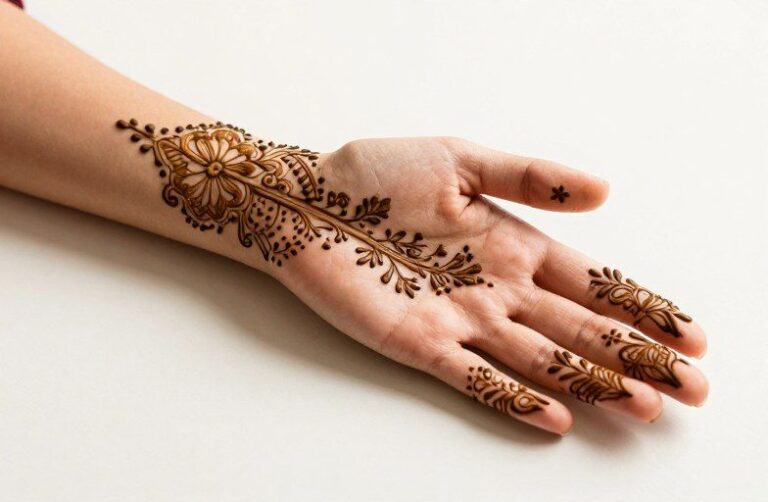
Henna paste is applied through a cone or syringe; fine lines require steady pressure and skill. A butterfly with delicate, hair-thin wing veins will stain lighter and fade faster than one with bold, filled shapes. For maximum contrast and longevity, artists typically outline the wings thickly and fill with patterned detail rather than attempting photographic realism. The traditional mehndi vocabulary, paisleys, florals, geometric fills, integrates naturally into wing patterns.
Common Pairings
- Floral vines trailing from the butterfly’s flight path: growth following transformation
- Moon phases integrated into wing patterns: cyclical change, feminine timing
- Single butterfly versus multiple: solitude versus community in transformation
- Broken or emerging-from-chrysalis designs: process over result
Color is limited by the medium, true henna is always some variation of reddish-brown. “Black henna” containing PPD is a known allergen and not traditional; “white henna” is actually body paint, not stain at all. The authentic color range is part of the symbol’s honesty.
How It Ages on Skin
The fading process is not failure but an integral part of the symbol’s meaning.
The Stain Timeline
Fresh paste removed after 4-8 hours leaves a bright orange that looks almost neon. This deepens to reddish-brown over 24-48 hours as the lawsone oxidizes. Peak color lasts 3-5 days, then gradual fading begins, first at edges, then in high-friction areas. By day 10-14, most designs are ghost images; by day 21, often gone entirely. The butterfly’s wings seem to lighten, then disappear, a literal enactment of transformation and release.
Factors That Extend or Shorten Wear
Aftercare matters: keeping the paste on longer (up to 12 hours for palms), avoiding water for the first 24 hours, and applying a sugar-lemon sealant all deepen stain. Conversely, swimming, exfoliating, and certain skincare acids strip it rapidly. The butterfly on a swimmer’s shoulder will vanish faster than one on a desk worker’s inner wrist.
Skin chemistry varies enormously. Oily skin tends to resist stain; dry skin absorbs it deeply. Some people stain almost black, others barely reach orange. This unpredictability is part of the medium, no two butterfly henna applications develop identically, just as no two transformations follow the same course.
Final Thoughts
The butterfly henna tattoo occupies a specific symbolic space: it marks transformation while refusing to fix it permanently. This is not lesser than a permanent tattoo; it is different in kind. The fading is the point. The ritual of application, the waiting for color to develop, the watching as it lightens and disappears, all of this becomes part of what the symbol means. For those drawn to it, the butterfly in henna offers a way to wear change on the body, to witness it directly, and to let it go when the time comes. That is its particular power, and its particular honesty.
Frequently Asked Questions
How long does a butterfly henna tattoo typically last?
With proper aftercare, palm and hand designs fade in 1-2 weeks, while arm, shoulder, and back placements often last 2-3 weeks. Feet and ankles fall somewhere in between. Individual skin chemistry and daily habits significantly affect longevity.
Can I get a dark black butterfly henna design?
True henna never stains black, it ranges from orange to deep reddish-brown. Products marketed as “black henna” often contain PPD, a chemical that can cause severe allergic reactions and permanent scarring. The authentic color range is part of the tradition.
Does the butterfly direction matter in henna design?
A butterfly facing upward or in flight typically suggests aspiration and forward movement. One at rest with wings folded can indicate completion or internal processing. These are common interpretations rather than fixed rules, and most contemporary wearers choose based on aesthetic preference.
What’s the difference between henna and a permanent butterfly tattoo for this meaning?
Permanent ink commits the symbol indefinitely, anchoring transformation as a completed identity. Henna’s impermanence frames transformation as ongoing and cyclical. Neither is more authentic; they serve different relationships to change, one as milestone, one as process.