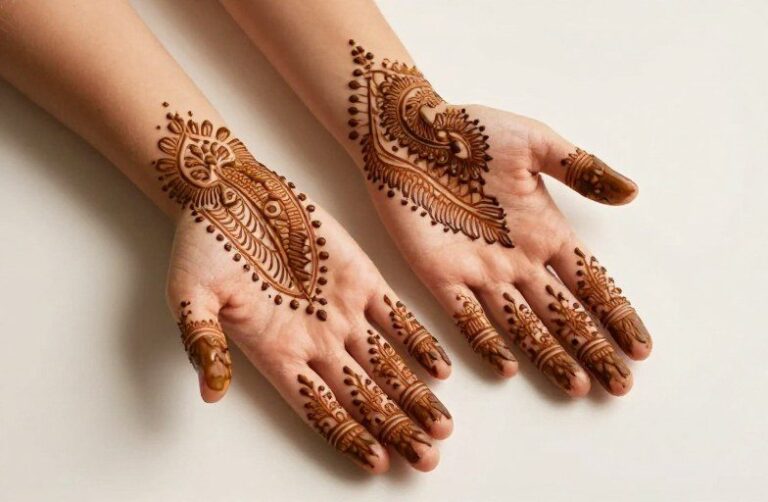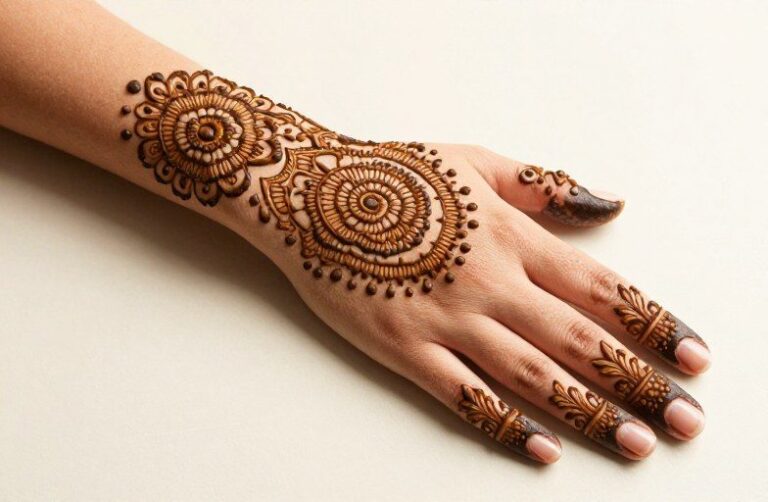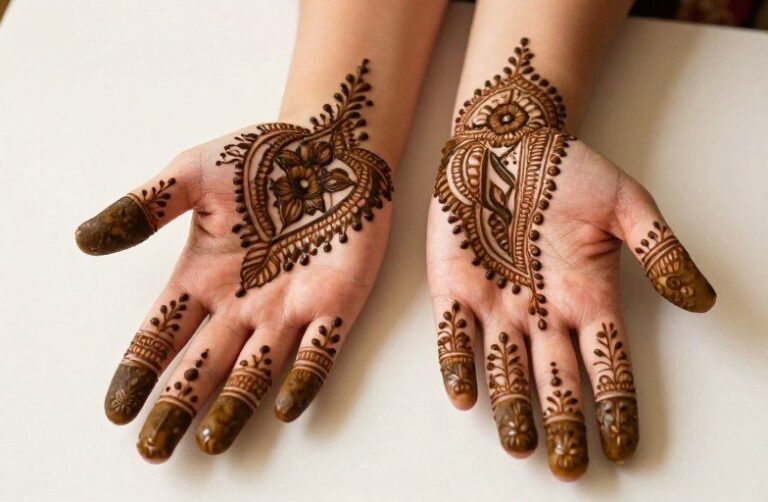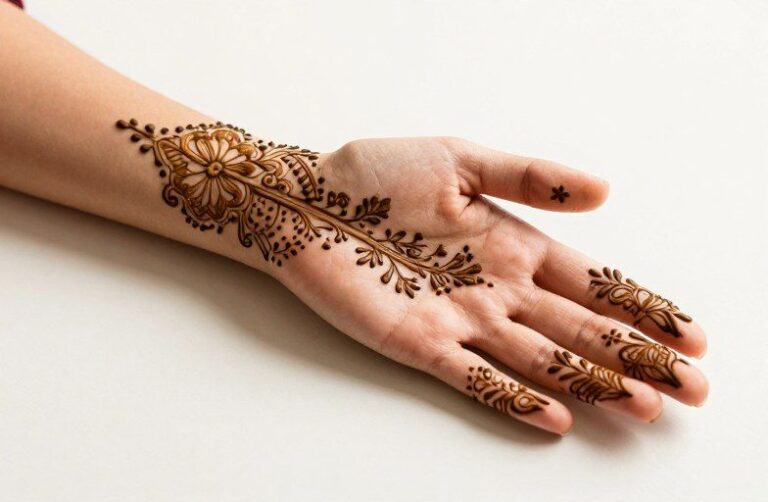
Dulhan henna isn’t just decoration, it’s the last quiet moment before the chaos of a wedding weekend. The designs have gotten more intricate, more personalized, and honestly more competitive. Brides now show up with reference folders, not just a vague idea of “something traditional.” This guide breaks down what actually matters: placement that photographs well, density that won’t crack, styles that age gracefully through haldi, ceremony, and reception.
For First-Timers
If you’ve never sat for bridal mehndi, the time commitment shocks most people. Full dulhan designs run four to eight hours. Your hands will be wet, dark, and essentially useless for the rest of the day. Plan accordingly.
What Happens During Application
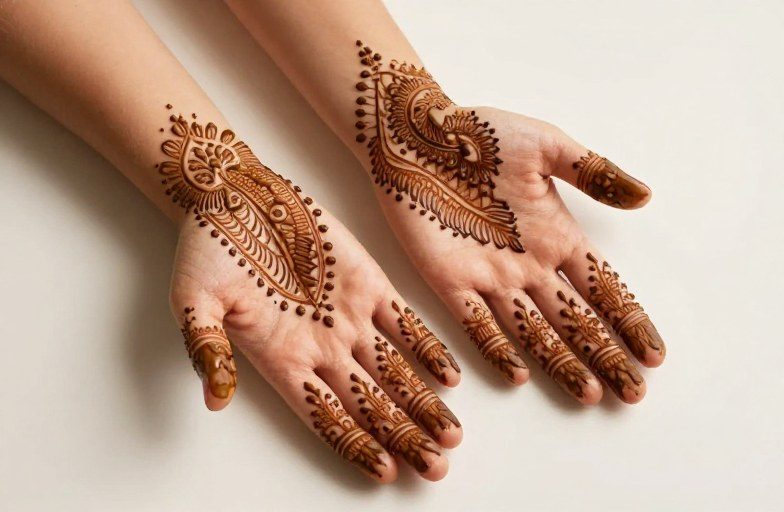
The artist starts with the palms, working outward. Palms stain darkest because the skin is thickest there. Backs of hands and arms get progressively lighter. Most artists build a “frame” first, borders and key motifs, then fill in the dense background patterns. You’ll sit still, fan your hands periodically, and try not to check your phone (touching anything smudges the paste).
After application, the paste dries for 20-30 minutes. Then comes the lemon-sugar seal, then the wait. Six to eight hours minimum for deep color. Overnight is better. The paste flakes off naturally; don’t pick it. What remains is orange at first, deepening to maroon or brown over 24-48 hours.
First-Timer Mistakes to Avoid
- Scheduling mehndi day-of: color won’t peak in time
- Getting hands done before feet: you’ll need to walk to the bathroom
- Applying lotion beforehand: it blocks absorption
- Choosing white outfits: paste flakes stain fabric
- Forgetting to eat beforehand: long sessions are draining
Size & Scale
Dulhan henna operates on a spectrum from minimal to total coverage. The choice affects photography, movement, and how much your hands “read” as bridal versus everyday.
Full Hand vs. Partial Coverage
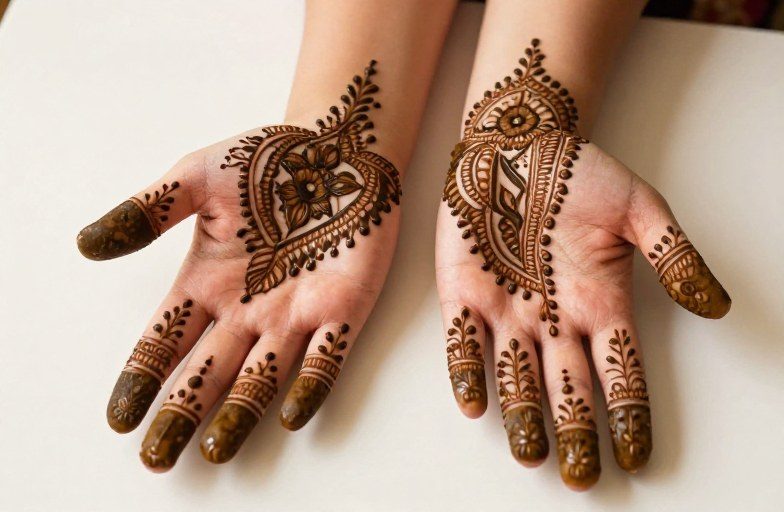
Full palm-to-fingertip coverage with dense fill photographs dramatically but limits hand function. Partial coverage, perhaps a central motif with scattered details, reads modern and leaves fingers free for rings, phones, eating. Most brides compromise: full palms for ceremony photos, lighter backs of hands for the reception when you’re holding a microphone or cake knife.
Arm length varies too. Wrist-only keeps things practical. Elbow-length is standard for most South Asian weddings. Shoulder-length (“full sleeve” mehndi) makes a statement but requires sleeveless or sheer-sleeved outfits to display properly.
Feet: Often Forgotten, Always Photographed
Feet get less attention during planning but feature heavily in ritual photography, think joota chupai, pheras, toe-ring ceremonies. Sole coverage stains poorly (thin skin, constant friction), so artists focus on tops of feet and ankles. A common approach: dense ankle bands with a central foot motif, lighter fill toward the toes. This photographs well when you’re seated, doesn’t crack when you walk.
Tips for Choosing
The reference image you love and what actually works on your skin might differ. Here’s how to bridge that gap.
Matching Design to Your Outfit
Heavy embroidery on your lehenga? Balance with similarly dense mehndi, or the hands disappear in photos. Minimal outfit? You can go lighter on mehndi without looking unfinished. Red and maroon outfits make henna read more orange; pastels and whites make it read darker by contrast. Consider this when you’re choosing between brown henna and black “henna” (actually PPD-based, often irritating, stick to natural).
Also consider sleeve length. Full-sleeve blouse? Arm mehndi peaks through sheer fabric beautifully. Cap sleeves or sleeveless? Arm design becomes part of the outfit itself.
Artist Selection Reality
Not all mehndi artists do bridal work. Party artists work fast with repetitive patterns. Bridal artists build custom compositions, incorporate names or portraits, and understand how designs flow across joints. Ask to see healed results, not just fresh photos. Anyone can make wet paste look good; the stain quality matters more. Book early, top bridal artists often schedule months out, especially during wedding season.
Standout Design Ideas
Personalization separates memorable dulhan mehndi from generic patterns. These approaches actually work in practice.
Hidden Names and Initials
Artists weave the groom’s name into dense pattern areas, usually the palm where it’s hardest to spot. The game: he finds it on the wedding night. Cheesy but beloved. More subtle: initials in negative space, or coordinates of where you met worked into border geometry. These read as pattern to casual observers, meaning to you.
Portrait and Scene Elements
Some artists now include miniature portraits, couple’s faces, wedding venue architecture, pets. This requires exceptional skill; verify the artist’s portfolio includes actual portrait work, not just claims. Scene elements (peacocks, elephants, mandap structures) work better than faces for most artists. They fill space dramatically and read clearly even as the stain lightens.
Asymmetric Pairing
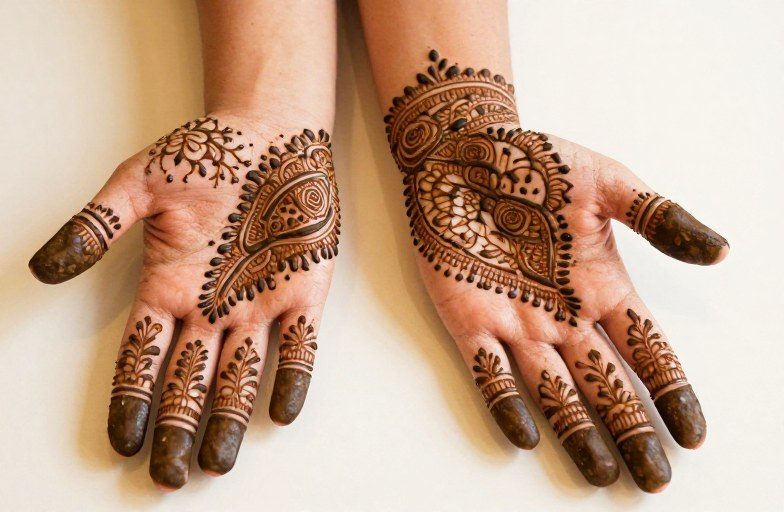
Matching hands are traditional. Asymmetric designs, different but complementary patterns on each hand, photograph more dynamically and feel contemporary. One hand might feature a large central motif, the other scattered elements that echo it. This works especially well for brides who’ll hold hands together in photos, creating visual conversation between the two.
Popular Styles
Regional styles have distinct characteristics. Most modern brides mix elements rather than adhering strictly.
Rajasthani: Dense and Architectural
Characterized by fine grid-based fill, mango (kairi) motifs, and heavy palm coverage. Rajasthani style photographs well from distance, important for stage shots where hands are small in frame. The density also means longer application time and more paste to flake off. Best for brides prioritizing traditional impact over speed.
Arabic: Flowing and Open
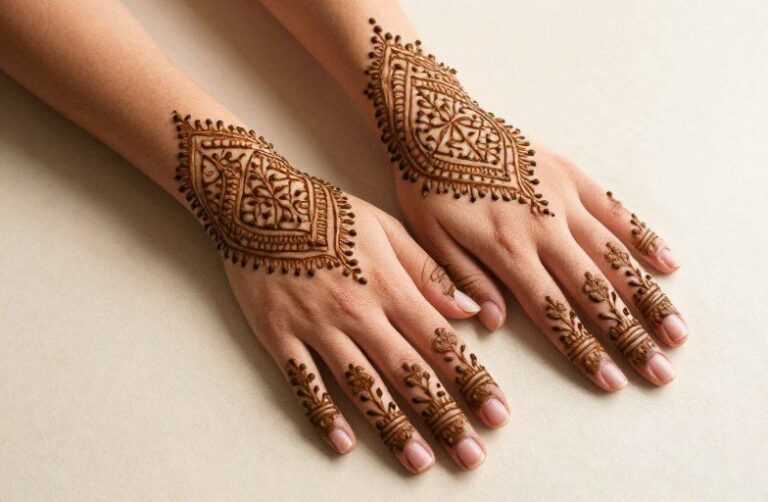
Arabic-influenced designs use bold outlines, floral trails, and significant negative space. Less time to apply, lighter stain by volume, but the contrast between skin and pattern creates striking visual effect. Particularly flattering on darker skin tones where dense brown-on-brown Rajasthani style can disappear. Popular for reception looks or brides wanting modern elegance.
Indo-Arabic Fusion
The practical compromise: dense elements where they’ll stain darkest (palms, wrist bands), open Arabic-style flow on arms and backs of hands. This gives the bridal “weight” for ceremony photos while keeping application time manageable. Most contemporary dulhan mehndi falls in this hybrid space.
Trending Variations
Some newer approaches are shifting how brides approach mehndi day.
White and Glitter Accents
White henna (actually body paint, not true henna) and glitter add dimension for immediate photography but wash off without staining. Artists apply these over dried natural henna for the event, knowing they’ll disappear. Useful for reception touch-ups if natural color has faded. Not a replacement for proper staining.
Minimalist Bridal
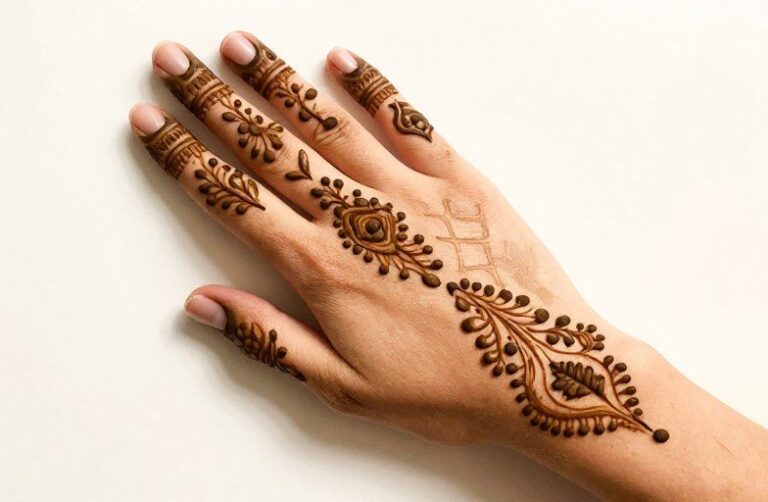
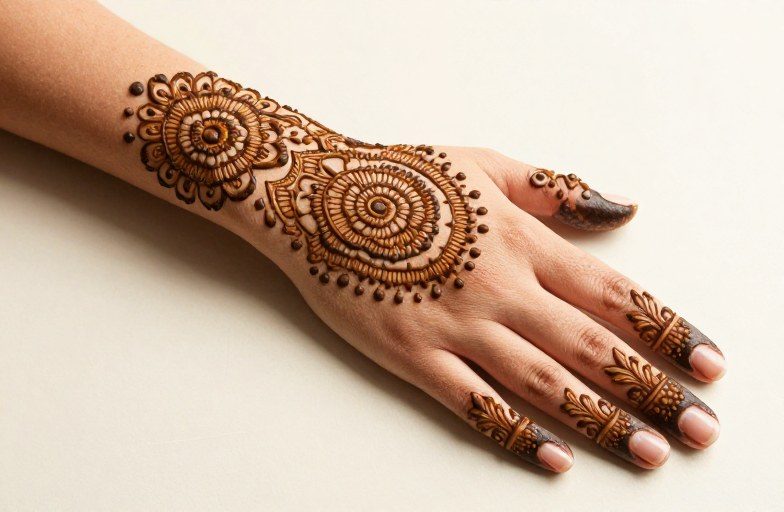
A counter-trend: single bold motifs, clean lines, lots of skin showing. Think one large mandala per palm, or a delicate vine trailing to one finger. Requires confidence, it reads as intentional choice, not unfinished. Best for brides with strong personal style or those whose outfits are already maximalist.
Pre-Wedding Touch-Up Sessions
Some brides now get base mehndi 2-3 days before, then a quick touch-up session day-before-wedding for fresh dark paste on key visible areas. This ensures peak color for all events without the marathon single session. Costs more, requires scheduling flexibility, but solves the “my mehndi faded by reception” problem.
Final Word
Dulhan henna sits at an intersection: personal ritual, family expectation, photography requirement, and genuine artistic expression. The best results come from knowing your priorities and communicating them clearly. Want deep tradition? Book the Rajasthani specialist, clear your calendar, accept the paste flakes. Want modern efficiency? Arabic or fusion styles deliver impact without the endurance test. Either way, schedule early, eat beforehand, and protect your hands once that paste goes on. The color will speak for itself.
Frequently Asked Questions
How far in advance should I book a bridal mehndi artist?
Top artists typically book 2-4 months ahead for wedding season dates. Last-minute bookings often limit you to less experienced artists or require paying rush fees. Confirm your date before finalizing other vendors.
Does bridal henna work differently on very fair or very dark skin?
Henna stains skin protein, so results vary by individual chemistry, not just skin tone. Fair skin shows orange-brown stages more visibly. Darker skin achieves deeper maroon-brown final color. The contrast with surrounding skin differs, which affects how dense your design should be for visibility.
Can I get my nails done after mehndi application?
Nail polish, gels, or acrylics applied after henna can interfere with the stain on your fingertips. Do nails first, or wait until henna has fully developed color (48 hours). Many artists actually appreciate clean bare nails as a canvas for fingertip detail.
What if I’m allergic to henna or have sensitive skin?
Natural henna rarely causes true allergy, but PPD-laced “black henna” does. Patch test 48 hours before if concerned. Some artists offer jagua (genipa americana) as an alternative, though it stains blue-black rather than brown. Discuss sensitivities openly when booking.