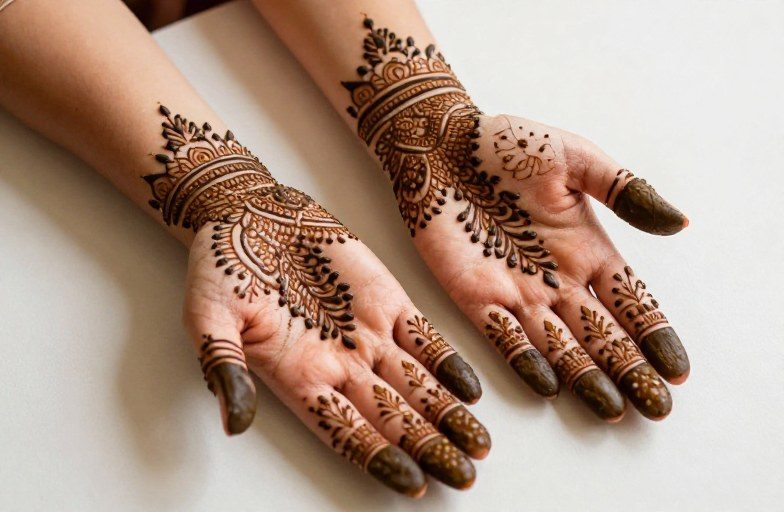
Dulhan mehndi celebrates intricate, meaningful bridal art through temporary henna paste applied with a cone. Unlike permanent body art, it dries on the skin, leaves a reddish-brown stain that deepens on the second day, and fades within one to three weeks. If you are honoring heritage or drawn to the expressive language of South Asian bridal art, understanding the process helps you plan a beautiful result.
Standout Design Ideas
Full Hand and Finger Extensions
The classic dulhan look covers the back of the hand to the fingertips with dense, interconnected patterns. With fresh henna paste, this demands thoughtful placement. Apply the design in sections so each intricate element remains clear while the paste dries. A “half-hand” approach can combine dense palm-side work with cleaner, more open patterning across the knuckles. Finger extensions, those delicate lines running from the base of the finger to the nail, look graceful and should remain undisturbed until fully dry.
Floral Mandala Centers
A central mandala on the back of the hand, ringed by radiating vines and paisley, gives the bridal feel without the full-coverage commitment. The mandala structure ages well because the circular format disguises minor spreading. Ask for the center to be slightly bolder than the outer rings; that contrast survives longer as the finer outer details soften.
Related reading: dulhan henna designs | henna Indian wedding meaning | Rajasthani mehndi ideas | Indian mehndi designs
Motif Selection That Lasts
- Paisley (mango/boteh) motifs: classic, recognizable, hold line weight well
- Peacocks and lotus flowers: symbolic weight, but need skilled shading to avoid looking muddy
- Geometric lattice (jaali) patterns: excellent for filler, age better than organic curves
- Hidden initials or dates woven into vine work: personal without being literal
Best Placements
Hands and Feet
These are the traditional dulhan locations, but they also need careful preparation. Palm-side designs may lighten faster because of constant friction and washing. The back of the hand often keeps its stain longer. Feet, especially the tops and sides, create a striking bridal placement, though the paste can take longer to dry there. For an authentic bridal result, plan the application around the wedding schedule and allow one to three weeks for the stain to fade.
Alternative Locations That Honor the Aesthetic
Forearms, upper arms, and shoulder areas let you scale up the intricate detail while keeping the design visible for ceremonies. A mehndi-style sleeve from elbow to wrist reads as bold and bridal without limiting hand movement. The upper back, centered between the shoulder blades, accommodates a large mandala with the same sacred presence as a full-hand design. Ribs and sternum work beautifully for flowing vine patterns that echo the way henna trails across the torso in some regional traditions.
For First-Timers
Testing the Waters
Mehndi designs are detail-dense, which makes careful application essential. Start with a smaller test design, perhaps a delicate mandala on the wrist or a vine band around the forearm, to see how the paste stains your skin. Darker skin tones can develop a rich, striking stain, while lighter skin may show the reddish-brown color more vividly. Keep the paste on long enough to dry completely, then seal it with lemon-sugar for a deeper result.
Session Realities
The session length surprises people. A palm-sized dense mehndi design takes 3-4 hours minimum. Full hand coverage with finger extensions runs 6-8 hours, often split across two appointments. Numbing creams help but can alter skin texture, making the artist’s job harder. Expect to pay premium rates; this is not flash art, it requires steady, unhurried precision.
How to Personalize It
Regional Variation
Mehndi traditions vary enormously by geography. Rajasthani work tends toward geometric density with minimal negative space. Pakistani bridal styles often feature bolder, more open floral compositions. Arabic mehndi uses flowing, unconnected vines with significant skin showing through. Indo-Pakistani fusion incorporates figurative elements like bride-and-groom portraits or narrative scenes. Research the specific tradition you are honoring. Artists who know the difference can execute authentic pattern vocabulary rather than generic filler.
Integrating Non-Mehndi Elements
Some people choose to weave in personal symbolism: a constellation pattern within the jaali lattice, a meaningful word in Gurmukhi or Devanagari script tucked into vine curls, or a small animal motif representing family heritage. The key is keeping these additions in the same visual language. Line weight, density, and curve style should match the surrounding mehndi work or the piece fractures visually.
Popular Styles
Blackwork and Dotwork
Traditional brown henna creates the classic dulhan look because the paste develops into a warm, oxidized stain. Fine dots and graceful shading add texture without competing with the intricate pattern. Some mehndi artists specialize in a stippled approach that recreates the slightly grainy quality of real henna paste on skin. The result feels ornate, expressive, and temporary.
Specialized Techniques
White ink over blackwork creates a raised, scar-like effect that some find evocative of henna’s temporary nature, but white fades unpredictably and can yellow. It is a high-maintenance choice. Negative space techniques, where the skin itself forms the pattern against a blacked-out background, create dramatic contrast but require large, committed placements to read properly.
- Fine cone detail: maximum intricacy, needs careful drying, creates a delicate stain
- 3-5RL line work: standard for most mehndi replication, reasonable longevity
- Black and grey wash: for peacock or figurative elements within traditional patterning
- Ornamental fusion: combining mehndi vocabulary with Art Nouveau or geometric frameworks
Color Choices
Black Inks
Traditional henna ranges from orange-brown to deep reddish-brown depending on oxidation time, paste quality, and body chemistry. The stain develops gradually rather than appearing all at once. Fresh paste looks vivid and greenish-brown, then darkens over the next two days. Ask your mehndi artist how long to keep the paste on and whether lemon-sugar sealing suits the occasion.
Browns and Accents
Natural henna develops a warm brown stain that can shift toward orange or burgundy as it oxidizes. If you want that classic dulhan tone, choose fresh, safe henna paste and leave it undisturbed until dry. Lemon-sugar sealant can help the paste stay in contact with the skin longer. Avoid questionable black henna products, which may contain harsh additives and can trigger serious skin reactions.
What to Remember
A dense mehndi design needs patience while the paste dries. Expect to keep the area still for one to two hours, avoiding water, rubbing, and tight clothing. Once dry, gently crumble the paste away rather than washing it off immediately. Lemon-sugar sealing can support a deeper stain, which usually grows darker on the second day before gradually fading over one to three weeks.
In many South Asian traditions, mehndi carries specific ritual significance: blessing, adornment, transition. Choosing this visual language deserves the same respectful attention as the ceremony itself. Research the tradition, credit the source, and choose a mehndi artist who understands the pattern vocabulary rather than approximating it. The most meaningful dulhan designs come from genuine engagement with the art form, whether applied professionally or created at home.
Finally, plan for the long arc. These designs are meant to be lived with, not just photographed fresh. The mandala that looks crisp at six months will soften at five years. Choose pattern density and line weight with that future in mind, budget for maintenance, and you will have something that honors both the tradition and your own permanence within it.
Frequently Asked Questions
How long does a bridal mehndi design take to apply?
A palm-sized dense design runs 3-4 hours. Full hand coverage with finger extensions typically needs 6-8 hours, often split across two sessions to manage swelling and skin trauma.
Will fine line mehndi patterns blur or fade quickly on hands?
A bridal hand design can take several hours depending on coverage and detail. A simple palm-sized motif may take 30-60 minutes, while full hand coverage with finger extensions may need 3-6 hours. Plan drying time afterward so the paste can remain undisturbed and the stain can develop fully.
Can all skin tones achieve the same detail level with bridal henna?
All skin tones can wear intricate henna beautifully. The final stain may appear more vivid or subtle depending on the skin and paste, so a skilled mehndi artist should adjust contrast, spacing, and motif size. A small test design can show how the reddish-brown color develops before the main occasion.
What type of henna best creates a traditional bridal look?
Fresh natural henna paste with a fine cone creates the classic bridal stain and supports delicate detail. Dense paisley, mandala, jaal, and peacock motifs can look especially striking. Keep the paste on for one to two hours, seal it gently if desired, and expect the color to deepen through the second day.
Dulhan mehndi celebrates intricate, meaningful bridal art through temporary henna paste applied with a cone. Unlike permanent body art, it dries on the skin, leaves a reddish-brown stain that deepens on the second day, and fades within one to three weeks. If you are honoring heritage or drawn to the expressive language of South Asian bridal art, understanding the process helps you plan a beautiful result.
The stain usually develops from orange-brown to a deeper reddish-brown as it oxidizes. Fresh paste, thorough drying, gentle lemon-sugar sealing, and keeping the area away from water afterward can support a richer result. Avoid artificial black henna products, which may contain unsafe additives and cause painful reactions.


Leave a Reply