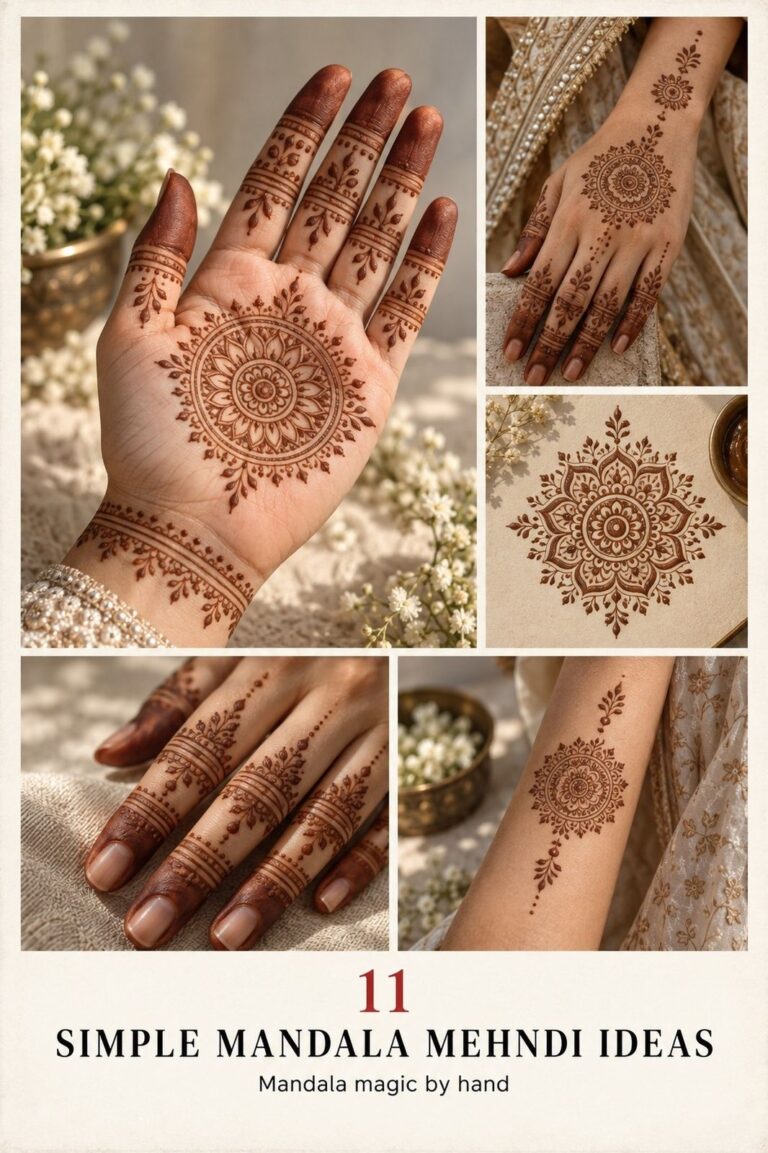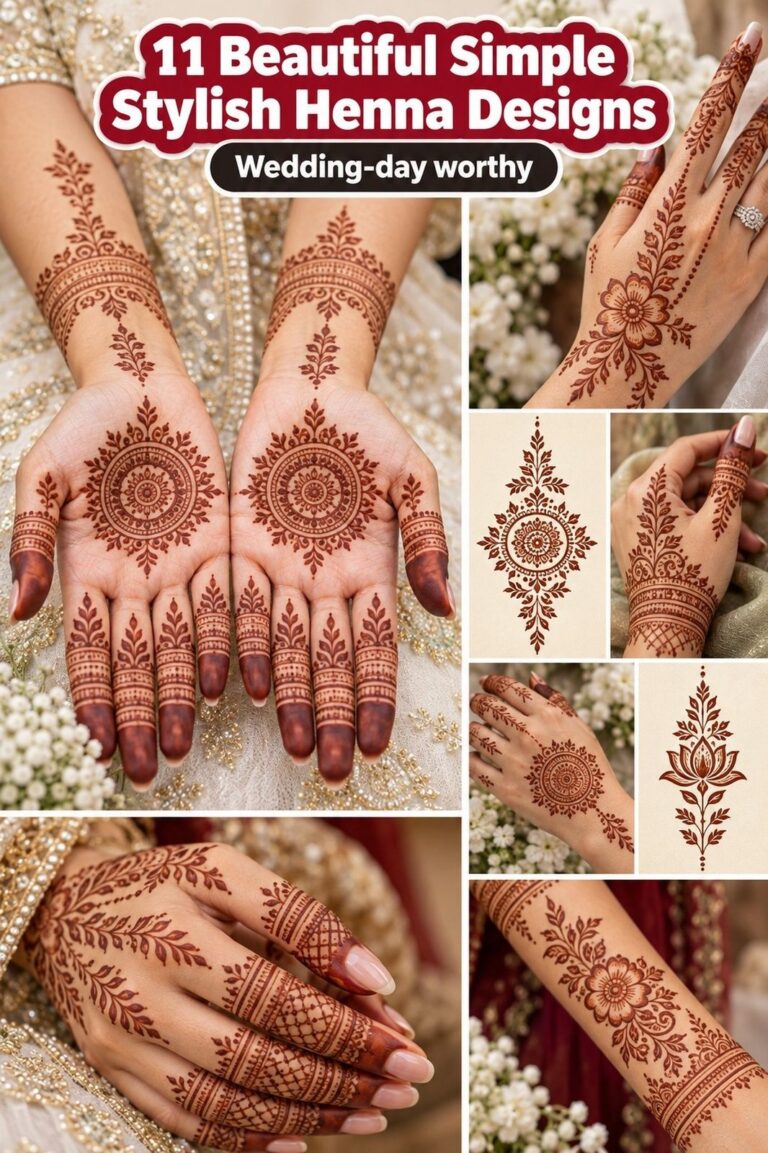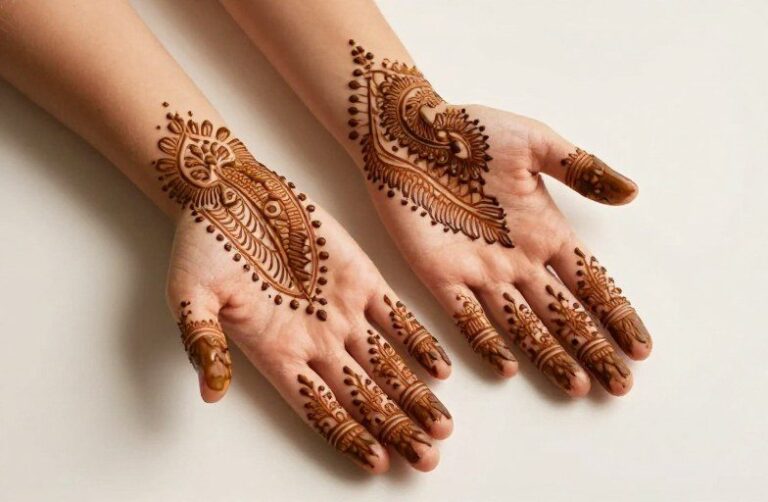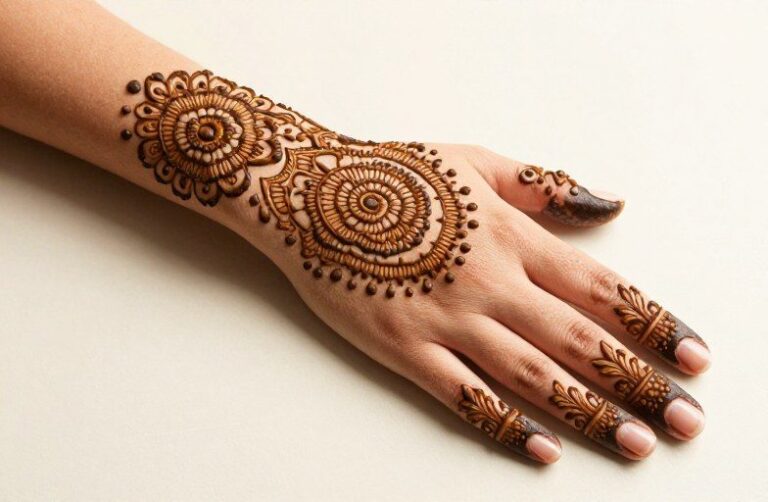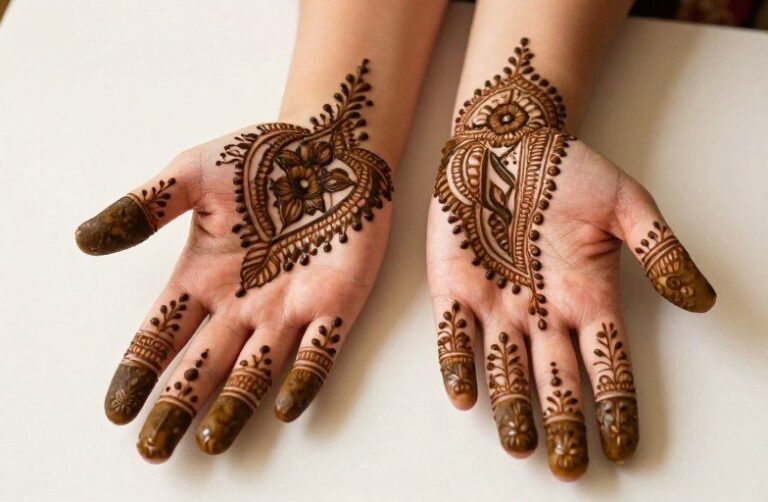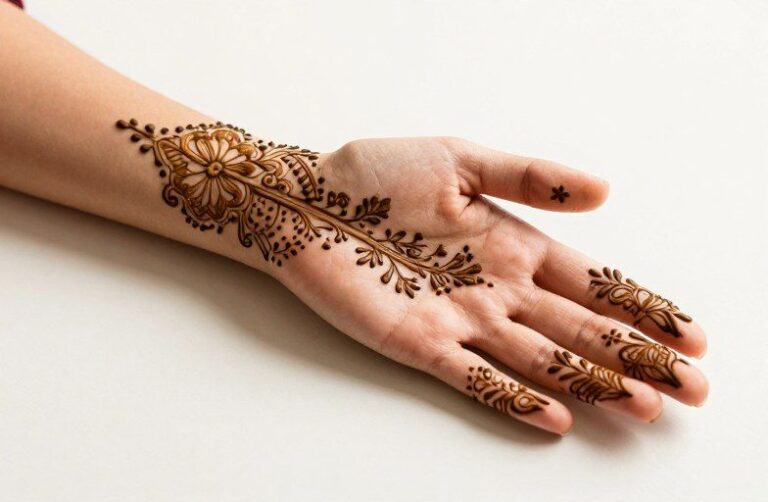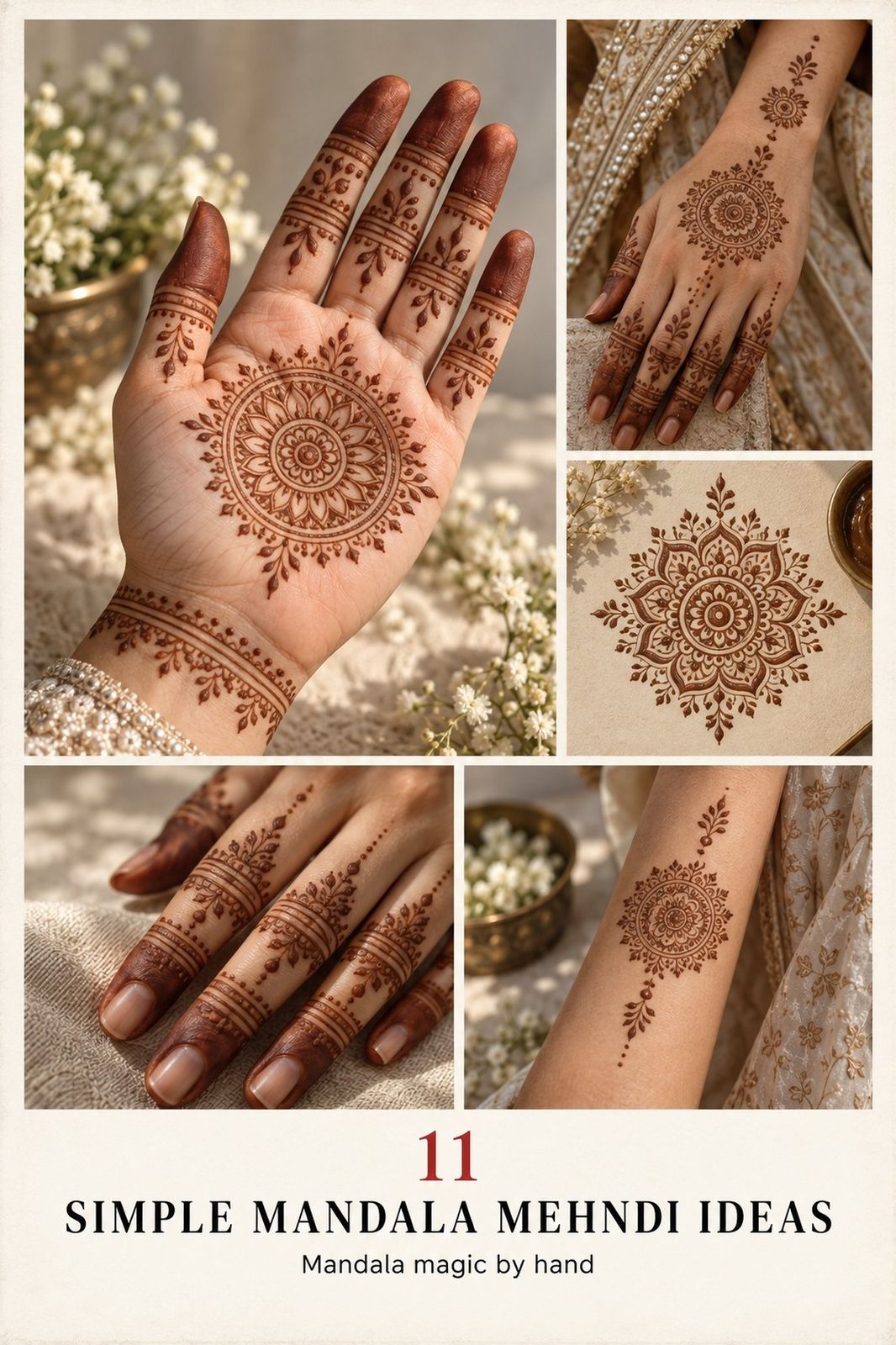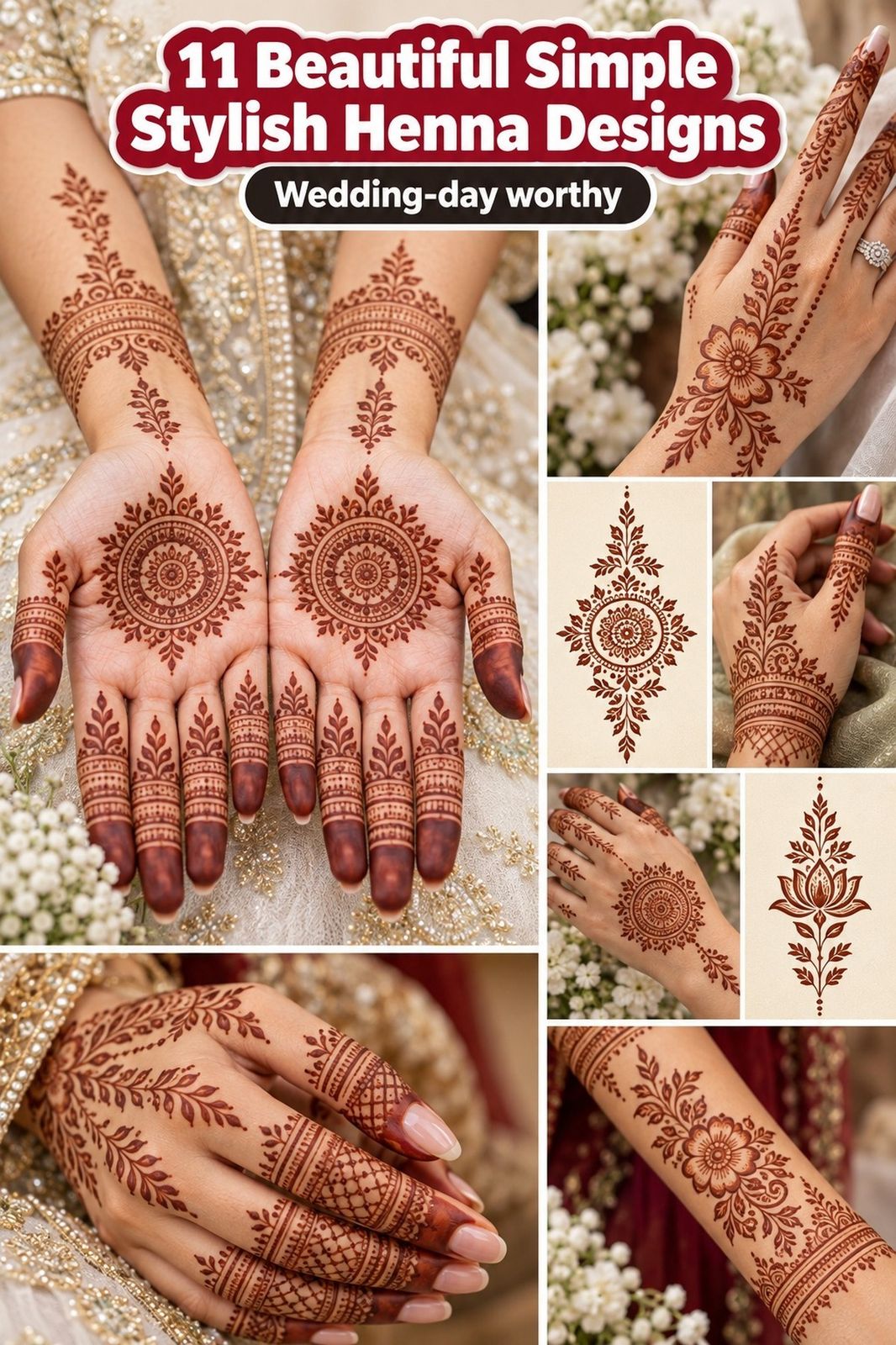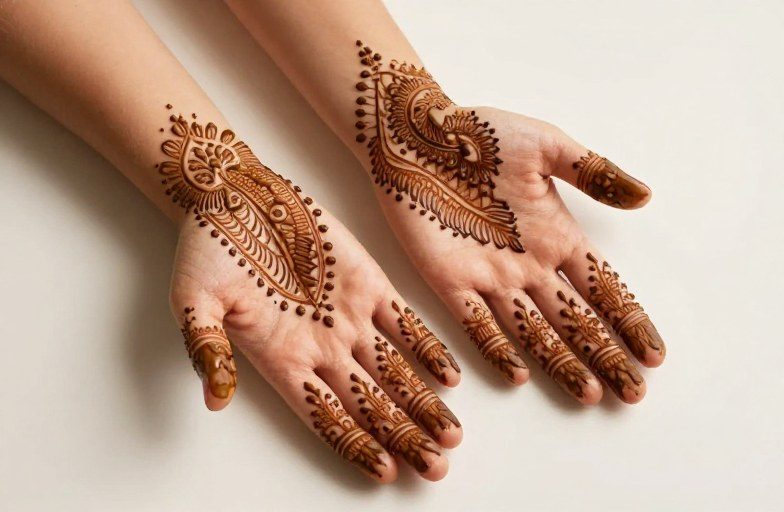
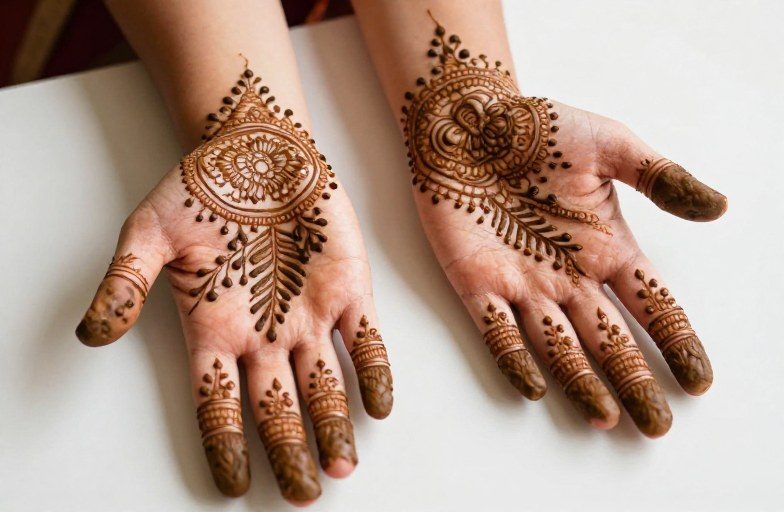
Rajasthani henna carries a visual weight that sets it apart from the looser, more floral styles popular elsewhere. The designs run heavy on geometric precision, peacocks, scorpions, and dense filler patterns that leave almost no skin untouched. Translating this tradition into permanent tattoo work means understanding what makes the style structurally unique, and where ink on skin behaves differently than henna paste sitting on top of it.
Color Choices
Traditional Rajasthani mehndi is a single reddish-brown tone, but permanent tattooing opens the palette in ways that either honor or deliberately depart from the source. The decision shapes how recognizable the piece remains as “Rajasthani” versus general South Asian ornamental work.
Sticking to Near-Black
Carbon black or deep charcoal linework closest mimics the dried henna stain against lighter skin tones. This reads as the most traditional adaptation. Over time, black ink holds its density better than color, though it does soften and can develop a slight blue undertone as it ages. Touch-ups every 5-8 years keep the pattern crisp.
Selective Color Accents
Some collectors add ochre, rust, or deep maroon to specific motifs, peacock feathers, floral centers, while keeping the surrounding lattice black. This approach risks looking like generic Indian-inspired tattooing rather than specifically Rajasthani, so the placement of color matters. Ochre in particular fades faster than black and may need refresh sessions.
- Near-black: reads most authentic, ages most predictably
- Rust/ochre accents: requires touch-up planning, high visual impact when fresh
- Full color saturation: moves away from mehndi reference entirely; own that choice if you make it
Best Placements
The body locations where Rajasthani henna traditionally gets applied, palms, soles, up the arms to the elbow, along the feet to the ankle, don’t all translate cleanly to tattooing. Palmar and plantar skin sheds rapidly and rejects ink; these placements are essentially temporary even when “permanent.”
Forearms and Calves
These flat, visible surfaces let dense patterning read as intended. The forearm’s outer side offers enough real estate for a full cuff-to-wrist composition without wrapping onto the softer inner skin, where fine lines blur faster. Calves work similarly: the outer muscle provides a stable canvas, and the pattern can stop cleanly above the ankle bone rather than fighting the foot’s topology.
Upper Back and Shoulder Caps
For larger-scale adaptations, the upper back’s relative flatness accommodates the symmetrical mandala-like compositions common in bridal mehndi. Shoulder caps let the design radiate from a central point, though the curvature requires your artist to adjust the pattern so it doesn’t distort when your arm hangs at your side.
Size & Scale
Rajasthani henna is inherently detailed. The style relies on tight repetition, tiny dots, and hair-thin lines that create texture through density. At too small a scale, these elements merge into gray mush within a few years. At too large a scale, the personal, hand-applied quality can feel lost.
Minimum workable size for a single motif, say, a peacock with surrounding filler, runs about 4 inches in the longest dimension. This gives the artist room for true line variation: the thick outer contours and the whisper-thin interior detail that makes the style legible. Full sleeves or leg pieces need even more planning; the pattern must flow around joints without the lattice stretching into unrecognizable shapes when you move.
- Single motif: 4+ inches minimum
- Partial sleeve or cuff: 6-8 inches vertical, plan for elbow/bend interaction
- Full limb coverage: requires mapping in multiple positions (standing, arm bent, arm straight)
Standout Design Ideas
Certain motifs carry specific weight in Rajasthani tradition, and tattooing them permanently means engaging with that symbolism whether you intend to or not. The scorpion, for instance, appears in bridal mehndi in the Sikar and Shekhawati regions, often linked to protective symbolism, though some trace it to older fertility associations. The peacock dominates nearly every regional variation, its tail feathers fanning into geometric abstraction.
The Scorpion Motif
Less common in contemporary mehndi, the scorpion makes a striking tattoo centerpiece. Artists often render it with elongated pincers and a curled tail that integrates into surrounding lattice. The negative space of the body against dense patterning creates natural contrast. Placement on the inner forearm or calf lets the tail wrap slightly, giving it movement.
Peacock with Geometric Tail
The Rajasthani peacock differs from the naturalistic birds in other Indian styles. Here the tail dissolves into diamond grids, chevrons, and concentric circles. As a tattoo, this abstraction holds up well, geometric shapes age more predictably than fine feathering. The body can anchor a composition while the tail extends toward the wrist or ankle.
How to Personalize It
Direct copying of traditional bridal patterns can feel appropriative or simply impersonal. The structure of Rajasthani henna, radial symmetry, dense borders, specific filler vocabulary, allows for customization without breaking the visual language.
Consider integrating initials or significant dates into the lattice using the dot-and-line alphabet style sometimes hidden in mehndi. Replace generic floral centers with botanicals specific to your own heritage or region. A skilled ornamental artist can adapt the chevron filler into a topographic map of meaningful terrain, or hide constellation patterns within the diamond grids.
- Hidden text: requires working with an artist who understands Devanagari or Urdu script integration, or who can adapt Latin characters into the visual rhythm
- Personal botanicals: jasmine, marigold, or region-specific flowers replacing generic lotus forms
- Contemporary geometry: slight asymmetry or broken borders for a less ceremonial feel
Trending Variations
Recent adaptations push Rajasthani structure into unexpected territory. Some collectors request the patterning in white ink on darker skin tones, creating a ghost-mehndi effect that inverts the traditional visibility. Others ask for the dense blackwork to stop abruptly, leaving raw skin in deliberate negative shapes, skulls, silhouettes, abstract forms, that reference the style without reproducing it.
White Ink and Scar-Work
White ink tattoos on medium to deep skin tones heal with a raised, scar-like quality that actually resembles henna’s temporary stain in texture if not color. The longevity is unpredictable; white can yellow or disappear entirely. This variation works best as a secondary, not primary, commitment.
Mixed Media: Tattoo and Actual Henna
Some maintain permanent black linework as a base and refresh actual henna over it for events. The tattoo provides the structure; the henna adds the warmth and impermanence. This hybrid approach requires planning the permanent lines to complement, not compete with, the organic flow of fresh paste application.
Before You Decide
Rajasthani-inspired tattooing demands an artist comfortable with ornamental precision, not just illustrative skill. The line weight control, the ability to pack black without blowout, and the understanding of how dense patterns age are specialized. Look at healed photos, not just fresh work. Black-filled lattices that look solid at six months can soften into gray blur by year three if the saturation was too shallow or the skin too mobile.
The commitment level here is high. Unlike a single-image tattoo, ornamental coverage becomes part of your visual identity in a way that reads immediately as cultural reference. Be prepared to explain your connection to the style, or be comfortable not explaining. The work will draw attention and questions.
Finally, consider the long-term maintenance. Dense blackwork requires touch-ups to maintain contrast. The style’s beauty lives in its crispness; once it softens, it loses the quality that made it distinctive. Budget for that ongoing relationship with your artist, or accept the gradual shift toward something more atmospheric than precise.
Frequently Asked Questions
How long does dense blackwork like this typically take to heal?
Surface healing runs 2-3 weeks, but the settling period where true black saturation becomes visible is closer to 6-8 weeks. Dense packing means more trauma, so expect slightly longer redness and potential scabbing than with lighter linework.
Will the fine dot details disappear completely over time?
Tiny dots tend to spread and soften into the surrounding skin within 5-10 years depending on placement and sun exposure. Your artist should size them slightly larger than the final desired look to account for this predictable aging.
Is it disrespectful to get this style if I’m not South Asian?
The question of appropriation varies by individual and community. Rajasthani mehndi has been widely shared and commercialized for decades, but permanent tattooing removes the temporary, participatory aspect. Research, credit the source, and consider whether your specific design reproduces sacred or specifically bridal symbolism.
Can I cover an existing tattoo with Rajasthani patterning?
Dense blackwork can cover lighter existing pieces, but the underlying tattoo will influence what reads clearly. Old color work may shift the apparent tone of overlying black. A consultation with healed photos of the existing piece is essential before planning.