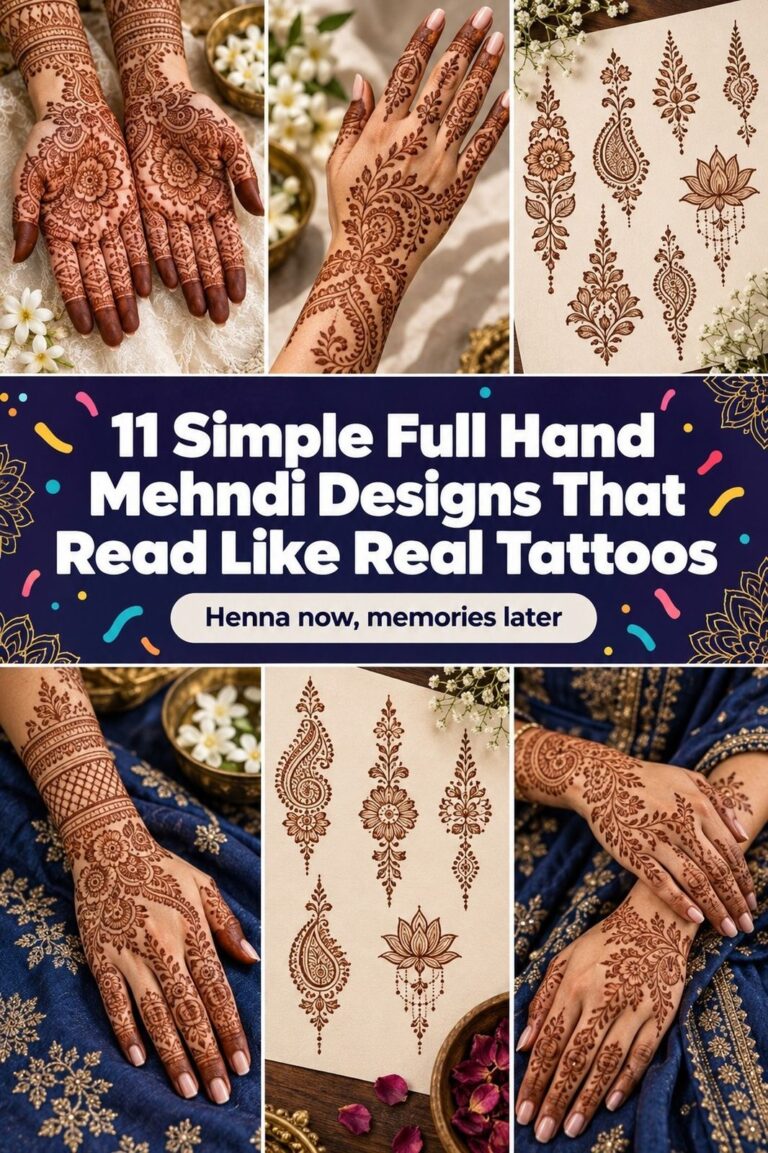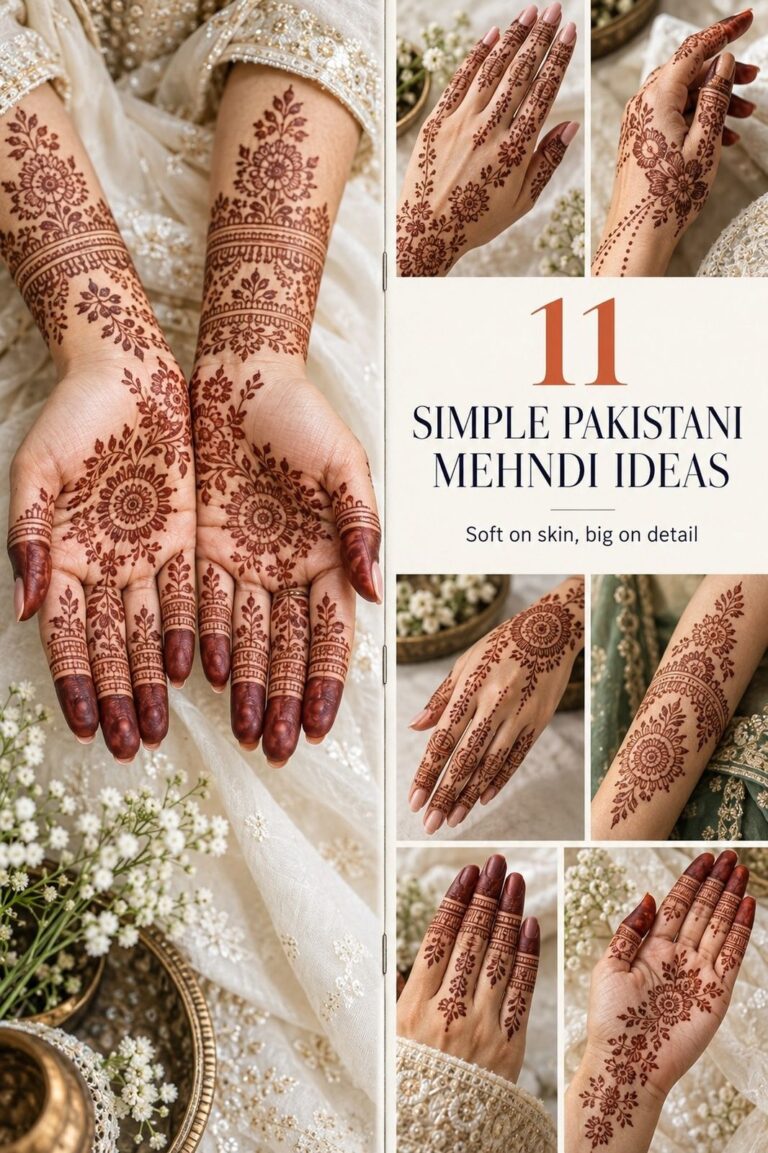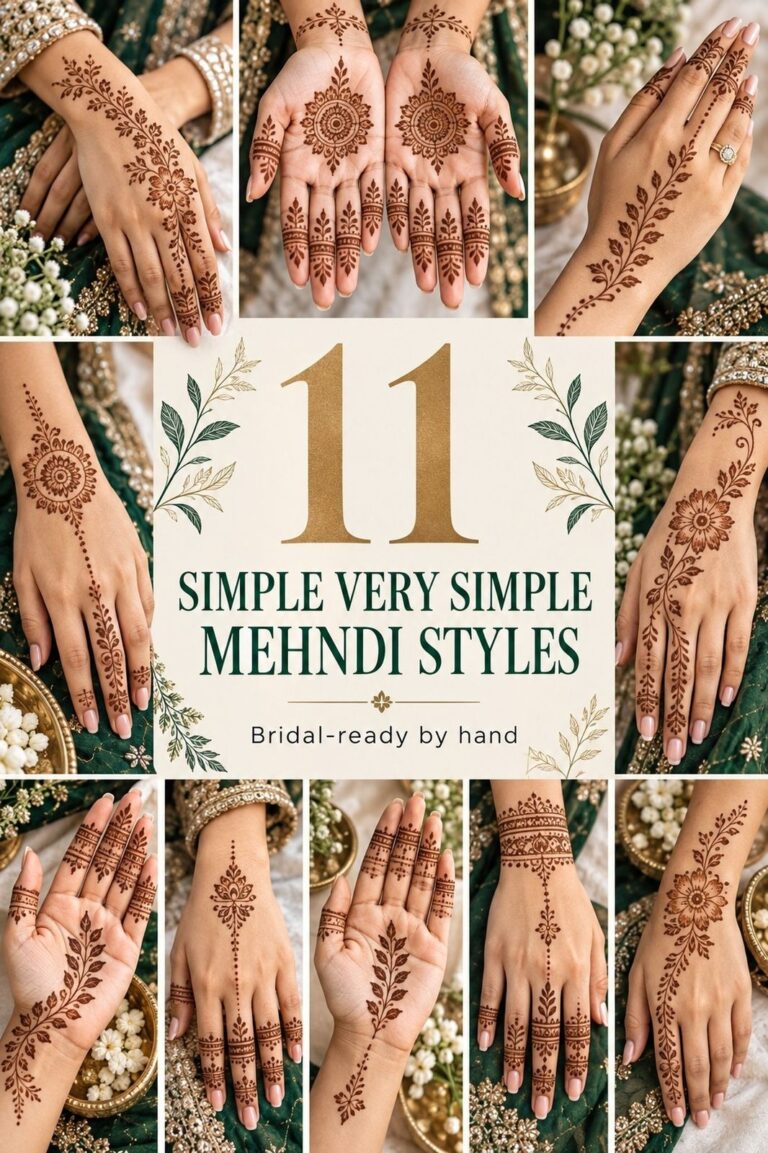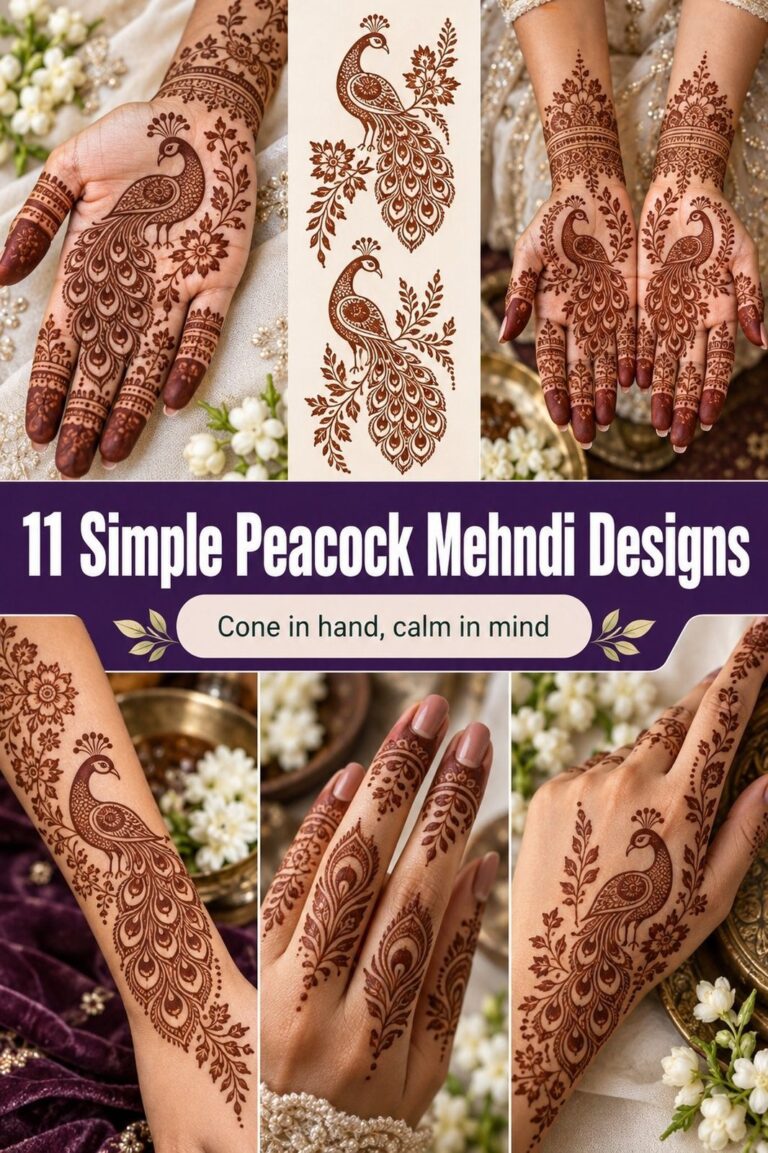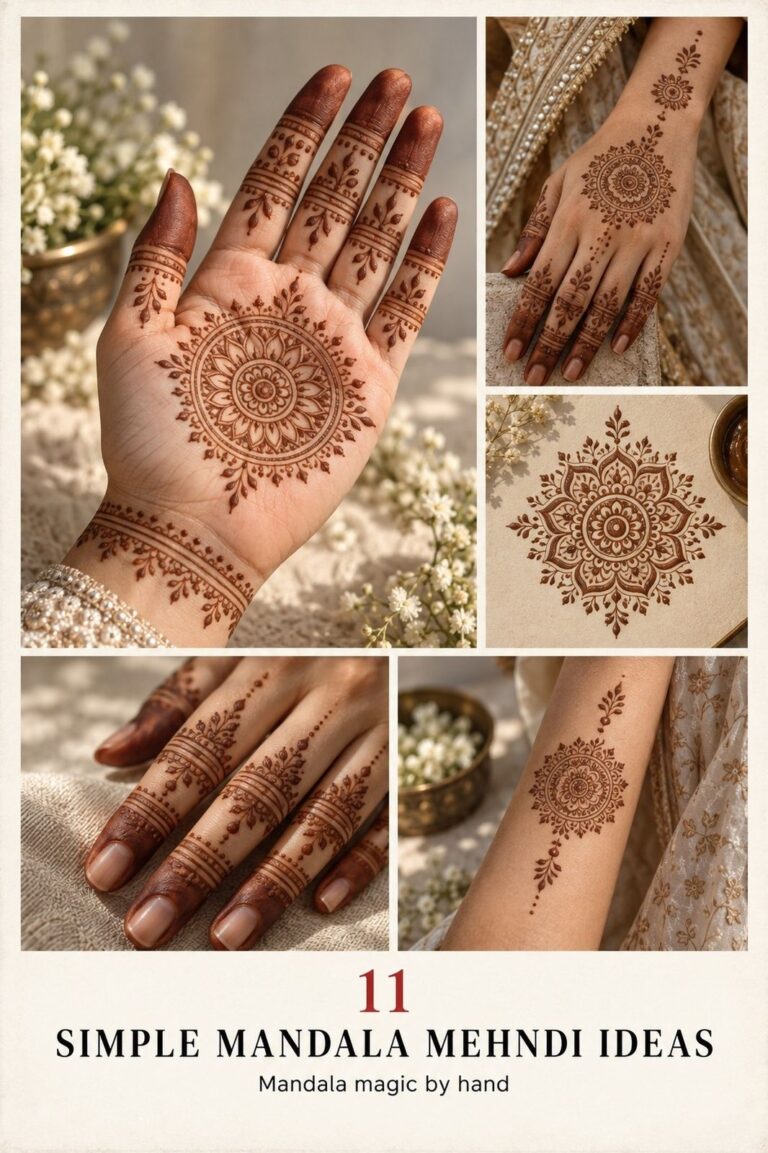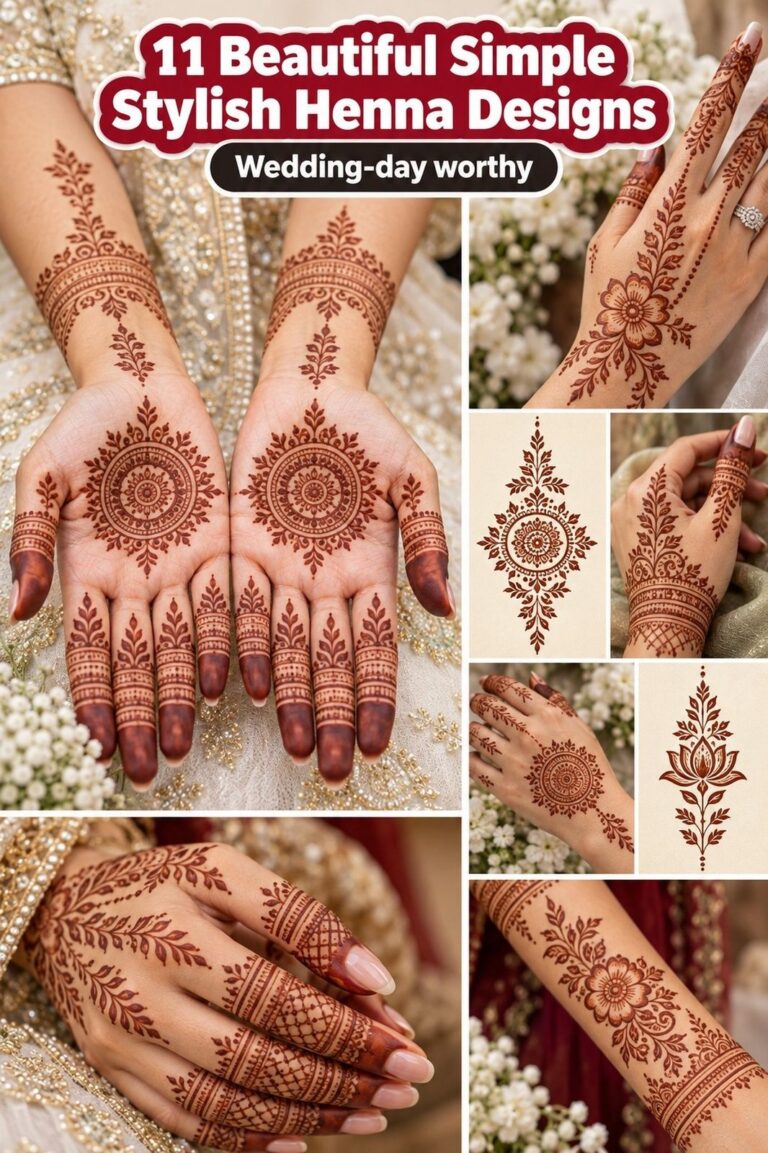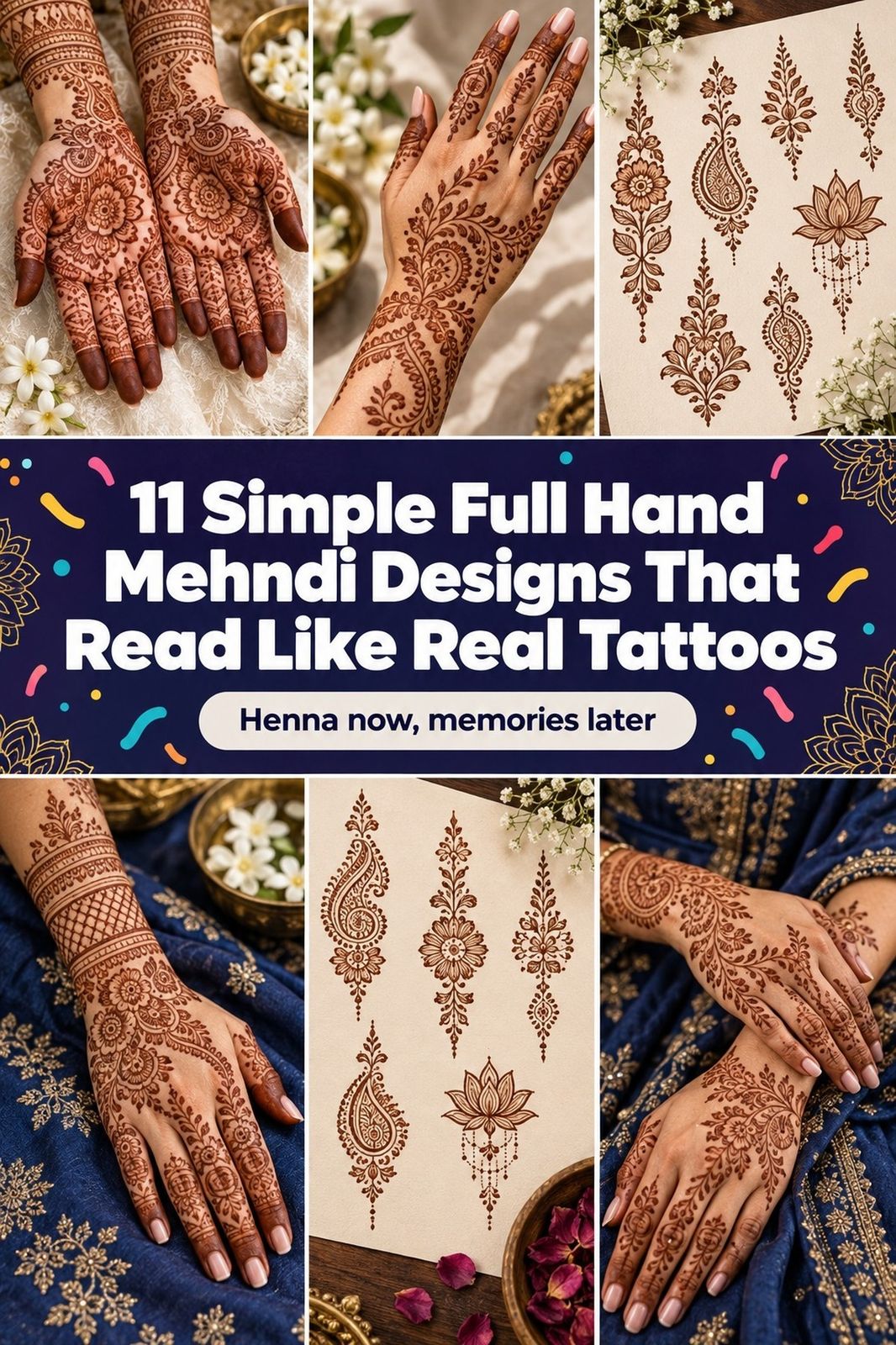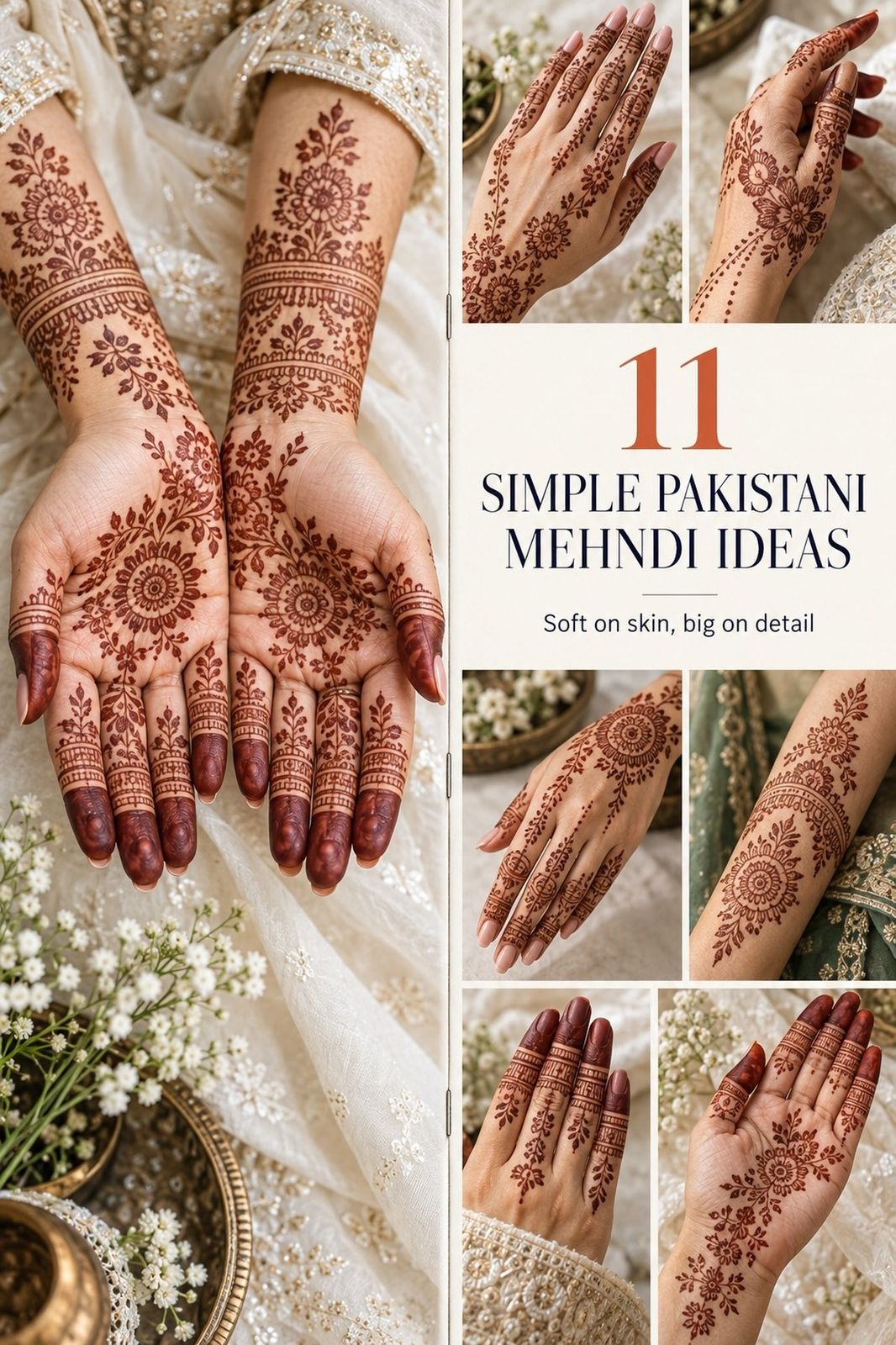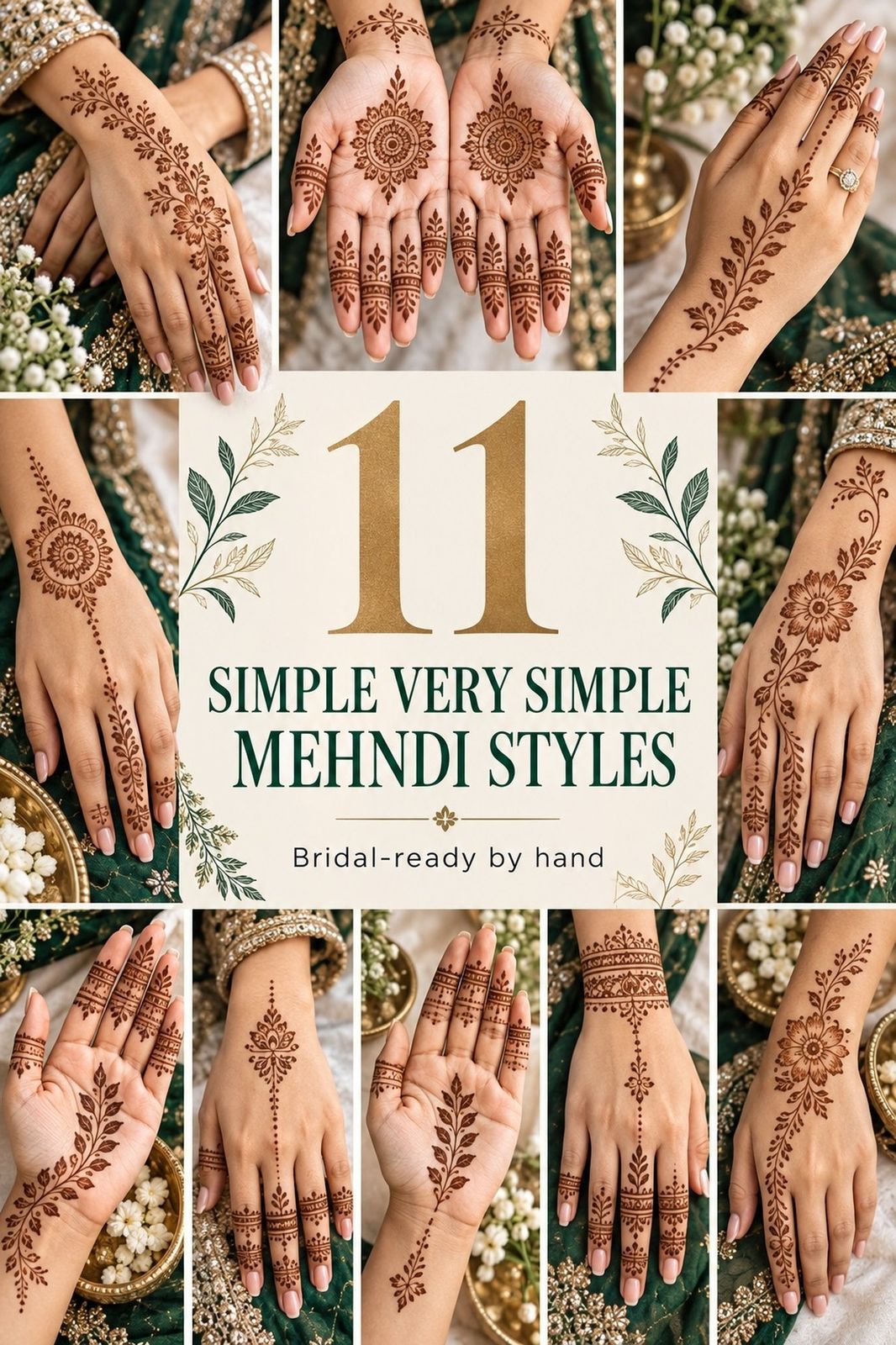
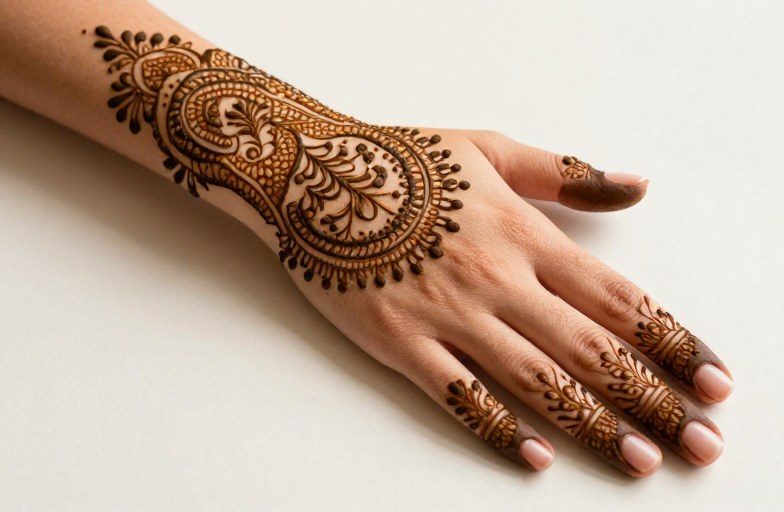
A henna hand tattoo replicates the flowing, organic patterns of traditional Mehndi in permanent ink. It carries connotations of celebration, spiritual protection, and feminine power, often chosen by people honoring South Asian, Middle Eastern, or North African heritage, or simply drawn to its intricate visual language. The meaning shifts between faithful cultural homage and personal aesthetic appreciation, sometimes both.
Symbolism & Core Meaning
Roots in Ritual and Celebration
Mehndi, the application of henna paste for temporary staining, predates recorded history in multiple regions. Archaeological evidence places henna use in the Levant and North Africa over three millennia ago. In South Asian wedding traditions, elaborate bridal Mehndi remains central to pre-ceremony festivities, with darker stains interpreted as deeper love or stronger bonds. The hand specifically matters: it’s the visible instrument of greeting, giving, and creating. Translating this into permanent tattoo form preserves that ceremonial weight for some, while others separate the visual from the ritual entirely.
Protective and Spiritual Associations
Across traditions, henna patterns often incorporated the evil eye motif, botanical elements believed to repel misfortune, and geometric barriers against negative energy. The hand’s palm, in particular, was thought to receive and transmit energy, making it a logical site for protective marking. Permanent henna-style tattoos sometimes carry this intention forward, though the wearer determines whether that symbolism operates as genuine spiritual practice or cultural resonance.
- Floral vines: fertility, growth, natural cycles
- Paisley (mango/boteh): abundance, luck, eternal life
- Geometric mandala elements: cosmic order, meditation focus
- Peacocks: beauty, pride, immortality in Hindu and Persian contexts
- Evil eye symbols: protection against envy and harm
Similar & Related Symbols
Adjacent Cultural Markings
The henna hand sits within a broader family of hand-centered symbolic tattoos. The Hamsa or Hand of Fatima shares protective intent and geographic overlap, though its origins are distinct, often linked to Jewish, Islamic, and Berber traditions. Sailor Jerry-style hand tattoos (hold fast, roses, religious icons) occupy completely different cultural territory but similarly use the hand as a billboard of identity. Dotwork mandalas on palms or fingers parallel henna’s geometric precision without claiming its cultural lineage.
Where Lines Blur
Temporary jagua tattoos mimic henna’s color but derive from South American fruit. Black henna containing PPD (para-phenylenediamine) is a dangerous chemical concoction unrelated to traditional practice. Permanent henna-style tattoos sometimes borrow from Mehndi, sometimes from these imitators, knowing the difference matters for respectful placement and informed choice.
Personal & Modern Meanings
Heritage Reclamation vs. Appreciation
For South Asian diaspora members, a permanent henna hand can counteract generational pressure to downplay ethnic markers in professional spaces. It becomes a fixed declaration of identity that temporary paste, washed away for work or family scrutiny, couldn’t provide. Others with mixed heritage use it to reconnect with ancestry they weren’t raised inside. The tattoo functions as research made visible, sometimes awkward, sometimes powerful, always personal.
Conversely, people without South Asian, Middle Eastern, or North African roots sometimes choose henna-style work purely for aesthetic reasons. This generates ongoing debate about cultural appropriation versus appreciation. The line often hinges on specific pattern choices (sacred vs. decorative), consultation with cultural practitioners, and the wearer’s willingness to engage with meaning beyond surface decoration.
Commemoration and Transition
Some get henna hands to mark specific life events that parallel traditional Mehndi occasions, marriages, recoveries, coming-of-age moments. The permanence underscores irreversibility. Others choose it during periods of intense personal transformation, drawn to the hand’s association with action and creation: this is what I make now, this is how I touch the world.
Common Variations & Styles
Traditional Replication
Pure linework recreates Mehndi’s characteristic fine strokes, negative space, and gradual density from wrist to fingertips. Skilled artists study actual henna application patterns, how vines thicken, how paisleys nest, how finger bands create rhythm. This style demands technical precision; shaky lines destroy the illusion of organic flow. Single needle or very tight groupings (3rl, 5rl) typically produce the necessary fineness.
Fusion and Modern Interpretations
Contemporary adaptations incorporate watercolor splashes behind traditional patterns, geometric simplification, or mixing with other symbolic systems (sacred geometry, botanical realism). Some artists create “Mehndi-inspired” pieces that borrow the visual density without replicating specific cultural motifs, abstract lace, organic filigree, ornamental dotwork. These carry less cultural weight but also less risk of misappropriation.
- Full hand with fingertips: maximum visual impact, highest cultural visibility
- Back of hand only (dorsal): more concealable, easier to integrate with other arm work
- Wrist-to-knuckle band: Mehndi-inspired bracelet or cuff
- Finger detail only: subtle, often combined with ring tattoos
- Palm placement: extremely rare in permanent ink due to pain and poor retention
Best Placements
The hand’s anatomy dictates what works. The dorsal surface (back of hand) offers relatively stable skin compared to fingers or palm, though still among the fastest-fading tattoo locations anywhere on the body. Finger tattoos of henna-style bands blur within 2-5 years for most people, sometimes sooner with frequent handwashing or manual work. The wrist transition zone, where henna patterns traditionally begin their ascent up the arm, holds ink better but lacks the iconic hand-centered impact.
Professional considerations weigh heavily. Unlike a sleeve or back piece, the hand remains visible in virtually every social and professional interaction. Some industries accommodate this; others don’t. The cultural specificity of henna patterns can trigger assumptions about background, religion, or travel history that simpler hand tattoos might not. This isn’t necessarily negative, but it’s a factor worth anticipating.
Scaling for Longevity
Extremely fine Mehndi replication doesn’t age well. Lines spread, dots merge, negative space fills in. Experienced artists scale patterns slightly bolder than temporary henna, thicker main lines, slightly larger spacing, anticipating this inevitable softening. What looks like perfect replication fresh will settle into something closer to actual worn henna’s faded elegance, which many find acceptable or even preferable.
How It Ages on Skin
Hand tattoos, including henna-style work, age notoriously fast. The skin here sheds rapidly, receives constant sun exposure, and endures mechanical stress from gripping, typing, washing. Color saturation drops within 3-7 years; linework thickens as ink particles migrate. Black and grey hold better than color, which is fortunate since traditional Mehndi is monochromatic anyway.
Touch-ups become routine maintenance, not failure. Some artists build this into their pricing structure. Others won’t tattoo hands at all, knowing the frustration of premature fading. The henna aesthetic actually accommodates aging better than some styles, the original art form celebrates fading and reapplication. A slightly blurred henna hand reads as authentic in ways a blown-out portrait never could.
Aftercare demands extra diligence: moisturize aggressively, sunscreen religiously, avoid harsh chemicals when possible. But realism matters. You will not preserve a hand tattoo in pristine condition without lifestyle changes most people won’t make. The question becomes whether the evolving appearance suits the symbol, fleeting beauty made permanent, slowly becoming memory of itself.
Final Word
A henna hand tattoo occupies complicated territory between homage and appropriation, between temporary ritual and permanent declaration. Its meaning depends substantially on the wearer’s relationship to the traditions it references, genuine connection, respectful distance, or unexamined aesthetic attraction. The visual language is undeniably beautiful: dense, organic, celebrating the hand’s expressive potential. Whether that beauty carries depth or remains surface-deep is work only the individual can do. Choose an artist who understands the technical demands of fine linework on difficult skin, and who can discuss pattern origins with honesty. The tattoo will last longer than the initial impulse; make sure both can sustain scrutiny.
Frequently Asked Questions
Does a henna hand tattoo have to be black like real henna?
No. While traditional Mehndi stains brown to near-black, permanent tattoos can use any color. Many choose black or dark brown for authenticity, but greywash, red, or even subtle color integration works. Black ages most cohesively on hands.
Is it culturally appropriative to get a henna hand tattoo if I’m not South Asian?
This depends on specific pattern choices, your engagement with the tradition, and context. Sacred or religious motifs without understanding carry more risk than generic floral patterns. Consulting artists from the tradition, learning specific meanings, and avoiding wedding-specific bridal designs reduces concerns. Some diaspora members welcome appreciation; others find any outsider adoption extractive. There’s no universal rule.
How painful is a hand tattoo compared to other placements?
Hand tattoos rank among the more painful locations due to thin skin, abundant nerve endings, and proximity to bone. Fingers and knuckles particularly sting. The back of the hand is moderate, manageable for most experienced tattoo collectors but intense for first-timers. Sessions are usually shorter due to size, which helps.
Can I get a henna hand tattoo that looks exactly like fresh Mehndi paste?
Not permanently. Fresh henna paste sits raised on skin with a wet, almost glittering quality; tattoo ink sinks flat beneath the surface. Skilled artists can approximate the visual density and flow, but the dimensional quality and specific color of curing henna paste cannot be replicated. The tattoo becomes its own interpretation rather than a perfect copy.