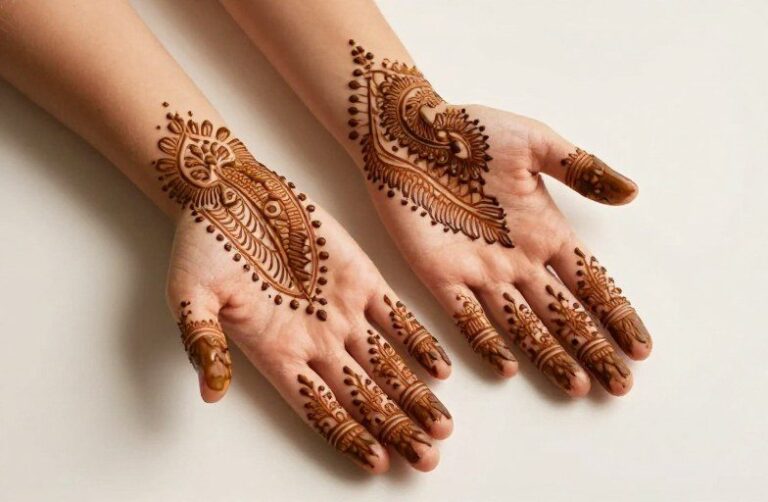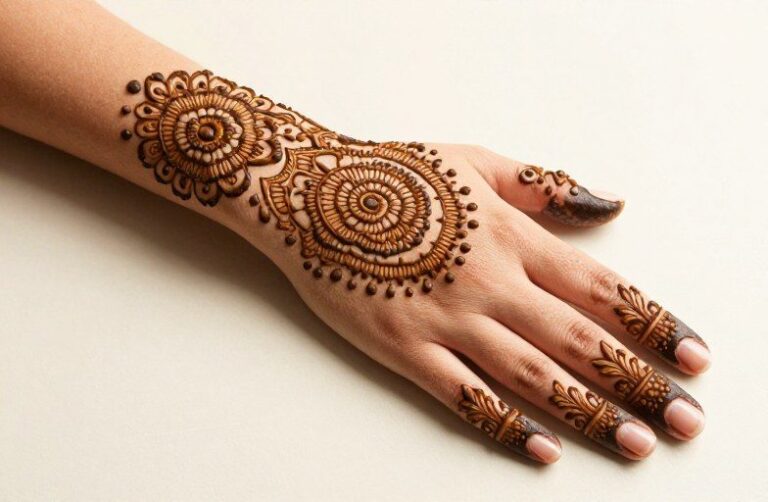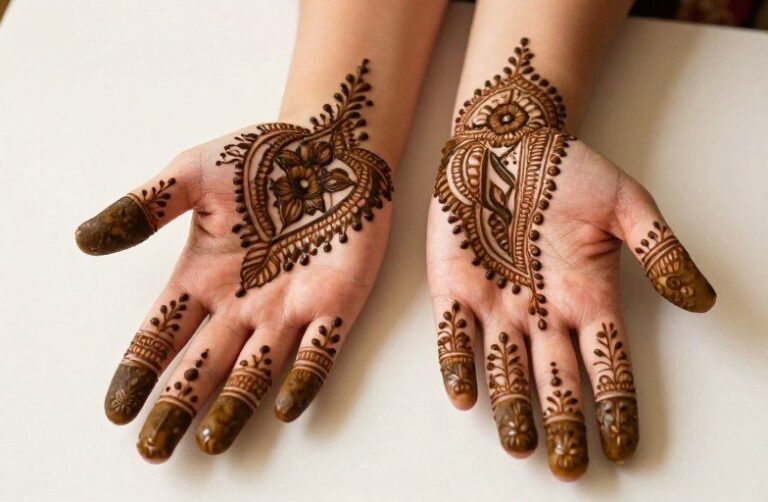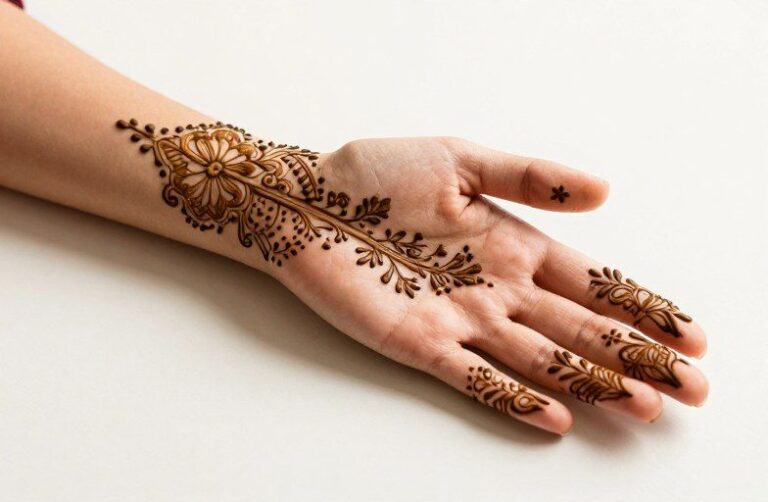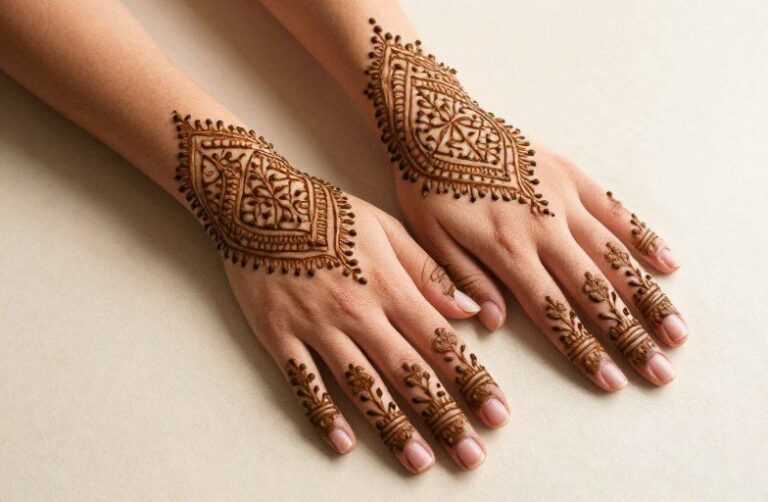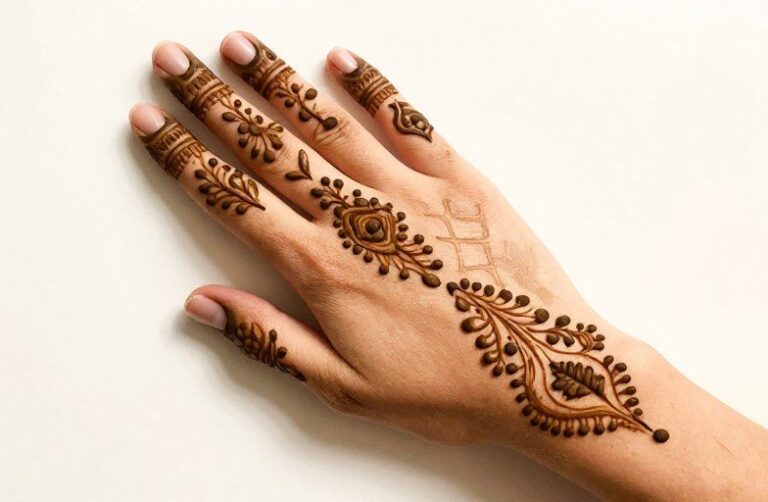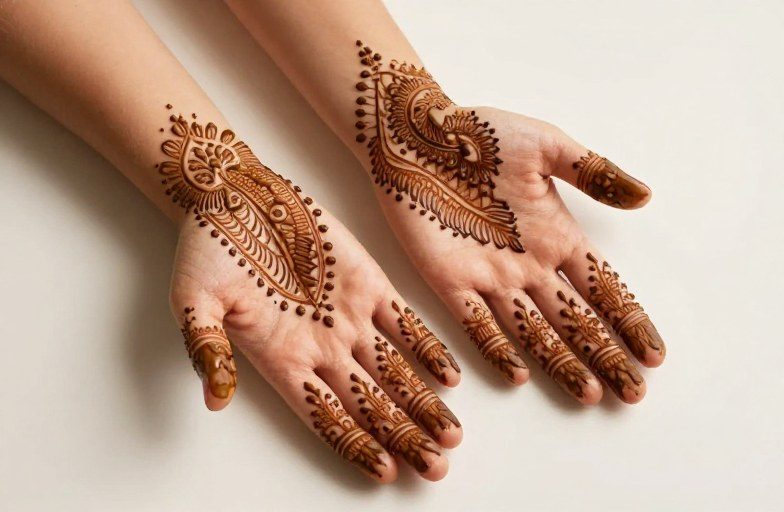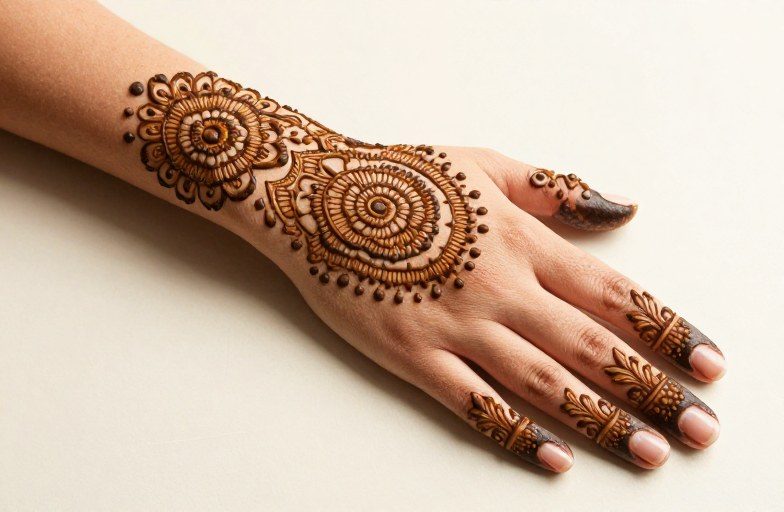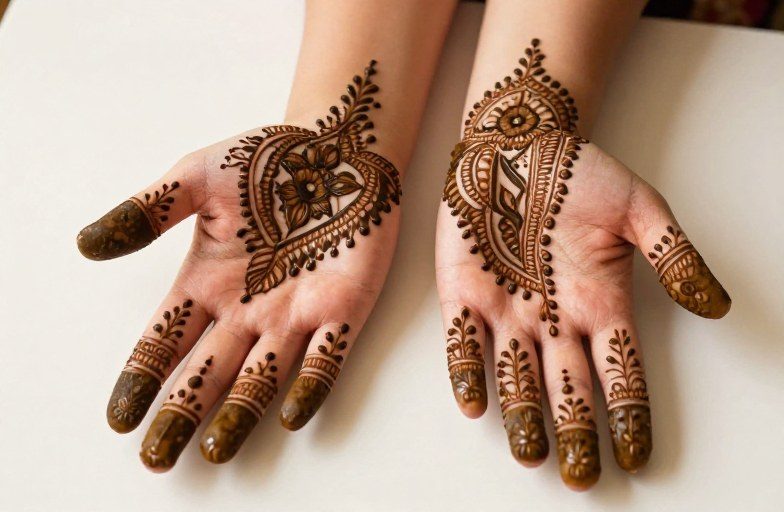

A henna mandala tattoo merges two distinct visual languages: the flowing, botanical patterns of traditional henna (mehndi) and the concentric, geometric structure of the mandala. Together, they typically symbolize wholeness, spiritual journey, and the cyclical nature of life, though the specific meaning shifts based on design choices, placement, and what the wearer connects with personally. Unlike actual henna, which stains skin temporarily, these are permanent tattoos done with standard tattoo ink, borrowing the aesthetic rather than the medium.
Similar & Related Symbols
Several visual cousins orbit this design space, and understanding them helps clarify what a henna mandala is and isn’t.
Traditional Mehndi vs. Tattooed Henna Style
Actual henna application creates a reddish-brown stain from the Lawsonia inermis plant. The patterns traditionally cover hands and feet for celebrations, flowing organically across fingers and palms. A tattooed “henna mandala” freezes that aesthetic into permanent ink, usually black or dark brown rather than henna’s natural rust tone. The tattoo version tends to be more contained, often circular or centered on a single body area, whereas real henna spreads and connects across surfaces.
Mandala Adjacents: Sacred Geometry, Lotus, and Chakra Imagery
Pure geometric mandalas emphasize mathematical precision, think Tibetan sand mandalas or Hindu yantras. Add henna-style flourishes (paisley curves, leaf vines, dot clusters) and the result softens toward organic decoration. The lotus mandala overlaps heavily, with petal shapes forming the outer rings. Chakra-themed pieces sometimes place color-coded symbols at the mandala’s center. Each hybrid carries slightly different weight: geometric mandalas read more meditative and structural, while henna-infused versions feel celebratory, feminine-coded, and decorative.
- Mehndi patterns alone: temporary, culturally specific to South Asian and Middle Eastern celebrations, often social rather than solitary
- Geometric mandalas: precision-focused, commonly associated with Buddhist and Hindu spiritual practice
- Henna mandala tattoos: permanent, aesthetic fusion, typically chosen for visual balance and personal symbolism over religious practice
Common Variations & Styles
The category isn’t monolithic. Artists execute henna mandala tattoos across several technical approaches, each with distinct visual results.
Line-Work Dominant vs. Shaded Pieces
Thin, consistent lines replicate the fine-tip application of a henna cone. These age cleanly but require skilled hands, wobbly lines in this style look amateur fast. Shaded versions use whip shading or dotwork to create depth, mimicking how henna paste sits slightly raised on skin before flaking away. Shading adds dimension but blurs faster over time; fine lines remain readable longer but can look sparse on large pieces.
Placement-Driven Shapes
On flat planes like the upper back or thigh, the mandala stays true circular. Wrapped around wrists, forearms, or sternums, it distorts into elongated or half-mandala forms. The sternum placement particularly suits henna mandalas because the central design point anchors between breasts, with decorative elements extending toward collarbones, echoing how traditional henna frames the hands from a central palm design. Finger and hand tattoos in this style exist but fade notoriously fast; the combination of thin lines and high-movement areas means regular touch-ups.
Color vs. Blackwork
Most henna mandala tattoos stay black or dark brown, honoring the original medium. Some incorporate muted earth tones, terracotta, ochre, deep green, to evoke henna’s natural stain without looking gimmicky. Full color (jewel tones, watercolor backgrounds) pushes the piece toward neo-traditional or illustrative territory, diluting the henna reference.
How It Ages on Skin
This matters more than most clients consider upfront. The intricate detail that makes henna mandalas beautiful also makes them vulnerable to time.
The Detail Problem
Individual dots, hair-thin vines, and tiny paisley fills blur together as skin ages and ink settles. What reads as delicate texture at month six becomes muddy suggestion by year ten. Artists compensate by building in “redundancy”, repeating similar motifs at slightly larger scales so the design holds even when finest details disappear. Ask your artist about this specifically; a good one will show you healed photos, not just fresh work.
Placement and Sun Exposure
Areas with frequent stretching (stomach, thighs) distort circular geometry. Sun-exposed placements (hands, forearms, shoulders) fade faster, and the reddish-brown tones some choose to mimic henna are particularly photosensitive. Black ink holds better but still shifts to blue-green over decades. The sternum and upper back, popular for this style, offer reasonable compromise: protected from sun, relatively stable skin, large enough canvas for detail.
Touch-Up Reality
Plan for at least one refresh in the first five years if you want the piece to stay crisp. Lines can be sharpened; lost dotwork cannot always be recovered without darkening surrounding areas. Discuss long-term maintenance with your artist during consultation, not after the first session.
Design Tips & Pairings
Building a coherent piece requires decisions beyond “I want a henna mandala.”
Scale and negative space: These designs need room to breathe. A palm-sized mandala contains recognizable detail; shrunk to wrist-cuff size, the same pattern becomes indistinct gray. Conversely, blown up to full back piece without variation, the repetition feels monotonous. Strong designs use density variation, tight centers, looser outer rings, or vice versa.
Complementary elements: Floral wreaths frame mandalas naturally. Moon phases tucked into outer rings connect to cyclical symbolism. Sanskrit or Arabic script (if culturally appropriate to your background) can integrate into negative space. Avoid cramming unrelated imagery, skulls, daggers, cartoon characters, into the mandala structure; the visual languages clash rather than converse.
Style mixing: Some artists blend henna mandala centers with geometric outer rings, or reverse the formula. Others dotwork the background while keeping the mandala in clean linework. These hybrids work when one style dominates and the other accents, not when they compete equally.
History & Cultural Roots
Neither component of this hybrid exists in isolation, though the combined form is distinctly modern.
Mehndi’s Origins and Spread
Henna body art is often linked to ancient Egypt, India, and the Middle East, with evidence of cosmetic use stretching back thousands of years. In South Asian traditions particularly, mehndi became deeply embedded in wedding rituals, with elaborate bridal designs signifying joy, beauty, and spiritual awakening. The patterns themselves carry regional signatures, Rajasthani work features fine mesh and peacocks; Arabic styles favor larger floral flows; African henna traditions often incorporate bolder geometric elements.
Mandala Symbolism Across Traditions
The mandala form is commonly associated with Hindu and Buddhist practice, where it represents the universe, spiritual wholeness, and the journey toward enlightenment. Tibetan monks create sand mandalas then destroy them, teaching impermanence. Hindu yantras serve as meditation focal points. The western adoption of mandalas as coloring books and tattoos strips much of this context, which some practitioners find appropriative; others see the form as universal enough to transcend specific religious ownership.
The tattooed “henna mandala” emerges from this intersection: a western tattoo culture borrowing visual systems from multiple non-western sources, often without deep cultural engagement. That doesn’t invalidate personal meaning, but it does place responsibility on the wearer to understand origins rather than treating the imagery as purely decorative.
Personal & Modern Meanings
What people actually express when they choose this design varies widely, and the best artists listen before drawing.
Some connect the mandala structure to personal centering, literalizing the idea of returning to core values. The henna element evokes celebration, marking transitions (marriage, recovery, relocation) with permanent commemoration rather than temporary stain. Others simply respond to the visual balance: radial symmetry satisfies something primal in human perception.
Modern iterations increasingly incorporate personal symbolism into traditional structures, birth flowers replacing generic petals, coordinates encoded in dot patterns, initials hidden in paisley curves. These customizations anchor the design to individual narrative without requiring explicit representational imagery.
The meaning that persists across most wearers: completion and return. The mandala’s center-and-circumference structure suggests that journeys outward and inward are the same path, and the henna style’s association with marking significant moments reinforces that life events are cyclical rather than linear.
Before You Decide
Research your artist’s healed work specifically for this style, not just their fresh portfolio. The difference between a crisp healed mandala and a blown-out one is years of technical refinement, not just artistic vision. Ask about their needle groupings, single needles for fine henna-style lines, larger groupings for fills, and how they adjust for your skin type (oilier skin holds detail differently than dry).
Consider whether you want the henna reference clear or subtle. Some pieces read as “mandala with organic touches” to casual viewers; others scream “tattooed henna.” Neither is wrong, but mismatch between your intention and the result breeds regret.
Finally, sit with the cultural dimensions. If you have no South Asian or Middle Eastern heritage, the henna element is aesthetic borrowing, not ancestral connection. That doesn’t prohibit the choice, but it should inform it, ideally toward deeper understanding rather than shallow consumption.
Frequently Asked Questions
Does a henna mandala tattoo have to be black, or can it match real henna’s brown color?
Brown ink exists and can approximate henna’s natural stain, but it fades faster than black and often heals unevenly. Most artists recommend black or dark gray for longevity, with brown reserved for specific stylistic intent and clients prepared for quicker touch-ups.
How painful is a sternum henna mandala compared to other placements?
The sternum ranks high on the pain scale due to thin skin over bone and proximity to nerve clusters. Rib cage breathing movement during the session adds challenge. Many artists break large sternum pieces into multiple shorter sessions rather than one marathon sitting.
Can I get a henna mandala tattoo if I’m not Hindu or from a henna-using culture?
Tattoo culture widely accepts aesthetic borrowing, but the mandala and henna elements carry specific cultural histories. Respectful approach means learning those origins, avoiding sacred symbols you don’t understand, and crediting the traditions rather than treating the design as generic “tribal” or “boho” decoration.
What’s the typical cost range for a detailed henna mandala tattoo?
Palm-sized pieces with moderate detail typically run $200-500 depending on artist experience and location. Full sternum or back pieces requiring multiple sessions can reach $800-2000. Intricate dotwork and single-needle linework command premium rates because they take longer and demand specialized skill.