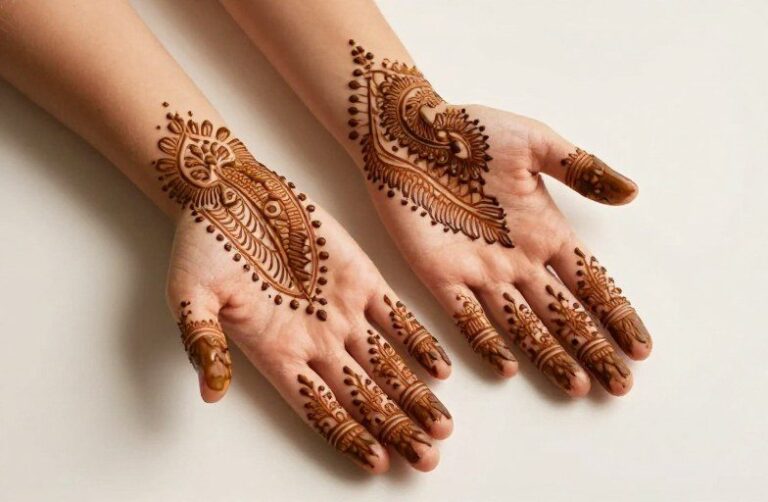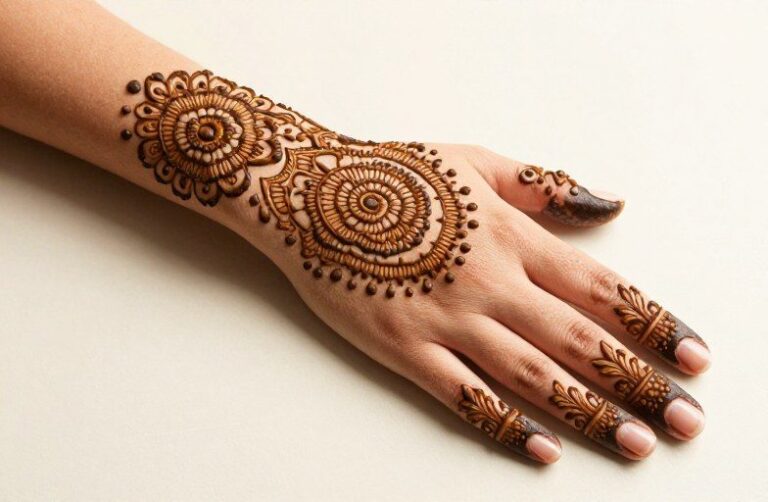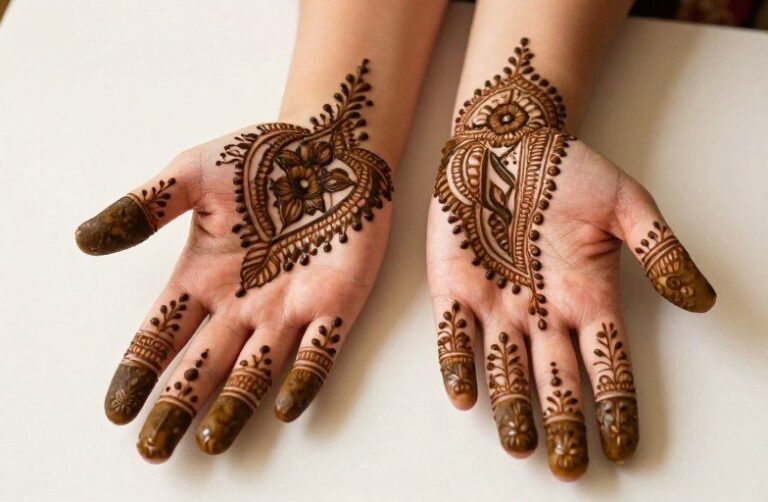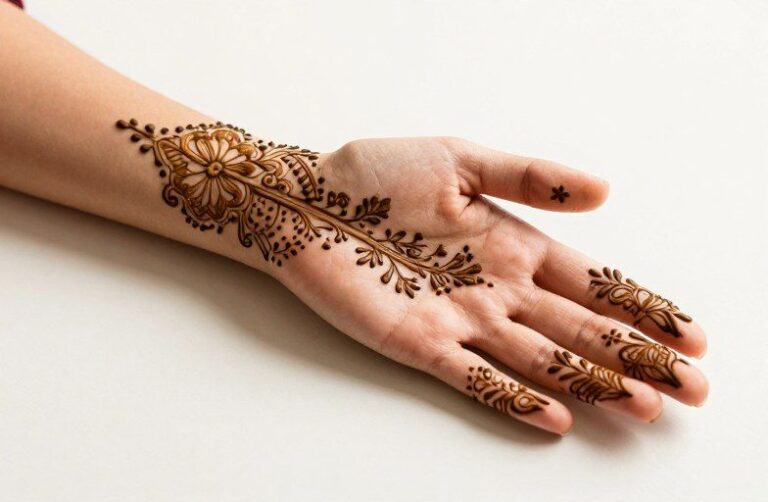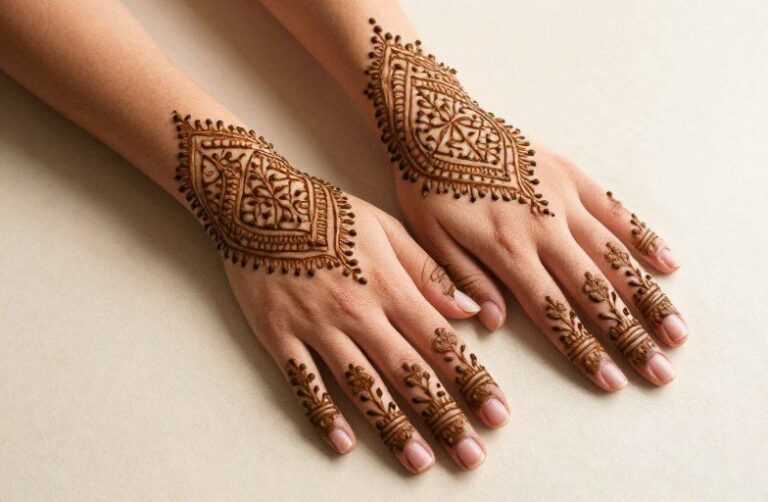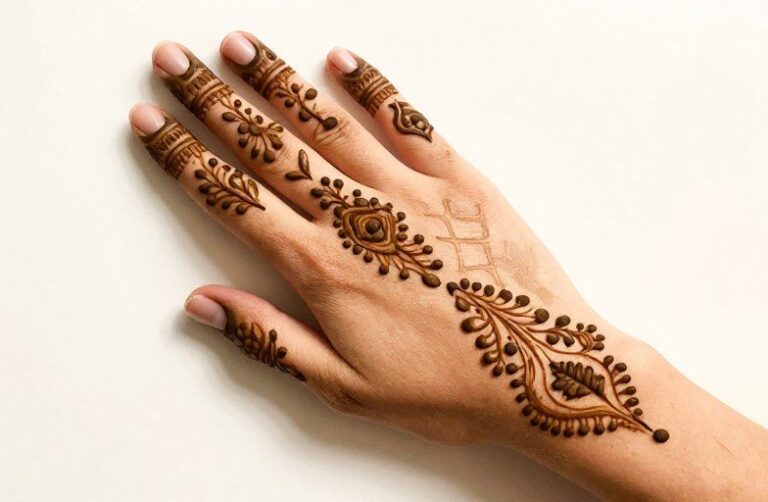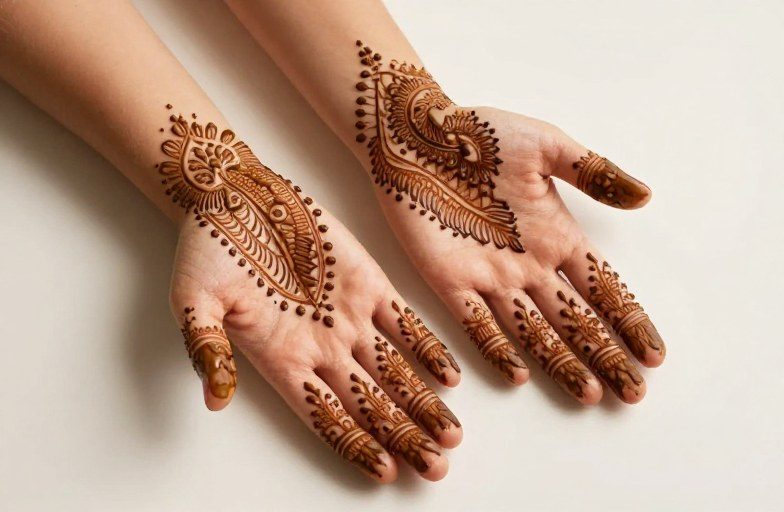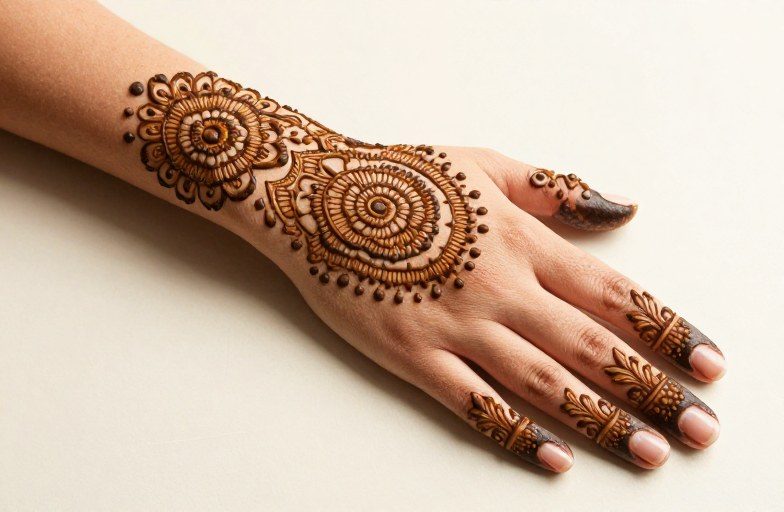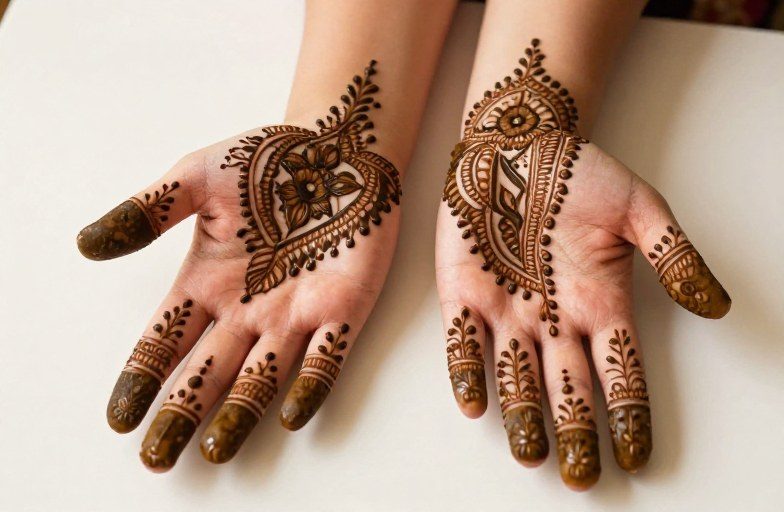
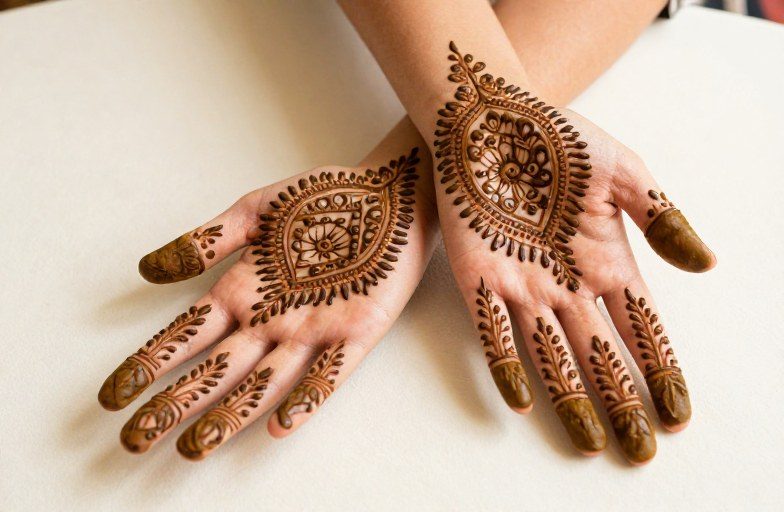
A henna tattoo meaning strength typically combines the flowing, organic patterns of traditional mehndi with imagery that evokes endurance, lotus flowers, unbroken lines, mountain forms, or the henna plant itself. Unlike permanent ink, henna sits on the skin’s surface, staining the top layers for one to three weeks. That temporary quality actually reinforces the symbolism for many people: strength as something you must renew, practice, and choose again.
Design Tips & Pairings
Placement shapes meaning more than most people expect. The palm, where henna traditionally goes, makes the design visible to the wearer every time they reach out, useful for a strength motif you want to actively remember. The back of the hand reads more public, more declarative. Inner forearm splits the difference: you see it, others do too.
Line Weight and Pattern Density
Traditional mehndi relies on fine, consistent lines built from cone application. For strength symbolism, thicker central elements, maybe a single bold stem or geometric core, can anchor wispy surrounding detail. The contrast reads as rootedness. Too much uniform fineness feels decorative; too heavy and you lose the henna character entirely. A common workable ratio: one dominant thick element for every four to five fine filigree sections.
Pairing Motifs That Reinforce the Meaning
- Lotus: Often linked to rising through difficulty; pairs naturally with henna’s organic line language
- Unbroken circle or spiral: Continuity, returning to center, easy to weave into traditional mehndi geometry
- Mountain silhouette: Solid, immovable; works best as a negative-space element within denser patterning
- Henna leaf or vine itself: The plant’s actual form, sometimes overlooked in favor of more dramatic symbols
Color vs Black and Grey
Real henna produces one color: orange-brown that deepens to reddish-brown over 48 hours, then fades through stages of caramel and amber. “Black henna” is a misnomer, it’s usually PPD-laden hair dye or other additives, and it’s responsible for most henna-related skin reactions. If someone offers you jet-black henna that stains instantly, that’s a warning, not a feature.
Natural Henna’s Color Journey
Fresh paste goes on dark green or brown. The initial stain after paste removal looks neon orange, alarming if you haven’t seen it before. That oxidizes to the mature color by day two. The fading process matters for strength symbolism: the tattoo weakens visibly, daily, requiring the wearer to witness impermanence. Some find this mirrors how strength itself needs maintenance.
Permanent Tattoo Alternatives
People who love the henna aesthetic but want permanence sometimes get actual tattoos mimicking henna style. These work best in black and grey, since brown tattoo ink ages unpredictably, often shifting to muddy green or grey anyway. Line-based henna-style tattoos hold up better than shaded versions; the fine dots and paisley fills that read beautifully in real henna tend to blur together in skin over five to ten years.
Personal & Modern Meanings
The shift from ceremonial mehndi to individual strength symbolism is relatively recent. Traditional henna application happens at weddings, festivals, and celebrations, social, communal events. Repurposing it for private resilience marks a change in how people relate to the form.
What People Actually Reference
Some trace the strength association to henna’s physical properties: the plant’s hardiness in arid climates, the labor-intensive process of grinding leaves and mixing paste, the patience required for a full application. Others connect to specific cultural narratives, the night of mehndi before a wedding as a gathering of female support systems, or henna’s use in some regions to mark safe return from pilgrimage. Modern wearers often layer their own meanings: recovery from illness, endurance through grief, the strength to leave or stay in a relationship.
Appropriation vs Appreciation
There’s a meaningful difference between getting henna for a specific event with cultural invitation and appropriating the form as a general “exotic” aesthetic. For strength symbolism specifically, the question becomes: does your personal meaning connect to the tradition’s actual values, or does it strip the context for visual consumption? Many artists from South Asian and Middle Eastern backgrounds now explicitly welcome non-community members at appropriate events while rightfully critiquing random festival booths that treat henna as costume.
How It Ages on Skin
Henna’s lifespan depends on body chemistry, placement, and aftercare. Palmar skin, thick and constantly regenerating, sheds the stain fastest, sometimes four to five days. Thinner dorsal hand skin might hold seven to ten. The outer forearm, less exposed to friction and water, often reaches two weeks. Ankles and feet, where mehndi traditionally goes, can stretch to three weeks because the skin is thinner and less washed.
The Fading Pattern
Unlike a healing tattoo, which can look worse before it looks better, henna looks best at peak color (day two or three) and then gradually degrades. The fade isn’t uniform, high-contact areas go first, creating a mottled effect that some find ugly and others appreciate as part of the process. For a strength symbol, that uneven fading can feel honest: strength isn’t equally present in all moments either.
Similar & Related Symbols
People considering henna for strength often cross-shop related imagery. Understanding the distinctions helps clarify whether henna actually serves your intent.
Permanent Botanical Alternatives
Laurel wreaths, olive branches, and oak leaves all carry strength or victory associations in Western traditions, but they’re visually and culturally distinct from henna’s flowing geometry. A permanent tattoo of these reads differently, more classical, less process-oriented. The temporary nature of henna is part of its meaning; swapping to permanent botanicals changes the symbolism fundamentally.
Geometric Strength Symbols
- Inguz rune: Nordic symbol of completion and inner strength; angular where henna is curved
- Unalome: Buddhist path-to-enlightenment spiral; shares henna’s line quality but different cultural home
- Adinkra symbols (e.g., Dwennimmen): West African strength imagery, often more geometric and compact
These can pair with henna-style rendering, but the combination requires care to avoid visual or cultural collision.
Who Chooses This Tattoo
The choice often reveals something about the wearer’s relationship to permanence. People who opt for henna strength symbols frequently resist the finality of needle-and-ink, or they’re testing a design before committing. Some work in professions where visible tattoos carry consequences. Others specifically want the ritual of application and the witnessing of fading.
Practical Profiles
There’s no single demographic, but patterns emerge: people in transitional life phases (divorce, recovery, career change), those reconnecting with ancestral practice, and younger wearers experimenting with body art before turning eighteen. The common thread isn’t identity category but a specific attitude toward strength as practice rather than trait, something done repeatedly, not possessed once.
Final Word
Henna as a strength symbol works because of its contradictions: it’s delicate in application but stains stubbornly; it’s temporary but demands patience; it’s deeply traditional but individually reinterpretable. The meaning holds when the form respects its origins and the wearer understands what they’re asking their skin to carry for those few weeks. Whether you return to the paste monthly or carry the memory into a permanent design later, the henna itself has already done its job, marking a moment when you chose to make strength visible, if only briefly.
Frequently Asked Questions
How long does a henna strength tattoo actually last?
Most last one to two weeks, with palm placement fading fastest (4-7 days) and ankle or foot placement lasting up to three weeks. Aftercare matters: avoid water for the first 12 hours, keep the paste on as long as possible, and apply a sugar-lemon sealant if your artist recommends it.
Can I get a permanent tattoo that looks like henna?
Yes, but choose carefully. Fine henna details blur over time in permanent ink, so simplify the design and stick to black and grey. Brown tattoo inks often shift to muddy green as they age, undermining the warm henna aesthetic you’re trying to capture.
Is it culturally appropriate for non-South Asian people to get henna?
Context matters. Participating when invited to events like weddings or festivals where henna is offered is generally welcomed. Treating henna as a random festival accessory or “exotic” aesthetic without engagement with its traditions is where problems arise. Ask your artist about the context they work in.
What’s the difference between real henna and ‘black henna’ dangers?
Real henna paste is brownish-green, smells earthy, and stains orange at first before darkening. ‘Black henna’ usually contains PPD (hair dye chemical) and can cause severe allergic reactions, blistering, and permanent scarring. If it stains black instantly, refuse it.