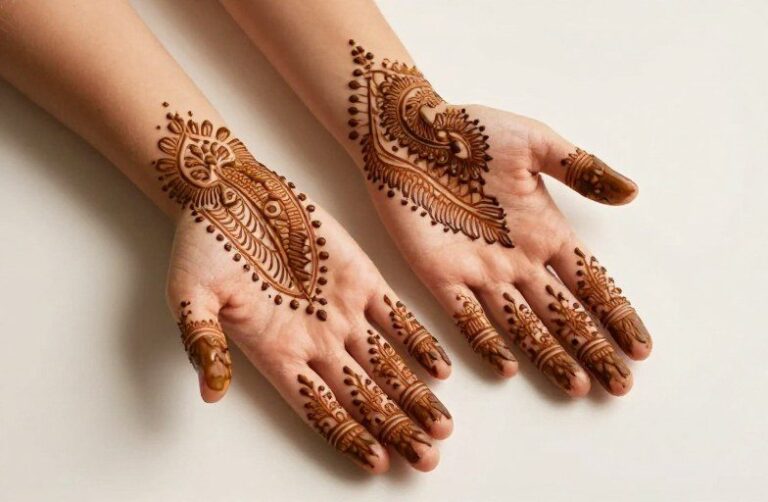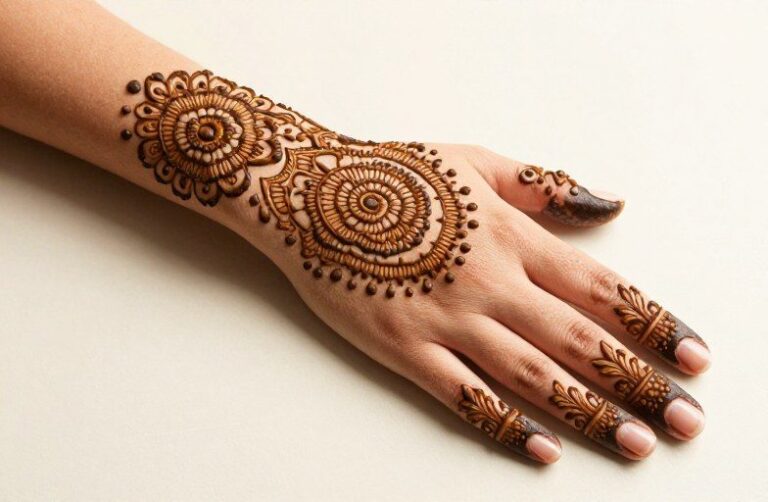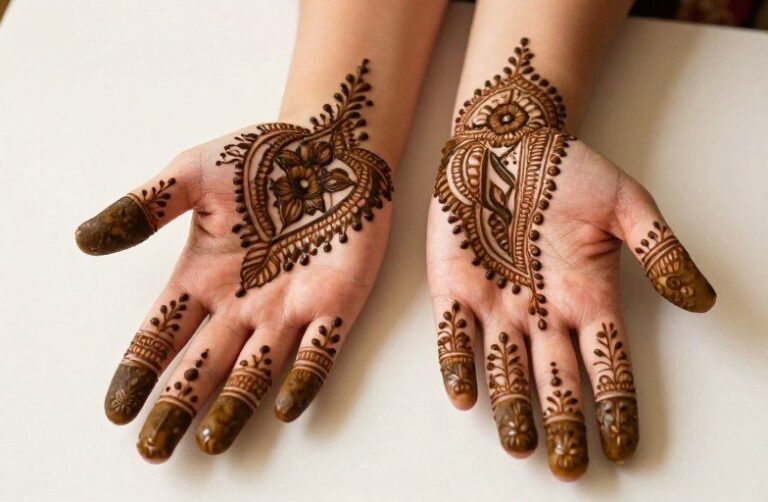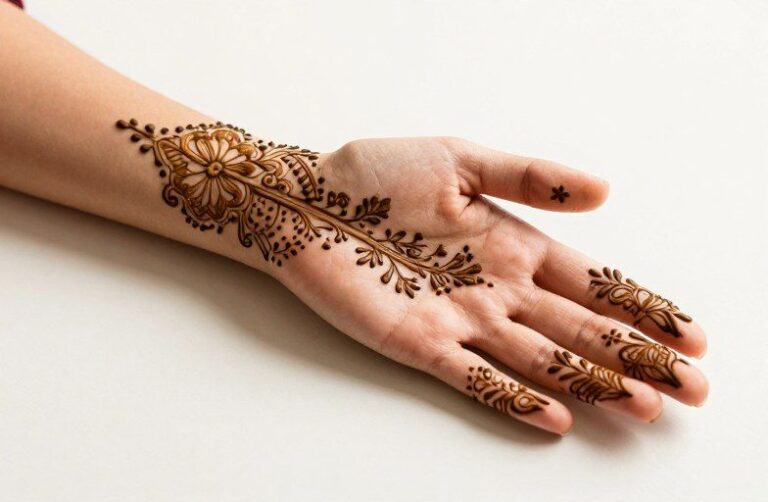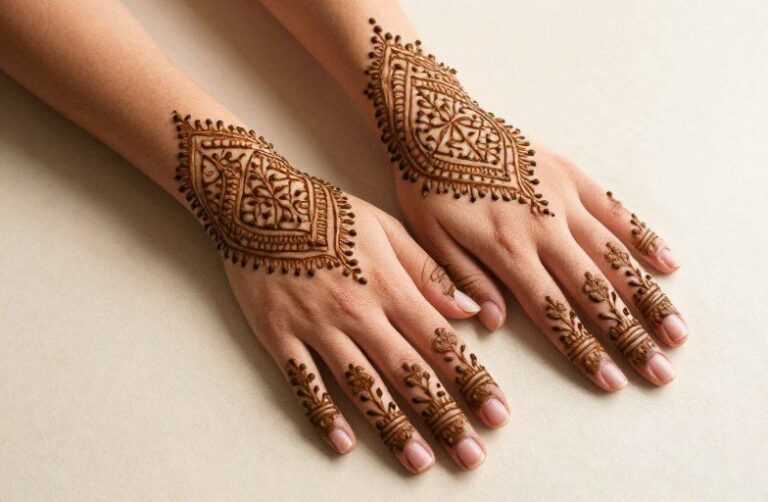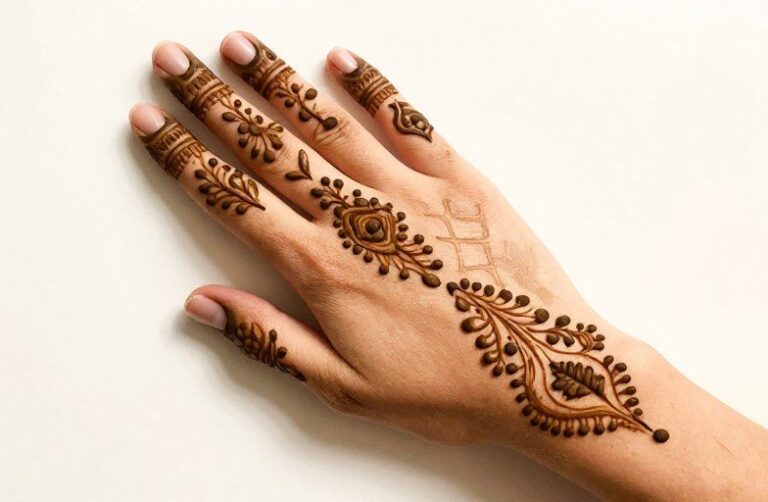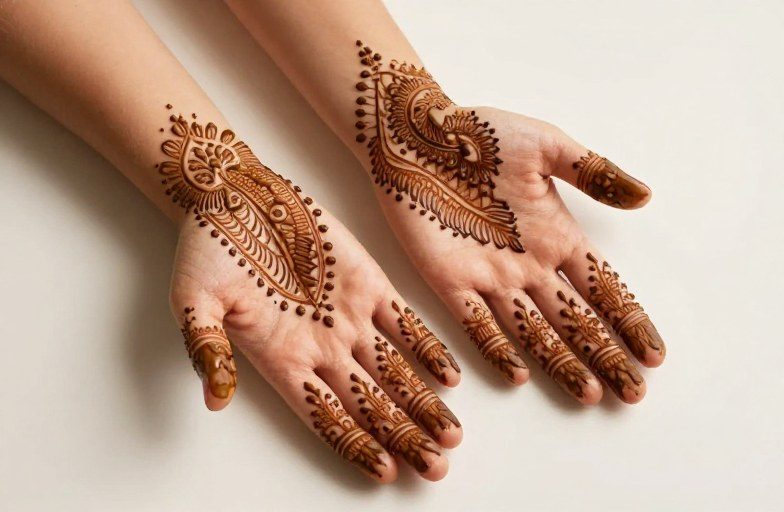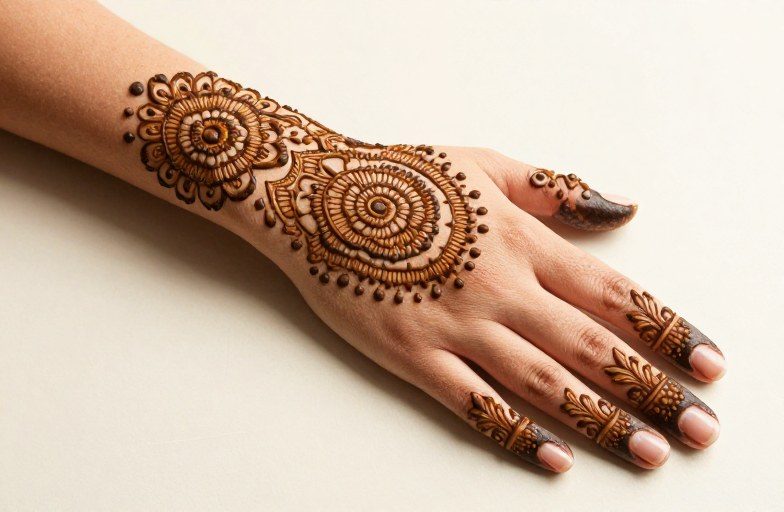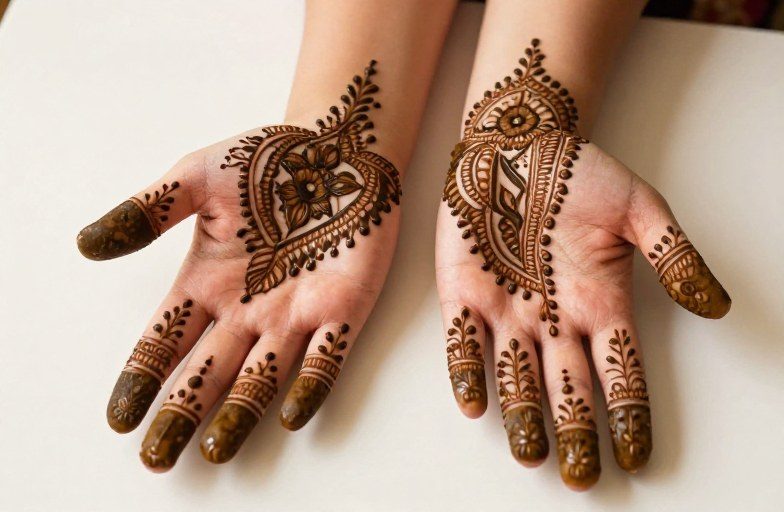
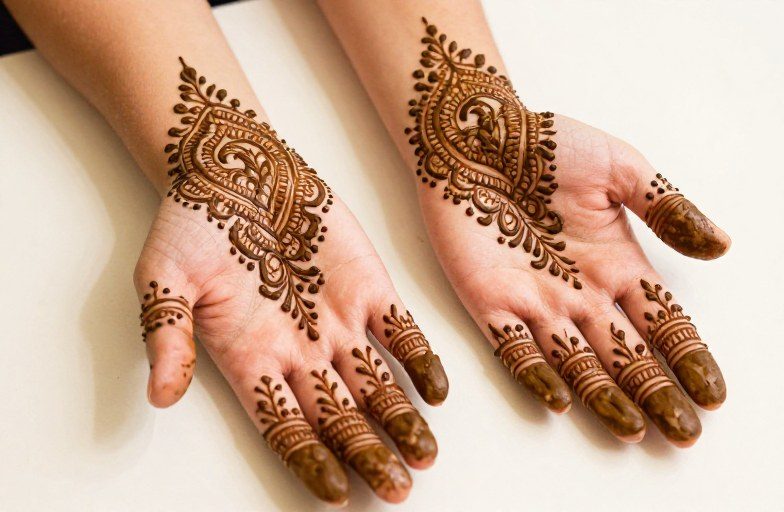
Henna tattoo stickers go on dry, not wet like traditional henna paste. Clean the skin, peel the backing, press the sticky side firmly onto your chosen spot, smooth out air bubbles, then wet the paper backing with a damp cloth, wait 30-60 seconds, and peel the paper away slowly. The design stays behind as a light-to-medium stain that develops over 24-48 hours.
Pain & Comfort
There’s no needle, no broken skin, no pain. Henna tattoo stickers sit on the surface, using the same adhesive transfer method as temporary tattoo sheets. Some people feel mild tingling if the skin is sensitive to the adhesive or the dye, but that’s uncommon and brief.
Skin Sensitivity Spots
Inner wrists, throat, and the thin skin behind ears can react more noticeably to adhesives. If you’ve had reactions to bandage glue or cosmetic tape, patch-test a small sticker on your inner forearm for a few hours first. Avoid broken, sunburned, or freshly shaved skin, the alcohol in some sticker formulas will sting, and open pores grab too much dye, blurring the edges.
What the Sensation Actually Feels Like
Application feels like pressing a wet sticker onto yourself. The damp cloth phase is cool and slightly clammy. After peeling, the skin air-dries in minutes. No throbbing, no heat, no lingering soreness. You can sleep on it immediately, though loose clothing prevents smudging while the stain sets.
Cost Factors
Sticker sheets run from $3 for basic drugstore brands to $15-25 for detailed designs from specialty importers. Single large back-piece or bridal-style sheets cost more. Compare that to professional henna application, which typically ranges $50-150 per hour depending on your region and the artist’s skill with freehand paste work.
Where You’re Really Spending Money
- Design complexity: intricate lace patterns need precise cutting and transfer layers, raising manufacturing cost
- Ingredient quality: natural henna-derived stains versus synthetic “black henna” chemicals (the latter cheaper, riskier, often containing PPD)
- Sheet size: hand-sized motifs versus full-arm bands or chest panels
- Import markup: authentic Indian or Middle Eastern brands carry shipping and distributor costs
The Hidden Cost of Redoing Bad Applications
Botched placement, torn designs from rushing the wet phase, or stain that washes off in hours, these waste the product. One ruined $8 sheet equals two successful $4 applications. Taking time with prep and peel saves more than buying bulk cheap sheets.
Tips From the Chair
After years watching people compare temporary options to permanent work, certain practical patterns emerge. Henna stickers reward patience and punish hurry.
Surface Prep Matters Most
Oil is the enemy. Any residue, lotion, sunscreen, natural skin sebum, blocks dye uptake. Wash with plain soap, no moisturizer after. Exfoliate lightly 12-24 hours beforehand if the area is flaky; fresh exfoliation leaves raw skin that over-absorbs and stains dark but uneven. Let the skin rest to normal texture before applying.
The Wet Phase Is Where People Fail
Too little water: paper pulls the design up with it. Too much: dye bleeds under edges, creating halos. Use a washcloth damp, not dripping. Press and hold for a full 45 seconds before attempting peel. Start at a corner, go slow, and if resistance meets you, rewet that section rather than yanking. The paper should almost fall away when ready.
After the Peel
Don’t rub, don’t touch, don’t let clothing press on the design for at least an hour. The stain is fragile while setting. Heat helps development, a warm room or brief hair-dryer pass on low. For the first night, loose cotton over the area prevents accidental smear during sleep.
The Direct Answer
Here’s the step-by-step that actually works, refined from product instructions and common failure points.
- Choose flat, relatively hairless skin. Upper arm, forearm outer side, shoulder blade, ankle bone, or upper back work well. Avoid joints that flex constantly, wrist creases and knuckles crack and fade the stain fast.
- Wash with soap, rinse thoroughly, pat completely dry. Wait five minutes for any residual moisture to evaporate.
- Cut the design from the sheet with margin around it. Peel the clear plastic protective layer away, exposing the sticky design surface.
- Position without stretching the skin. Press from the center outward, using a fingernail or credit card edge to burnish every detail flat. Air bubbles under fine lines become gaps in the final stain.
- Wet the paper backing until translucent and soft, about 30-60 seconds of firm damp-cloth pressure.
- Peel the paper back at 180 degrees, flat against the skin, not lifted upward. Lift upward pulls the design; flat peeling leaves it adhered.
- Let air-dry without touching. The stain appears faint orange at first. True color develops over 24-48 hours as the dye oxidizes.
Avoid water contact, scrubbing, or oil-based products for the first 12 hours. The stain layer is technically set to the skin surface but vulnerable to mechanical removal early on.
When to See a Professional
Stickers suit simple, spontaneous decoration. Certain situations warrant finding a henna artist who works with fresh paste.
Events Where Precision Counts
Weddings, religious ceremonies, or photography sessions need stain that reads rich, consistent, and placed exactly to complement jewelry or clothing. Freehand artists map designs to your specific anatomy, adjust for skin undertone, and use paste consistency to control darkness. Stickers can’t adapt to your hand width or ankle curve.
When You Want Real Duration
Quality professional henna on palms or soles lasts 1-3 weeks. Back of hand or arm: 7-10 days. Sticker stains typically fade in 3-7 days, faster on oilier skin or with frequent washing. The adhesive method deposits less dye and sits more superficially than paste worked into skin with sustained contact.
Safety Red Flags
Any sticker claiming “black henna” or promising instant dark stain should raise concern. Natural henna stains orange-brown, never true black. Rapid-darkening products often contain para-phenylenediamine (PPD), a chemical linked to blistering, scarring, and lifelong sensitization. Professional artists using natural paste avoid this; sticker packaging isn’t always transparent. If a product smells like hair dye or ammonia, skip it.
Realistic Expectations
Henna tattoo stickers occupy a specific niche: temporary, low-commitment, no-skill-required body decoration. They’re not training wheels for real tattoos, not spiritual practice, not identical to professional henna art. Understanding their actual behavior prevents disappointment.
How the Stain Actually Ages
Day one: pale orange, possibly slightly raised edges from adhesive residue. Day two: color deepens to reddish-brown. Days three to five: peak visibility. Days six onward: gradual fading from the edges inward, often patchy as skin exfoliation happens unevenly. Swimming, hot tubs, and aggressive exfoliation accelerate loss. The stain doesn’t “heal” because no wound exists; it simply wears away with dead skin cells.
Design Limitations
Sticker resolution has improved, but fine lines still blur compared to hand-drawn paste. Geometric patterns with tight repetition show misalignment more than flowing organic shapes. Large solid areas rarely stain evenly, the adhesive thickness varies, and dye saturation becomes patchy. Choose designs with moderate line weight and some negative space for best results.
Placement Realities
Stomach and side placements flex and stretch, cracking the stain faster. Feet inside shoes rub and sweat, fading in 2-3 days. The most durable sticker placements mirror where professional henna lasts: upper arms, outer forearms, upper back, calves. Hair interferes with adhesion and stain; shave or choose naturally smooth areas.
The Bottom Line
Henna tattoo stickers offer accessible, painless temporary decoration when you respect their limitations. Prep the skin properly, master the wet-peel technique, and let the stain develop undisturbed. For special occasions or longer wear, professional paste application justifies the cost. Either way, know what you’re putting on your skin, avoid chemical-laden imitations, and enjoy the temporary nature rather than fighting it. The stain fades; that’s the point.
Frequently Asked Questions
Can I shower right after applying a henna tattoo sticker?
Wait at least 4-6 hours before showering. When you do, keep the water lukewarm and avoid direct spray on the design. Pat dry gently rather than rubbing with a towel.
Why did my henna sticker turn out orange instead of dark brown?
Natural henna always starts orange and darkens over 24-48 hours. If it stays pale, the skin may have been oily, the wet phase too short, or the product past its potency. Heat exposure helps develop richer color.
How do I remove a henna tattoo sticker stain faster?
Exfoliate with a scrub or rough washcloth, apply oil to break down the dye, then wash with soap. Swimming in chlorinated pools also accelerates fading. Expect 2-3 days of active removal versus natural week-long fade.
Are henna tattoo stickers safe for kids?
Most are safe, but children’s skin is more permeable and reactive. Avoid any product with PPD or unspecified “black henna.” Supervise application, do a small patch test first, and keep away from face and hands that go into mouths.