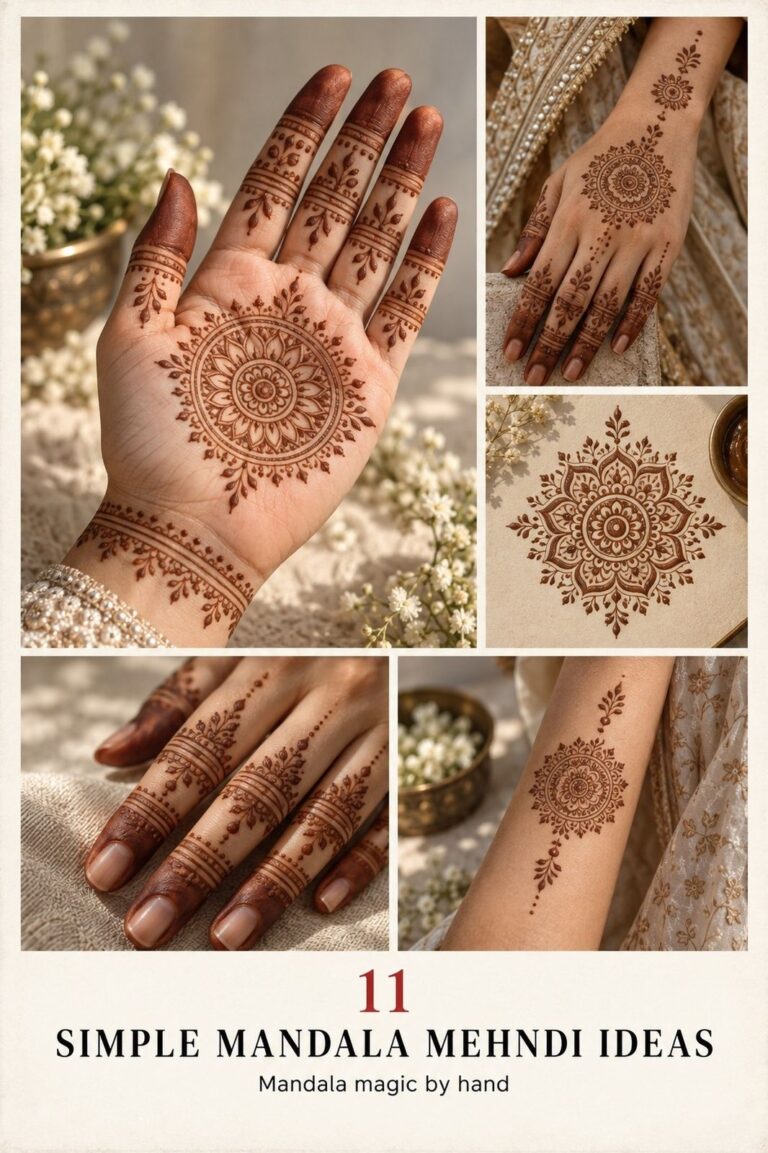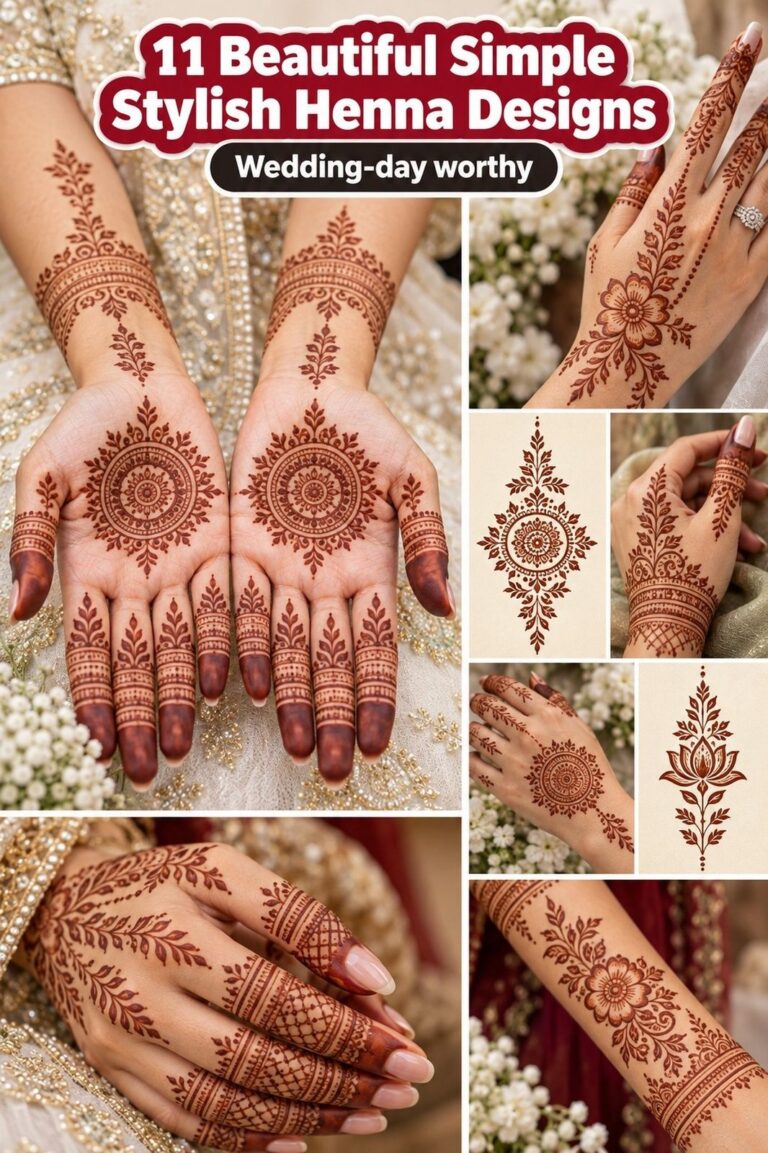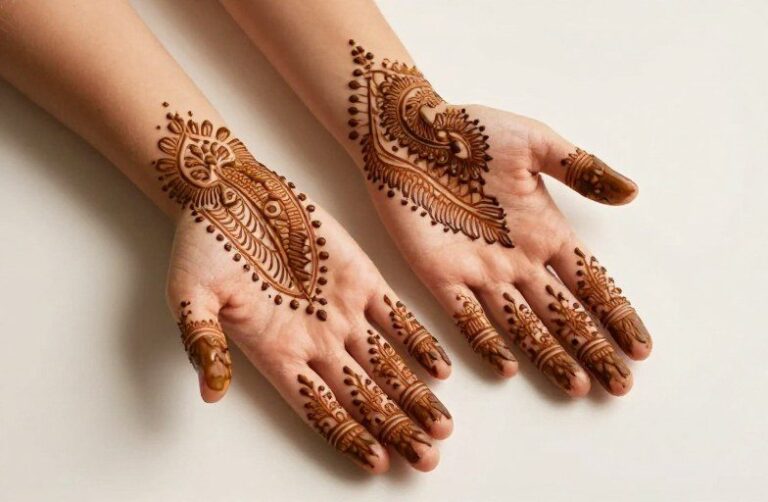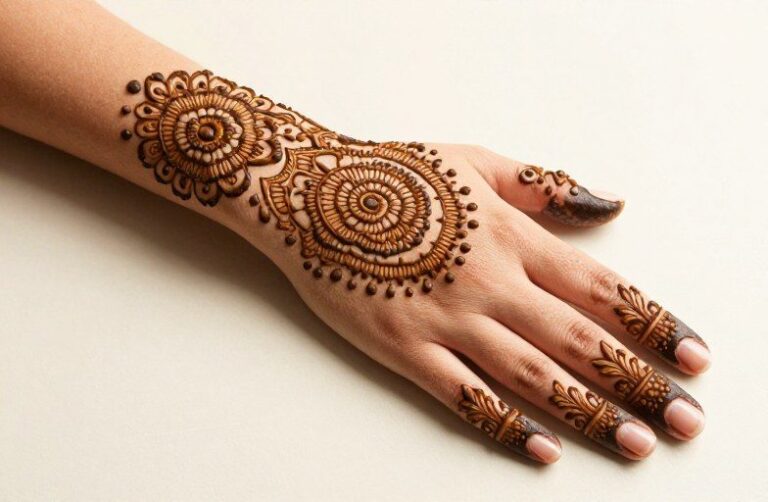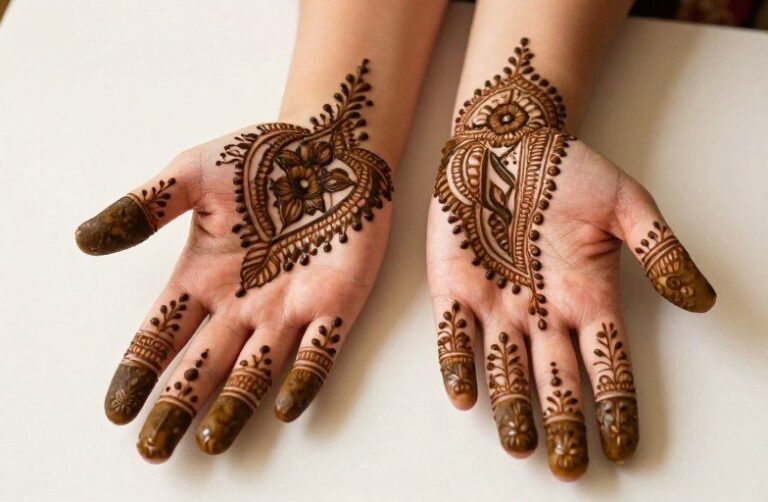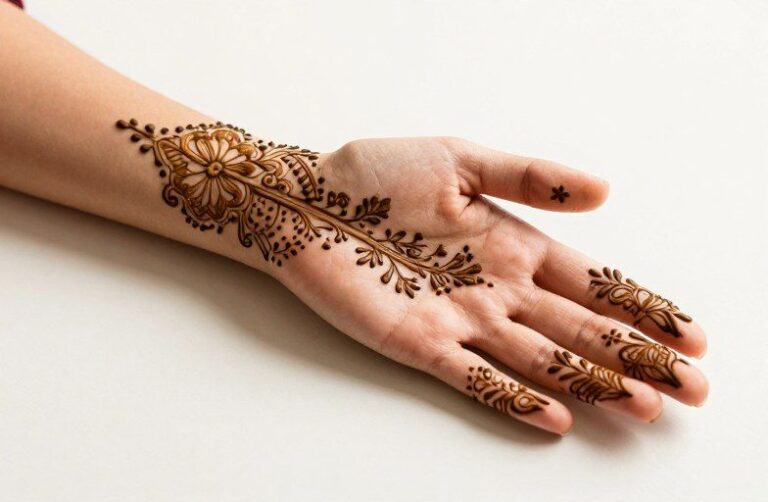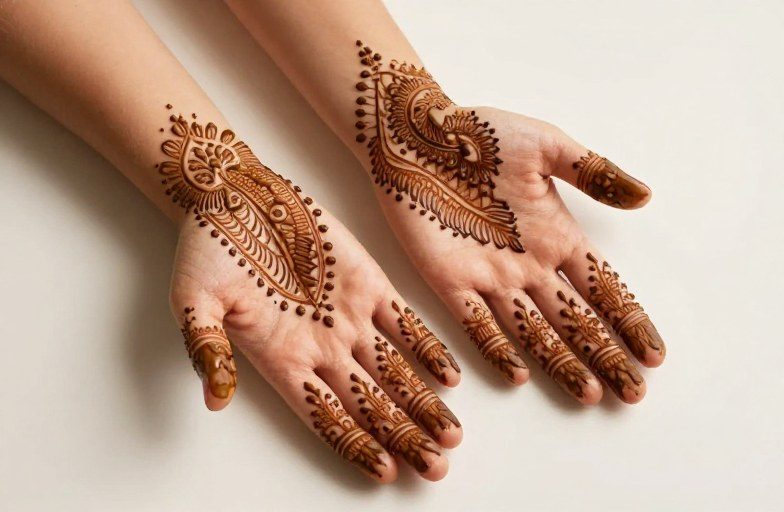
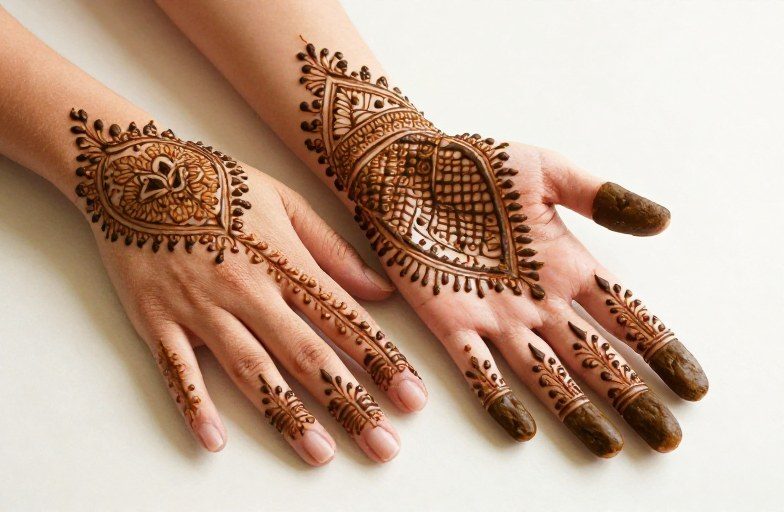
A mehndi hand tattoo translates the flowing, lace-like patterns of traditional henna body art into permanent ink. These designs wrap fingers, palms, or the backs of hands with dense geometric and floral motifs. For most wearers, the meaning centers on celebration, feminine energy, protection, and cultural homage, though the specific symbolism shifts dramatically based on which patterns you choose and where you place them.
How It Ages on Skin
The Hand as a High-Traffic Canvas
Hands shed skin faster than almost anywhere else on the body. Constant washing, sun exposure, and friction from daily tasks mean mehndi hand tattoos fade quicker than back or thigh pieces. Fine lines, those hair-thin details that make henna beautiful, blur within three to five years. The palm, with its thick, regenerative skin, holds ink poorly; many artists refuse palm work entirely or warn clients it may need annual touch-ups.
Back-of-hand placement ages better. The skin there is thinner but less abrasive, and the tattoo stays visible without the palm’s constant wear. Finger tattoos from mehndi designs are notorious for falling out partially; the sides of fingers often need re-lining after two years. For longevity, bold lines outperform delicate shading. A design built from solid black geometry with minimal greywash will still read as “mehndi” decades later, while hyper-detailed dotwork can muddy into soft grey blobs.
Color Choices and Fading Reality
Traditional henna is reddish-brown, but tattoo ink cannot replicate that organic warmth. Artists achieve “henna color” with diluted reds, oranges, or brownish earth tones. These pigments fade fastest of all, red molecules are smaller and break down quicker under UV light. A red-tinged mehndi hand tattoo may look authentically henna-like for two years, then settle into a muted rose or disappear entirely, leaving only the black outline. If you want the color to last, commit to sunscreen on your hands daily, or choose a black-and-grey interpretation from the start.
History & Cultural Roots
South Asian Origins and Ritual Use
Henna body art, called mehndi in Hindi and Urdu, has deep roots in the Indian subcontinent, the Middle East, and North Africa. Bridal mehndi remains the most visible tradition: intricate patterns applied to hands and feet before weddings, sometimes incorporating the groom’s initials hidden within the design. The practice is often linked to cooling properties in hot climates and to bringing good fortune. Some trace it to ancient Egypt, though the evidence there is more commonly associated with fingernail staining rather than the elaborate palm patterns we recognize today.
The shift from temporary paste to permanent tattoo began in earnest during the 1990s and early 2000s, as South Asian diaspora communities in the UK, US, and Canada sought permanent markers of cultural identity that wouldn’t wash away after a week. Early adopters sometimes faced criticism for “stealing” or “freezing” a ritual meant to be ephemeral, a tension that still surfaces in online discussions today.
From Cultural Practice to Global Aesthetic
By the 2010s, mehndi-inspired patterns had permeated mainstream tattoo culture, divorced from their ritual context. This globalization cut both ways: broader appreciation for the visual complexity, but also frequent appropriation without understanding. The permanent tattoo version often strips away the specific symbols, mango leaves for fertility, peacocks for beauty, the sun for awakening, that give traditional bridal mehndi its layered meaning.
Personal & Modern Meanings
Contemporary wearers assign their own significance. For those with South Asian, Middle Eastern, or North African heritage, a mehndi hand tattoo can signal permanent belonging to a culture that generations of assimilation threatened to erase. The hand becomes a daily-visible declaration, impossible to hide in a job interview or at a family gathering where old-country customs feel distant.
Others choose the aesthetic purely for its visual density. The hand’s natural contours, knuckles, finger joints, the valley between thumb and forefinger, provide built-in structure that flat geometric tattoos on an arm or leg lack. Some wearers connect the flowing patterns to meditation or mindfulness, finding the repetitive geometry calming to look at. A smaller group uses the tattoo to mark recovery from hand-related trauma: burns, scars, or self-harm, though this motivation rarely gets discussed openly in shops.
Who Chooses This Tattoo
Heritage Wearers vs. Aesthetic Adopters
The split is real and worth acknowledging. Heritage wearers often research specific regional styles, Rajasthani bold florals versus Arabic trailing vines versus Moroccan geometric tessellations, and may incorporate family-specific motifs. They sometimes consult elders or bring reference photos from actual mehndi ceremonies. Aesthetic adopters typically find the design on Pinterest or through a tattoo artist’s portfolio, drawn to the ornamental quality without cultural attachment.
Both groups face practical constraints. Hand tattoos remain stigmatized in conservative professions: medicine, law, finance, and education often still require coverage. The visibility means this choice is rarely someone’s first tattoo; most who sit for mehndi hand work already have visible pieces elsewhere and have accepted the social cost.
Gender and the Mehndi Hand
Women still comprise the majority of clients, reflecting henna’s historical gendering. However, male wearers have increased, particularly those choosing heavier blackwork versions that read more as geometric armor than delicate lace. Masculine interpretations often emphasize the back of hand and knuckles, avoiding the finger trails and palm coverage that code more traditionally feminine.
Mythology & Folklore
Traditional mehndi carries symbolic weight that permanent tattoos sometimes inherit, sometimes ignore. The night before a wedding, bridal mehndi is often linked to awakening the bride’s inner light and protecting her from the evil eye. Darker henna stains were believed to indicate deeper love from the husband’s family. Some folklore holds that the bride should not do housework until the mehndi fades, a temporary elevation of status.
The peacock, a frequent motif, connects to various regional myths: the bird’s thousand eyes watching for danger, its association with rain and fertility, its role as vehicle for certain deities. The lotus emerging from mud appears in both Hindu and Buddhist iconography, though in mehndi it more commonly signals beauty and purity than strict religious devotion. Permanent tattoos that include these symbols may carry the folklore forward, or may simply use them as recognizable decorative elements.
Common Variations & Styles
Traditional Interpretations
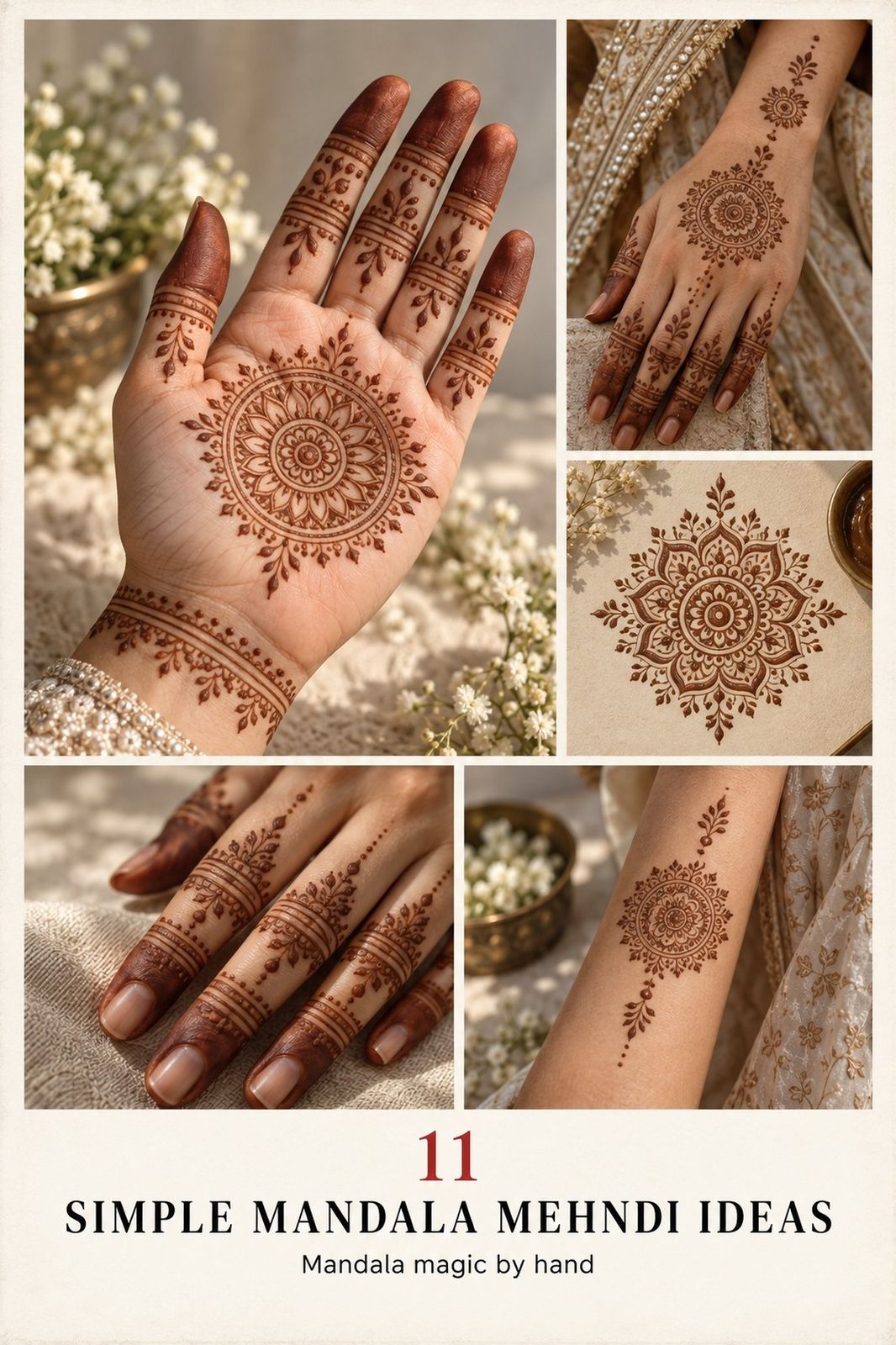
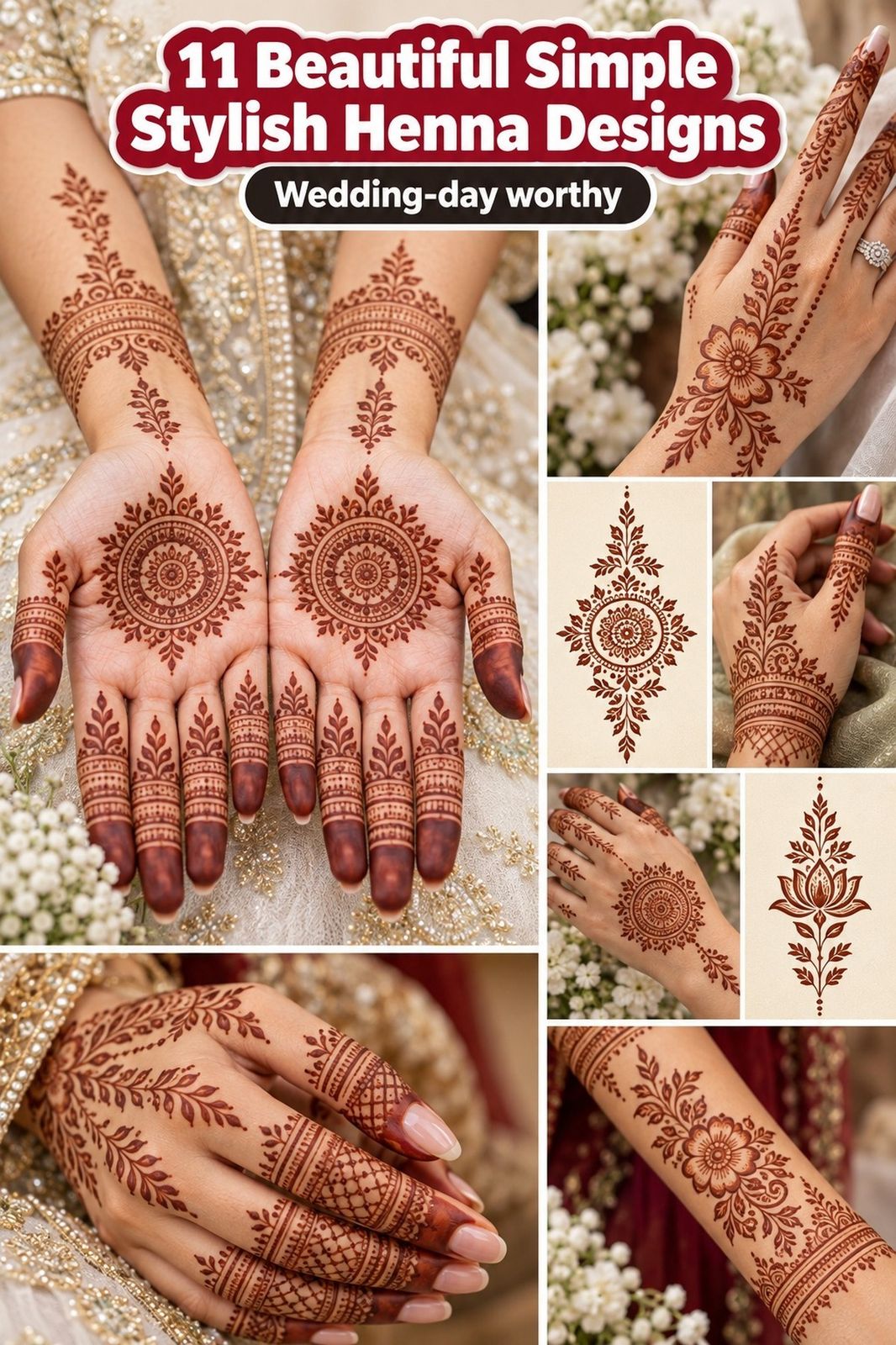
Pure black linework most closely mimics fresh henna paste. Artists build from a central palm or back-of-hand focal point, often a flower, mandala, or sunburst, then radiate vines, leaves, and dots outward. Fingers receive trailing patterns that extend toward the nail beds, sometimes wrapping like rings. This style demands an artist comfortable with extreme detail at small scale; the best work looks effortless but requires steady, planned improvisation to fit the hand’s unique topography.
Modern Adaptations
- Dotwork mandalas: Geometric precision replacing organic flow, often extending onto wrist and forearm as a sleeve transition.
- Negative space designs: Skin left uninked to form the pattern, with black surrounding it, effective for aging but reads less immediately as “mehndi.”
- Jewelry integration: Patterns that frame existing rings or mimic stacked bracelets, connecting tattoo to actual ornament.
- Color experiments: Deep reds and oranges for authentic henna reference; occasional teal or purple for purely contemporary aesthetic.
- Single-finger accents: Minimal commitment, one finger wrapped in pattern, often paired with a ring tattoo on the adjacent finger.
Some artists combine mehndi vocabulary with unrelated imagery, snakes threading through vines, skulls at the center of mandalas, text integrated into the pattern’s negative spaces. These hybrids are divisive: purists find them disrespectful, while others see them as legitimate evolution of a living art form.
The Takeaway
A mehndi hand tattoo carries weight, visual, cultural, practical, that simpler designs avoid. The meaning depends on your specific pattern, your background, and your willingness to maintain a high-maintenance placement. If you come from the tradition, the tattoo can be a permanent anchor to temporary ritual. If you don’t, the aesthetic appeal is genuine but requires honest acknowledgment of where the visual language originated. Either way, go bold on line weight, protect it from sun, and choose an artist who has actually executed detailed hand work before, not just one who draws beautiful stencils. The hand punishes arrogance and rewards preparation.
Frequently Asked Questions
Does a mehndi hand tattoo hurt more than other placements?
Yes, particularly on fingers, knuckles, and the palm where bone sits close to skin with little fat padding. The back of the hand is moderate, similar to a forearm. Numbing creams are less effective on hands due to thick skin and high blood flow.
Can I get a mehndi hand tattoo if I’m not South Asian?
You can, but approach it with respect. Avoid sacred or specifically bridal motifs, don’t claim the culture as your own, and consider consulting with artists from the tradition. Many heritage wearers appreciate thoughtful appreciation over careless appropriation.
How do I find an artist who specializes in this style?
Search portfolios for healed hand photos, not just fresh work. Look for artists who show consistent fine-line control and geometric precision. Ask specifically how they handle aging on hands, anyone who promises fine detail will last ten years is being dishonest.
Will a mehndi hand tattoo affect job prospects?
Almost certainly in conservative fields. Hands cannot be covered as easily as arms or legs. Some clients choose the back of hand only, keeping fingers clean for slightly easier concealment, but there is no fully hiding a hand tattoo in professional settings.