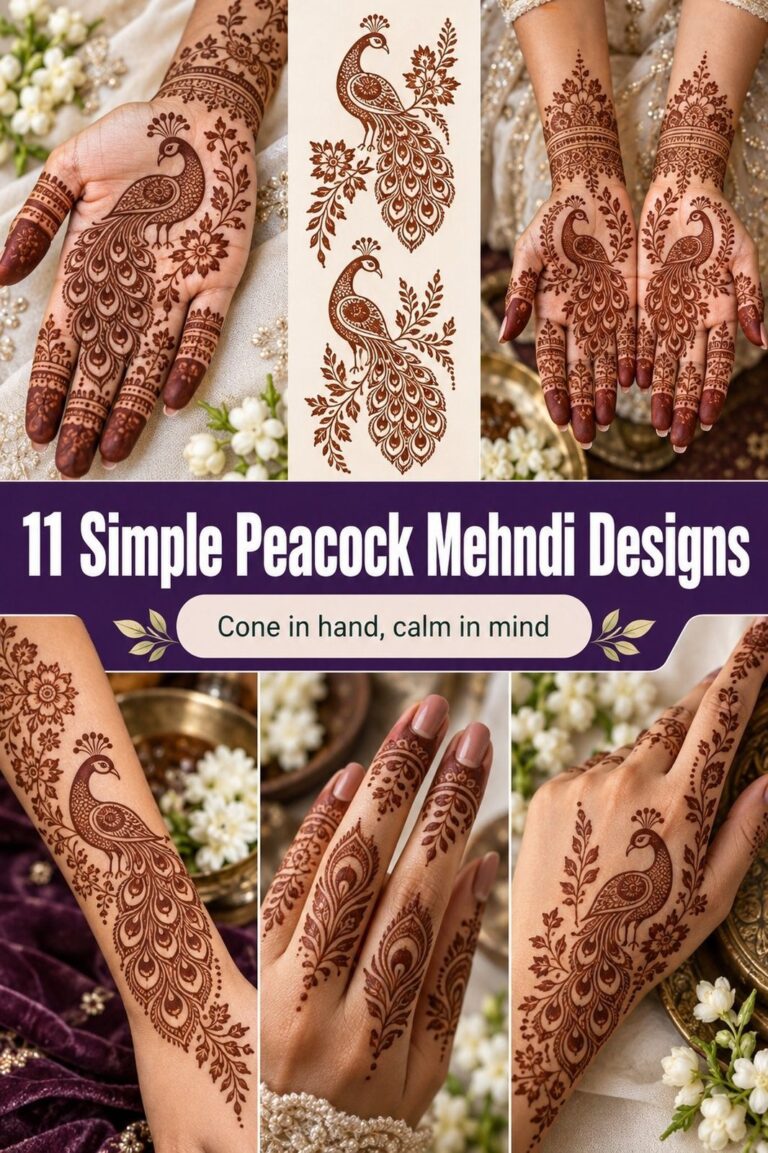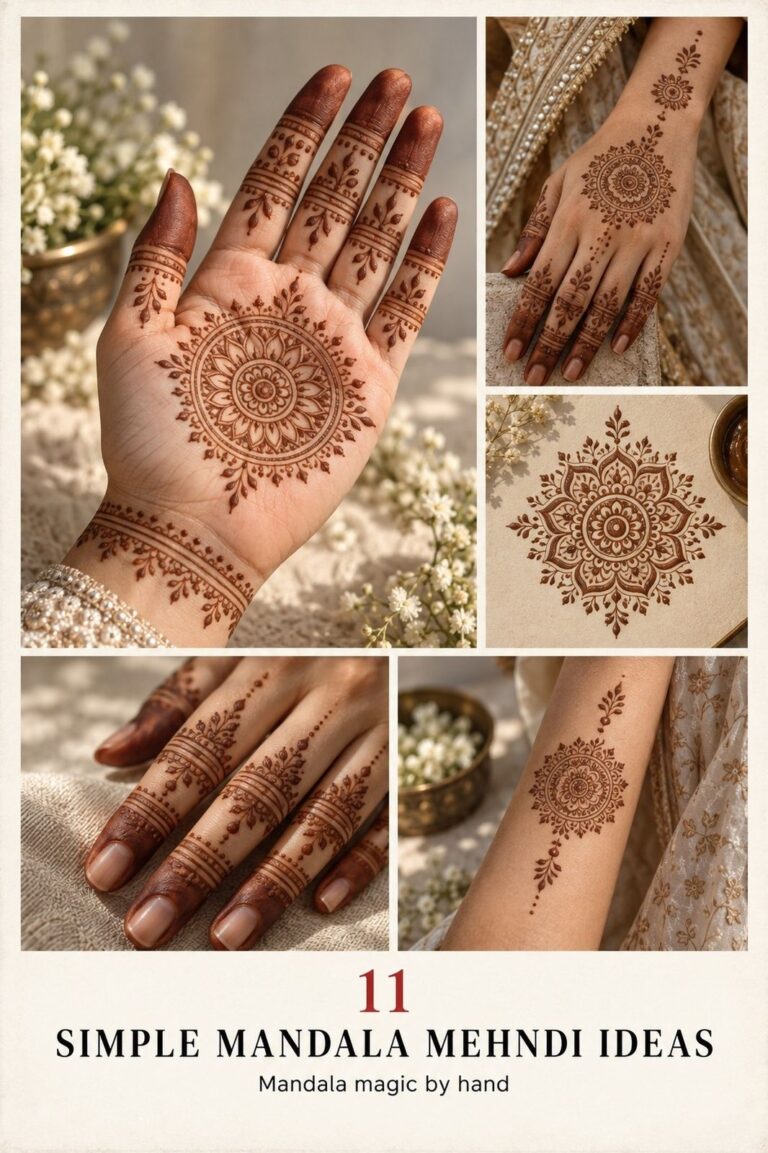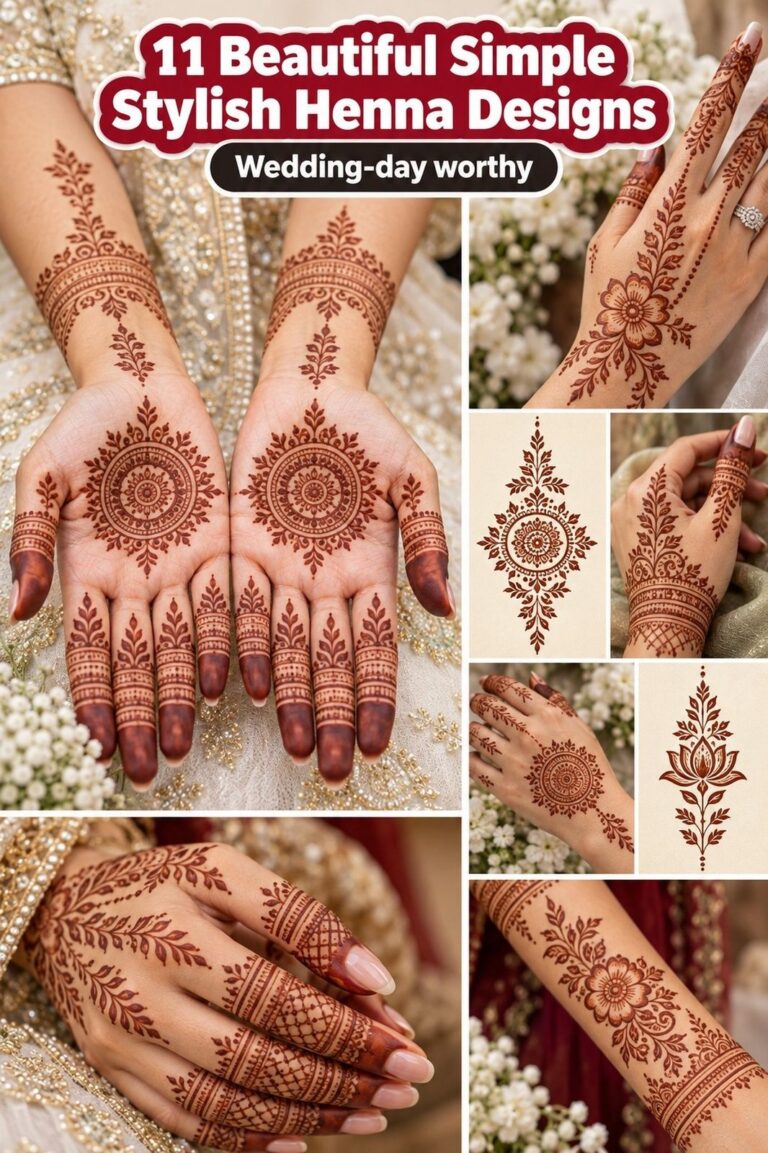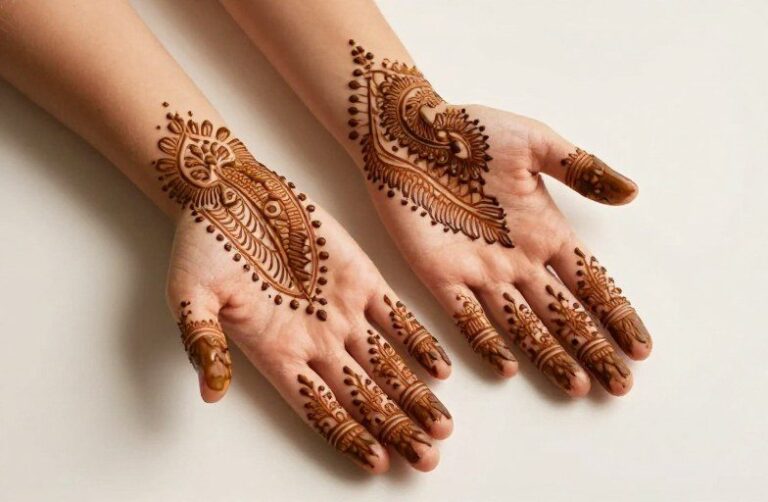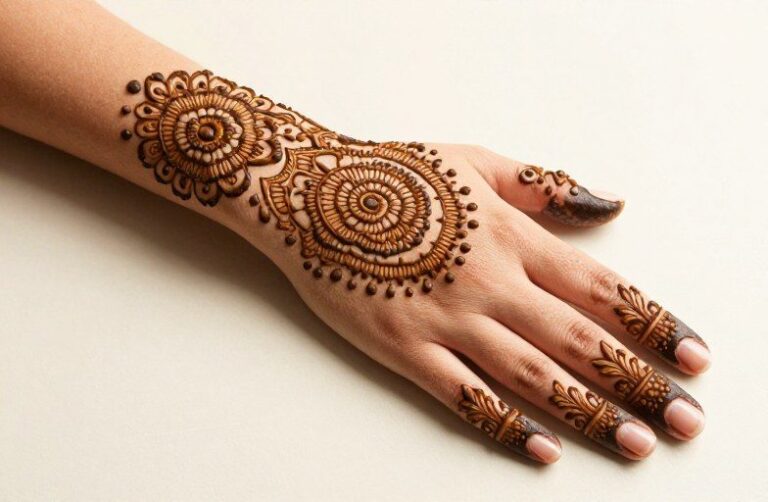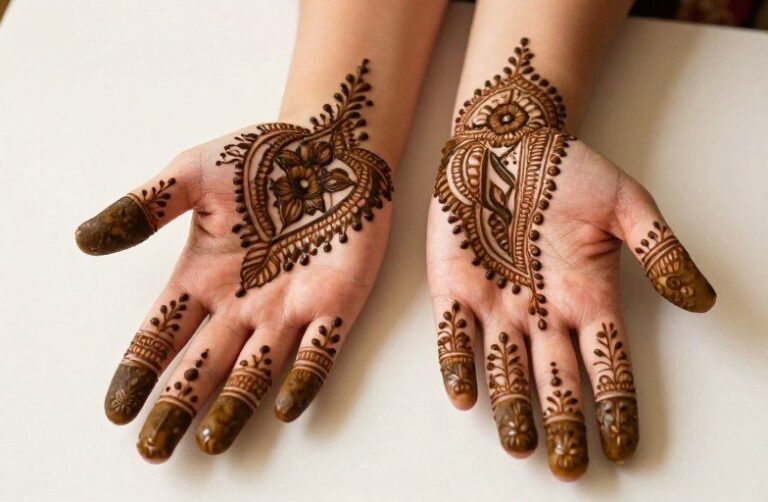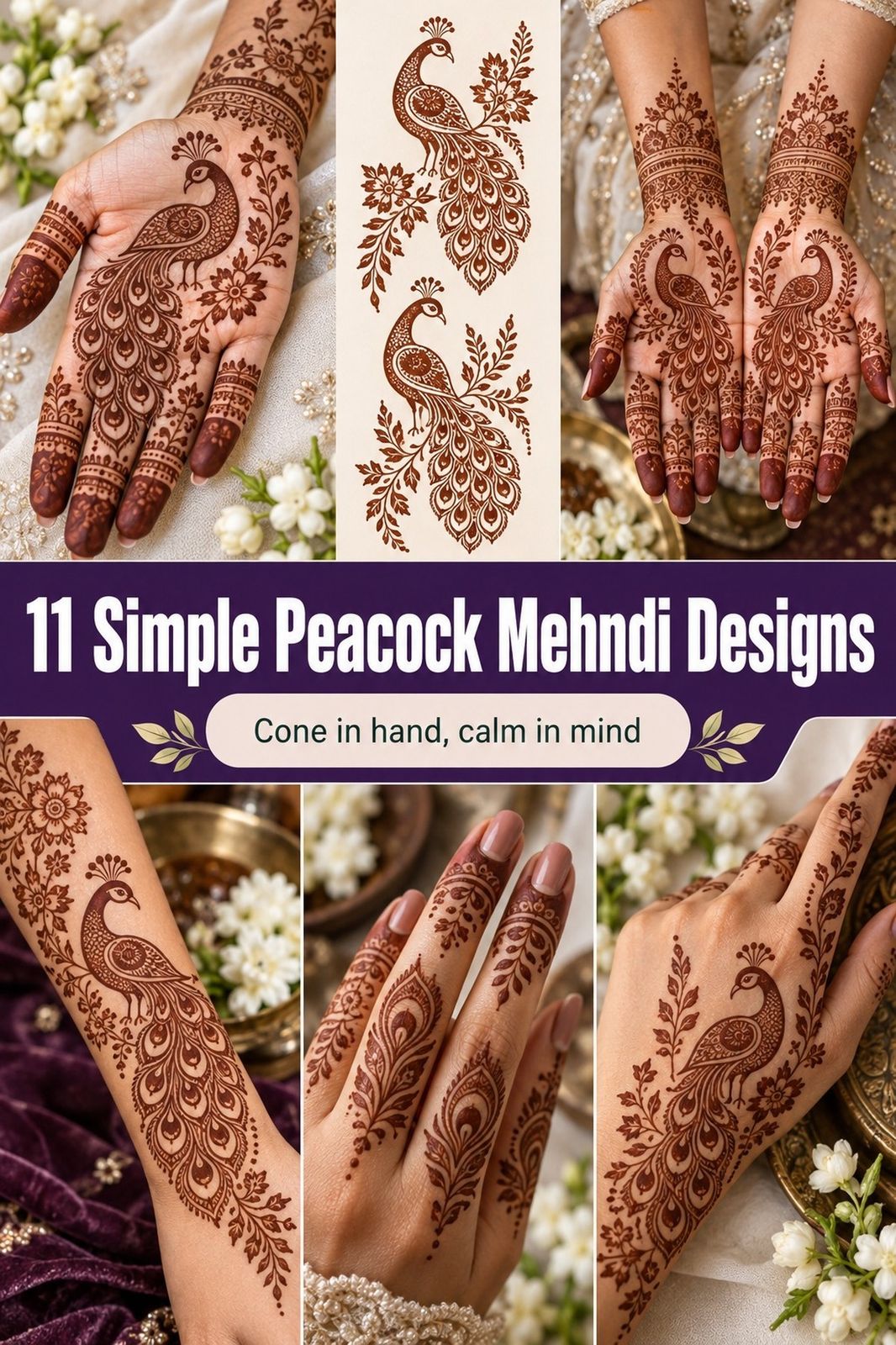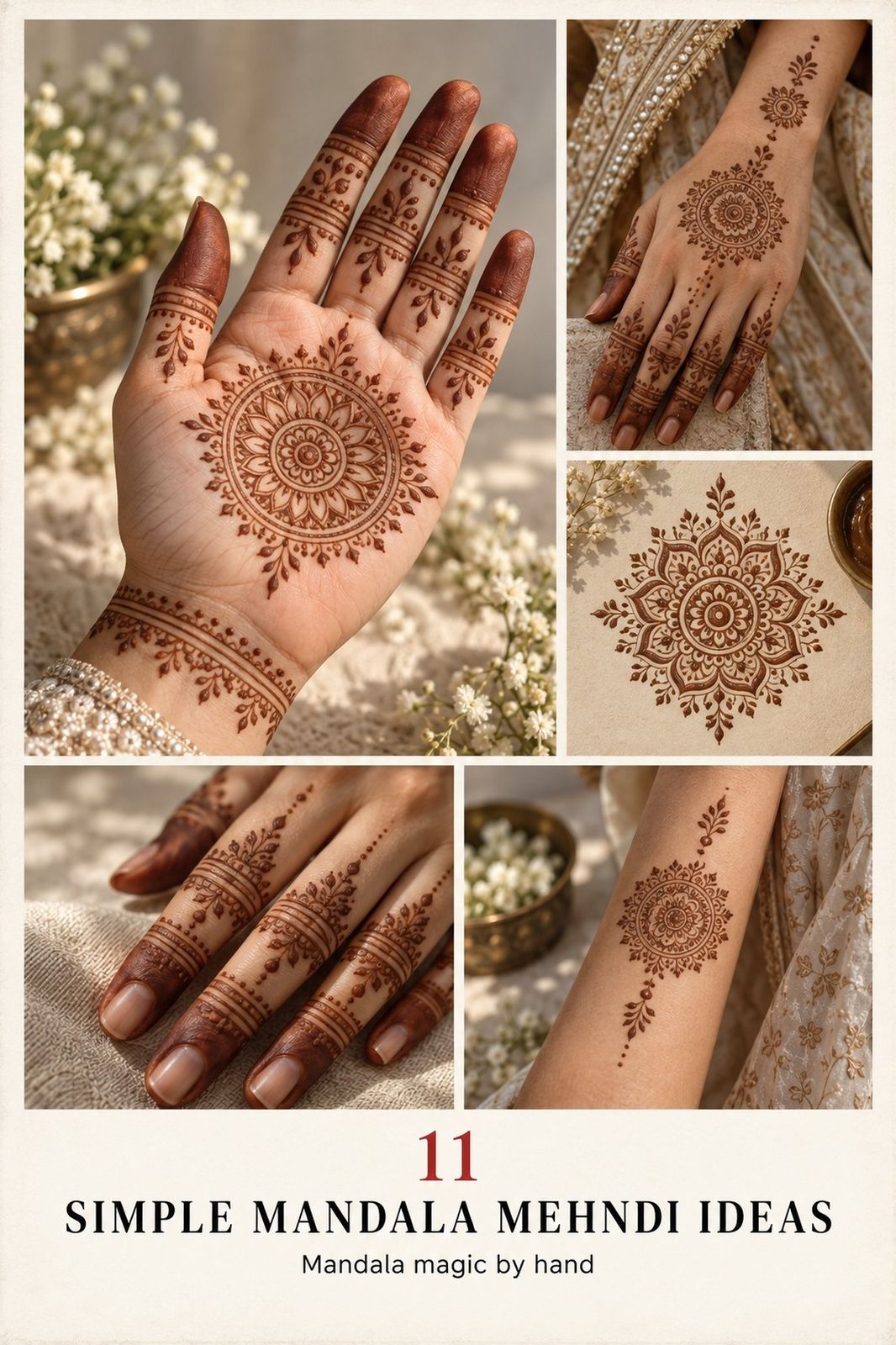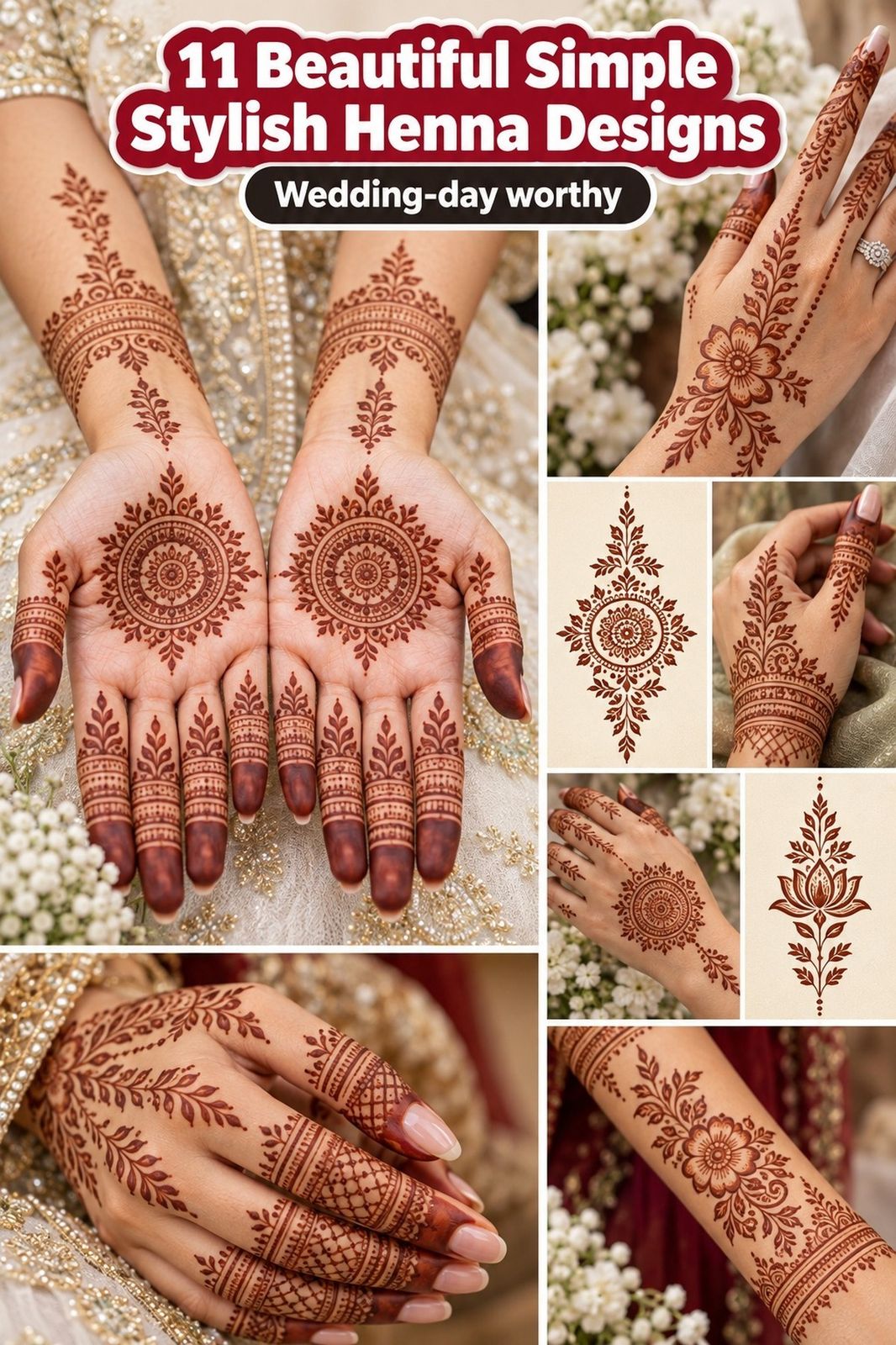
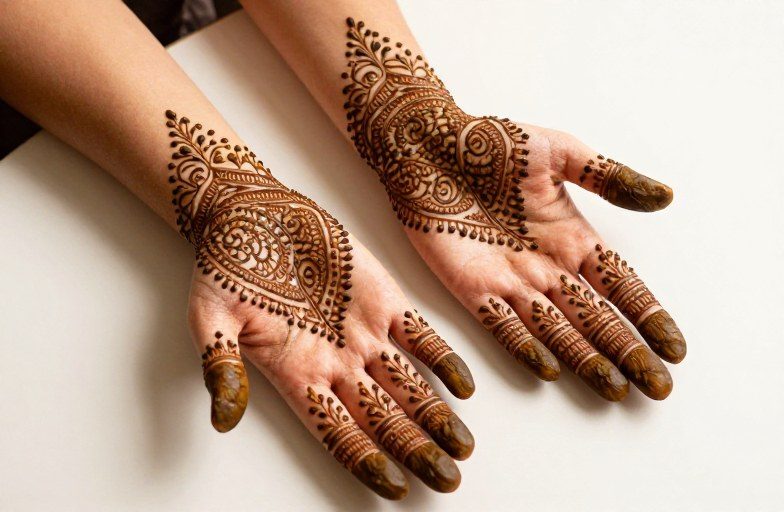
Indo-Arabic mehndi sits at the crossroads of two distinct visual languages. Arabic henna often favors bold, continuous lines, sweeping floral vines, and generous negative space. Indian tradition, broadly speaking, leans toward intricate fill work: paisleys, peacocks, mandalas, and fingertip detail that crowds the skin. A tattoo that fuses both can feel airy and ornate simultaneously, but the balance is delicate. Too much density and the Arabic flow suffocates; too much open line and the Indian richness disappears. The best designs let each tradition do what it does best.
Understanding the Style
Before you commit, know that “Indo-Arabic” is not a standardized category. Some artists interpret it as Arabic outlines with Indian motifs tucked inside. Others weave alternating bands of each style. The fusion itself is relatively recent as a tattoo genre, emerging from diaspora communities where henna artists began translating their temporary work to permanent ink, and tattoo artists borrowed from henna reference books. The category is still evolving, which means your input shapes the outcome more than in established styles like Japanese or American traditional.
What Each Tradition Does Well
Arabic linework excels at guiding the eye. A vine that flows from wrist to elbow creates movement and structure; the negative space around it lets the skin breathe. Indian detail rewards patience. A paisley no larger than a thumbnail might contain concentric layers of dotwork, teardrop shapes, and miniature florals. In a successful fusion, the Arabic element determines where your eye travels first; the Indian element gives you a reason to look closer.
Related reading: indo arabic mehndi tattoos | indo arabic henna tattoos | trendy indo Arabic mehndi tattoo | Pakistani henna designs
Where Your Taste Falls
Most people gravitate toward one side unconsciously. You might love the boldness of Arabic vines but want a single paisley as a focal point. Or you might want dense Indian fill across your entire hand, with one Arabic vine cutting through to prevent claustrophobia. Neither is wrong. The mistake is requesting equal amounts of both without considering how they interact.
For First-Timers
If you have never worn henna or gotten a tattoo in this style, start with a clear understanding of how it actually looks on skin. Reference images matter, but be specific. “I like this Arabic negative space” or “I want these Indian finger details” gives your artist something concrete. Avoid vague requests for “something Indo-Arabic” without visual anchors. Bring photos of both pure Arabic and pure Indian henna so the artist can see where your taste actually falls on the spectrum.
Start With a Hybrid Sleeve or Cuff
A wrist-to-forearm cuff works well for beginners because the placement is visible enough to enjoy, easy to conceal, and relatively tolerable for pain. Ask for an Arabic vine as the outer border, something that flows around the arm like a ribbon, then have the artist fill select leaves or flowers with Indian-style dotwork and paisley interiors. This keeps the overall shape legible from a distance while rewarding closer inspection.
What to Bring to Your Consultation
Print your references rather than scrolling on a phone. Phones distort color and scale. Mark the specific elements you want: the curve of a vine, the density of a fill pattern, the way negative space is handled around a wrist. If you have jewelry you wear daily, bring it. The tattoo should accommodate your life, not compete with it.
Matching and Pairing Ideas
This style pairs well with certain jewelry and clothing aesthetics, but the tattoo itself can also be designed as a pair or set.
Matching Hands or Feet
Some clients tattoo one hand in predominantly Arabic style and the other in Indian, then mirror elements across both. The effect is striking when the hands are pressed together. For non-bridal wearers, matching forearm cuffs with inverted designs, one arm flowing toward the elbow, the other toward the wrist, create visual harmony without exact duplication. The asymmetry keeps the pairing from feeling like a rubber stamp.
Pairing With Existing Jewelry
The negative space in Arabic linework frames rings and bracelets beautifully. Indian fill patterns, by contrast, compete with ornate jewelry. If you wear stacked rings daily, lean Arabic on the fingers and Indian on the back of the hand. The tattoo becomes a backdrop rather than a rival. If you rarely wear jewelry, you can afford more density overall.
Color Choices
Traditional henna is reddish-brown; jagua stains blue-black. Tattoo ink offers far more range, but certain colors behave differently in this particular style.
Black and Near-Black
Carbon black remains the most common choice. It holds crisp lines for years and mimics the depth of fresh henna paste. A soft black-gray wash can suggest the faded quality of old henna, which some prefer for a lived-in look. Solid black fill in Indian-style paisleys stays bold; in Arabic linework, it risks looking like a tribal band from the 1990s if overdone. Reserve heavy black for the Indian elements, keep Arabic lines lighter or single-pass.
Browns and Warm Tones
Light brown inks fade faster than black, sometimes to a muddy olive within a few years. If you want the authentic henna color, expect touch-ups. Some artists mix a custom brown-black that ages more gracefully than straight light brown. Avoid orange-toned reds; they often heal to a salmon pink that clashes with most skin tones.
Best Placements
Indo-Arabic design has natural homes on the body, but unconventional placements can refresh the tradition.
Hands, Feet, and Ankles
The classic placements remain hard to improve upon for authenticity. Palms and soles take ink poorly and hurt intensely; the backs of hands and tops of feet are the compromise. Finger tattoos in this style blur relatively quickly due to constant movement and regeneration. If you want fingertip detail, plan for regular refresh sessions. Ankle bracelets that wrap fully around the leg work better than partial wraps, which can look like a broken circle from certain angles.
Upper Back and Sternum
A large Indian mandala centered on the upper back, with Arabic vines extending toward the shoulders, uses the body’s natural geometry well. The sternum allows for symmetrical Indo-Arabic pieces that mirror across the chest, though this placement requires a high pain tolerance and stretches significantly with weight fluctuation. Consider whether you want this design for decades, not just for how it photographs.
Standout Design Ideas
Certain motifs translate particularly well from temporary henna to permanent tattoo.
The Floating Paisley Vine
Arabic-style vines that do not fully connect, with individual paisleys floating along the path like leaves. Each paisley contains Indian dotwork or miniature mandalas. The disconnected quality feels modern; the interior detail honors tradition. This works at medium scale on forearms or calves. Avoid making the paisleys too numerous; three to five strong ones beat ten crowded ones.
Architectural Frames
Indian jaali patterns, the lattice screens found in Mughal architecture, can form a rectangular or arched frame, with Arabic calligraphy or floral spray inside. The jaali provides the density and geometric precision associated with Indian design; the central content breathes with Arabic openness. This suits upper arms, thighs, or side panels on the torso. The historical link between Mughal architecture and the blending of Persian and Indian aesthetics makes this fusion feel grounded rather than arbitrary.
How to Personalize It
Generic Indo-Arabic tattoos abound on image platforms. Making yours specific requires embedding personal elements without disrupting the visual grammar of the style.
Integrating Initials or Dates
Arabic calligraphy can conceal names or significant words within the flowing lines. Indian numerals in Devanagari script, tucked into paisley centers, mark dates more subtly than Roman numerals. The trick is scale: too large and the personal element dominates; too small and it becomes illegible within months as the tattoo settles. Trust your artist on minimum legible size for your chosen placement.
Regional Variation
Indian henna itself varies by region. Rajasthani work often favors peacocks and fine mesh; Pakistani styles sometimes include more geometric elements; Gulf Arabic henna tends toward larger, bolder shapes. Specifying a regional blend, something like Rajasthani fill with Kuwaiti line weight, gives your artist a precise brief and produces something harder to replicate. This specificity also shows respect for the traditions you are borrowing from.
What to Remember
Indo-Arabic mehndi tattoos succeed when each tradition is allowed its strengths. Arabic linework provides structure and flow; Indian detail offers depth and reward for close viewing. The fusion fails when one style dominates or when the two are simply layered without integration. Prioritize placement based on how the design will age. Fingers and palms blur; forearms and upper backs hold. Color choice should account for fading: black stays, brown softens, orange-red turns pink. Most importantly, bring specific visual references to your artist. This style is broad enough that “Indo-Arabic” alone means little. The tattoo you want is built from precise decisions about line weight, fill density, motif selection, and negative space. Those decisions are yours to make before the needle touches skin.
Frequently Asked Questions
How long does an Indo-Arabic mehndi tattoo typically take to complete?
Timing varies significantly by artist, design complexity, and how you handle sessions. A small cuff might take a single afternoon. Dense hand-and-forearm work with Indian detail often spans multiple sessions. The dotwork and fill add time compared to pure linework, so budget more than you would for a comparable-sized tattoo in a simpler style.
Will the fine dotwork and paisley details blur over time?
All tattoos soften with age, but thin lines and dense dotwork are especially vulnerable on high-movement areas like wrists and fingers. Lines under a millimeter may spread or fade within several years. Touch-ups help, but some artists advise starting slightly bolder than henna would suggest, to give the tattoo a longer readable life.
Can I get this style if I do not have South Asian or Middle Eastern heritage?
Cultural appropriation concerns arise with sacred or religious motifs. Abstract florals, paisleys, and non-religious geometric patterns are generally accepted as cross-cultural decorative art. Avoid specific religious iconography or sacred text unless it belongs to your own tradition. When in doubt, ask your artist, and listen if they express hesitation.
How do I find an artist who actually understands both styles?
Look for portfolios showing both Arabic linework and Indian fill techniques in separate pieces, not just claimed fusion work. Ask which regional henna traditions they reference. A genuine understanding shows in how they describe line origin and motif source, not just visual mimicry. Many skilled artists learned from henna practitioners; ask about that lineage if they mention it.