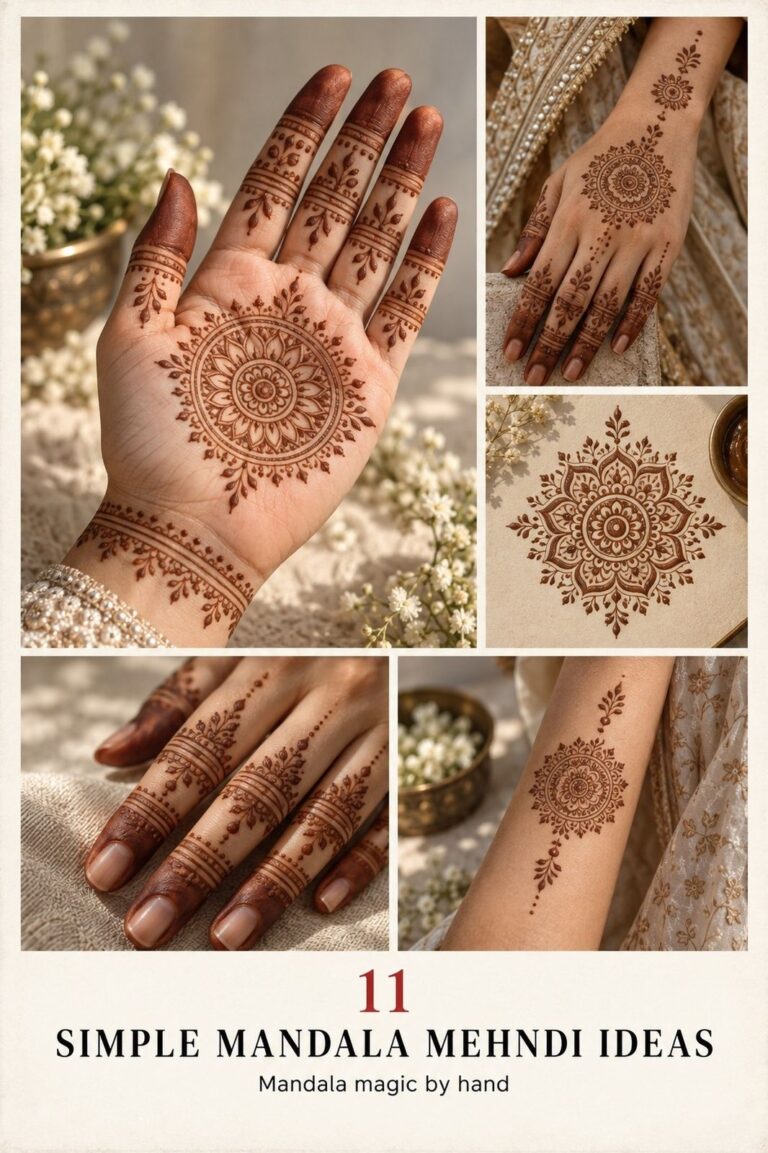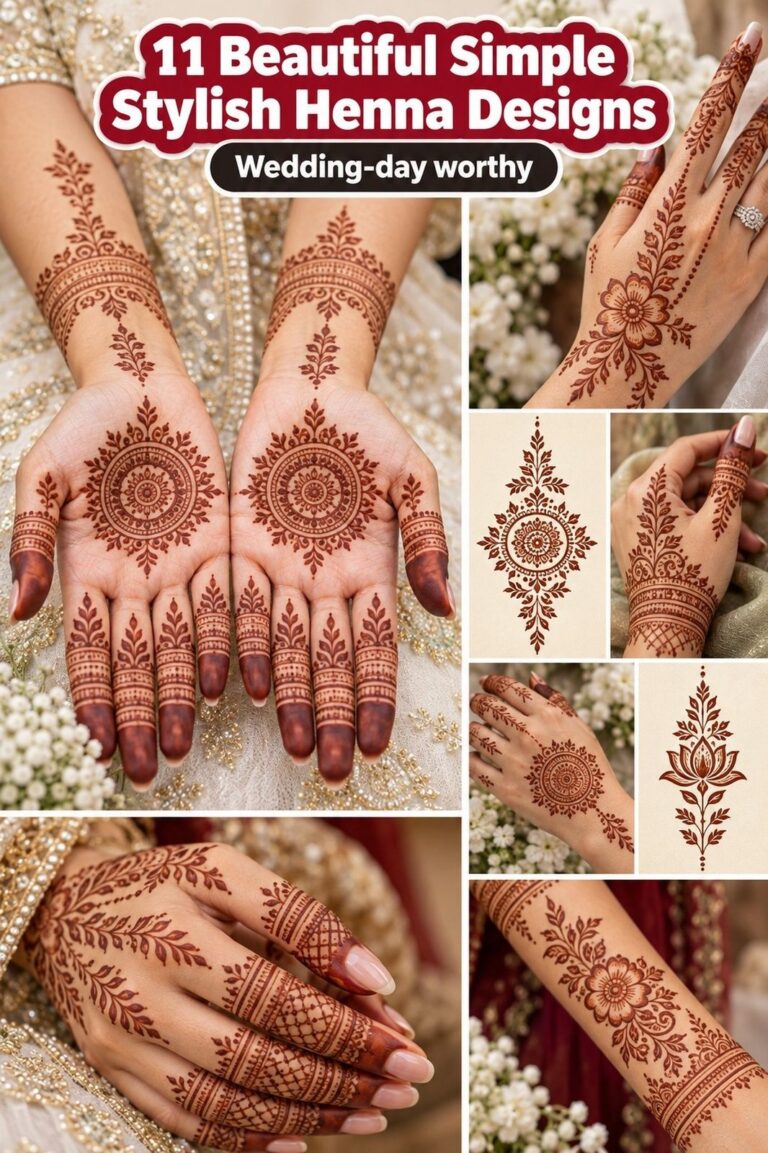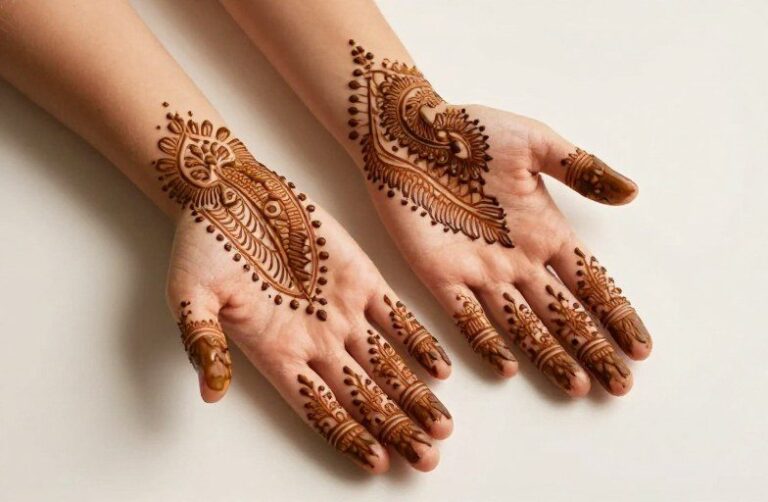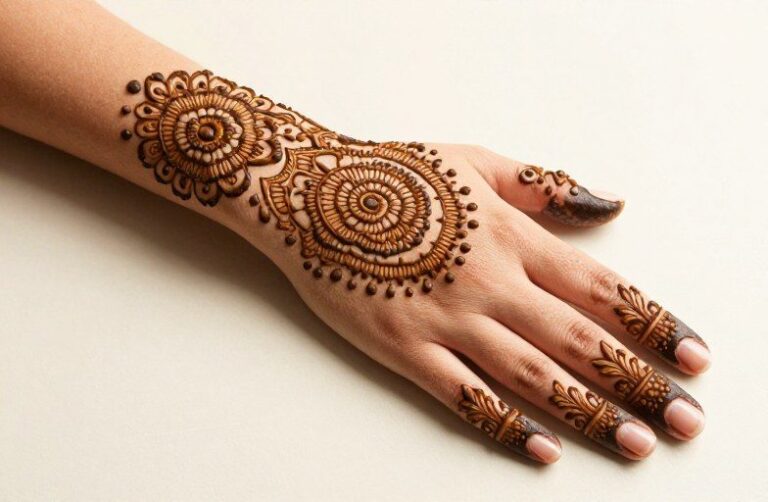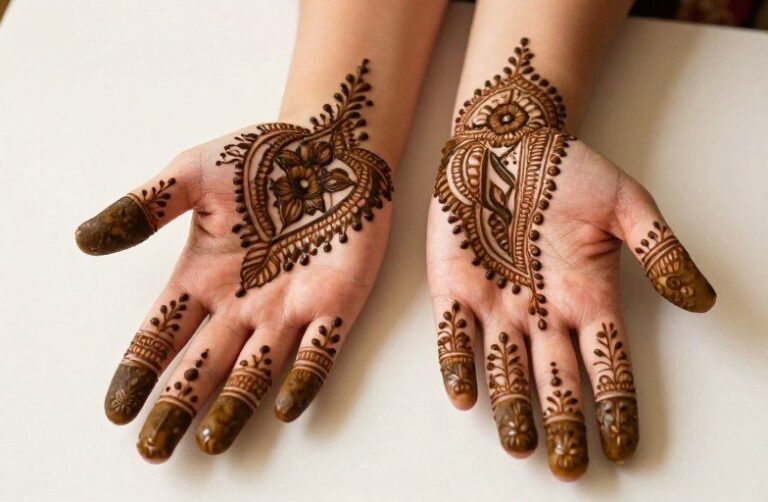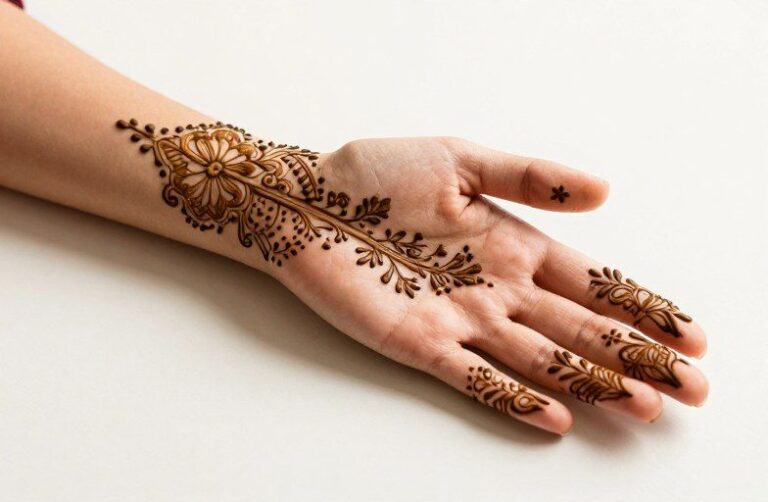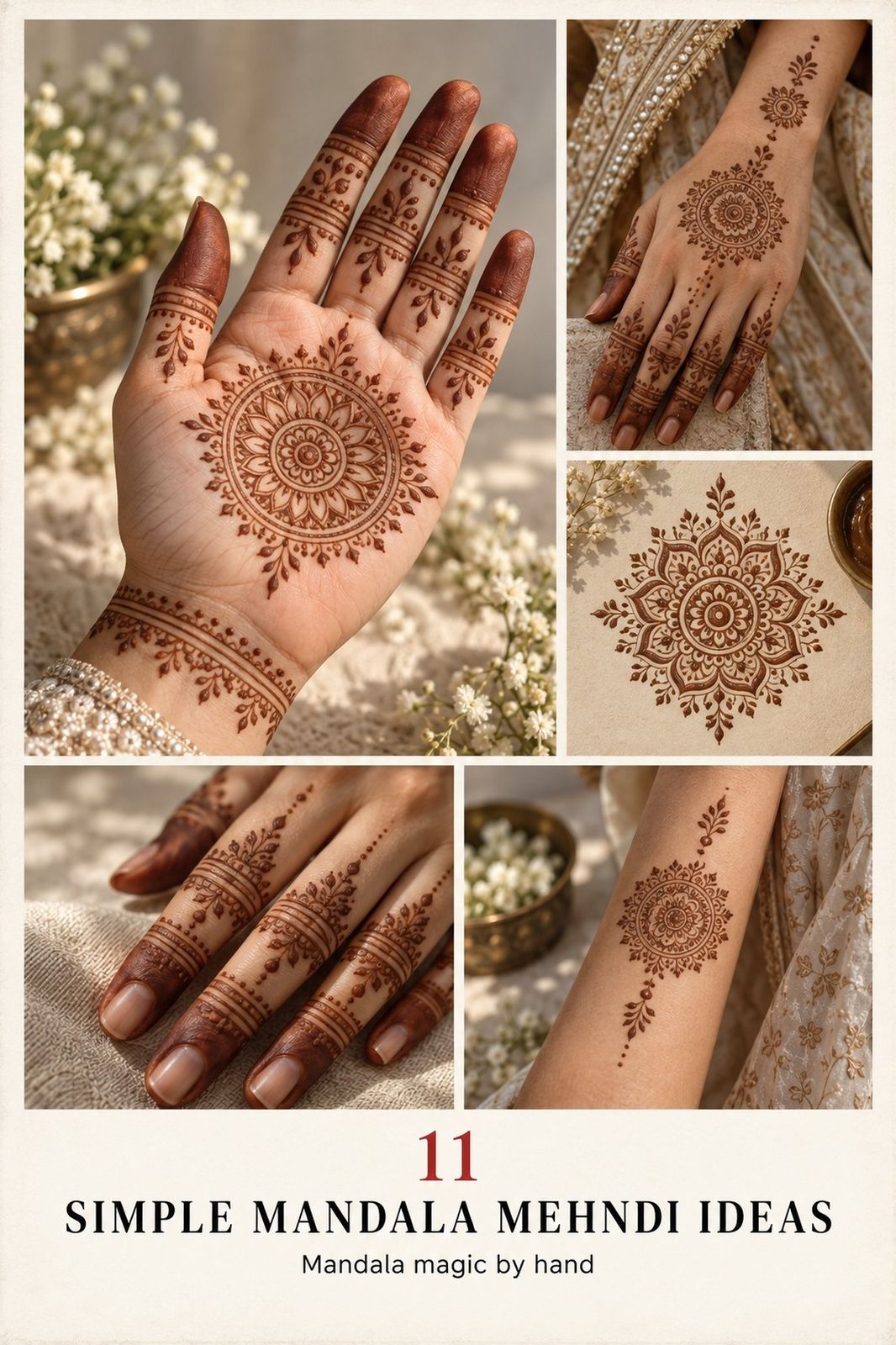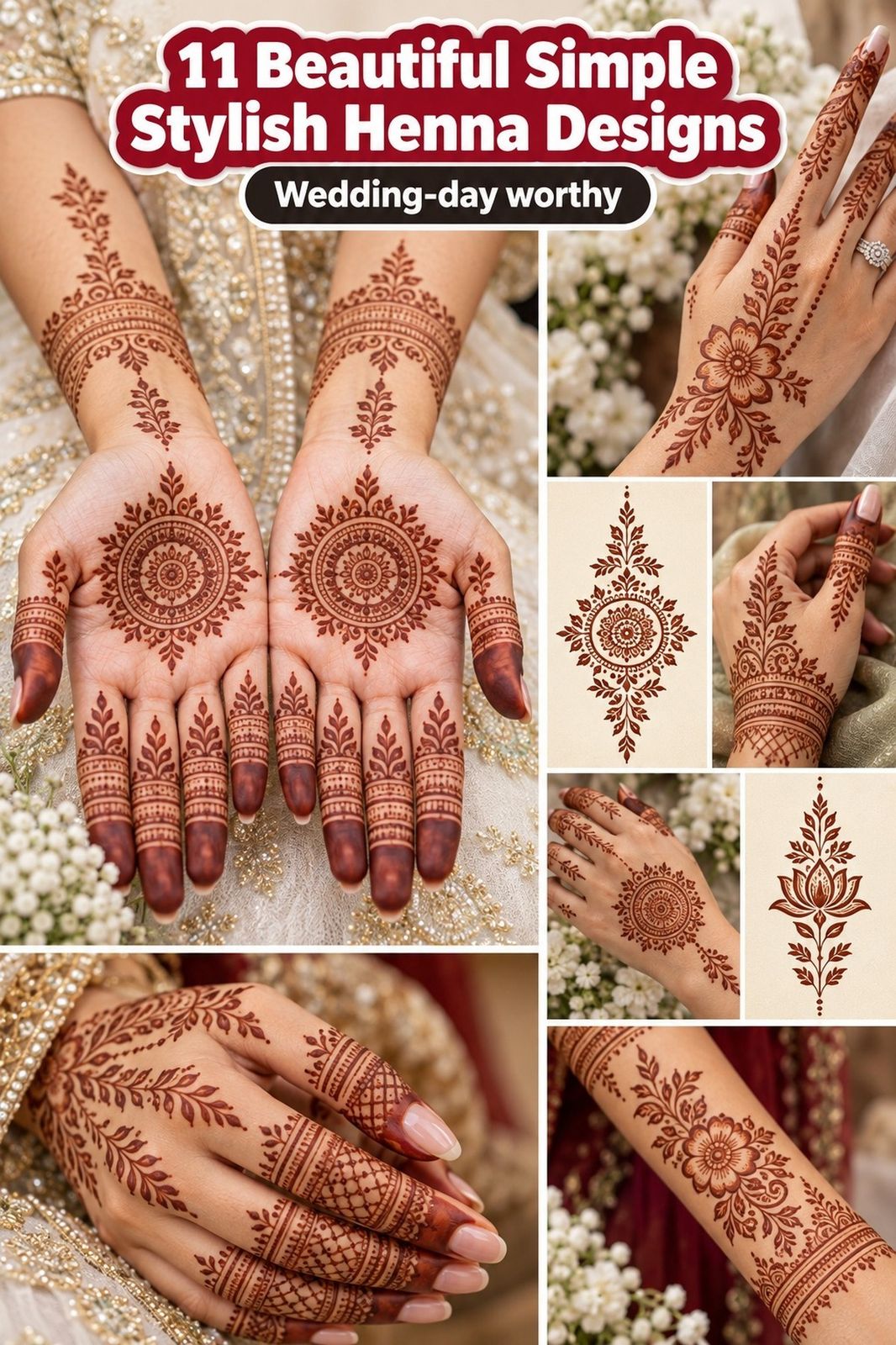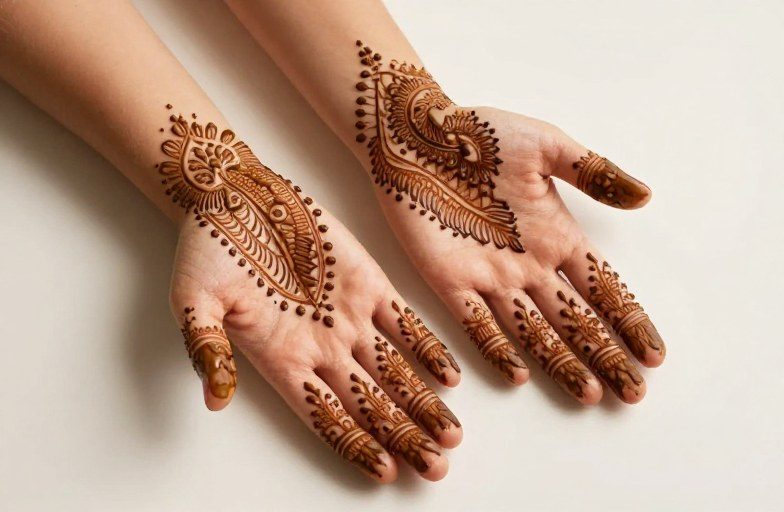
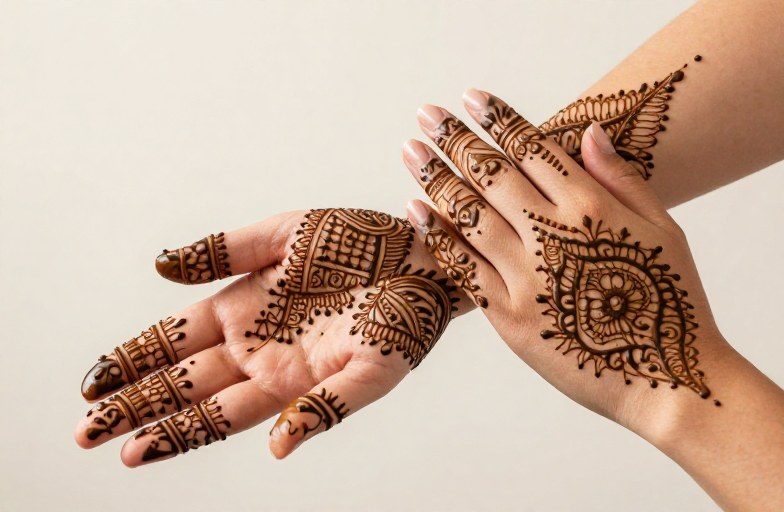
A Moroccan henna tattoo translates the temporary art of mehndi into permanent ink, carrying meanings of protection, fertility, and celebration. The dense geometric patterns, flowing vines, and negative-space florals traditionally applied to hands and feet during weddings and festivals now find new life on shoulders, ribs, and forearms. Understanding what these symbols actually represent helps you choose authentic elements rather than decorative pastiche.
Similar & Related Symbols
Mehndi traditions span North Africa, the Middle East, and South Asia, but Moroccan henna holds distinct regional characteristics. Berber (Amazigh) henna often features diamond shapes and cross-hatching tied to tribal identity and earth-based protection. Indian mehndi leans toward paisleys and peacocks with Hindu ceremonial associations. Arabic styles favor large floral sprays and calligraphic elements. Moroccan work sits at the intersection, geometric enough to feel architectural, organic enough to flow with body contours.
Geometric Cousins
Islamic geometric patterns from zellij tilework and mashrabiya screens share DNA with henna motifs. Both avoid figurative imagery, building complexity from repetition. A tattoo drawing from this well might incorporate eight-pointed stars (sebka patterns), interlacing knots, or the hamsa hand, a symbol of protection common across Morocco, often filled with henna-style filigree.
Botanical Overlaps
- Laurel and olive branches: Mediterranean symbols of peace and victory that complement Moroccan vine work
- Lotus: Less common in Moroccan tradition, but the layered petal structure echoes henna’s floral negative space
- Pomegranate: Actual Moroccan motif representing fertility and abundance, frequently rendered in henna on a bride’s palms
Symbolism & Core Meaning
The protective function dominates Moroccan henna’s symbolic core. Applied before major life events, it creates a temporary shield, literally a “dye” that stains the skin and, by extension, the person. The darkness of the stain traditionally indicated the strength of the bond between bride and mother-in-law, or the depth of blessing received. In permanent tattoo form, this protective intent becomes constant rather than ceremonial.
Specific Motifs and Their Weight
Not every swirl carries equal significance. The khamsa (five) pattern, five dots, five petals, five branches, references the hand of Fatima and deflects the evil eye. Eye motifs themselves, often hidden within geometric breaks, serve the same apotropaic function. Fish shapes, sometimes barely recognizable as they merge into vine systems, represent fertility and abundance in Berber interpretation. Spiderweb or crosshatch filling in larger shapes suggests the weaving of fate, the network of community, or simply the artist’s patience.
Placement on the body shifts meaning too. Palms and soles, the traditional canvas, were chosen because the dye penetrates thickest there and because these surfaces touch the world, protection where you meet your environment. A tattoo on the sternum, by contrast, becomes inward-facing protection, closer to a talisman than a social signal.
Design Tips & Pairings
Adapting henna for permanent tattoo requires respecting the medium’s strengths. Henna flows in organic, unbroken lines; skin under a machine needle behaves differently. Thin lines blur. Solid black packs in differently than natural henna paste. The most successful translations recognize these material realities.
What Translates Well
- Negative space florals: Petals formed by skin showing through dense black, this ages better than thin outlines
- Dotwork gradients: Mimics the natural fade of henna stains from dark to light
- Large-scale geometric sleeves: Upper arm to wrist, letting patterns break and reform around the elbow’s movement
- Rib-to-hip vines: Follows natural body curves the way henna follows hand anatomy
Risky Choices
Microscopic detail that looks crisp in a reference photo won’t hold. Single-needle hairlines in henna style blur to indistinct gray within five years. Fingertip placements, while traditional for mehndi, shed ink rapidly on tattooed skin due to constant regeneration. Full palm reproductions often look muddy where the original relied on skin stain chemistry.
Pairing Moroccan henna motifs with unrelated styles demands care. Japanese waves or American traditional roses clash with the geometric discipline. Better companions include ornamental blackwork, fine-line botanical work, or sacred geometry, styles that share the same visual grammar of repetition and precision.
How It Ages on Skin
Black ink in dense ornamental patterns ages differently than color realism or bold traditional. The good news: solid black holds. The challenge: fine internal detail disappears into the surrounding black as lines spread.
A well-executed Moroccan henna tattoo at five years should still read as patterned blackwork. The negative space that defined individual petals or geometric cells may shrink as adjacent black creeps inward. What began as crisp white skin between lines becomes narrower, then occasionally bridges. This is normal, predictable, and actually moves the tattoo toward a more authentic henna appearance, real mehndi stains bleed slightly into surrounding skin too.
After ten to fifteen years, expect generalized pattern recognition rather than specific motif clarity. The overall “lace” or “tile” impression remains. Sun exposure accelerates the blurring; the upper arm, frequently clothed, preserves detail better than a collarbone or hand. Touch-ups can re-establish negative space, but many collectors prefer the softened patina, which reads as aged textile or weathered architecture.
Religious & Spiritual Angles
Islamic tradition often links henna to the sunnah, practices associated with the Prophet Muhammad, who reportedly used henna to dye his beard and recommended it for gray hair. This religious association gives the practice weight beyond mere decoration. However, permanent tattooing itself remains controversial in Islamic jurisprudence, with many scholars interpreting hadith as prohibiting any skin alteration that mimics or changes God’s creation.
Navigating Intent
Some Muslims wear henna tattoos as cultural heritage without religious claim, much as secular Jews might sport Stars of David. The distinction matters: temporary mehndi for Eid or a wedding carries different spiritual freight than permanent ink. If you’re drawn to the aesthetic without cultural connection, straightforward acknowledgment, this is ornamental appreciation, not spiritual practice, carries more integrity than inventing ancestral ties.
Berber spiritual traditions, sometimes called pre-Islamic or co-Islamic, interpret henna patterns as direct barriers against djinn and the evil eye. The yad (hand) and khamsa motifs function as active amulets. A permanent tattoo claiming this protective power enters complicated territory: does the permanence strengthen or dilute the charm? Practitioners differ; no consensus exists.
Color vs Black and Grey
Traditional henna is reddish-brown; “black henna” (often PPD-laden and skin-damaging) produces near-black results. Neither color translates directly to tattoo ink. The choice between color and blackwork determines the tattoo’s entire character.
Black and Grey
Most Moroccan henna tattoos execute in solid black or black-and-grey wash. This reads immediately as ornamental, architectural, graphic. The contrast with skin tone does the work. Grey shading can suggest the variable stain depth of real henna, darker at the center of a motif, lighter at edges. This approach ages cleanly and maintains the historical reference without literal color mimicry.
Color Approaches
Actual henna-orange as tattoo ink tends to look jarring, too bright, too artificial against real skin. Muted rust, terracotta, or ochre tones work better as accents within black patterns, not as field color. Some artists use brown ink for a softer initial read, though it fades faster than black. White ink highlights, often hyped in ornamental work, yellow substantially within two years and are generally not worth the trouble in this style.
The most successful color integration I’ve seen uses subtle blue or green dots at pattern intersections, reference to Moroccan zellij tile glazes, without attempting to replicate henna’s actual stain. This acknowledges the broader visual culture without pretending to be temporary dye.
Final Word
A Moroccan henna tattoo carries genuine symbolic weight when the wearer understands what the patterns protect, celebrate, or mark. The aesthetic alone, beautiful as it is, risks flattening centuries of practice into wallpaper. Work with an artist who can build authentic motifs rather than copying Pinterest mehndi photos. Prioritize negative space and bold geometry over delicate linework that won’t survive. And know that the tattoo will age into something softer, more atmospheric, perhaps closer to the faded stain on a grandmother’s palm than the crisp application on a bride’s hand. That transformation isn’t failure. It’s the medium doing what it does, becoming part of you rather than sitting on top.
Frequently Asked Questions
Can non-Moroccan people get Moroccan henna tattoos respectfully?
Appreciation with research and acknowledgment beats appropriation with invented backstory. Choose authentic motifs, credit the tradition, and avoid claiming spiritual protection you don’t practice. Most Moroccan artists and community members welcome genuine interest over ignorance.
How long does a Moroccan henna tattoo take to complete?
Dense ornamental work runs 4-8 hours depending on size and complexity. A single hand-sized panel on a forearm might take 3 hours; a full sleeve with geometric breaks and reformations around joints can span multiple sessions. The precision demands patience.
What’s the difference between Moroccan and Indian henna designs for tattoos?
Moroccan work emphasizes geometric grids, diamond shapes, and architectural repetition. Indian mehndi favors peacocks, paisleys, and flowing asymmetry. For tattooing, Moroccan patterns age better due to their bolder negative space and structural density.
Do Moroccan henna tattoos have to go on hands or feet?
Traditional mehndi does, but permanent adaptations work anywhere the body accommodates the pattern flow. Ribs, upper arms, thighs, and shoulders all carry the ornamental style effectively. Just understand that moving the placement shifts the symbolic context from social ceremony to personal talisman.