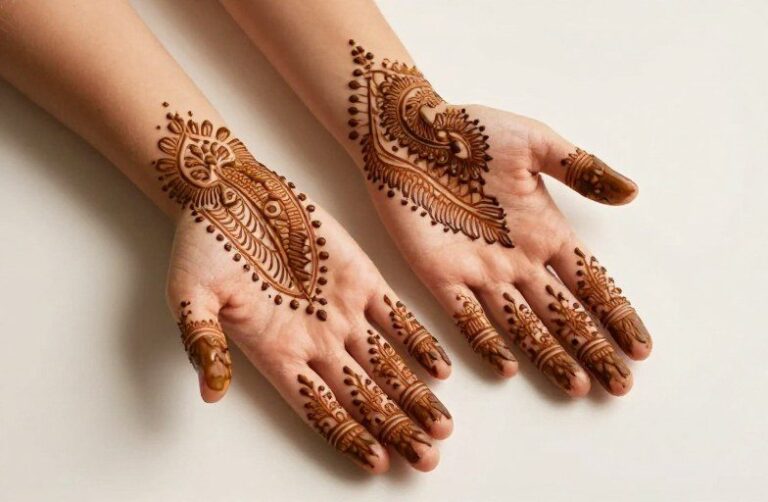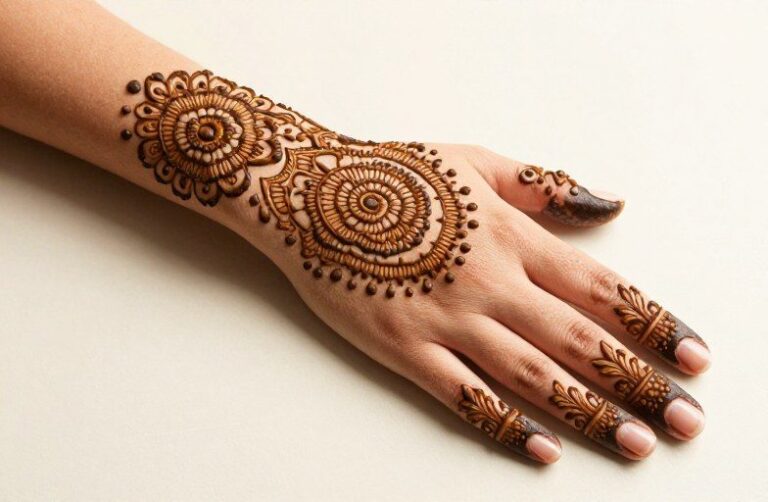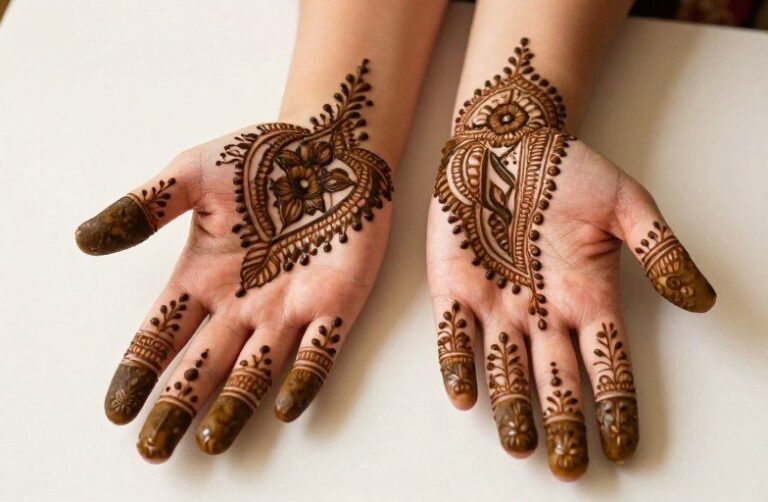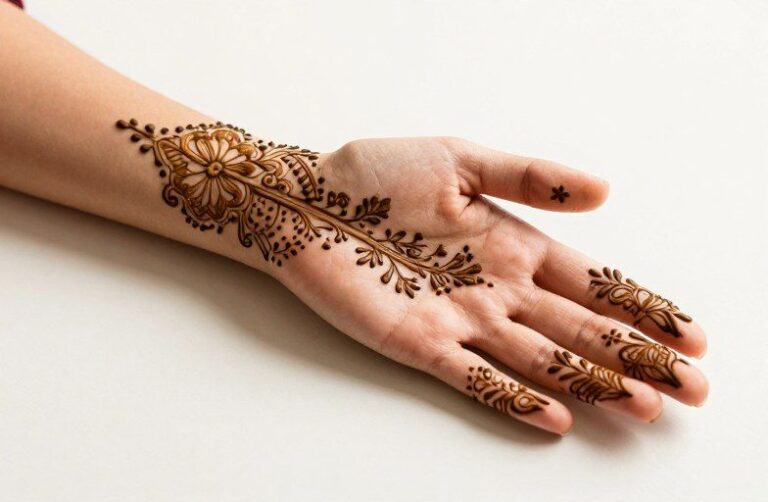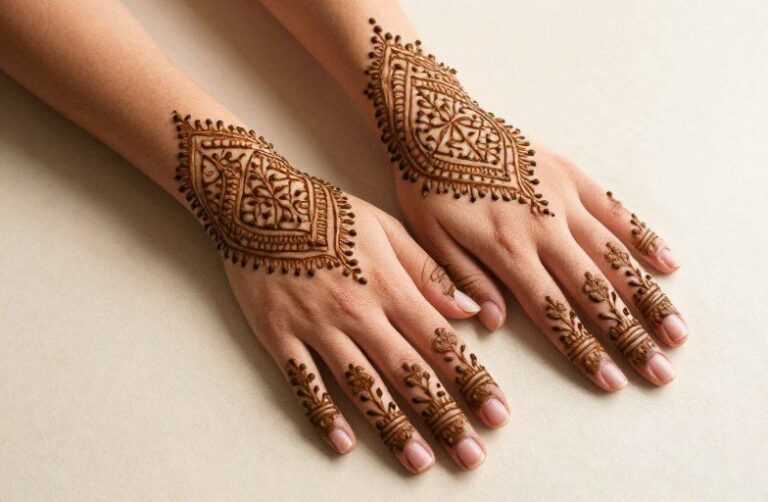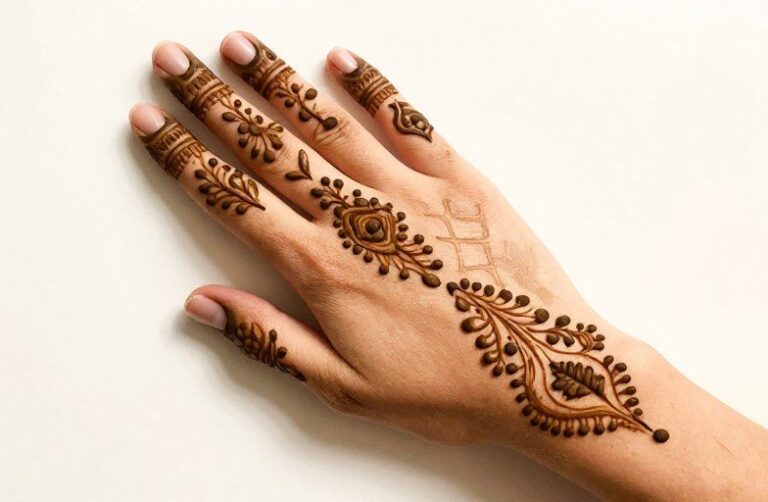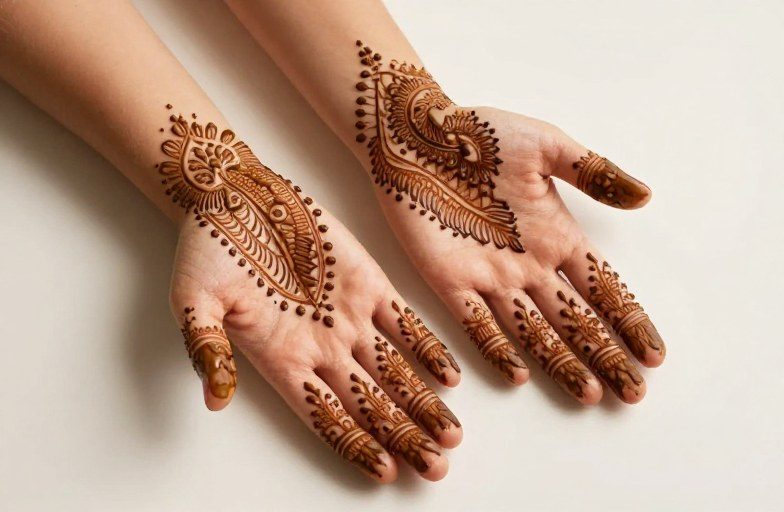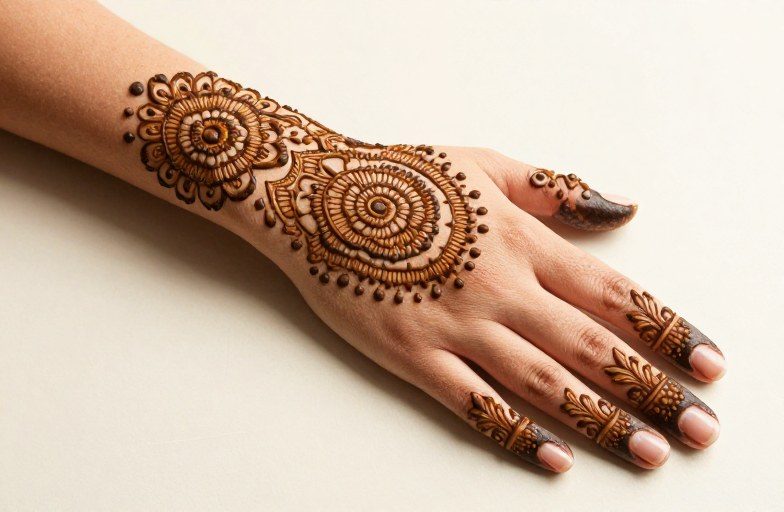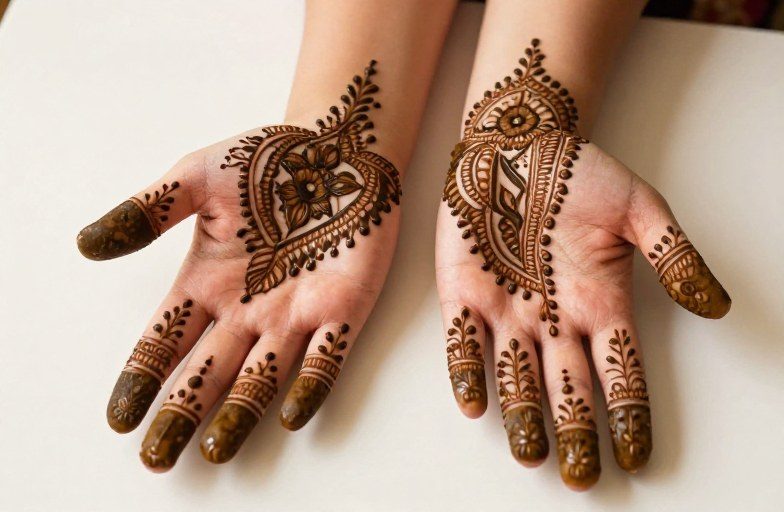
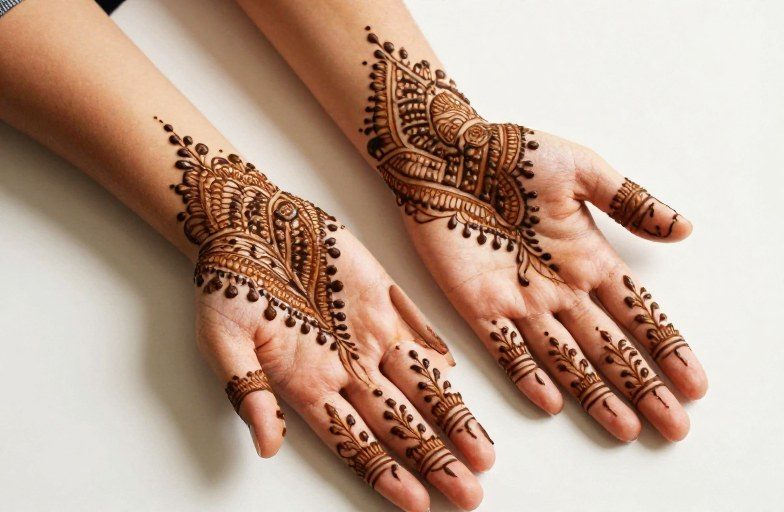
A henna inspired tattoo borrows the flowing, ornamental patterns of traditional mehndi and commits them to permanent ink. this style carries associations with celebration, protection, and the marking of life transitions, births, marriages, coming-of-age. The meaning deepens through specific motifs: paisleys for fertility and abundance, flowers for joy and beauty, vines for growth and connection, the evil eye for warding off harm.
Best Placements
Hands and Fingers
The most authentic placement mirrors actual henna application. Palms, backs of hands, and fingers carry immediate visual recognition. Finger bands and fingertip caps age poorly, ink blurs faster here, and touch-ups are frequent. The palm itself is extremely high-maintenance; the skin sheds rapidly and the tattoo fades unevenly. For permanence, the dorsal hand (knuckles up) holds ink better and still reads as henna-inspired.
Feet and Ankles
Bridal mehndi traditionally covers feet, so ankle wraps and top-of-foot pieces feel culturally grounded. The ankle bone area is notoriously painful and prone to blowout, lines spread where skin is thin over bone. Top of foot tattoos heal badly if you wear closed shoes during recovery; plan for sandals for two weeks minimum. The payoff is a placement that genuinely looks like stained skin.
Upper Arms and Shoulders
More forgiving for complex mandala-style work. The deltoid and outer bicep offer flat, stable skin where fine lines stay crisp. This placement shifts the meaning slightly, from ritual adornment to personal ornament, more decorative than ceremonial. Sleeve-adjacent pieces can extend henna motifs into larger floral or geometric compositions without losing the reference.
- Wrist: high visibility, frequent sun exposure accelerates fading
- Behind the ear: intimate scale, limited detail possible
- Ribcage: large canvas for flowing vine work, significant pain
- Upper back/lower neck: mirrors traditional bridal placement, good for symmetrical pieces
How It Ages on Skin
Line Weight Matters
Henna designs rely on hair-thin lines and dense stippling. In permanent tattooing, lines below 0.5mm blur within 3-5 years as skin cells turnover and collagen shifts. What reads as delicate on day one becomes muddy later. The solution is strategic thickening: an artist can suggest fine-line texture through slightly heavier outlines that won’t disappear, or use dotwork at a scale that remains readable when softened.
Shading vs. Pure Line
Traditional henna is monochromatic reddish-brown. Black ink tattoos attempting this look can feel harsh; greywash shading softens the effect and mimics henna’s natural tone variation. However, greywash fades faster than solid black, expect soft grey areas to need refresh at 4-7 years, while bold lines last a decade. Some artists use brown ink specifically, but it shifts unpredictably, sometimes healing purple or olive depending on skin chemistry.
Sun exposure is the primary enemy. Henna-inspired work on hands, feet, or forearms, constantly uncovered, will degrade faster than covered placements. White highlights, sometimes added for “fresh henna” contrast, almost always disappear entirely within 2-3 years.
Religious & Spiritual Angles
Islamic and Hindu Roots
Mehndi practice is often linked to South Asian and Middle Eastern traditions, particularly within Hindu and Muslim wedding customs. The night before a Hindu marriage, the mehndi ceremony (often called the vidhi) involves applying elaborate designs to the bride’s hands and feet. Some trace protective symbolism to this, the darkness of the stain was historically believed to ward off evil spirits. In Islamic contexts, henna is commonly associated with Eid celebrations and the Sunnah of the Prophet Muhammad, though scholarly debate exists about historical authenticity of specific hadith references.
Appropriation vs. Appreciation
Permanent henna-style tattoos on non-South Asian, non-Middle Eastern wearers raise questions that temporary henna doesn’t. The temporary nature of actual mehndi allows participation in cultural events without permanent claim. Committing the same patterns to permanent ink can read as extraction rather than exchange, especially when sacred motifs (specific religious symbols, bridal-only elements) are used out of context. Meaningful engagement means researching specific motifs, crediting cultural origins, and avoiding designs reserved for ceremonial use, particularly anything mimicking the intricate bridal patterns of a tradition you don’t belong to.
Personal & Modern Meanings
Beyond cultural inheritance, people choose henna-inspired tattoos for intensely personal reasons. The style’s organic, non-figurative nature allows projection without fixed interpretation.
Marking Transitions
Divorce, recovery, relocation, gender affirmation, any threshold moment that once might have been marked by community ritual can be claimed individually. The tattoo becomes a self-administered ceremony, the permanence substituting for collective witness. The flowing, enveloping quality of henna patterns suits this: they wrap and contain, suggesting protection during vulnerable change.
Connection to Heritage
For diaspora wearers with South Asian or Middle Eastern ancestry, the style can function as reclamation. Mixed-heritage individuals sometimes use henna-inspired tattoos to maintain visual connection when cultural practice has been interrupted by assimilation pressure. The permanence asserts belonging against erasure, though this carries its own complexity, permanent ink fixes identity in ways that living tradition doesn’t.
- Memorial work: incorporating a loved one’s name in flowing script within henna-style borders
- Chronic illness marking: the “stain” as visible evidence of invisible struggle survived
- Aesthetic preference without symbolic claim: valid, but requires honest acknowledgment
Similar & Related Symbols
Mandala and Sacred Geometry
Henna patterns frequently incorporate mandala structures, radial symmetry representing cosmic order. The mandala as tattoo carries overlapping but distinct meaning: Buddhist and Hindu spiritual diagrams, Jungian psychological wholeness, or pure geometric aesthetics. When mandala appears within henna-inspired work, the meaning layers: cultural practice plus spiritual aspiration plus visual harmony. The outer edge of a mandala in henna style often breaks into vine or paisley rather than closing perfectly, suggesting organic growth rather than fixed perfection.
Mehndi vs. Permanent Patterns
Actual henna is a plant-based temporary stain. “Black henna” containing PPD (a hair dye chemical) is dangerous and not traditional. The tattoo style borrows visual language without chemical process. Related permanent styles include: dotwork mandalas (more rigid, less organic), lacework tattoos (European reference, similar density), and ornamental blackwork (geometric, less floral). Each carries different cultural weight; henna-inspired specifically signals South Asian/Middle Eastern aesthetic lineage.
Design Tips & Pairings
Working With Your Artist
Bring reference images of actual mehndi, not other tattoos. A skilled artist will translate the fluid, stain-based quality into ink-appropriate line weights. Request test patches for fine line density, what looks possible on paper may not hold in skin. Consider negative space: traditional henna relies on skin showing through for pattern clarity. Over-dense blackwork loses this breathing room and becomes visually heavy.
Complementary Elements
Floral realism pairs naturally, roses or lotuses emerging from henna-style borders. Script in Urdu, Hindi, Arabic, or Persian calligraphy can integrate into the flowing lines if you have linguistic or familial connection. Geometric accents (small triangles, diamond grids) can anchor the organic flow. Avoid mixing with unrelated cultural symbols (Celtic knotwork, Native American imagery) unless you have genuine multi-heritage claim; the juxtaposition reads as random collage rather than meaningful fusion.
Color is uncommon in true henna style but possible: muted ochre, rust, or deep red can suggest the original stain without garishness. Bright colors generally fight the reference.
Before You Decide
Ask yourself what permanence adds that temporary henna doesn’t. The stain fades; the tattoo doesn’t. If the meaning is tied to specific ritual or community, permanent ink may misalign with the temporary, participatory nature of the practice. If the meaning is personal transition or aesthetic love, permanence serves.
Research your artist’s experience with ornamental work, this isn’t flash art, and line precision matters enormously. Look at healed photos, not just fresh work. Consider placement longevity: hands and feet are high-impact, high-fade zones that require commitment to maintenance or acceptance of degradation.
Finally, sit with the cultural dimension. Henna-inspired tattoos aren’t inherently appropriative, but they aren’t neutral either. The meaning you carry includes the meaning others perceive, and that perception is shaped by history, power, and context you don’t fully control. Choose with clarity, wear with respect, and let the tattoo be one part of ongoing engagement rather than final statement.
Frequently Asked Questions
Do henna inspired tattoos hurt more than other styles?
The pain depends on placement, not style. Hands, feet, and ribs hurt regardless of design. The fine-line technique common in henna-inspired work can require more passes, potentially increasing session discomfort.
Can I get a brown tattoo that actually looks like real henna?
Brown inks exist but heal unpredictably, often shifting to purple, olive, or grey. Most artists recommend black or greywash for longevity, accepting that the tattoo will read as ‘inspired by’ rather than identical to henna.
How do I know if a specific henna motif is culturally restricted?
Ask your artist or consult resources from South Asian cultural organizations. Bridal-specific elements, religious invocations, and family-specific patterns are generally reserved. When uncertain, choose widely used decorative motifs like general florals or paisleys.
Will a henna inspired tattoo look dated in ten years?
Ornamental styles age better than trend-driven imagery because they reference centuries-old practice. However, fine-line density determines longevity, overly delicate work blurs, while slightly bolder patterning endures.