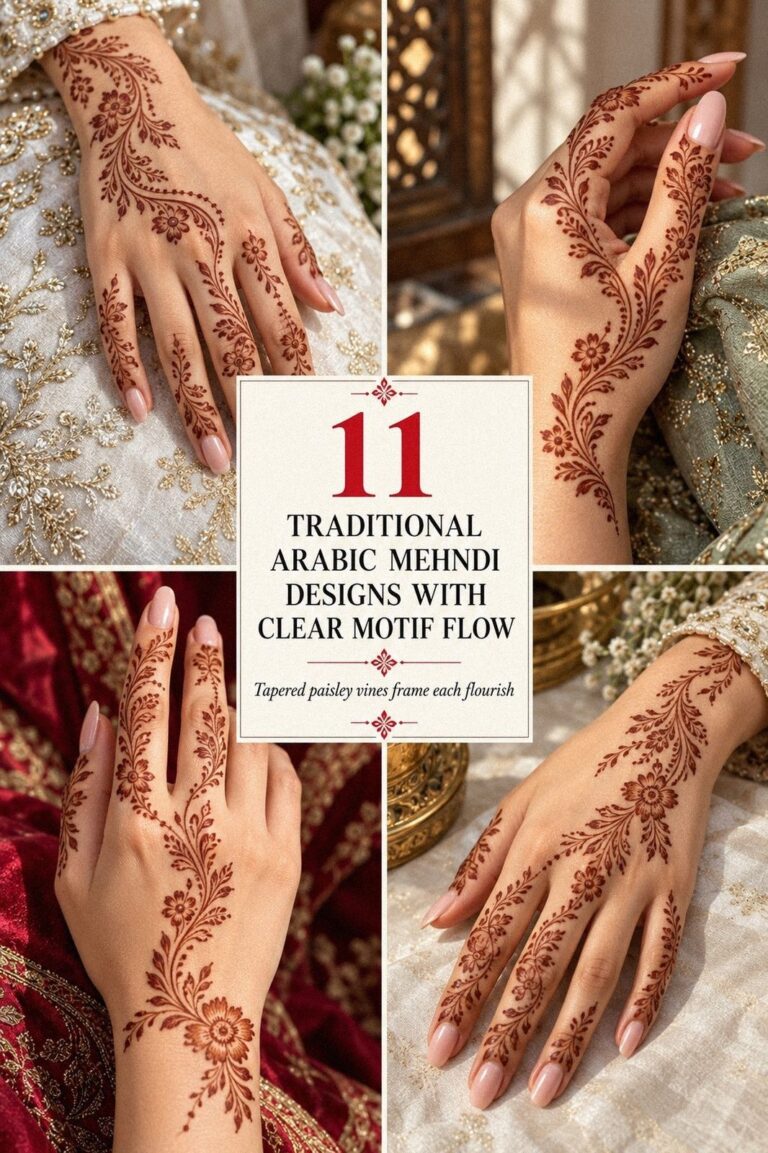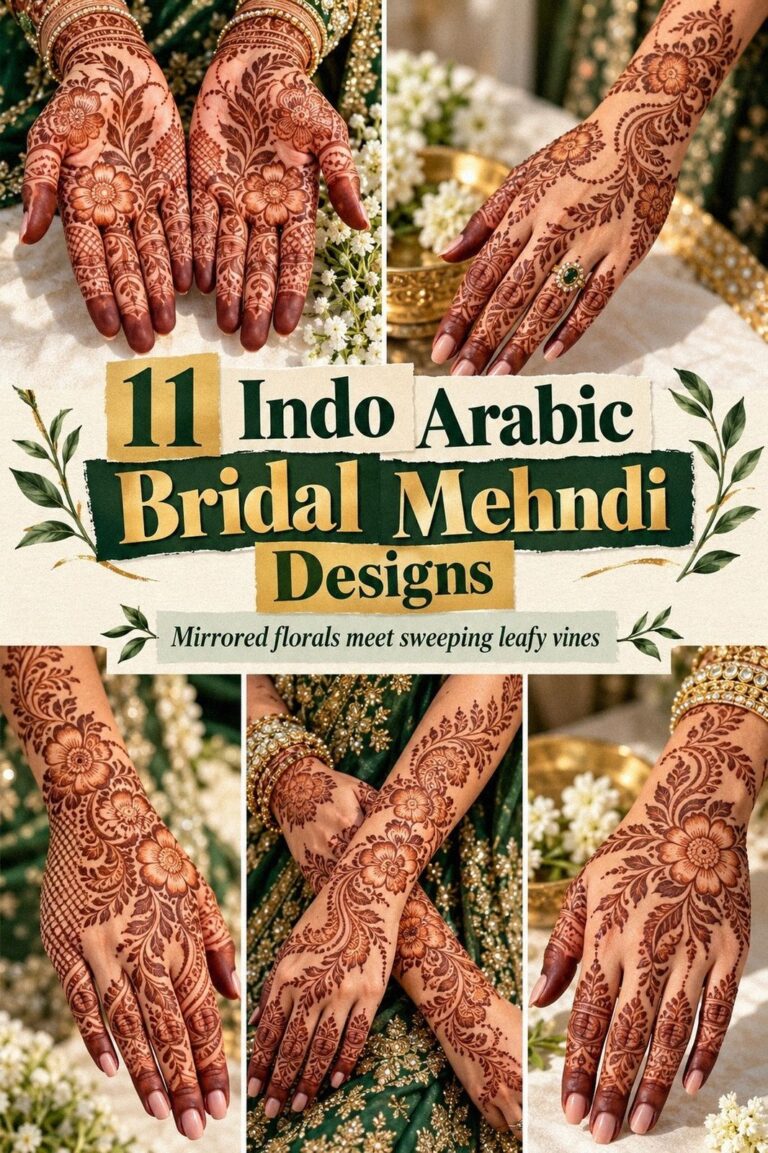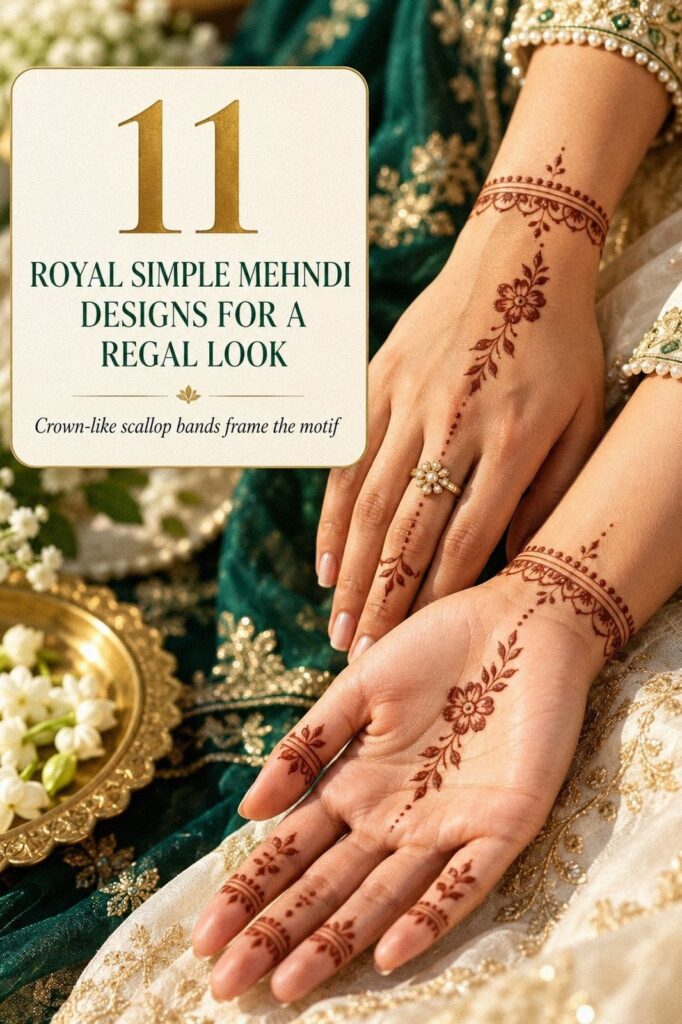
Royal simple mehndi designs can look delicate on day one and deepen into a rich reddish-brown by day two. I once rinsed paste off too early and wondered why the color looked faint. Don’t repeat that mistake. These 11 patterns keep the lines clear, symbolic, and easy to wear, whether you want something minimal or ornate.
- Start with Royal Simple Mehndi Designs for Palms
- Which Mandala Style Feels Most Royal?
- Mughal-Inspired Finger Bands Keep the Design Dainty
- Flowing Vines, Not Crowded Filler
- Can Back-Hand Mehndi Stay Simple?
- Build a Delicate Jaal Grid
- Let Arabic Flow Lead the Eye
- Shape the Wrist with a Bold Cuff
- Give the Peacock One Powerful Moment
- How Can Bridal Mehndi Stay Elegant?
- Choose Negative Space Over Heavy Filling
1Start with Royal Simple Mehndi Designs for Palms
This palm design uses an open paisley near the center, with slim petals reaching toward the fingers. The pattern feels intricate without covering every patch of skin, so your natural palm still shows through.
I’d keep the cone pressure even and leave narrow gaps between the curves. That makes the finished stain look striking instead of crowded.
For your version, ask for a small floral center, two curved leaves, and crisp fingertip bands. A fine henna cone gives you more control around the wrist and finger joints.
Let the paste dry for 1 to 2 hours, then keep the flakes on as long as practical. Your color should deepen on the second day, not immediately.
If you’re working with a limited budget, compare this idea with simple stylish mehndi designs for the front hand. You’ll notice that the strongest examples use one focal shape and plenty of open skin. That restraint keeps the design minimal, polished, and personal.
2Which Mandala Style Feels Most Royal?
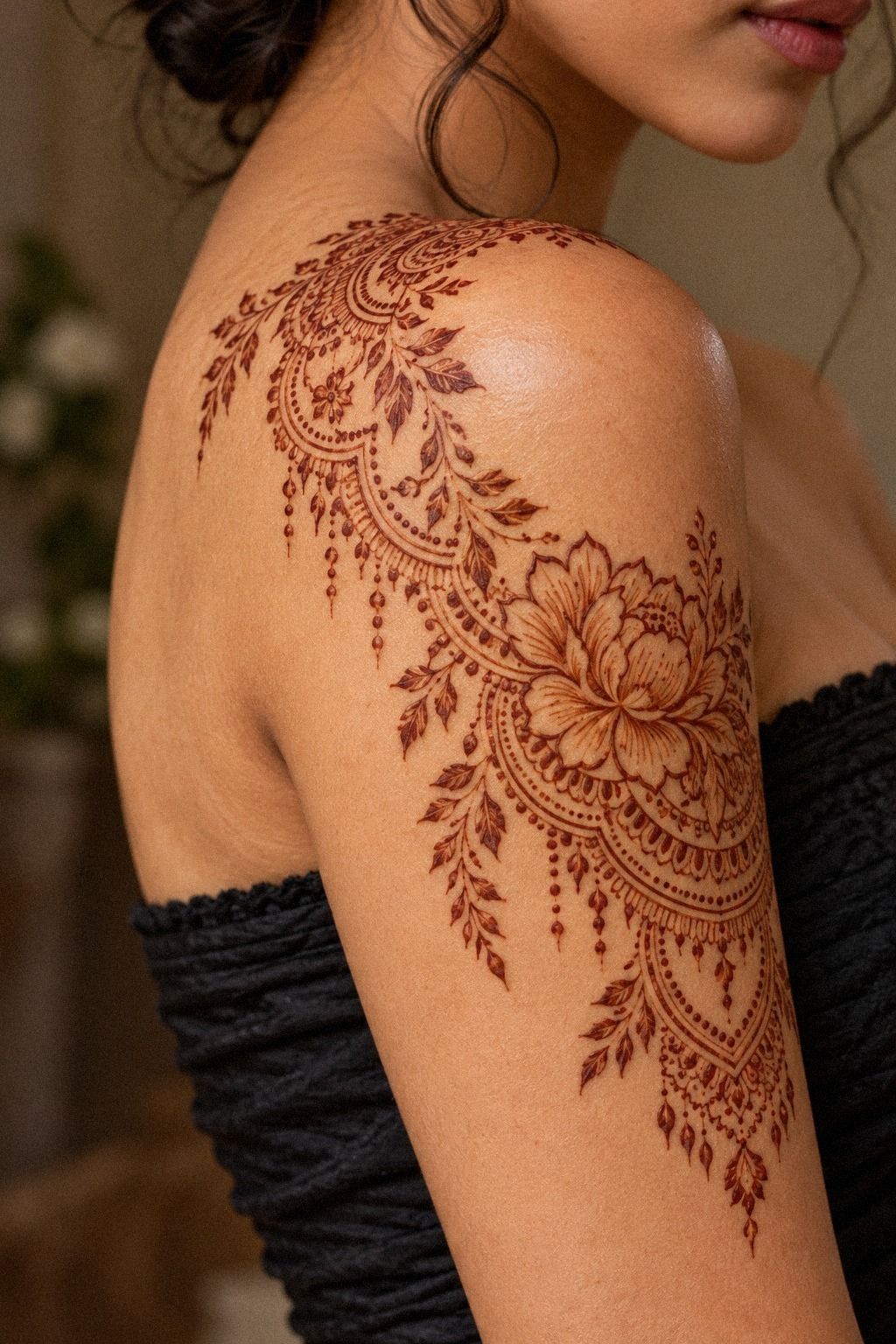
A small concentric mandala makes both palms feel connected without forcing them to mirror each other. One hand can carry a fuller center, while the other uses a lighter ring and a few pointed petals.
That difference feels expressive and modern. I wouldn’t copy every circle exactly, because stiff symmetry can make your hands look overly formal.
Start with a reddish-brown paste and a rounded central dot. Add scalloped petals, tiny arches, and a clean border around the palm heel.
Your mandala should sit where your hand naturally opens, not too close to the wrist crease. The result is delicate, graceful, and easy to read from a distance.
Don’t judge the stain while the paste is still fresh. The color often looks orange at first and grows deeper during the next day.
If you’re comparing the value of different patterns, simple modern mehndi designs show how open skin can keep a mandala understated. Your hands won’t need heavy filling to look regal!
3Mughal-Inspired Finger Bands Keep the Design Dainty
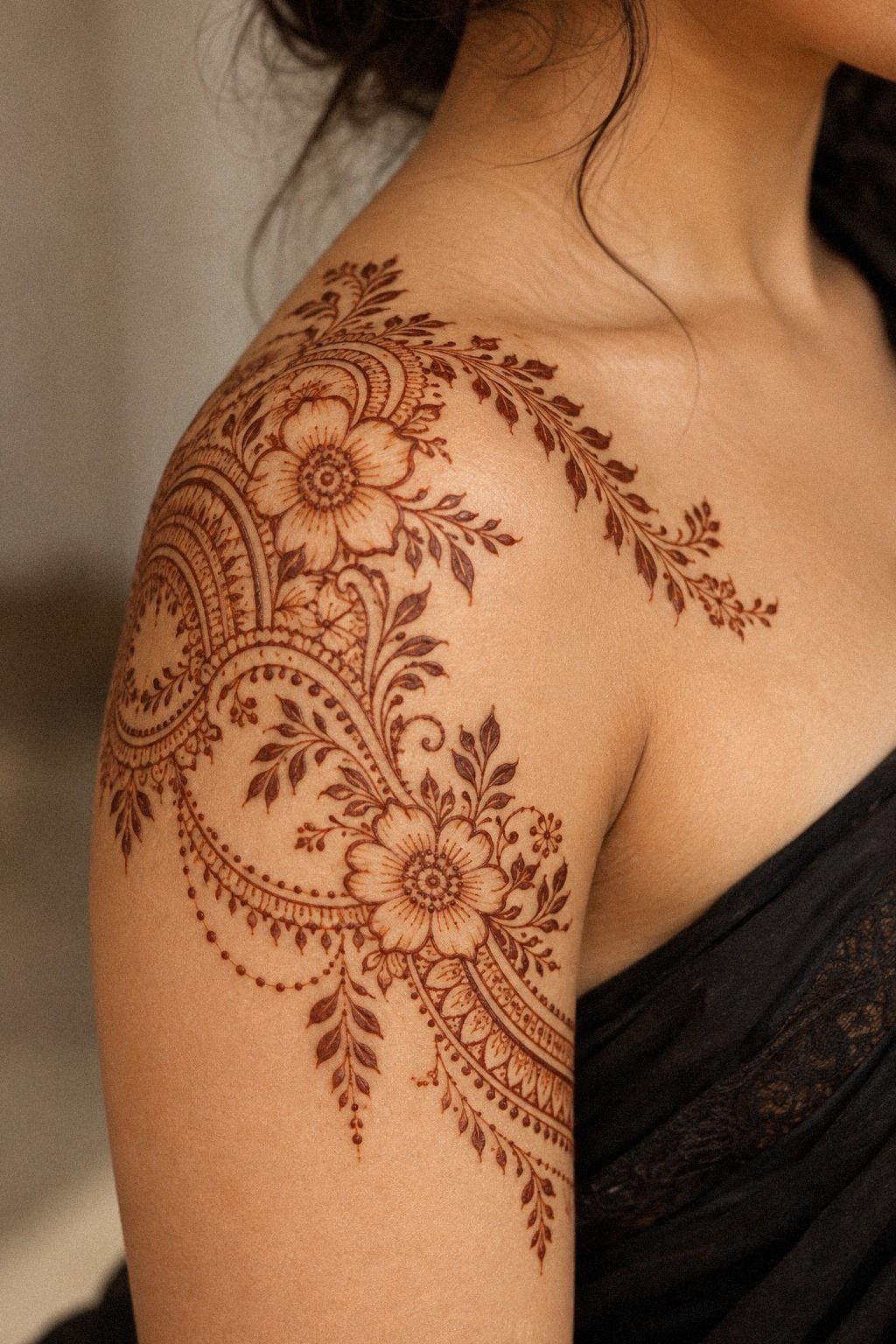
Finger-focused mehndi works best when every line has a job. Try tapered finger bands with one small leaf on the index finger and a slim chain toward the palm.
This placement looks crisp from the side and gives you a refined finish without covering the entire hand. I’d skip thick fingertip blocks here, since they can overpower a simple royal theme.
Use a small paisley accent at the base of one finger, then repeat only the curve on the next finger. Your design will feel more flowing when the details echo each other instead of matching exactly. Leave the middle of each finger lightly stained so the reddish-brown pattern keeps its airy visual rhythm.
Ask your mehndi artist to check the natural finger spacing before applying the paste. The right width can make a dainty pattern feel elegant rather than unfinished.
Browse simple very simple mehndi designs for short motifs rather than full bridal coverage. The stain should remain readable for about 1 to 3 weeks.
4Flowing Vines, Not Crowded Filler
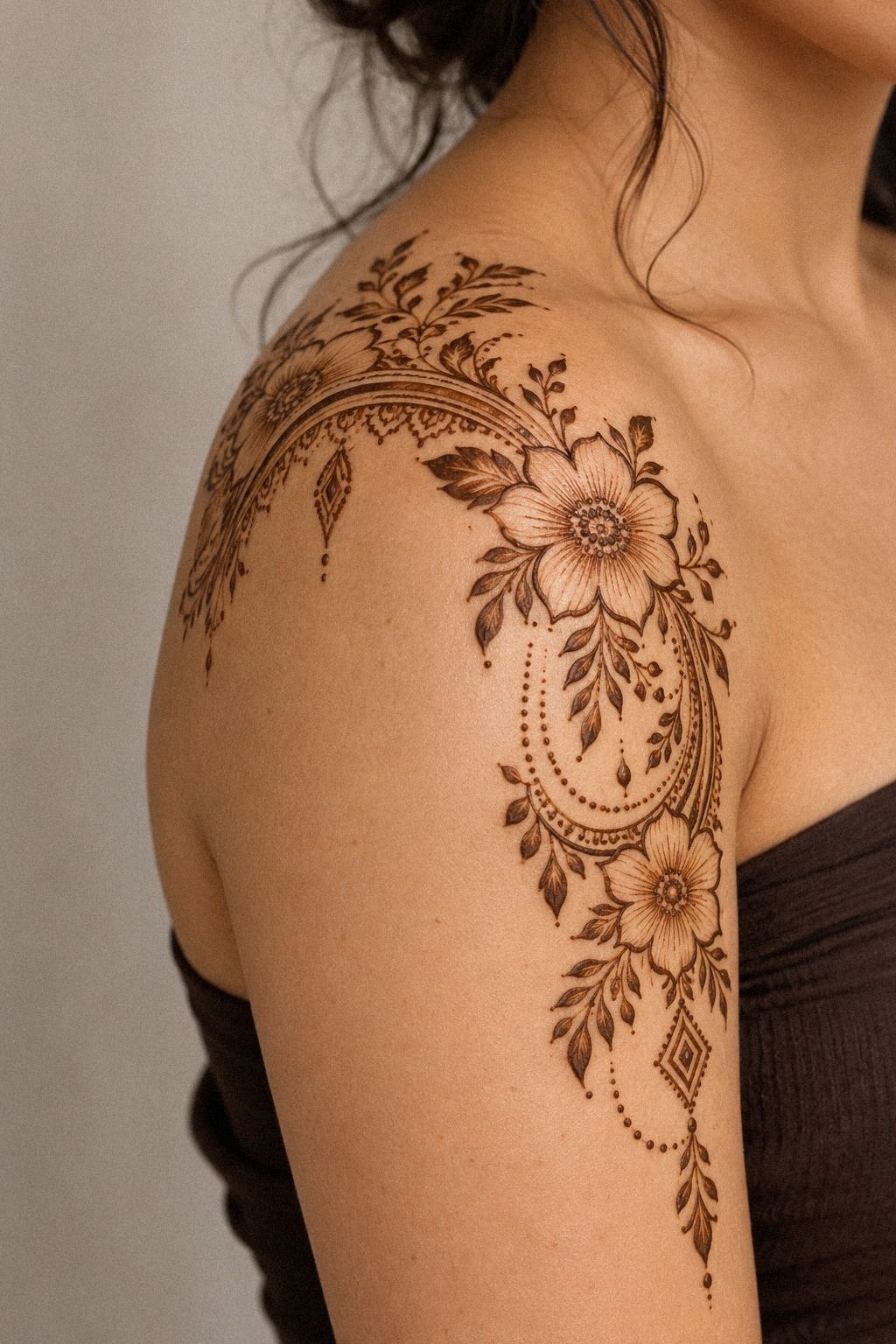
A curved vine trail can travel from the palm toward one finger in a way that feels natural and slightly whimsical. Use three leaves, one open flower, and a few sharp tendrils.
That’s enough. I prefer an off-center vine because it looks more personal than a rigid center line.
The most important detail is spacing. Keep the leaf shapes separate and let the vine bend rather than stack vertically.
Add a small leaf cluster near the wrist only if your palm feels unfinished. I’d avoid filling every gap with dots, because the flowing shape is the point.
You can borrow the same movement from simple trendy mehndi designs without making the pattern too busy. A light lemon-sugar seal may help the paste stay attached, but it should never leave the surface wet or sticky. That small aftercare step can improve the value of a simple design.
5Can Back-Hand Mehndi Stay Simple?
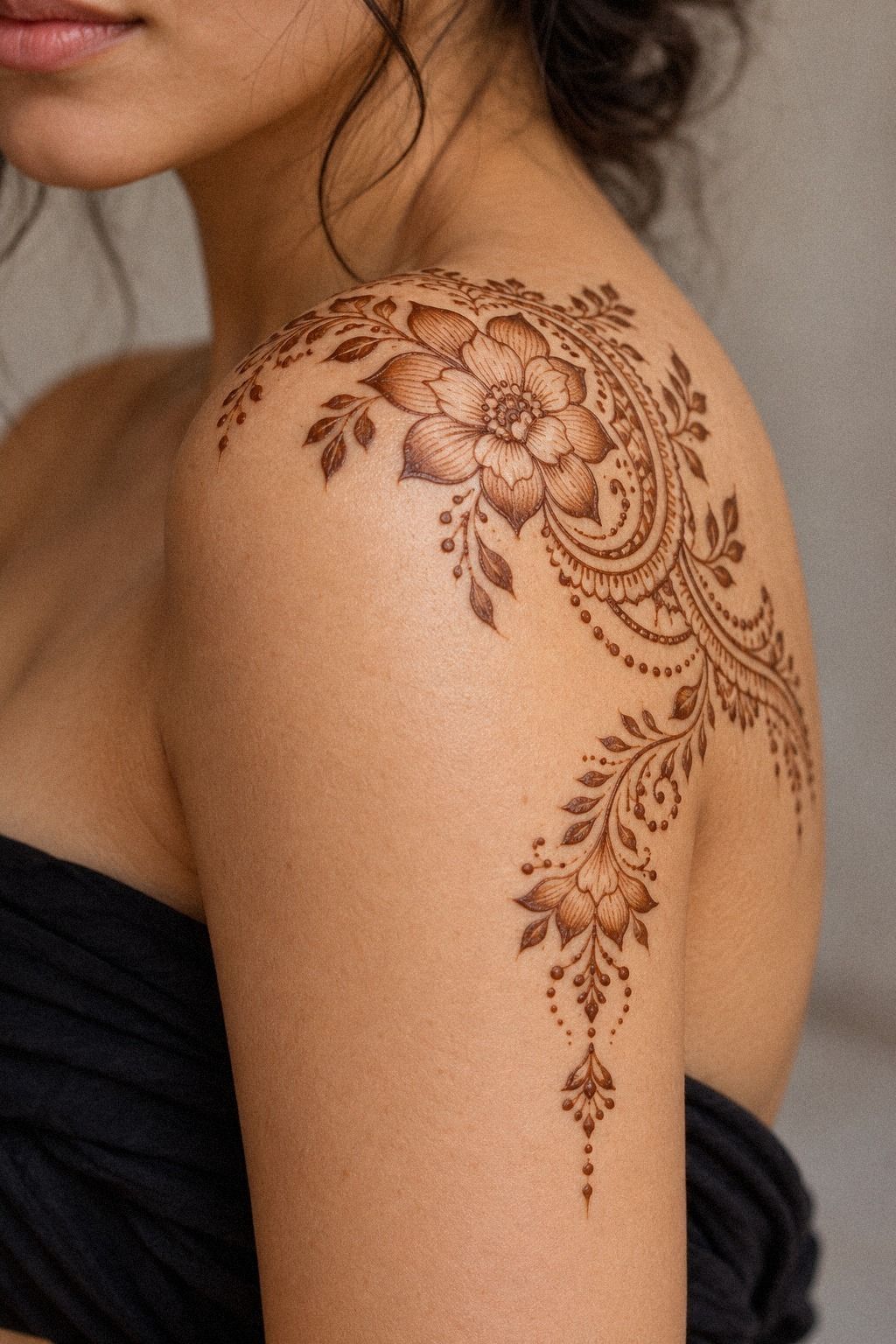
This reference works better on the back of the hand than on the feet, so placement matters before you request it. The same ankle paisley can be adapted with a smaller central motif and shorter trailing leaves. Your final pattern should match the body area, not just the reference caption.
On the back of the hand, a floral jaal can curve around the knuckles while keeping the center open. Use slightly stronger lines where friction may soften tiny details. The result can remain understated when the central flowers stay unfilled.
Ask about the dry-setting routine before you book. The paste needs to dry fully before socks, footwear, or repeated handwashing touch it. If the artist charges more for detailed coverage, compare that cost with how much of the pattern you’ll actually see in daily life.
6Build a Delicate Jaal Grid
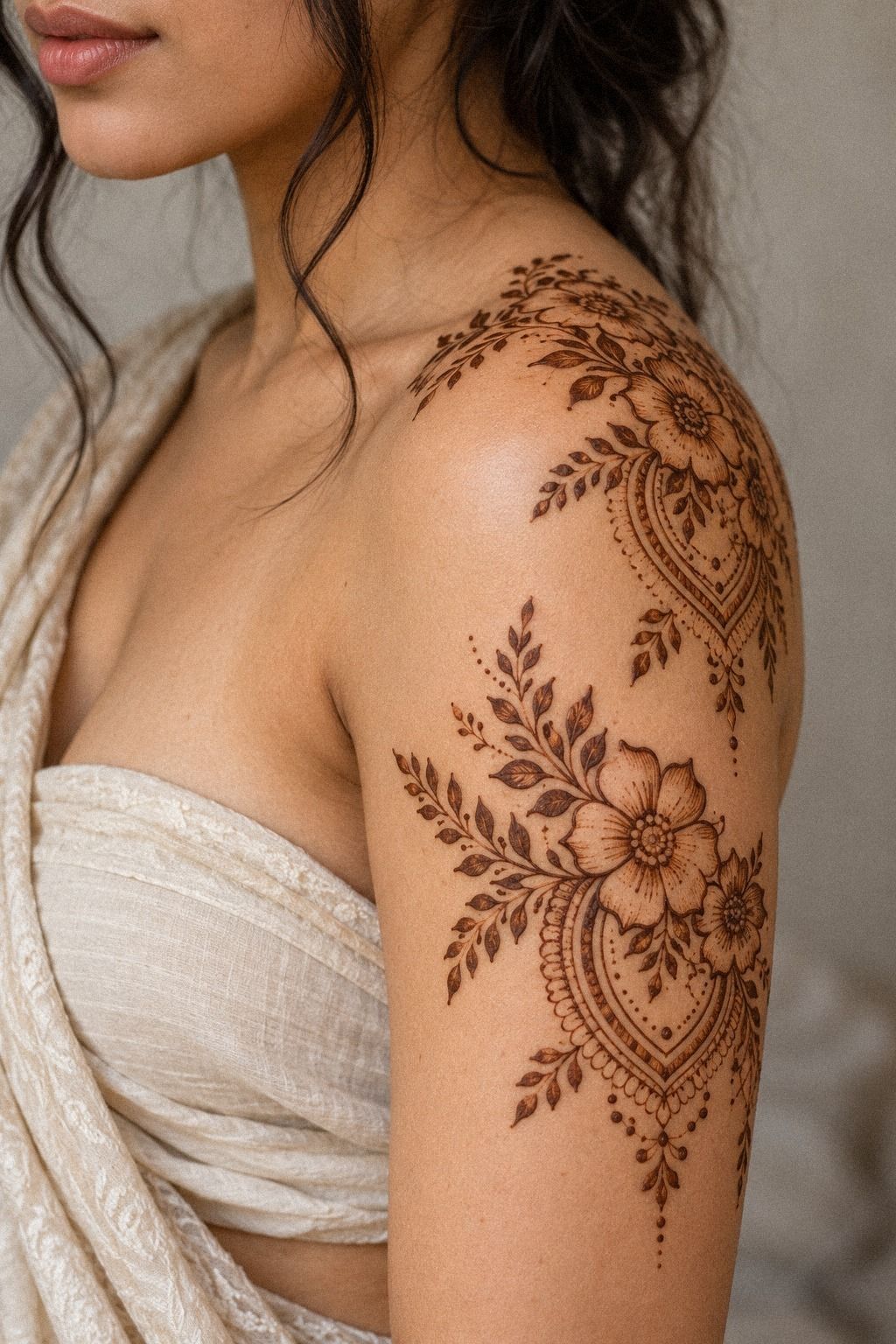
A light jaal grid across the forearm can look ornate without becoming heavy.
7Let Arabic Flow Lead the Eye
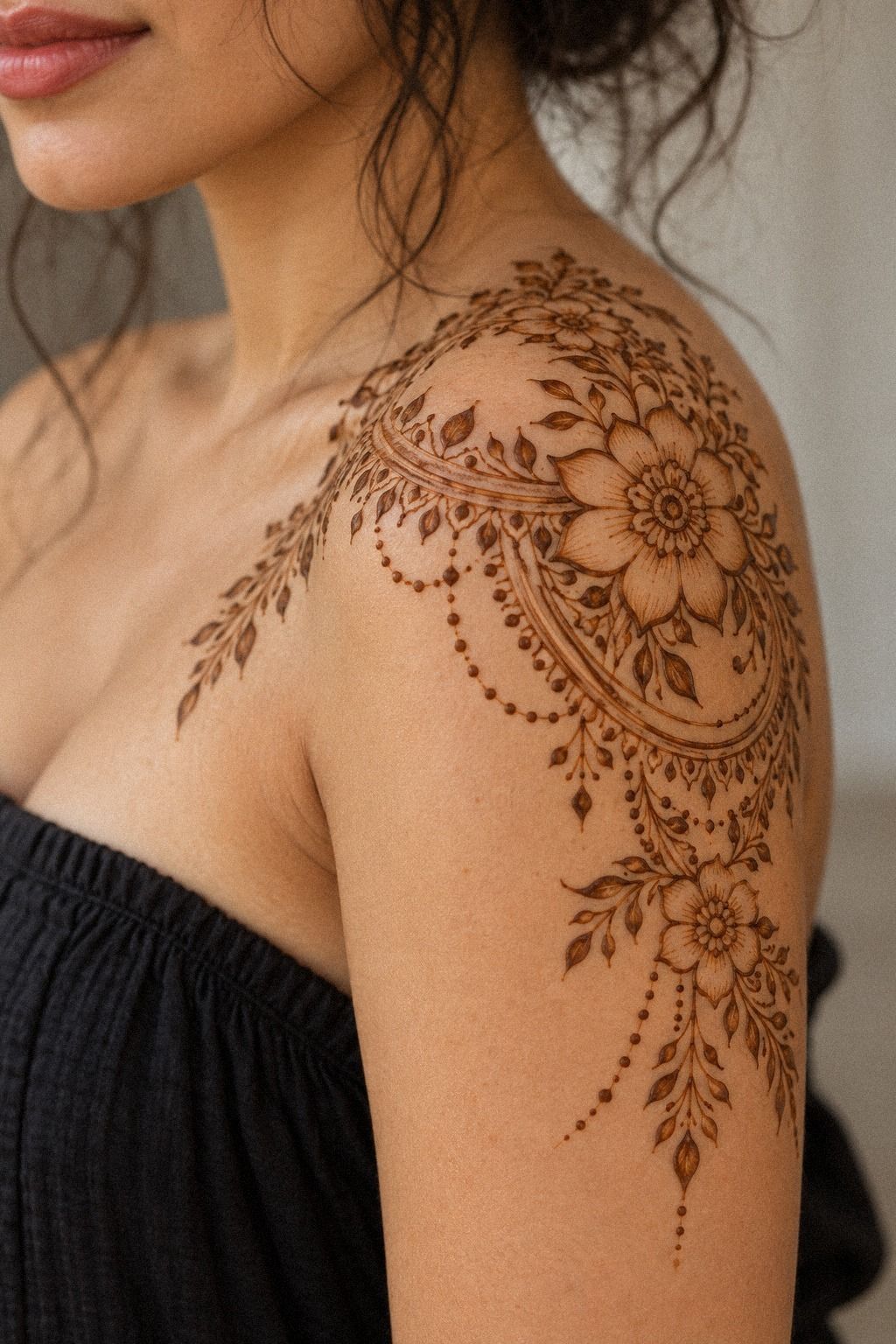
Arabic flow depends on one strong diagonal floral sweep rather than many small decorations. Start near the wrist, move through a large paisley, and finish with two pointed leaves near the index finger.
Your hand will look longer because the design follows its natural direction. I’d choose this style when you want something sleek and graceful.
A bold floral outline can carry the whole composition, while tiny dots soften the edges. Keep the center open so the stain doesn’t become a solid patch. I once saw a design lose its shape because every petal was filled; the eye couldn’t find the main curve anymore.
For more placement ideas, use simple trendy mehndi designs as a reference and ask for fewer details than the sample shows. The final result should feel refined, not copied line for line. If you’re weighing the cost of full coverage against a diagonal trail, the flowing option often gives stronger value.
8Shape the Wrist with a Bold Cuff
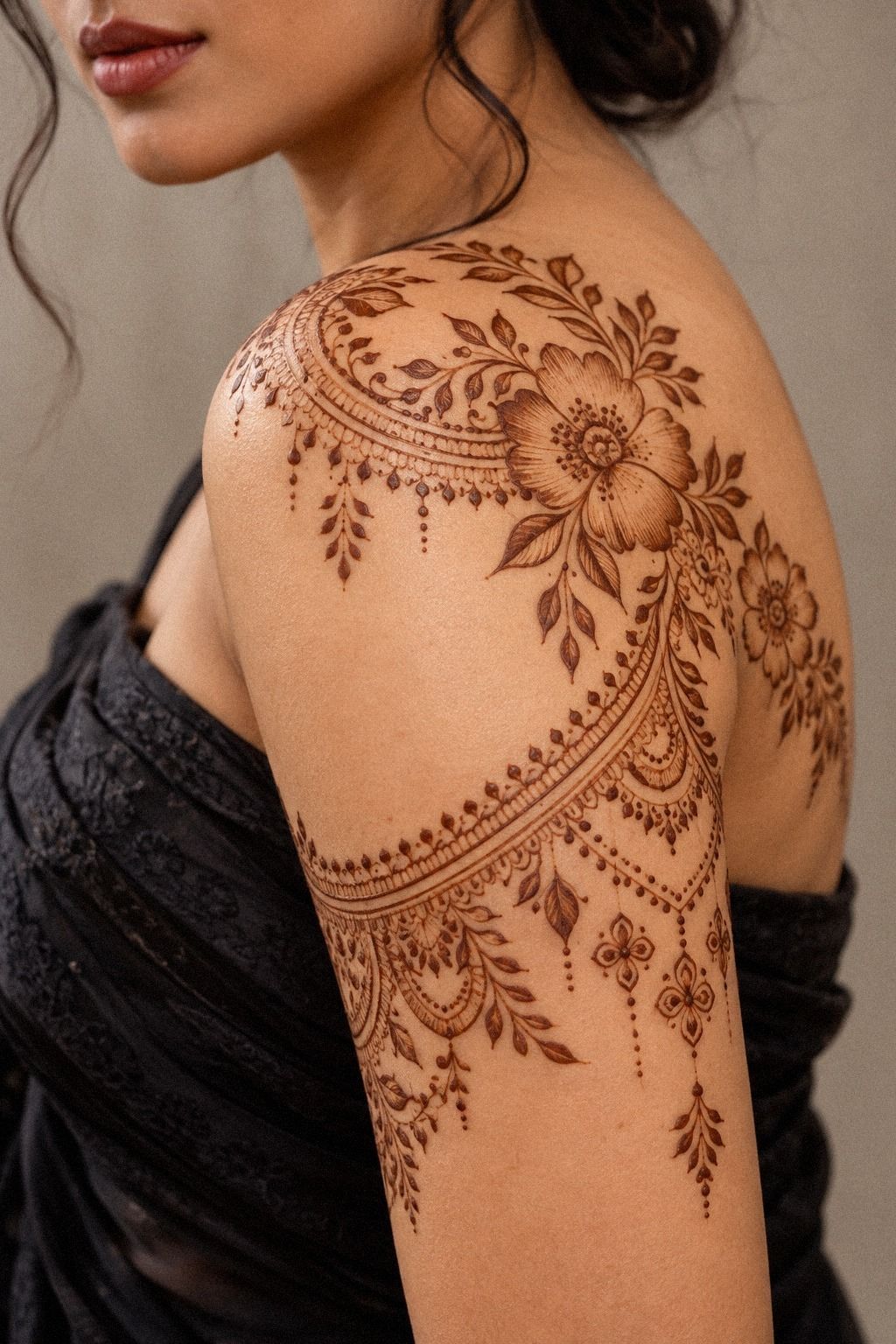
A wrist design can act like a decorative cuff without looking heavy.
9Give the Peacock One Powerful Moment
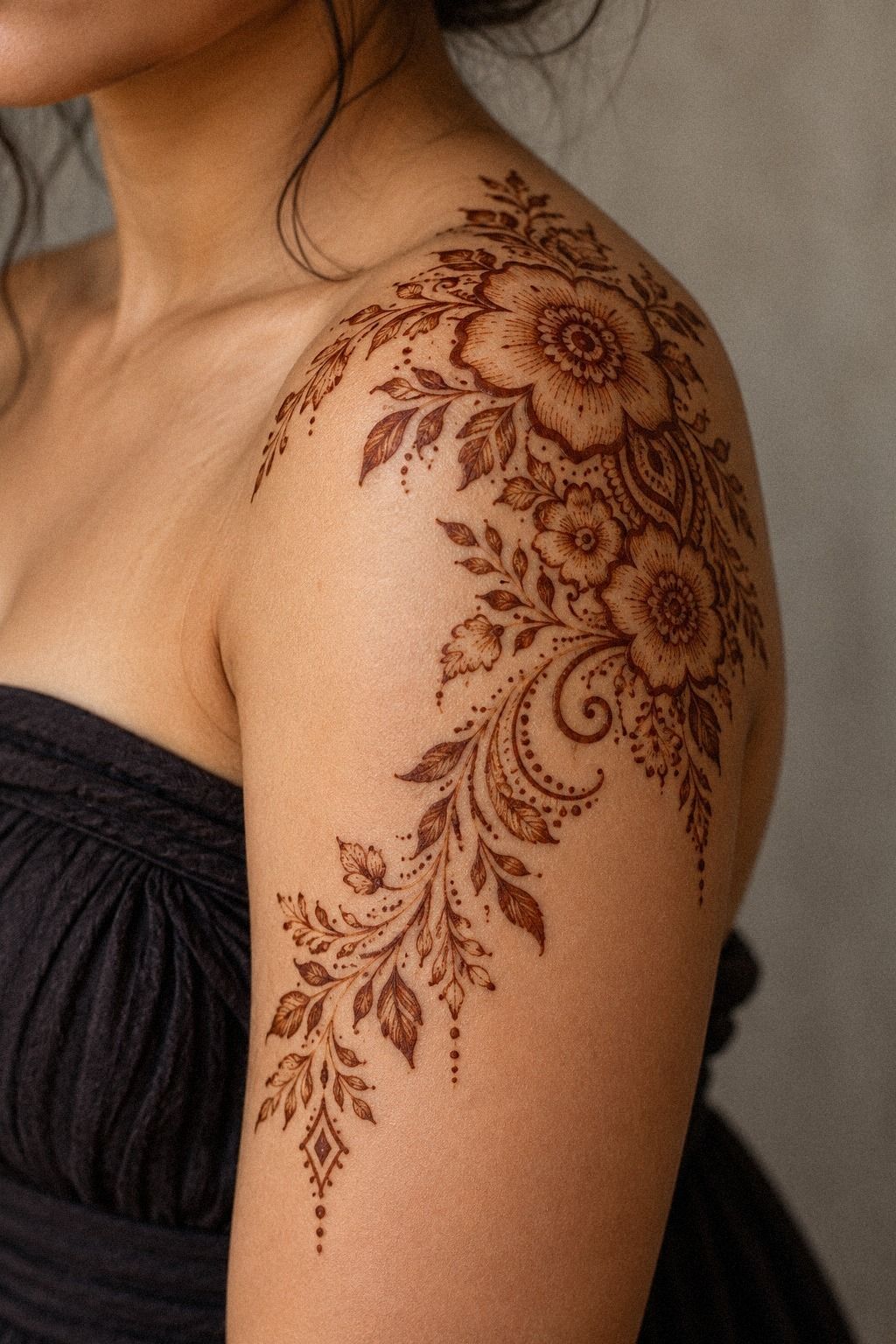
A small peacock motif gives your design a powerful focal point without requiring full coverage. Keep the body compact, then use three feather arcs to create movement toward the wrist. I’d place the head near the palm and let the tail point toward the fingers.
The best feather detail is not the densest one. Use a peacock feather curve with a few open eyes and one darker accent near the base.
Your stain will soften over time, so leaving tiny windows prevents the design from becoming muddy. The result can feel romantic, symbolic, and classic at once.
For a larger composition, compare simple peacock mehndi designs and borrow only one feature. Maybe it’s the feather eye, the curved neck, or the trailing dots.
Don’t copy the entire arrangement if you want a simple result. One recognizable bird is more memorable than a crowded chain of motifs.
10How Can Bridal Mehndi Stay Elegant?
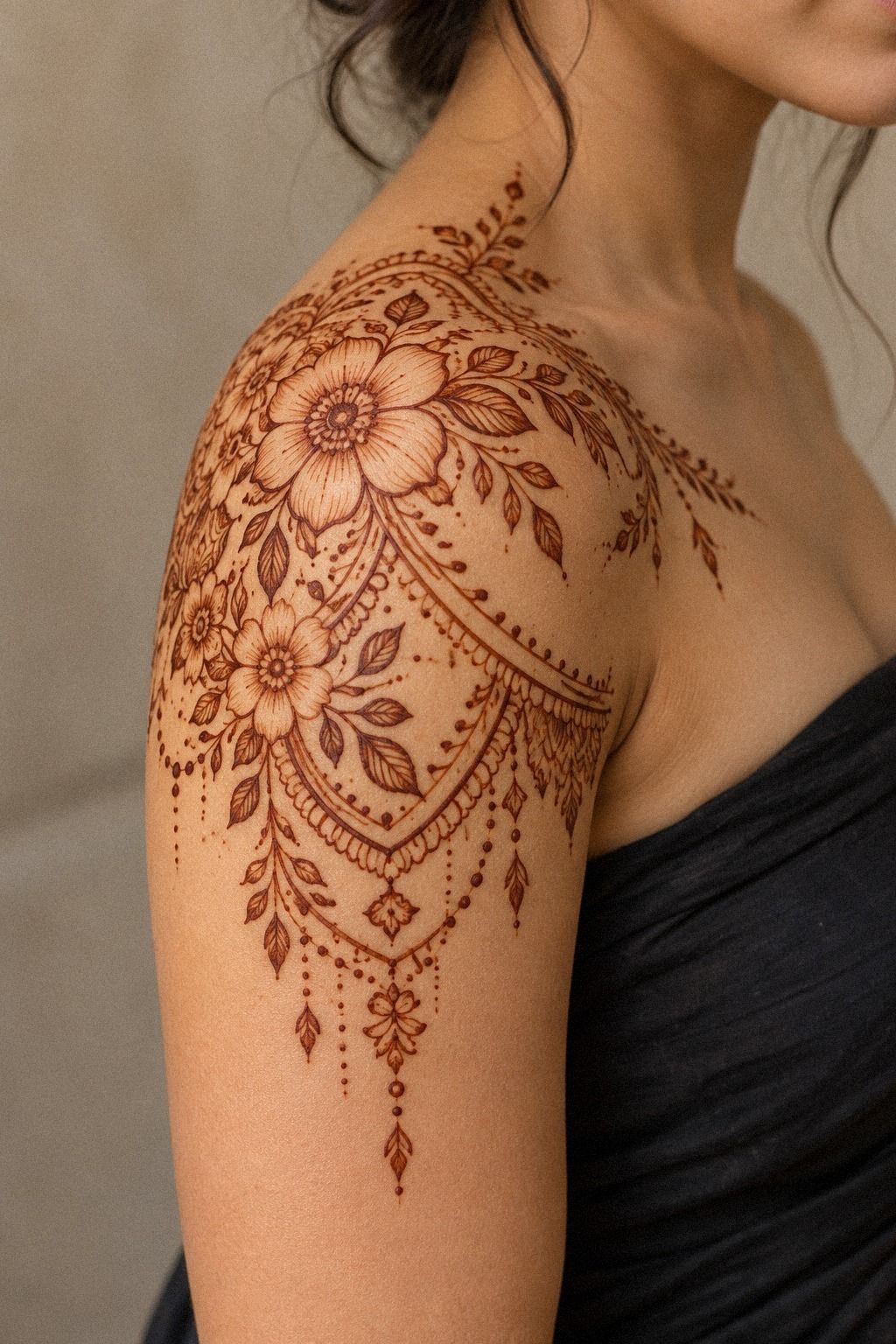
Bridal mehndi can stay simple when you choose one centered bridal flower and repeat its shape lightly across the fingers. Add a narrow jaal near the wrist, then leave a clear strip through the palm. Your hands will look ornate enough for photographs while still showing the reddish-brown stain clearly.
I’d use a deep floral center and delicate outlines around it. The contrast looks especially elegant when the paste is left on long enough to develop color on the second day. Keep the seal light, because too much moisture can make fine lines blur.
For a wedding event, simple new bridal mehndi designs can help you compare palm coverage. Ask how long the design will take before you book. If the fuller version costs much more, decide whether the extra detail is worth the cost for your occasion.
11Choose Negative Space Over Heavy Filling
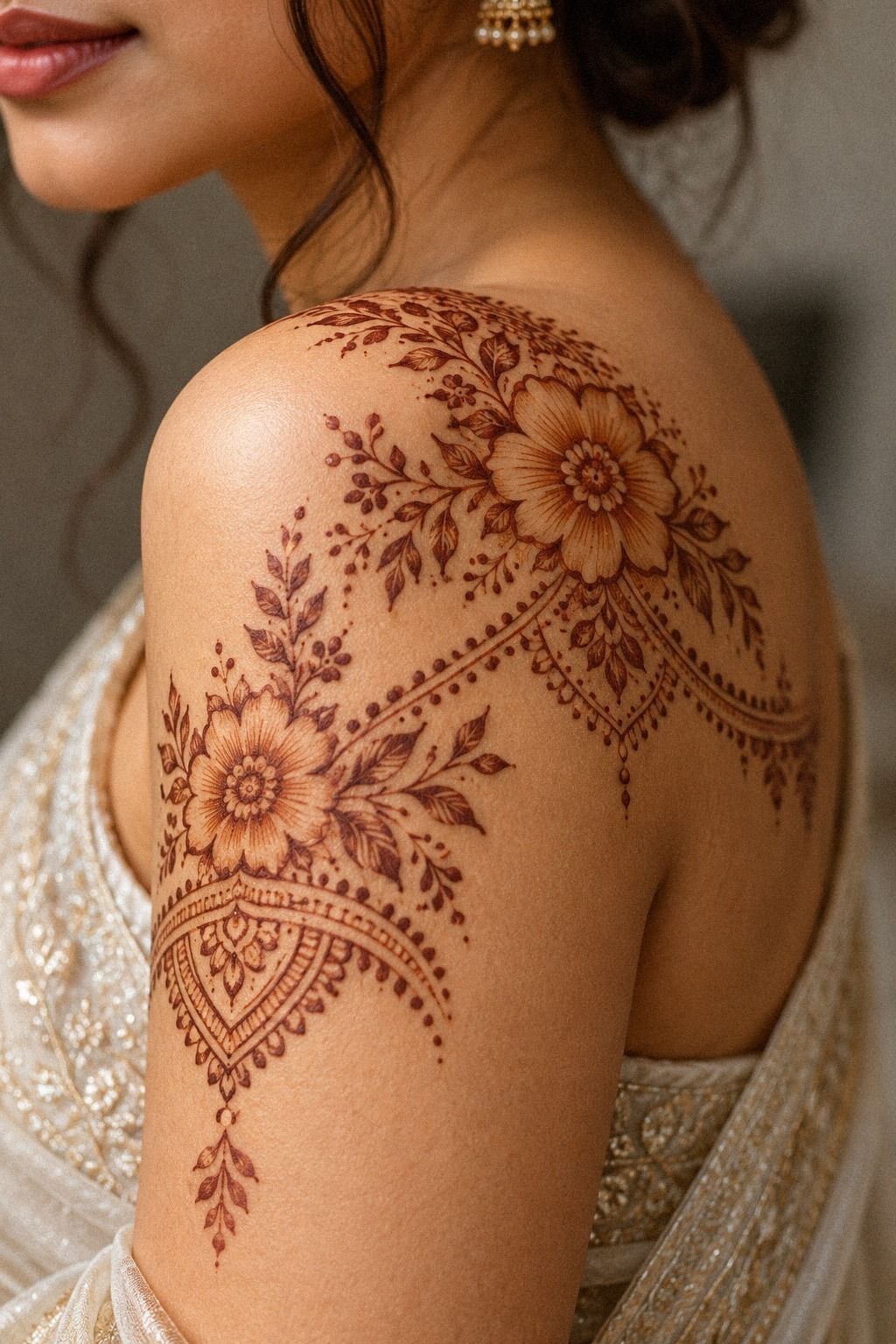
Negative space gives a clean open palm a dramatic edge. Draw one central flower, frame it with curved leaves, and leave a wide section of skin untouched around the motif.
Your hand will look striking because the eye can see both the pattern and the skin beneath it. I’d pick this approach when you want a refined design with a little attitude.
Use a sharp outline around the main shape, then add only a few dots at the outer edge. The contrast between filled lines and bare skin makes the design feel modern and crisp. Your artist can scale the motif for the palm, back of the hand, or feet without losing its identity.
For another restrained reference, save simple stylish mehndi designs for the front hand and simple modern mehndi designs. You don’t need a dense pattern to create a royal impression. Let the stain deepen naturally, protect it from early water, and keep the open areas truly open.
How Mehndi Color Changes After Application
The stain changes in stages, so judging the design too soon can be misleading. A natural henna stain often looks lighter orange after removal, then deepens into reddish-brown over the next day. Your result depends on paste quality, skin warmth, aftercare, and how long the paste stays in place.
Wait until the paste flakes fall naturally before washing. Don’t peel them off with force. Afterward, gentle washing is better than scrubbing, and limiting strong friction during the first day can protect the developing color.
A simple aftercare routine includes keeping the area away from swimming, prolonged water exposure, and harsh soap. If the color looks faint on day one, wait before deciding whether the paste or design failed.
How to Choose a Mehndi Artist for These Designs
Look for clear portfolio photos showing hand-drawn paste lines, not only edited finished results. You should be able to see whether the artist keeps curves even, spaces motifs cleanly, and adjusts the design for different skin tones and hand shapes.
A good consultation includes the occasion, placement, drying time, and the level of detail you want. Ask to see the ingredient list before you book, and avoid any paste marketed as instant black henna when the contents are unclear.
You can compare simple Pakistani mehndi designs and simple very simple mehndi designs before your appointment. Bring one favorite reference, then let the artist adapt it to your palm. A personal interpretation usually offers more value than an exact copy.
Why Royal Simple Mehndi Is Having a Moment
I think the appeal comes from control. These patterns look ornate in a photograph, yet they don’t demand dense coverage, long preparation, or one fixed arrangement. You can choose a minimal palm, a bold wrist cuff, or a symbolic peacock and still keep the overall language elegant and timeless.
The style also photographs well because the contrast is immediate. A clear floral center, a flowing vine, or a jaal border gives your hands structure without burying them under detail.
Your design can feel traditional for a wedding and still look modern at Eid or Diwali. That flexibility is powerful!
The best simple mehndi isn’t the design with the most motifs. It’s the one where every curve has space to show. A striking focal point, a few crisp lines, and patient aftercare will usually beat a crowded pattern that looked impressive for ten minutes.
The Mehndi Choices I’d Make
I’d choose the central motif before choosing the extra details. A peacock gives you symbolism, a mandala gives you balance, and a vine gives you movement. Your placement comes next, because palms, fingers, wrists, forearms, and feet all need different spacing.
For color, I’d protect the paste from water during the drying stage and wait until day two before judging the result. A second-day color check tells you far more than a fresh orange stain does. If your result looks lighter than expected, check paste quality and aftercare before adding more detail.
I’d also keep one single reference open during your consultation, not twelve. Too many examples can blur your decision. Your mehndi artist can make the pattern more ornate, more delicate, more feminine, or more understated while keeping the royal character intact.
What Does Royal Simple Mehndi Cost?
The fresh henna cone is usually the smallest part of the budget. The price changes with the artist’s experience, the occasion, the amount of coverage, and whether the design is done at your home or at an event.
A simple hand booking can be worth it when you want clean symmetry or a difficult motif. For a casual occasion, however, a smaller design may fit your budget better without losing its symbolic character.
Ask what is included before comparing prices. The lowest cost may not represent the best value if the paste is weak, the appointment is rushed, or aftercare guidance is missing.
Which Occasion Fits the Pattern Best?
A wedding mehndi plan can use a centered flower, peacock, or light jaal without becoming visually heavy. Ask for a design that matches your outfit, ceremony length, and how long you can keep both hands still while the paste dries.
For Eid, Diwali, or sangeet, an Eid-ready motif can be smaller and more expressive. A wrist cuff, finger bands, or negative-space palm usually takes less time than a bridal arrangement and still feels meaningful.
If you’re booking for several guests, decide whether each person wants the same motif or a different variation. A shared theme with varied placement looks more personal and keeps the appointment moving.
Can a Simple Design Still Look Royal?
Absolutely. A restrained pattern can look more iconic than dense coverage when the main curve is sharp and the spacing is deliberate. Royal style comes from proportion, symbolism, and confident placement, not from filling every patch of skin.
Choose one meaningful detail and let it lead. A personal motif may be a peacock feather, a mandala, a paisley, or a small floral chain. When every mark supports that idea, the result feels polished and expressive.
The most memorable design may be the one that feels like yours. That is where the real value lies!
The Questions Worth Answering First
Where can you buy supplies for royal simple mehndi designs?
You can buy a fresh natural henna cone from a reputable mehndi supplier or prepare paste at home with verified ingredients. Check the label, avoid instant black products, and ask about storage. You need very little: cones, tissues, gentle oil, and a clean place to sit.
Do these designs work for a wedding or Eid?
Yes. A wedding or Eid design can be scaled from a small palm flower to a fuller jaal or peacock motif. Your artist can match the pattern to your outfit, event length, and preferred level of coverage.
How long should the paste stay on the skin?
Let the paste dry for about 1 to 2 hours, then keep the flakes on as long as practical. Your color will usually deepen during the second day. Don’t soak the area immediately after removal, because early water can weaken the developing stain.
How long does royal simple mehndi last?
A mehndi stain commonly remains visible for about 1 to 3 weeks. Palms and fingers may fade sooner because they’re washed and rubbed often, while a forearm or ankle design may remain clearer longer. Sun, swimming, soap, and friction can speed up fading.
Can you do these designs at home?
Yes, if you practice line pressure first. Start with a small vine, wrist band, or palm flower rather than a full bridal jaal. Your cone should produce a steady line, and you should test the paste on a small area before creating the final pattern.
Where I’d Start First
If I had to pick one, I’d start with the negative-space palm flower. It’s striking without becoming crowded, and the open skin keeps every curve readable after the color deepens.
Save the pattern for later, then compare it with simple stylish mehndi designs for the front hand before your appointment. Start there!