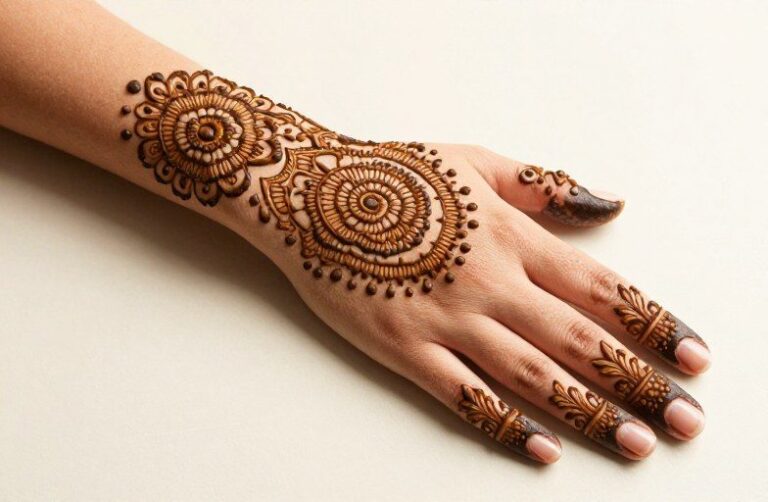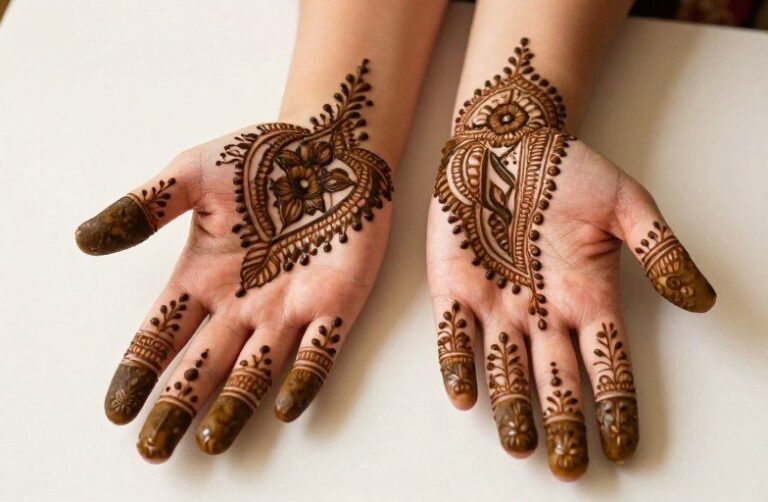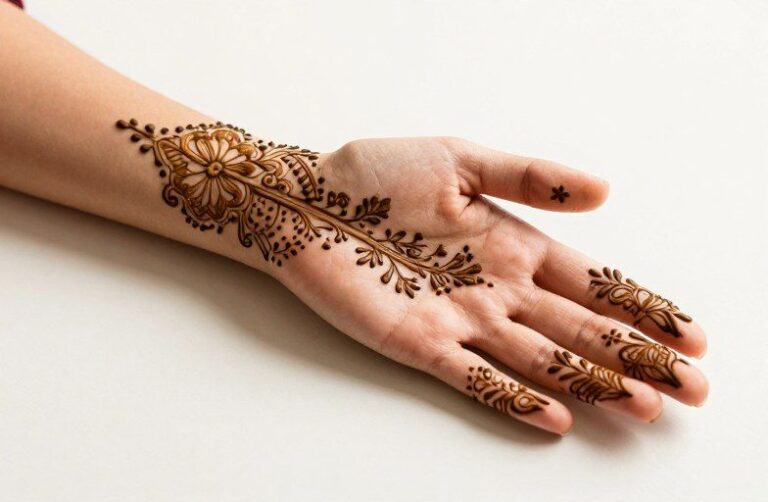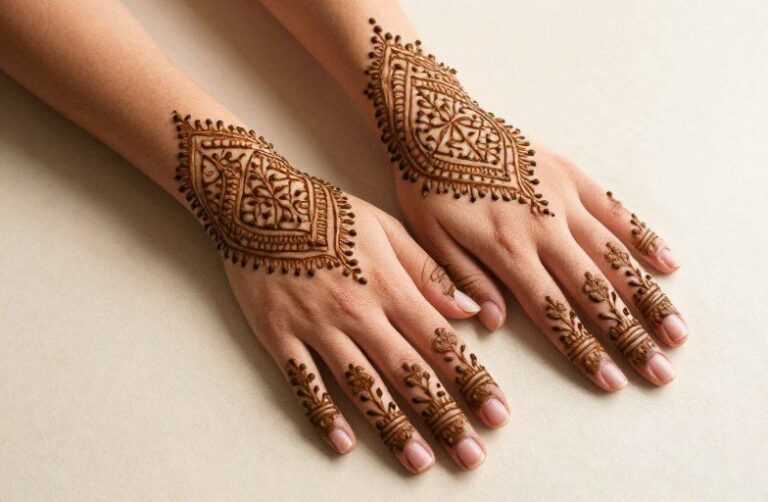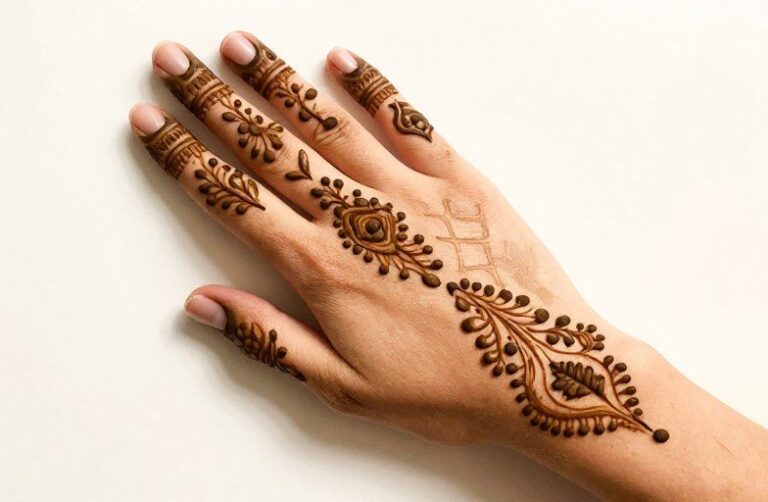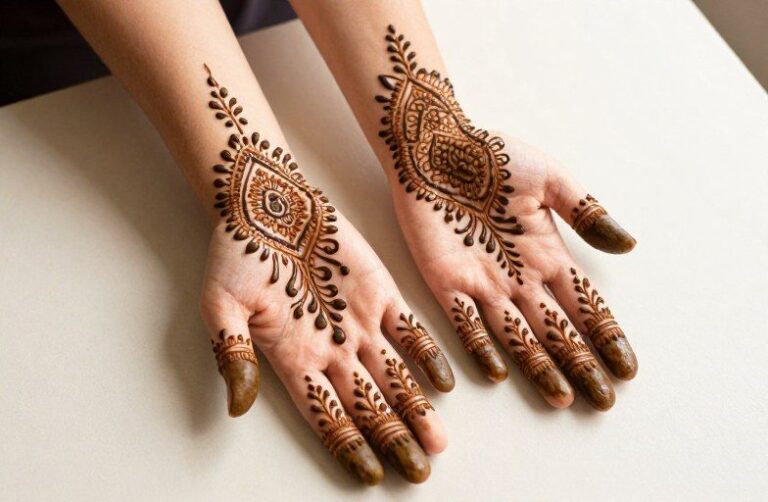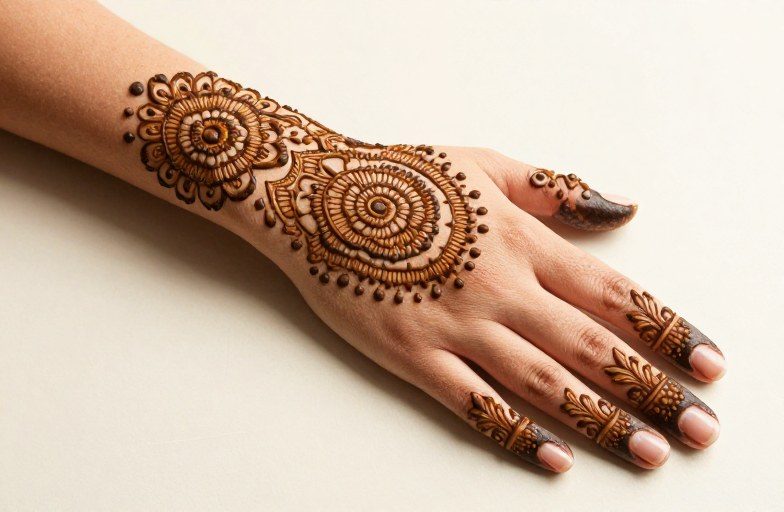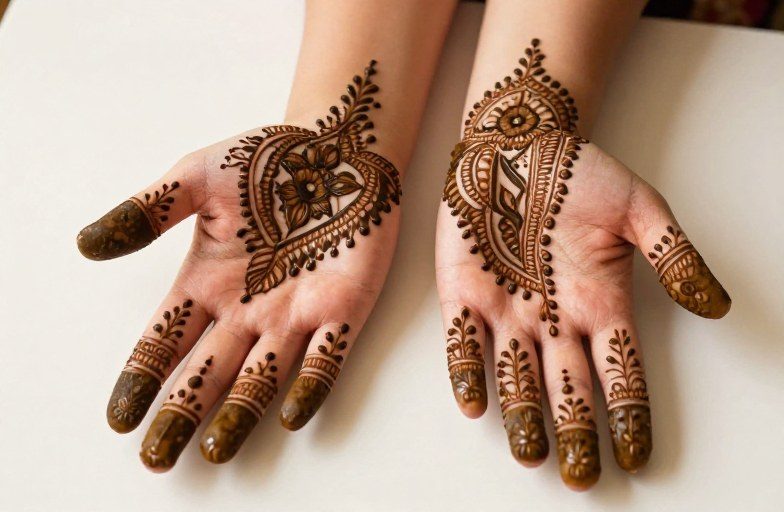
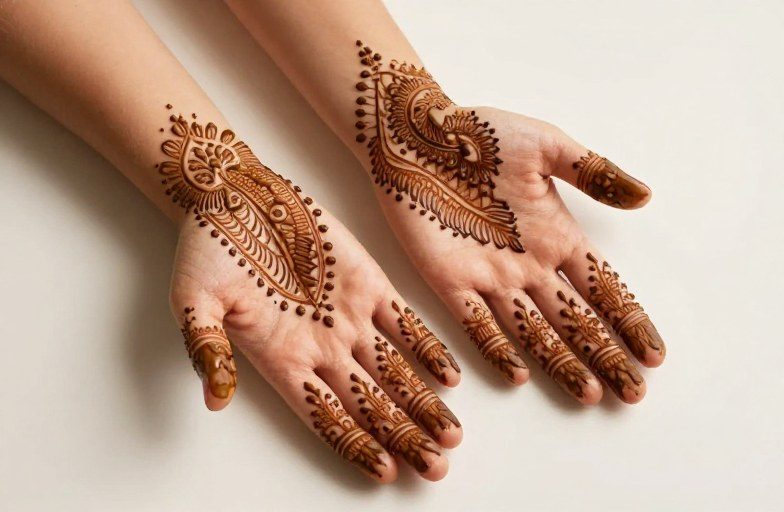
Minimalist mehndi tattoos strip traditional henna-inspired patterns down to their essential geometry. The result is something lighter, more wearable, and easier to integrate with modern tattoo collections. You get the flowing vines, dots, and mandala fragments without the dense saturation that can overwhelm a small placement or clash with existing work. These designs travel well across skin tones, age gracefully, and don’t fight for attention with other tattoos nearby.
Color Choices
Most minimalist mehndi tattoos live in black ink. The fine lines and dotwork need the sharpest contrast possible, and black delivers. Brown inks exist for a softer, more literal henna look, but they fade faster and can muddy into a bruise-like tone within a few years. If you want that warm reddish-brown association, a skilled artist can dilute black to a gray-wash that reads softer without the unpredictable aging of actual brown pigments.
Single Needle vs. Standard Linework
Single needle (usually 1RL or 3RL) produces the hair-thin lines that define this style. The tradeoff is longevity. Ultra-fine lines blur faster, especially on high-movement areas like fingers and wrists. Standard 5RL or 7RL lines hold crisper over time but read slightly bolder. Ask your artist to show healed examples of both so you know what you’re signing up for.
Accent Colors That Actually Work
Occasionally you’ll see a single dot or tiny gem shape filled with deep red or teal. This works when it’s one accent, not scattered throughout. More than two colors and the piece stops reading as minimalist. White ink highlights can add dimension on darker skin but tend to yellow or disappear entirely within two to three years.
Matching & Pairing Ideas
These tattoos pair exceptionally well with other styles because they don’t demand visual real estate. The open, airy quality lets them sit next to bold traditional work, script, or florals without creating chaos. The key is matching the density, not the subject matter.
- Behind a fine-line floral: the mehndi wraps around the stem or fills negative space between petals
- With script: a small mandala fragment anchors a quote running vertically along the forearm
- Framing a larger piece: finger-to-wrist vines draw the eye toward a central tattoo on the back of the hand
- As a standalone set: matching or mirrored designs on both hands, forearms, or feet create intentional symmetry
Matching with a partner works best when the designs are related but not identical. Same motif, different placement. Same placement, different scale. Identical copies on two people rarely age with the same dignity.
Best Placements
Fingers and hands are the most requested spots, and for good reason. That’s where henna traditionally lives. Simple finger mehndi tattoo designs show the range possible here. But fingers are also the fastest to fade. The near-constant movement, sun exposure, and hand-washing mean finger tattoos often need touch-ups within a year. Budget for that.
High-Retention Alternatives
The forearm, inner bicep, and upper shoulder hold these designs much longer. A simple wrist mehndi tattoo anchors a vine that follows natural muscle lines and moves gracefully with the body. The collarbone area can frame a small mandala beautifully, though the bone proximity makes the session sharper than fleshier spots.
Feet and Ankles
Traditional mehndi covers the tops of feet and wraps the ankles. Foot mehndi tattoo designs capture this tradition well, but feet swell during healing and the skin is thick with slower ink settling. Expect a longer healing period and more scabbing than elsewhere. Sandals are your enemy for two weeks.
Tips for Choosing
Reference images from actual henna art are more useful than filtered Instagram tattoos. Look at traditional Indian, Pakistani, and North African mehndi patterns for authentic geometry. Then work with your artist to extract the lines you want without copying religious or culturally protected symbols you may not intend to wear.
- Bring 3-5 reference images showing line weight, not just overall design
- Ask to see the stencil before application; symmetry is hard to eyeball freehand
- Consider how the design flows with your body’s natural lines, not against them
- Plan for aging: dense dot clusters blur together; spaced dots stay readable
Size matters more than people expect. A design that looks delicate at 4 inches can become an unreadable smudge at 2 inches. Trust your artist’s minimum size recommendation for the specific level of detail you want.
Popular Styles
The pared-down mandala is the most recognizable minimalist mehndi tattoo. A central circle with eight symmetrical petals, maybe a ring of tiny dots, nothing more. It references the full ceremonial mandala without requiring the hours and coverage. These work as standalone pieces or as the center of a larger composition.
Vine and Leaf Patterns
Single-line vines with spaced leaves create movement without weight. The best versions follow the natural curve of the arm, leg, or finger rather than fighting it. Some artists add tiny negative-space dots within the leaves for texture. This detail holds up well at small sizes and doesn’t require the precision of full dotwork mandalas.
Geometric Finger Bands
These mimic the look of stacked rings or traditional henna applied to the sides of fingers. A clean horizontal line with small geometric accents, triangles, diamonds, or simple florals, reads as jewelry replacement. Keep them to two fingers maximum per hand; more starts looking like a pattern rather than accents.
Trending Variations
Current variations push the minimalism further. Some artists are doing “ghost” mehndi, barely-there gray lines that look like faded henna on day ten. Others are combining the style with abstract expressionism, letting one or two lines break from the pattern into loose, unplanned strokes. Both approaches require extremely confident line work; there’s nowhere to hide a wobble.
Another direction pairs minimalist mehndi with micro-realism. A tiny, photorealistic flower or eye sits at the center of an otherwise geometric mandala. The contrast is striking but technically demanding. Not every artist handles both disciplines; portfolio review is essential here.
Mixed Media and Scarification References
Some designs incorporate white ink dots that heal into subtle scar-like texture, referencing the temporary stain of actual henna. Others use fine parallel lines (hatching) to create shading without solid black fill. These techniques need an artist with specific experience; they’re less forgiving than standard outline work.
Final Word
Minimalist mehndi tattoos succeed when they respect the source material while accepting the constraints of permanent ink. The lightness that makes them appealing is also what makes them vulnerable to time and sun. Choose placement with aging in mind, find an artist whose healed line work you can verify, and resist the urge to crowd the design with too many elements. The empty space is doing as much work as the lines.
Frequently Asked Questions
How long do fine-line mehndi tattoos typically last before needing touch-ups?
Finger and hand placements often need refresh within 12-18 months due to constant use and sun exposure. Forearm and upper arm versions hold crisp for 3-5 years or longer with proper care. Always budget for maintenance when choosing high-wear placements.
Can minimalist mehndi tattoos work on very dark skin tones?
Absolutely. The key is line weight, not color. Slightly bolder lines (5RL or 7RL) ensure visibility and longevity on melanin-rich skin. Black ink provides strong contrast across all skin tones when applied at appropriate saturation.
What’s the difference between a henna tattoo and a mehndi-inspired permanent tattoo?
Henna is a temporary plant-based stain that sits on the skin’s surface and fades in 1-3 weeks. A mehndi-inspired tattoo uses permanent ink deposited into the dermis. The tattoo references the visual language of henna art but requires completely different design considerations for aging and placement.
How much should I expect to pay for a quality minimalist mehndi tattoo?
Small finger pieces run $80-150 at reputable shops. Larger forearm or shoulder designs with intricate dotwork typically range $200-400. Single-needle specialists and artists with strong healed portfolios often charge premium rates. Avoid bargain pricing for this style; precision costs more.