
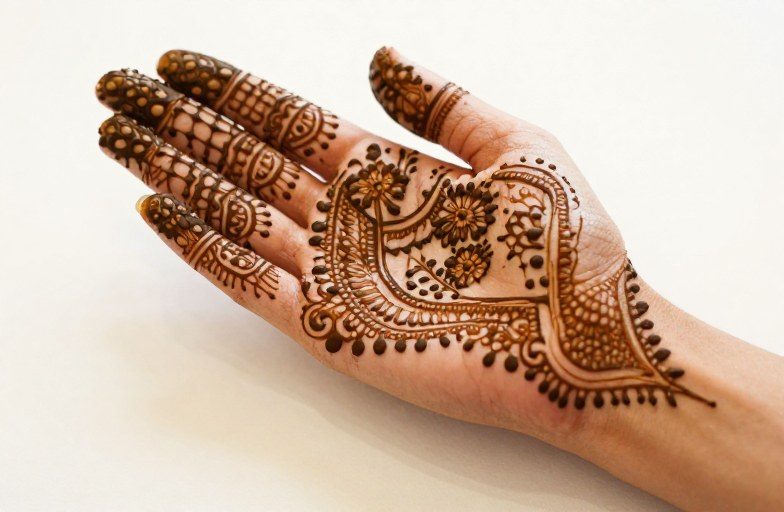
The fastest way to remove a henna tattoo early is to break down the stained skin cells through gentle exfoliation and oil-based softening. Expect partial fading in 24, 48 hours, not instant disappearance. Henna binds to the keratin in your dead skin layer, so removal means accelerating your natural shedding process.
Healing Timeline
Henna isn’t a wound, but your skin still follows a predictable cycle. Understanding this keeps you from panicking or over-treating.
The First 48 Hours
Fresh henna paste leaves a bright orange stain that darkens to deep brown over 24, 72 hours as lawsone oxidizes. During this window, the dye hasn’t fully set. Washing with soap, swimming, or scrubbing will lighten the result significantly, but the stain is still shallow and easy to push deeper into fresh skin if you irritate the area.
Days 3 to 10
Peak color sits around day three. After that, the stained stratum corneum begins its normal 14, 30 day journey toward flaking off. This is your main removal window. Anything you do to speed cell turnover helps: warm baths, gentle scrubs, swimming in chlorinated pools. The stain fades patchily, not evenly, so expect a mottled look before it’s gone.
Common Mistakes
Desperation makes people reach for damaging shortcuts. Here’s what backfires.
Abrasive Overkill
Sandpaper, pumice stones, and salt scrubs rubbed raw will tear living skin beneath the stained layer. You risk scabbing, hyperpigmentation, and a longer healing mess than the henna itself. Stick to soft washcloths, sugar scrubs with oil, or konjac sponges, tools that lift dead cells without drawing blood.
Bleach and Chemical Burns
Household bleach, hair bleach, and undiluted acids don’t selectively target henna molecules. They burn skin indiscriminately. The internet occasionally suggests lemon juice mixed with baking soda; this combo is drying and mildly caustic, yielding minimal benefit for real irritation. Skip it.
- Don’t pick or peel flaking skin, this causes uneven fading and potential scarring
- Avoid covering henna with petroleum jelly to “draw it out”; it actually seals the stain
- Resist reapplying henna over faded patches hoping to even things up
Realistic Expectations
Henna removal is a reduction, not an erasure. The most aggressive safe methods typically cut the lifespan from two weeks to four or five days. Completely clean skin in 24 hours is rare unless the original application was faint.
Body location matters enormously. Palms and soles stain darkest and deepest due to thick keratin layers, removal here is slowest. Outer forearms, shoulders, and backs fade faster. A faint ankle henna might nearly vanish in three days of treatment; a saturated palm design could still ghost after a week.
Skin tone affects visibility too. On melanin-rich skin, the orange-brown contrast is often subtler to begin with, so “removal” may simply mean fading to near-invisibility sooner than on very fair skin where the warm tone pops dramatically.
Tips From the Chair
Tattoo artists watch skin react to trauma daily. The principles for pushing out unwanted pigment overlap with how we advise clients managing blowouts or preparing for cover-ups.
Oil Soaks Work
Olive oil, coconut oil, or baby oil break down the lipid-friendly hennotannic acid. Apply generously, wrap in a warm towel for 20 minutes, then gently exfoliate with a soft brush. Repeat twice daily. The oil penetrates the stratum corneum, loosening the dye’s grip before mechanical removal lifts the cells away.
Heat Is Your Ally
Warm showers, steam rooms, and heating pads (low setting, cloth barrier) dilate capillaries and increase localized cell turnover. Follow heat with oil and exfoliation for compounded effect. Don’t burn yourself, irritation triggers inflammation that can actually darken surrounding tissue temporarily.
- Swimming pools: chlorine lightly bleaches and exfoliates simultaneously
- Exfoliating gloves: daily gentle use in circular motions
- Alpha-hydroxy acid lotions (glycolic, lactic): chemical exfoliation over 3, 5 days
What to Expect Step by Step
Here’s a practical daily protocol if you need that henna gone before an event or job interview.
Day 1: Stop the Darkening
If paste remains, scrape it off with a blunt edge, don’t wash it away with water, which can push pigment deeper. Immediately apply oil and begin gentle exfoliation. The stain may look lighter orange by evening; this is oxidation reversal, not true removal.
Days 2, 4: Active Treatment
Morning: warm shower with exfoliating glove, then oil application. Evening: 20-minute oil soak with warm towel, gentle scrub, moisturize. By day four, expect 40, 60% fading on average body placements. Palms and soles lag behind.
Days 5, 7: Maintenance
Continue daily exfoliation but reduce intensity to avoid raw skin. Moisturize heavily, healthy skin sheds faster than damaged, dried skin. Any remaining ghosting can usually be covered with concealer if timing is critical.
Pain & Comfort
Proper henna removal shouldn’t hurt. A mild tingling from AHA lotions or slight pinkness after exfoliation is normal. Sharp pain, stinging, or visible broken skin means you’ve crossed into damage.
When to Pause
Redness that persists beyond an hour, swelling, or a hot sensation signals you’re stripping living skin. Stop all treatment for 48 hours, apply plain moisturizer, and resume gentler methods. Compromised skin barriers invite infection, rare with henna itself, but real if you’ve created open wounds.
Sensitive Areas
Face, neck, and inner arm skin tolerate less mechanical stress. Use chemical exfoliation (low-percentage glycolic) rather than scrubbing here. Genital-adjacent henna, sometimes applied at bridal events, should be treated with extreme gentleness; this skin thins and irritates faster than almost anywhere else.
Before You Decide
Consider whether removal is worth the effort. A faint, week-old henna stain often reads as a light tan or subtle shadow to casual observers. Aggressive fading demands daily attention and some skin irritation. For professional contexts, long sleeves or makeup may solve the problem faster than removal.
If you regularly regret henna, switch to jagua (blue-black, shorter-lived) or white henna (cosmetic, washes off). Some artists now offer “henna” made with cosmetic-grade body paint that disappears in one shower, ask about ingredients before you commit. The best removal strategy is prevention: know your artist’s recipe, test a small spot, and confirm the design language won’t embarrass you in a week.
Patience outperforms force every time. Your skin knows how to shed; your job is to help it along without creating a new problem.
Frequently Asked Questions
Does toothpaste actually remove henna?
Toothpaste dries the skin slightly and may lift a tiny amount of surface stain, but it’s not an effective removal method. The menthol can irritate sensitive skin without meaningful fading benefit.
Can I tattoo over faded henna?
Wait until the skin is fully back to normal texture and color, usually 2, 4 weeks after application. Residual lawsone in the skin can interfere with how tattoo ink settles, and any irritation from removal attempts needs to heal completely first.
Why is my henna darker after trying to scrub it off?
Over-scrubbing triggers inflammation, which brings blood flow to the area and can temporarily deepen the appearance of the stain. It also pushes surface pigment into fresher skin layers. Gentle, repeated treatment fades faster than one aggressive session.
Does swimming in the ocean remove henna faster than a pool?
Salt water and sand provide natural exfoliation, but chlorinated pools are generally more effective for removal. Chlorine’s mild bleaching action combined with extended water exposure softens the stratum corneum for faster shedding.