Simple Pakistani mehndi designs can stay crisp when the artist protects negative space, chooses sensible placement, and respects how skin moves. I once packed every gap with detail, and the pattern lost its rhythm after healing. You’ll want clean spacing, a confident line, and a design that still feels personal. That’s the whole point!
- Map the Palm Center
- Why Finger Lines Stay Sleek
- Paisley Motifs: The Pakistani Current
- Map the Palm Center
- Why Finger Lines Stay Sleek
- Paisley Motifs: The Pakistani Current
- Back Hands or Full Coverage?
- Build Bold Linework for Feet
- Wrist Bands Need an Opening
- Follow a Floral Vine, Not a Grid
- Can Bridal Fingertips Stay Simple?
- Negative Space Makes the Difference
- Join Hands and Wrists with One Bridge
- The Four-Ring Mandala
1Map the Palm Center
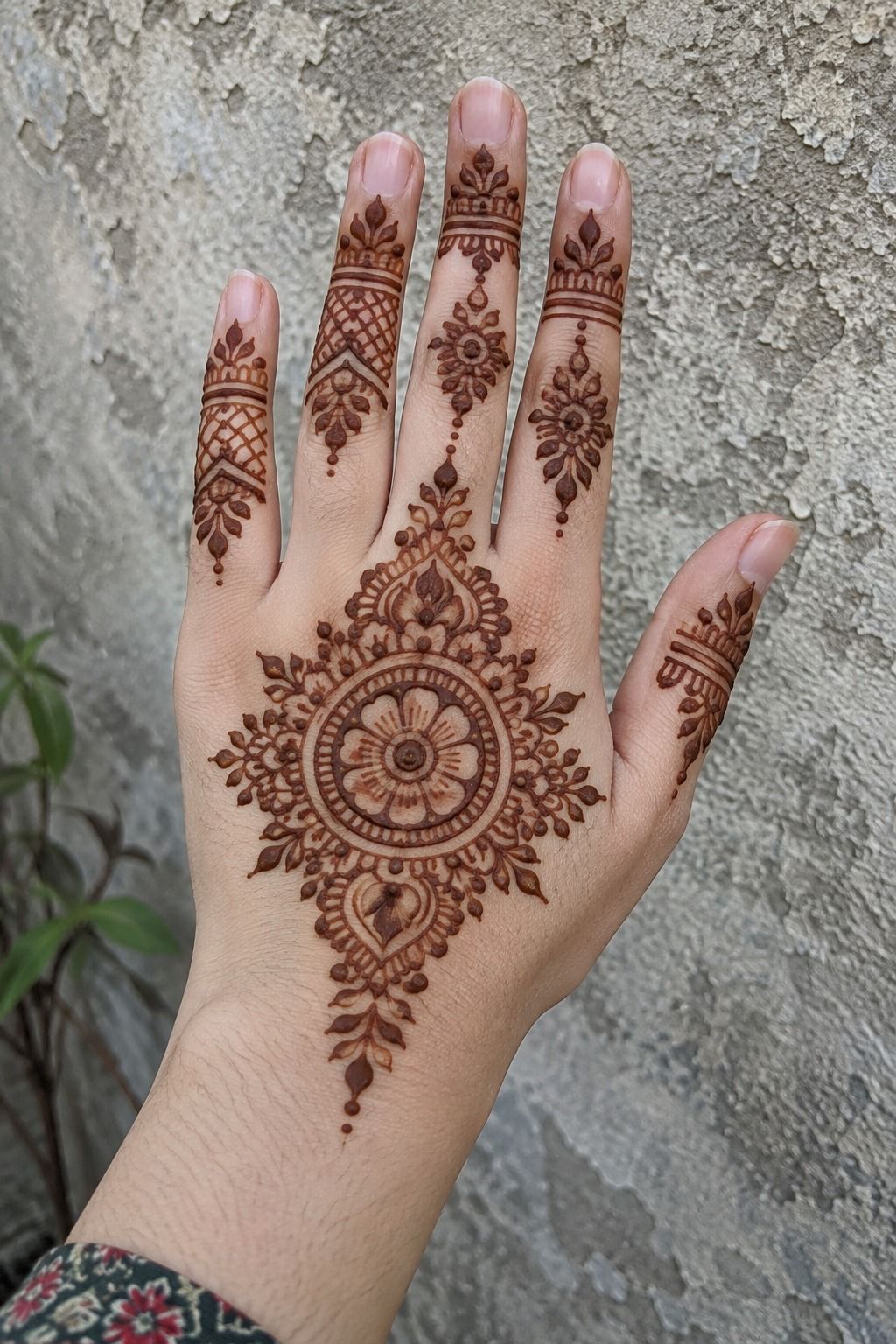
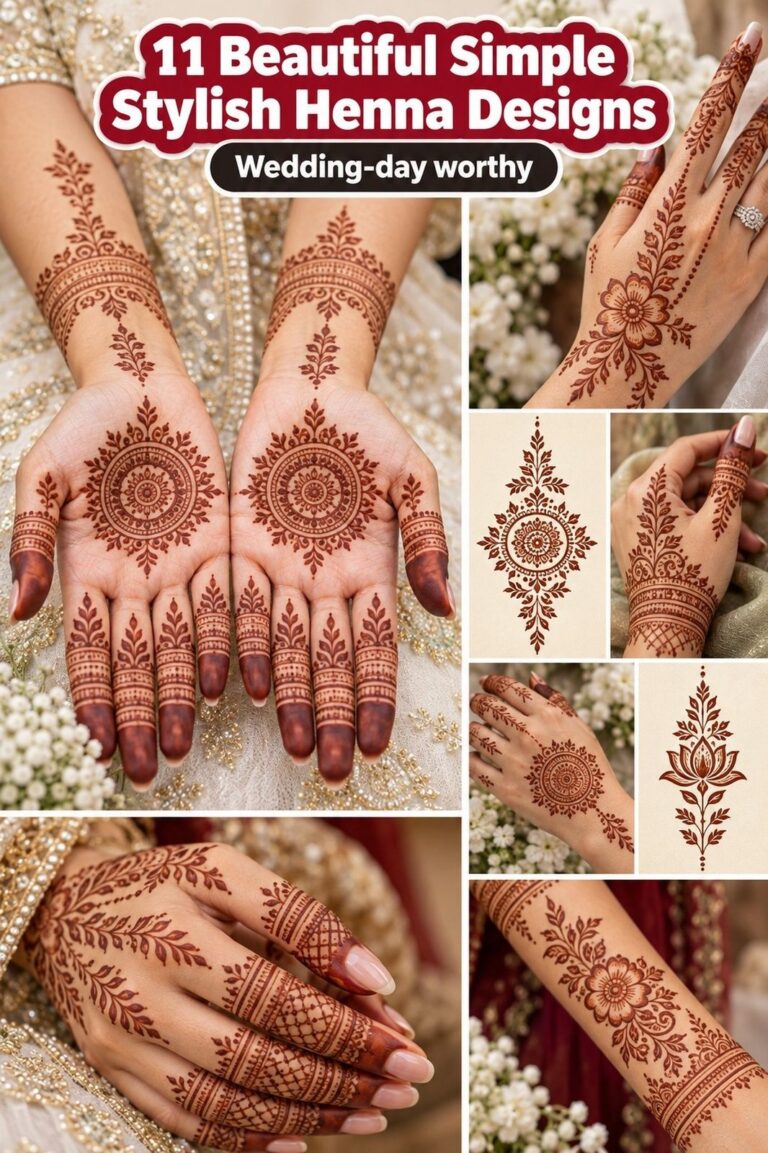
The palm-center layout gives you one striking focal motif instead of a crowded field of marks. Think of it as the Palm Compass Rule: one central shape, four supporting curves, and enough skin around them for every line to breathe. If you’re choosing this placement, keep the middle symbol crisp and meaningful.
A rounded reddish-brown henna reference can translate well into permanent ink without copying temporary paste exactly. Add tiny dots, short arcs, and a narrow floral edge, but don’t let every element compete. I’d skip dense fingertip shading because the palm takes friction and detail can blur faster.
You can ask your artist for an intricate center design with a delicate outer contour, then leave the heel of the palm nearly open. Your eye will read the pattern faster, and you’ll get a sharper silhouette in photographs. Natural henna can help you test the flow before you commit to a tattoo.
For a first piece, this is more forgiving than a full palm composition. The simple palm mehndi tattoo guide can help you compare open centers with denser versions. Keep your final motif compact, and you won’t lose the recognizable Pakistani rhythm.
2Why Finger Lines Stay Sleek
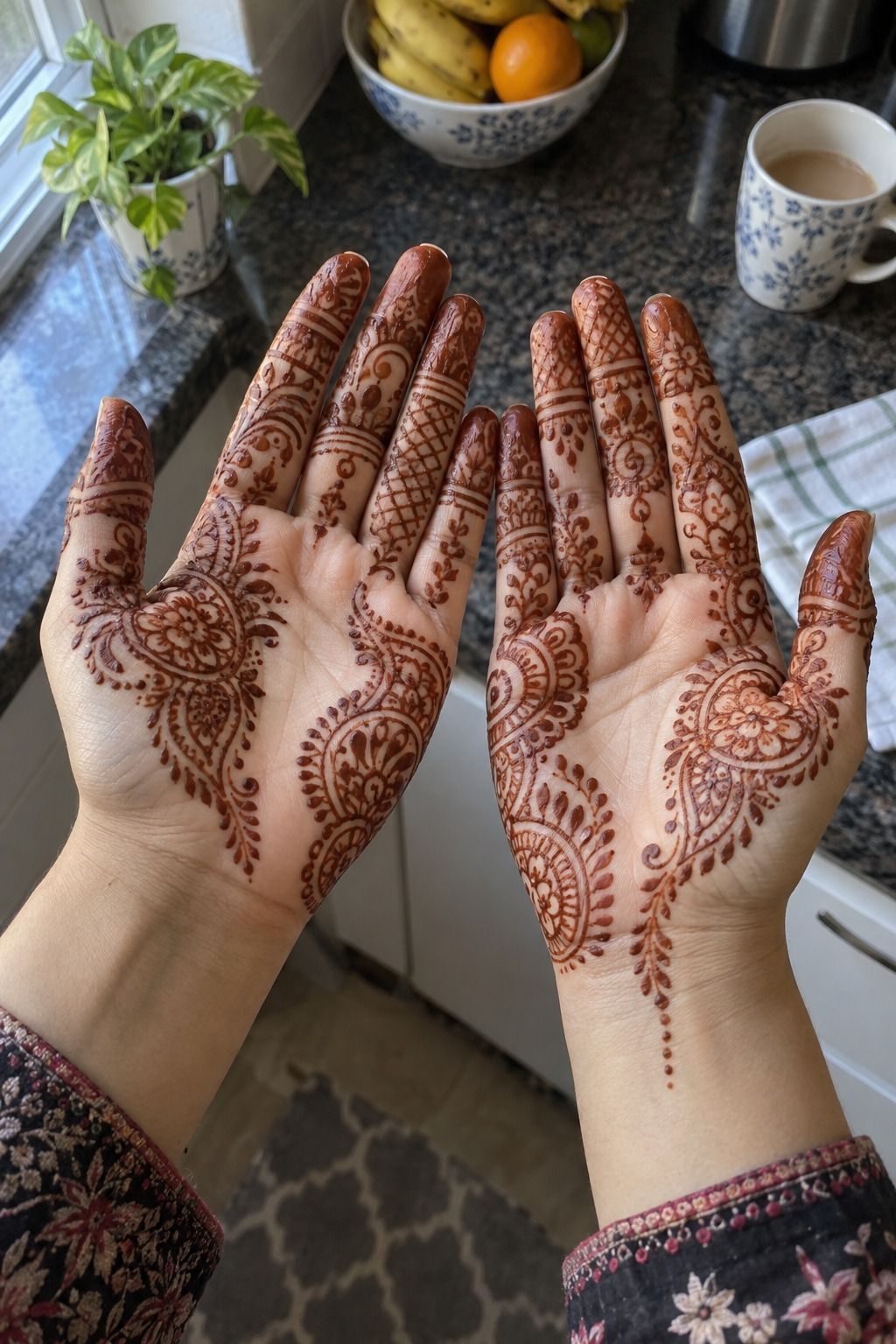
Finger-line mehndi has a sleek, understated quality because the design follows the anatomy instead of fighting it. The Finger-Gap Rule is simple: leave visible skin between each path, especially where your fingers bend. If you want a bold look without a heavy block of ink, this layout earns my vote.
Use fine black tattoo ink for the main lines, then reserve thicker marks for one anchor curve. I’d avoid filling every finger, since repeated bands can look stiff when your hands move. A minimal approach often gives better long-term value than paying for detail that cannot hold its shape.
A row of dainty arches can connect one finger to the next, while small leaves soften the geometry. You’ll notice the design feels more flowing when the arcs point toward the palm rather than away from it. I’ve seen finger tattoos age unevenly, so you’ll want an artist who photographs healed linework, not only fresh work.
Try comparing this idea with simple stylish mehndi designs for front hand. Your artist can test the spacing with transfer stencil paper before tattooing. That extra pause matters, because a crisp guide lets you catch a crooked curve while it’s still easy to change.
3Paisley Motifs: The Pakistani Current
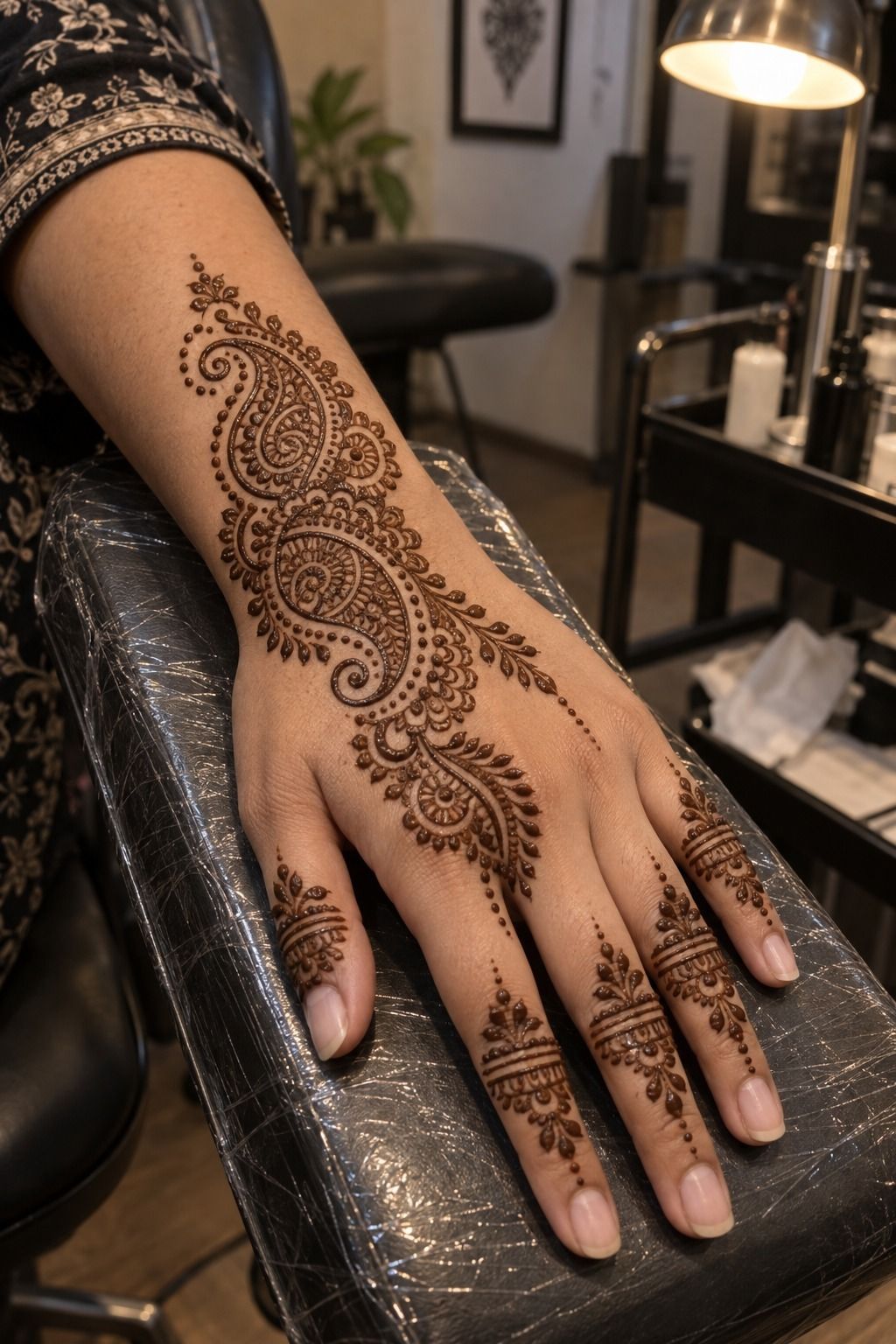
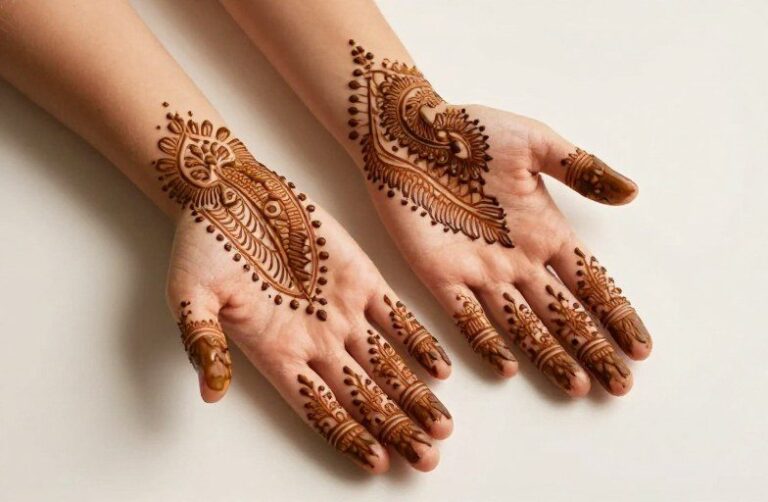
Paisley gives Pakistani mehndi its expressive, instantly readable shape. The Paisley Current Method places one tapered paisley near the wrist, then lets smaller curves travel toward the fingers. If you’re after something ornate but still wearable, this is more graceful than a solid ornamental block.
Choose a medium-scale paisley rather than a tiny symbol lost against the skin. Use sterile tattoo needles with a clear line hierarchy, making the outer contour stronger than the interior curls. It’s intricate, but it shouldn’t feel muddy when you look at it from arm’s length.
Your artist can add a pointed leaf, a few dots, and a narrow scalloped edge inside the paisley. A fierce black outline can give the motif structure, while a softer reddish-brown reference keeps the original mehndi character visible. I’d skip realistic shading because smooth graphic linework will hold the cultural shape better.
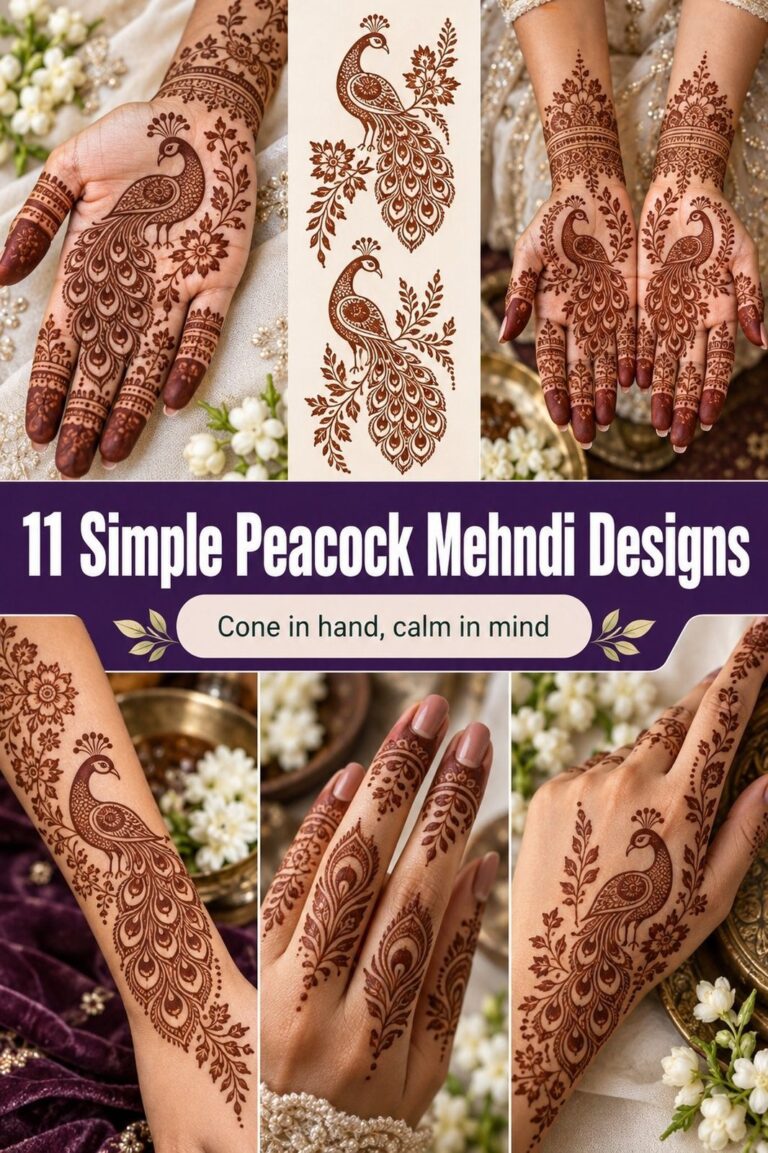
For a related direction, look at simple peacock mehndi designs, especially if you want the paisley to feel more symbolic. You’ll want to show your artist the exact curve you prefer, and you can ask for one personal detail inside it, such as a flower or tiny initial.
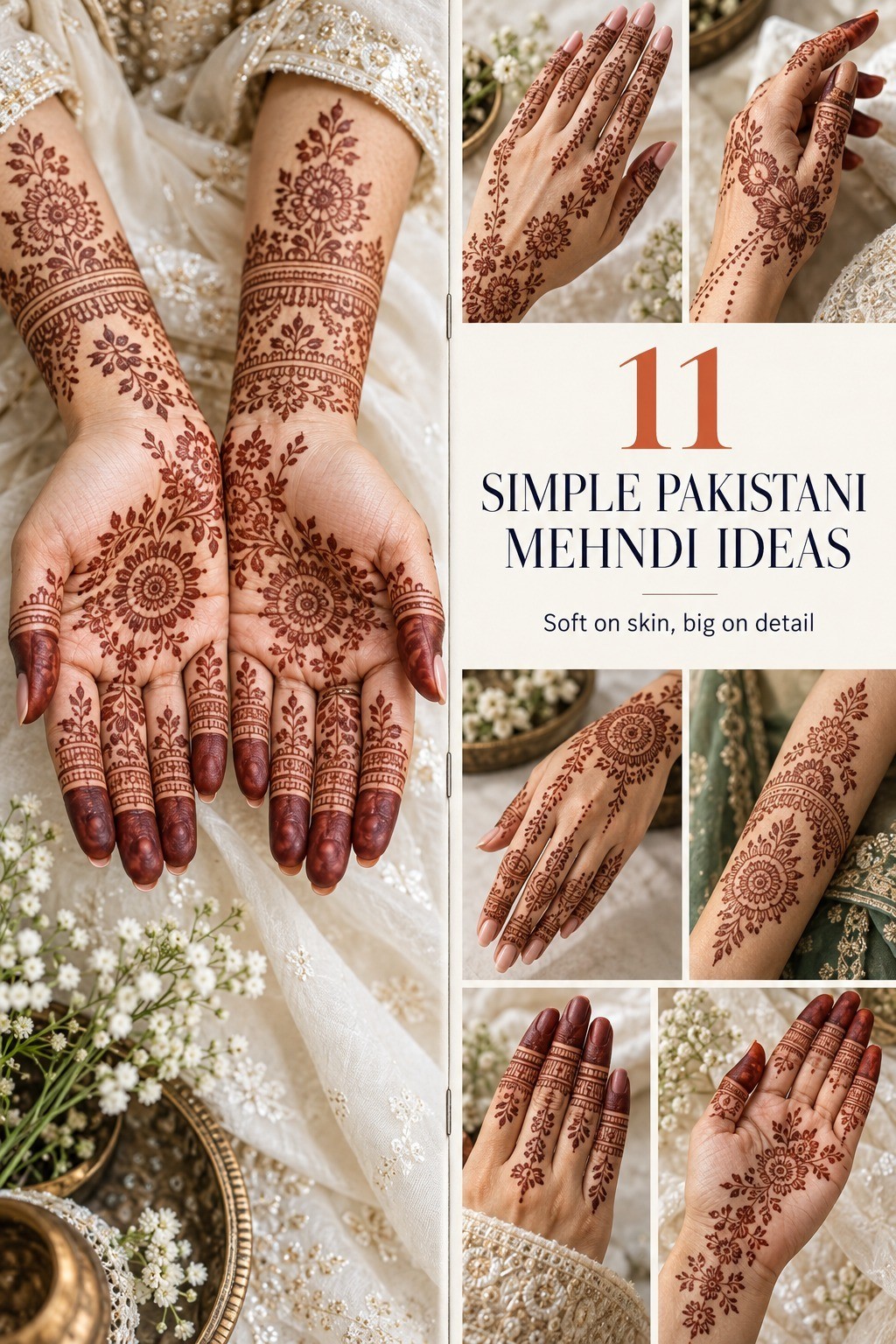
4Back Hands or Full Coverage?
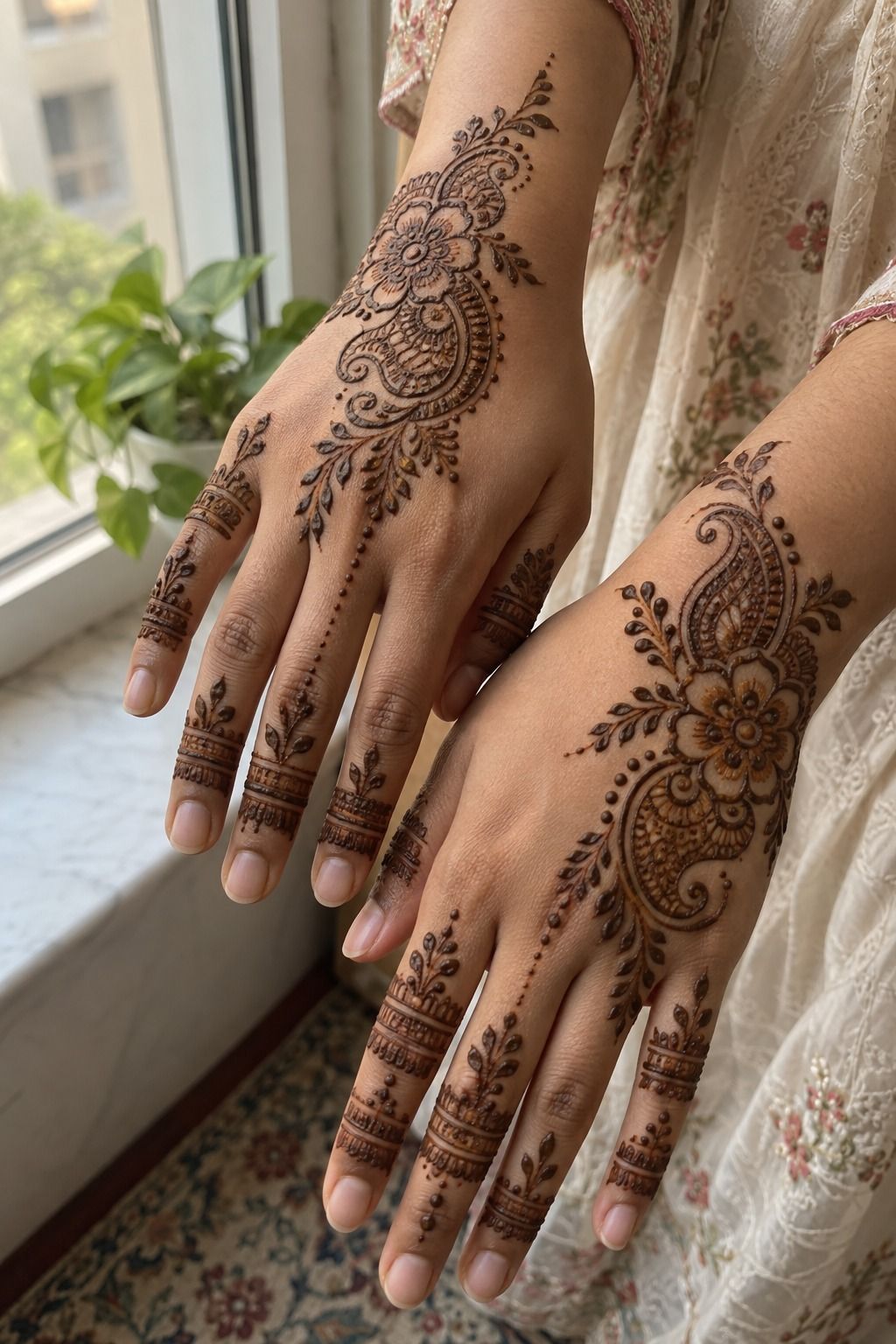
Back-hand placement makes the pattern easy to follow around the knuckles and wrist. The Back-Hand Ladder creates a visual climb: one central motif, two side branches, and open joints where your hand naturally folds. If you want a polished design that reads clearly in a photo, this structure is reliable.
Use bold outlines and smaller unfilled petals rather than copying every possible mark. Bold blackwork contours give the design presence without forcing drama into every corner. Your hand already provides movement, so the artist doesn’t need to fill every section.
A meaningful center can sit between the index finger and thumb, with graceful vines trailing toward the wrist. I’d choose this over a fully packed glove-like design because you’ll see more of your skin, and the linework won’t visually merge as quickly. And yes, open skin does real work!
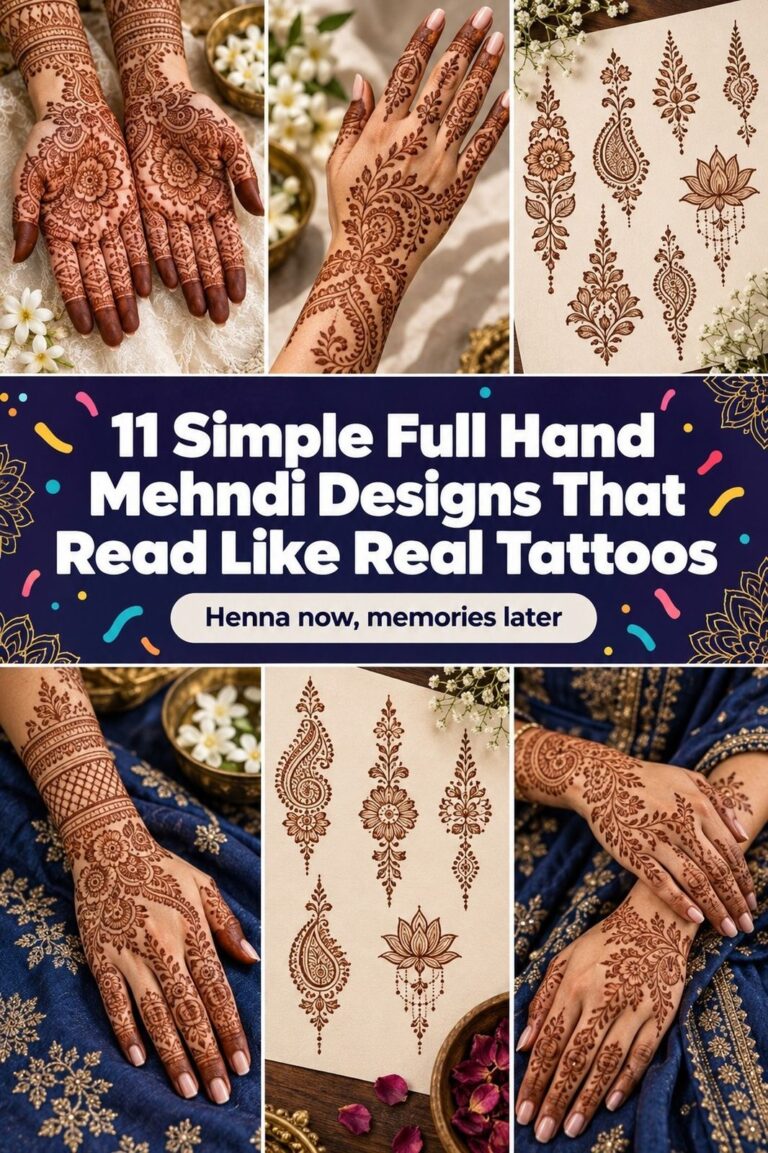
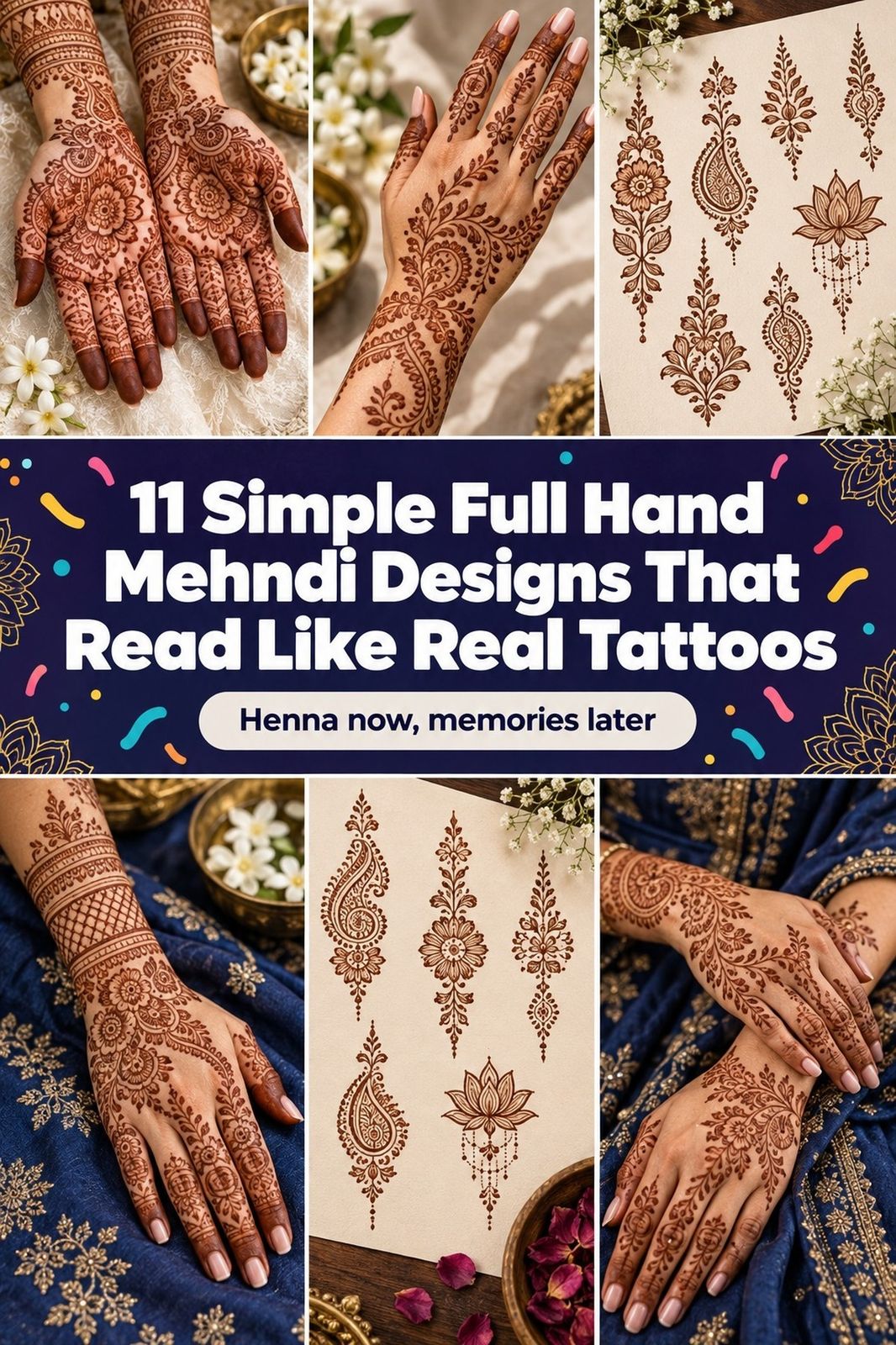
Before booking, review simple full hand mehndi tattoo references and ask yourself which parts you’d still love without extra filler. Fragrance-free stencil solution can help the transfer stay clear, but placement skill matters more than any single product.
5Build Bold Linework for Feet
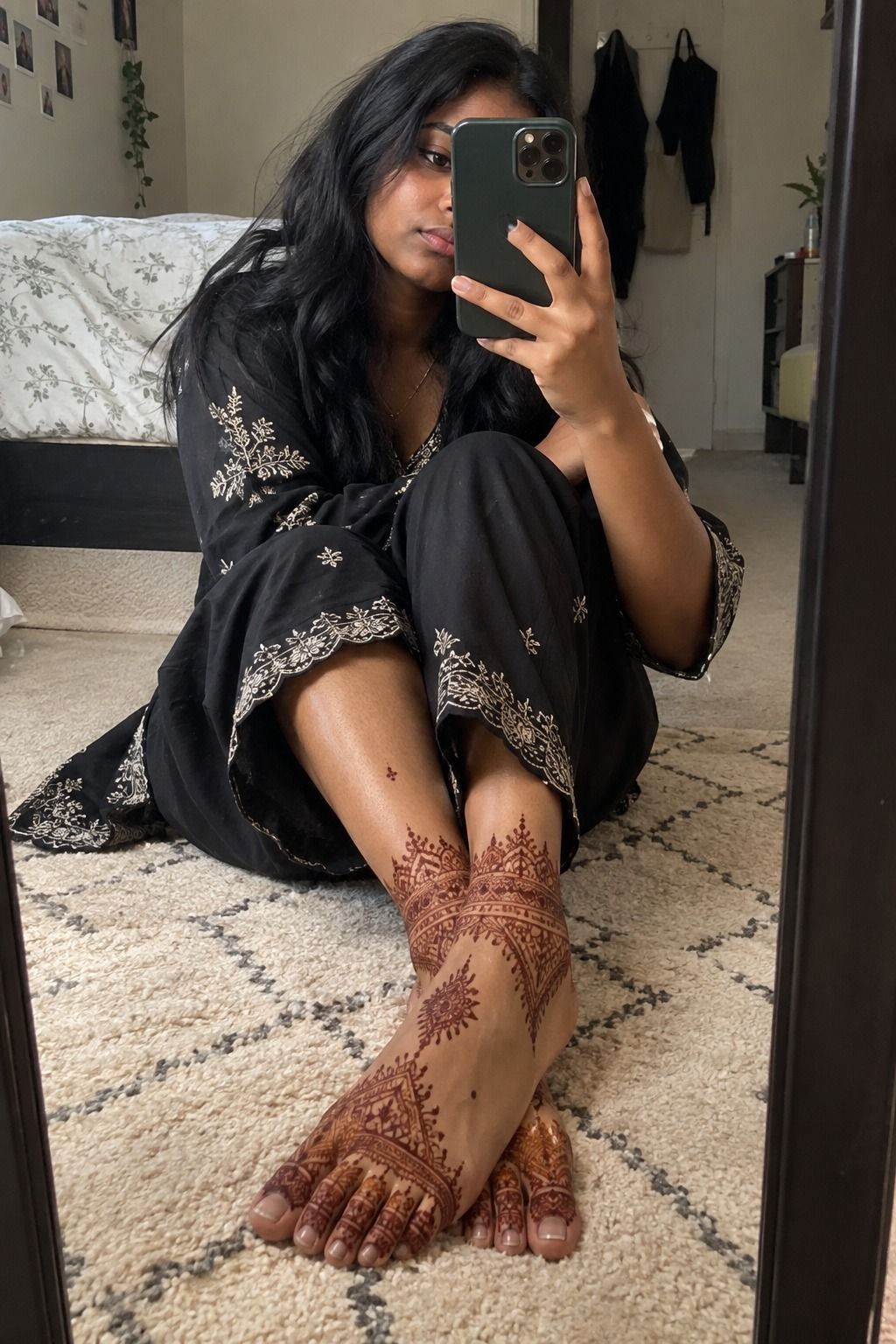
Foot and ankle placement benefits from stronger lines because the skin experiences movement, socks, shoes, and daily rubbing.
6Wrist Bands Need an Opening
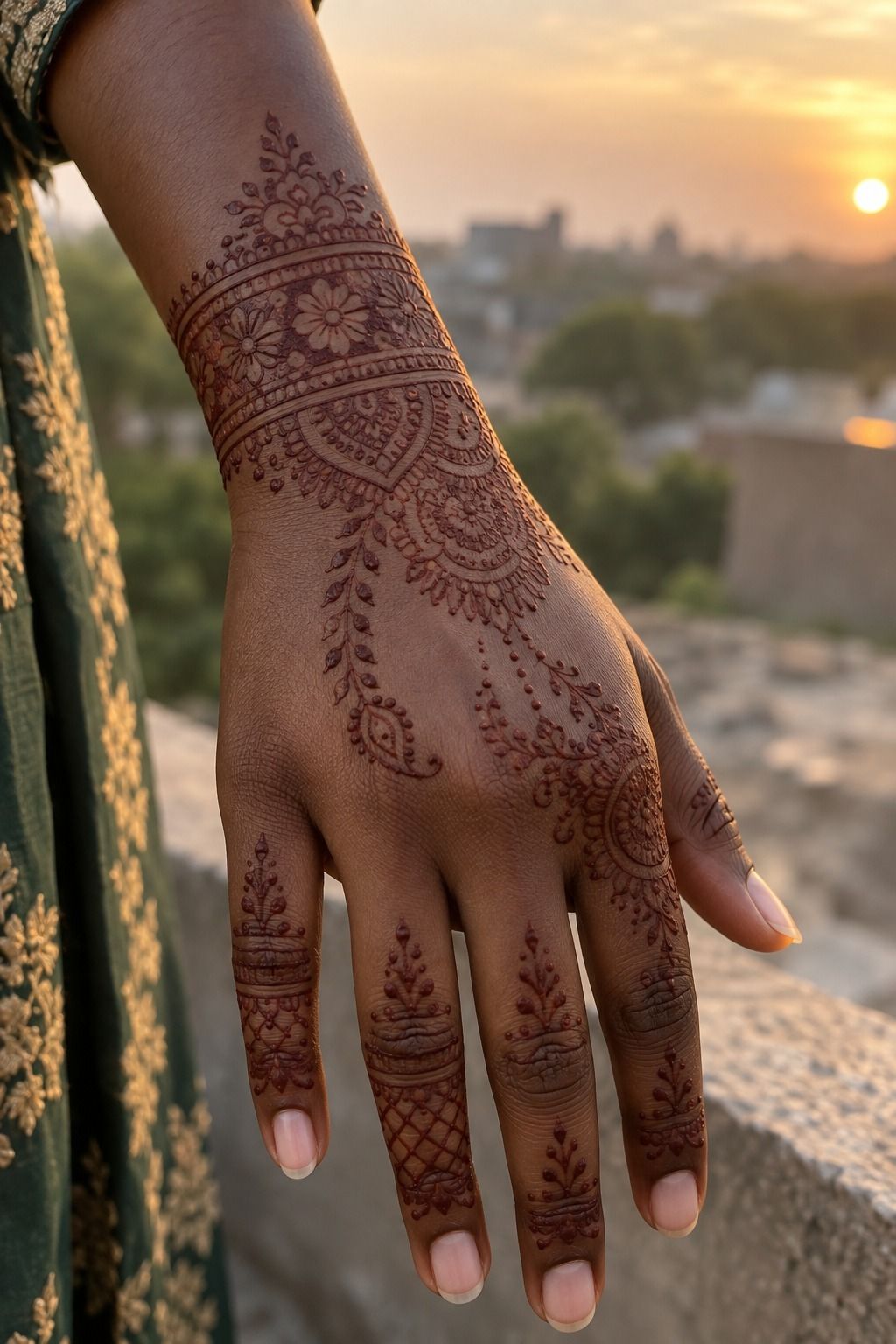
Wrist-band mehndi works when the band has a clear beginning and ending. The Wrist Gate Concept treats the design as a controlled path, not a bracelet copied edge to edge. If you’re choosing this idea, keep one side slightly more open so your wrist still looks graceful when your hand turns.
A narrow black ink wrist band can echo the visual weight of traditional mehndi while leaving the forearm mostly untouched. I’d avoid a perfectly uniform ring, because tiny shifts in wrist movement can make a rigid band look uneven. A custom stencil may cost slightly more, but the fit can be worth it.
Try a repeating arch, a small flower, and a few pointed leaves, then interrupt the sequence once near the thumb side. That interruption gives your eye a resting point.
You’re aiming for a vibrant rhythm, not a strip of identical stamps. Now that’s a band with movement!
For more placement ideas, compare simple wrist mehndi tattoo examples before deciding on width. Medical-grade transfer paper can help your artist adjust the curve to your wrist. I’d rather see a slightly thinner band that follows you well than a thick one trapped between the bones.
7Follow a Floral Vine, Not a Grid
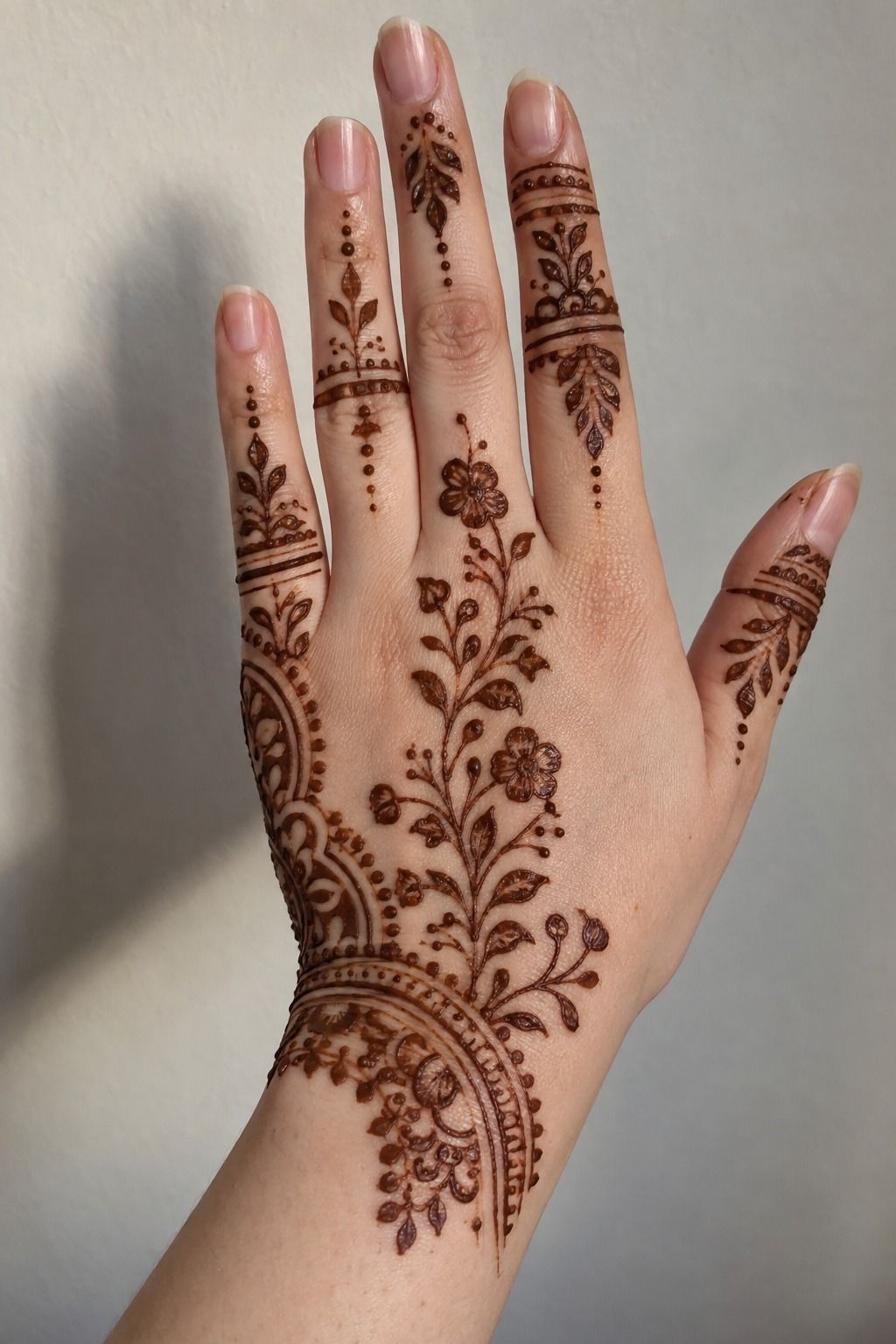
Floral vines bring a playful, feminine movement to the back of the hand. The Vine-Thread Principle keeps each flower connected by one dominant curve, rather than scattering separate blossoms across the skin. If you like a romantic look with visible direction, this composition gives you a natural starting point.
Use fine floral tattoo linework for the stems and let two or three flowers carry the weight. You’ll want different petal sizes because identical flowers can make a hand design feel mechanical. A smaller flower near the wrist can keep the composition from feeling crowded.
A stylish vine can wrap lightly toward the index finger, while a smaller leaf points back toward the wrist. I’ve found that a little asymmetry makes the pattern more personal. Don’t ask your artist to mirror every side perfectly; your hand will look more expressive when the branches feel related but not cloned.
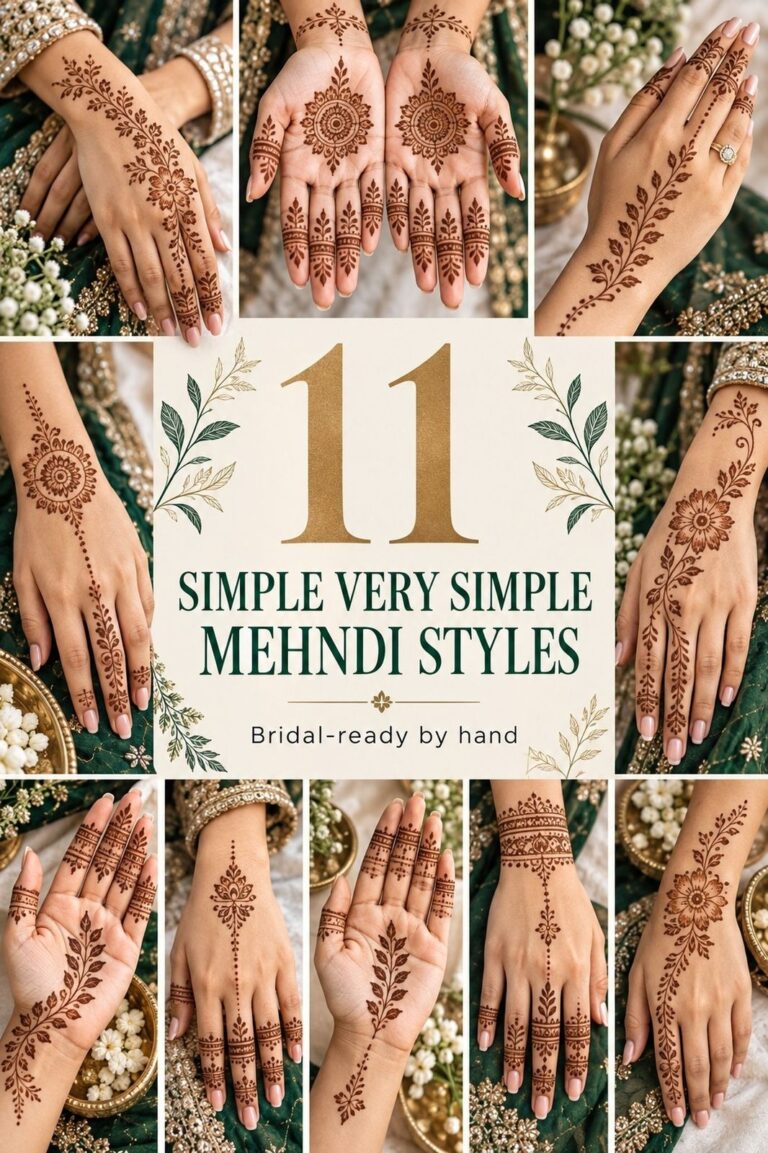
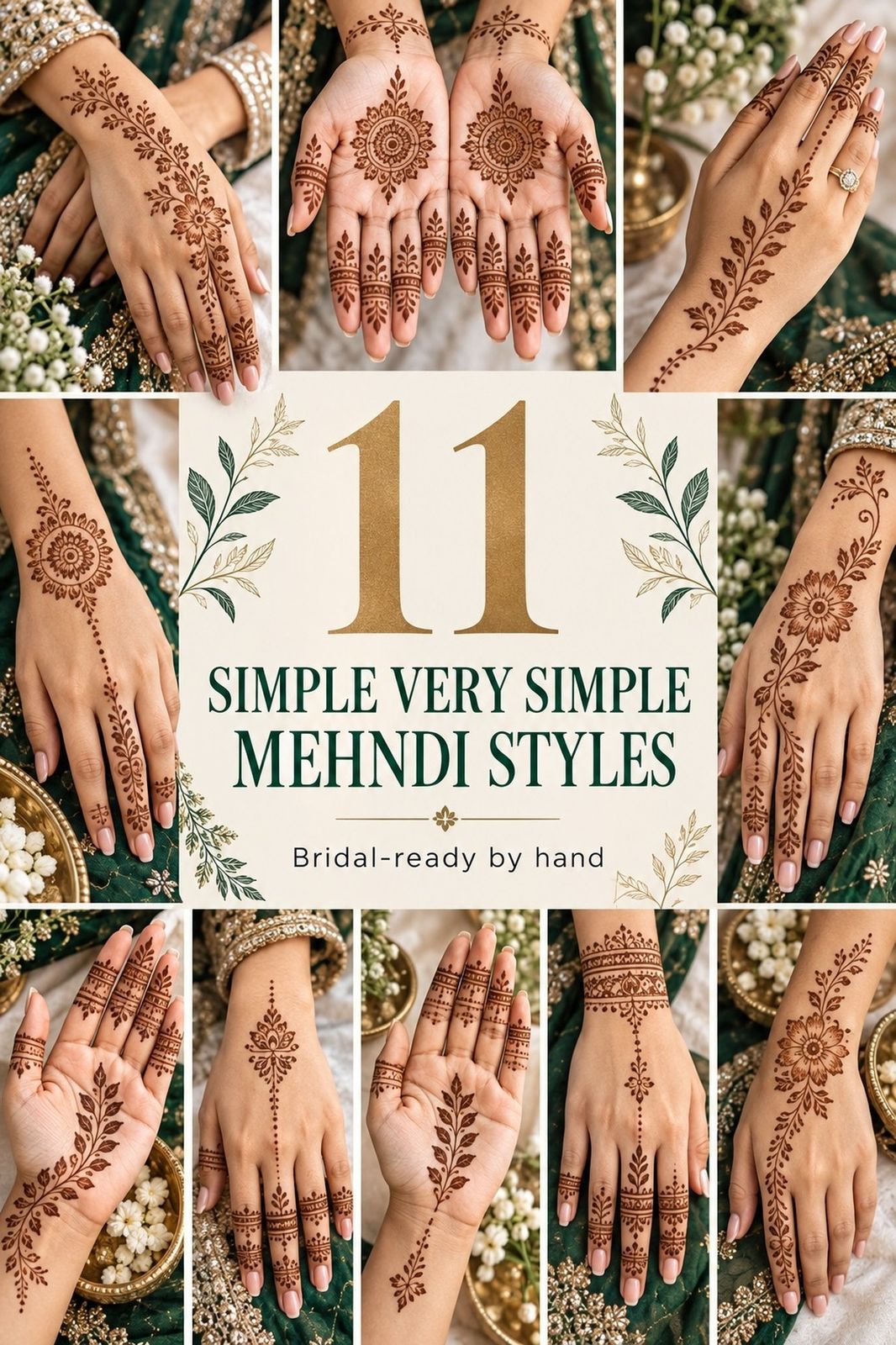
If you want more open examples, browse simple very simple mehndi designs. 0.25 mm tattoo needle cartridges can support delicate detail, although the artist’s hand control still matters most. You’ll want to discuss how the flowers should look after healing, not only how crisp they appear on appointment day.
8Can Bridal Fingertips Stay Simple?
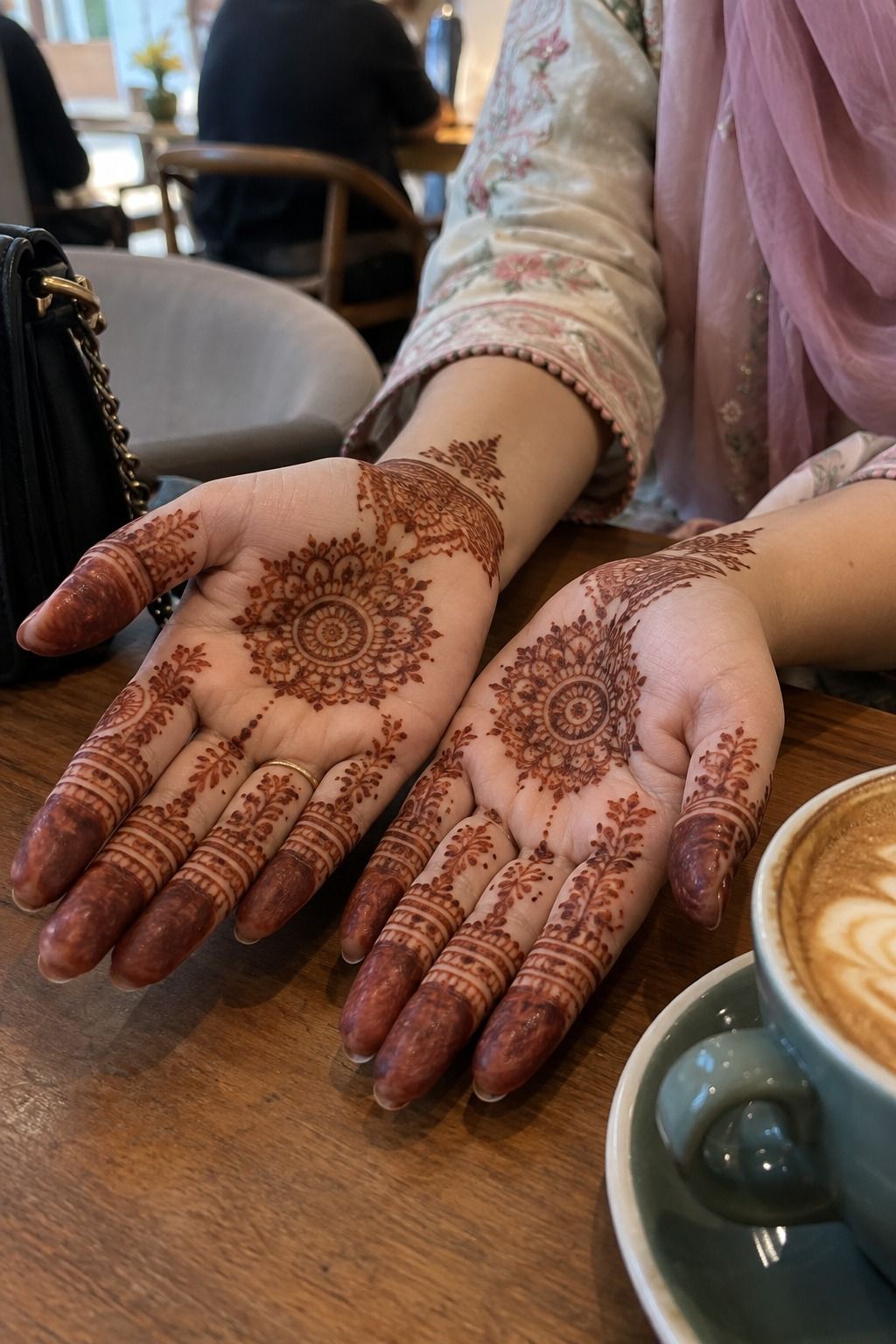
Bridal fingertip mehndi has an iconic visual language: repeated tips, narrow bands, and dense little marks balanced against cleaner palms.
9Negative Space Makes the Difference
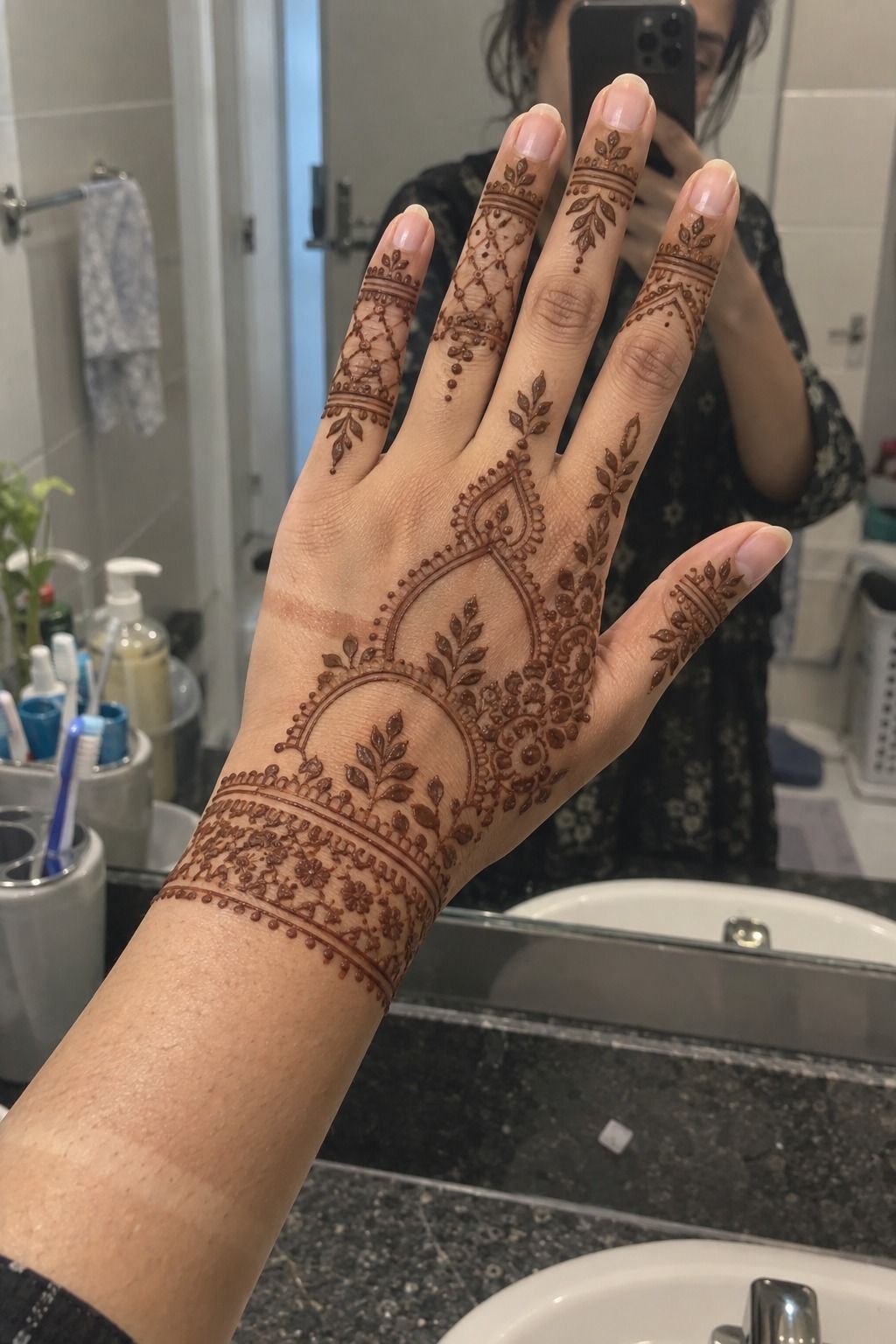
Negative space keeps a detailed design from becoming visual noise. The Open-Skin Grid places bold motifs beside clean channels, so the composition stays crisp even when your wrist flexes. If you’re searching for the latest simple Pakistani mehndi designs, this is the direction I’d study first.
Build around unfilled skin channels, using one central flower and two curved contours. You’ll get a sharper silhouette, and your artist can adjust the spacing to suit your hand instead of forcing a template. That flexibility can improve the final value of a small tattoo.
A daring outer edge can make a small piece feel larger, while an understated inner motif keeps it wearable. I’d choose this over squeezing in extra dots because fine detail needs room to survive ordinary aging. What good is an ornate pattern if you can’t read its main shape later?
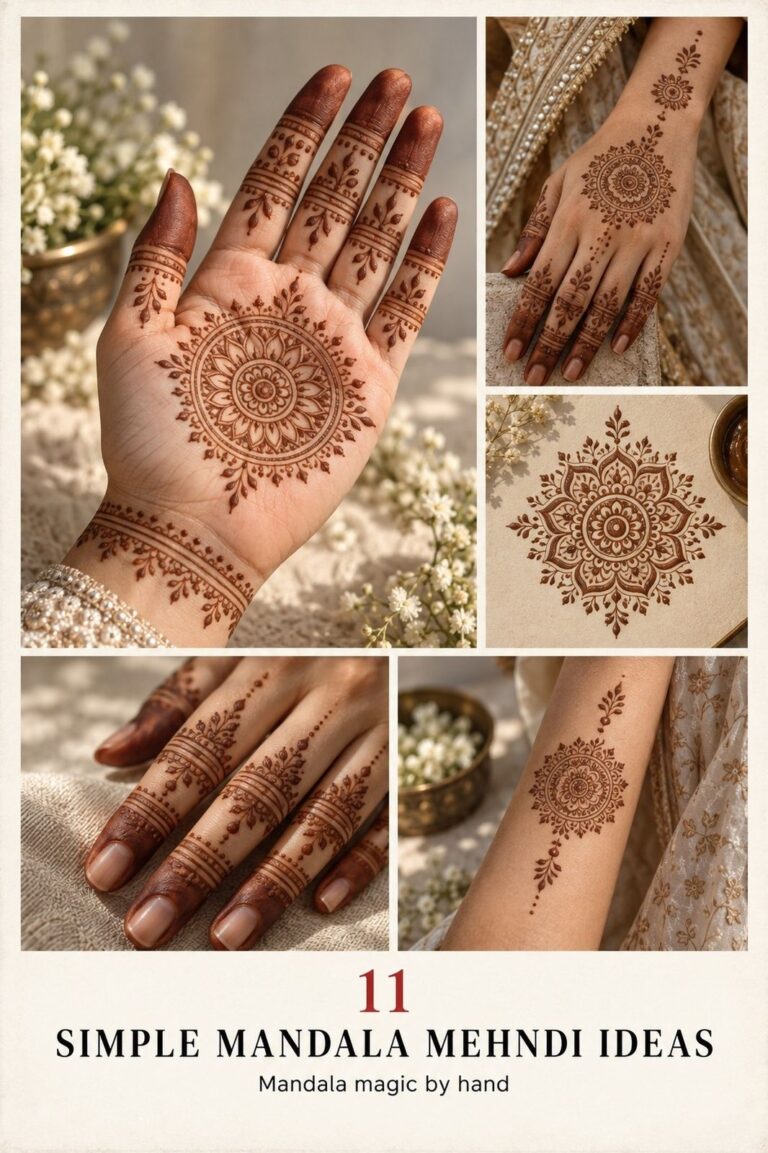
Look at simple mandala mehndi design examples for open-center ideas. Single-needle tattoo linework can look ethereal when placed carefully, but very fine lines may widen with time. You’ll want to ask about line weight, sun exposure, and whether your artist recommends a stronger contour.
10Join Hands and Wrists with One Bridge
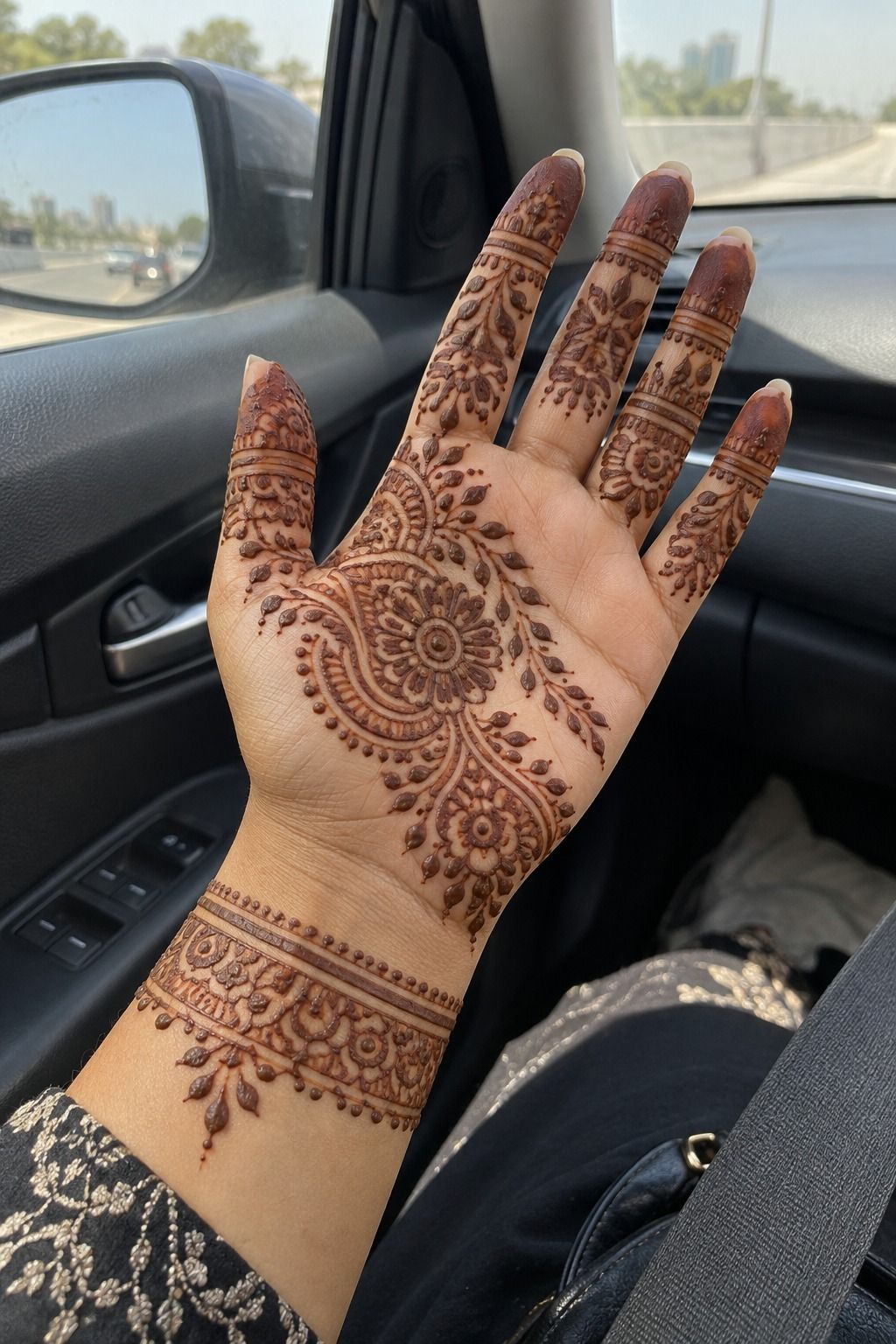
A hand-and-wrist composition lets you connect two zones without making either one feel overloaded. The Bridge and Bloom layout uses a central hand motif, then carries one narrow element across the wrist. If you want a classic look with a personal twist, this gives you room to edit.
Translate the design with warm black pigment and leave the wrist transition lighter. Your artist can use a small flower, a paisley, or a symbolic dot cluster as the bridge. You’ll want that connector to look intentional from every angle.
A vintage contour near the wrist can balance sharper finger lines, while a crisp palm center gives the eye somewhere to land. I’d avoid matching bands on both sides unless symmetry means something to you. One side can be fuller and the other more minimal, and that contrast often feels more personal.
If you’re comparing placements, see simple stylish mehndi designs for front hand before your appointment. Sterile black ink caps should be single-use in a professional studio. Your artist should also explain aftercare because hands see more washing, friction, and sunlight than most placements.
11The Four-Ring Mandala
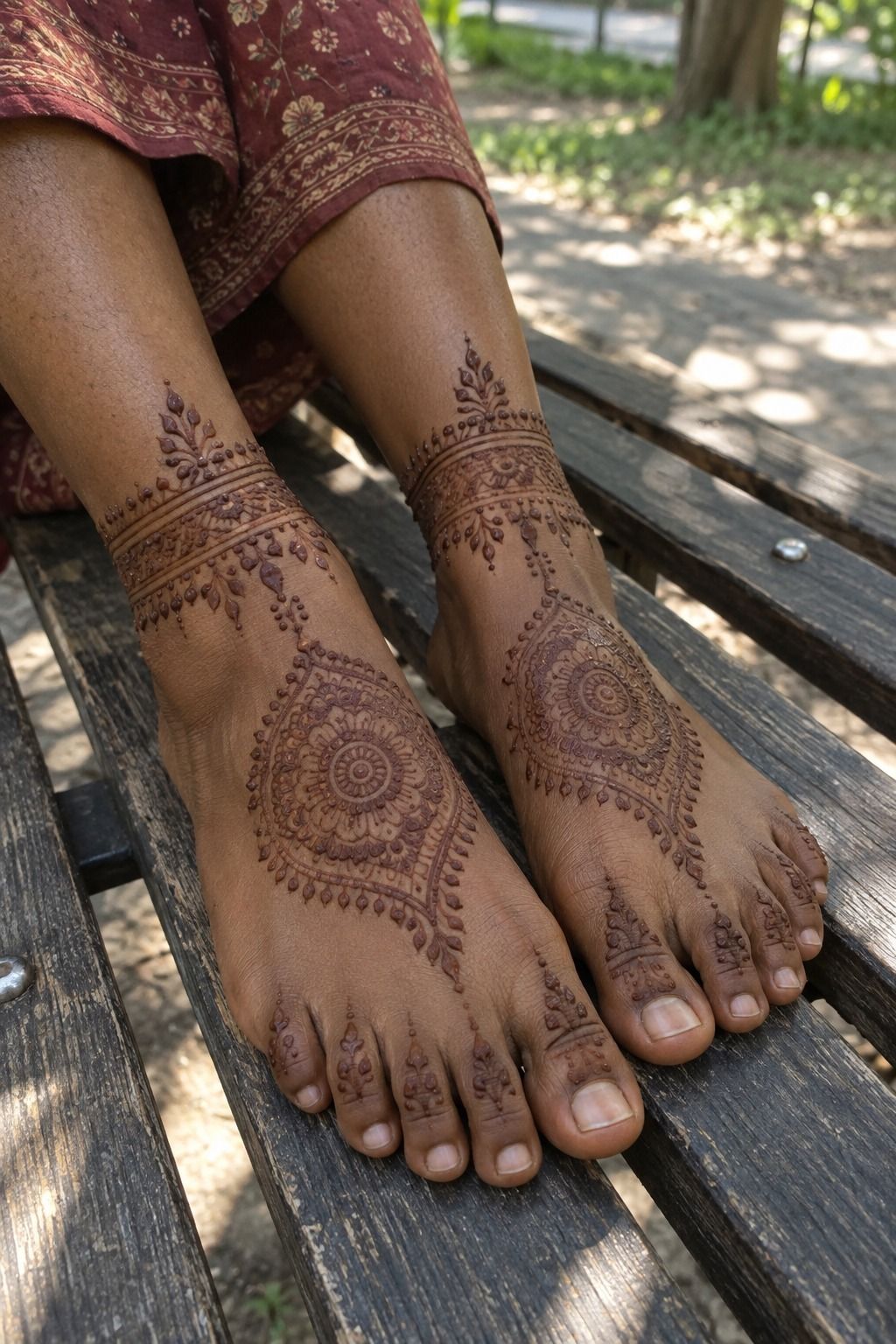
Mandalas can feel expressive without becoming overly ornate when the center stays clear. The Four-Ring Mandala Rule builds outward in controlled layers: a dot, a petal ring, a broken contour, and one final outer line. If you want a symbolic design with strong geometry, this is a powerful choice.
Geometric tattoo stencil lines can help your artist keep the circles balanced before the final pass. You’ll want to decide whether the mandala faces upward for easy viewing or follows the angle of the foot for a more integrated look.
A feminine mandala can use rounded petals, while a masculine version might rely on sharper points and heavier outer lines. Neither choice is mandatory, of course. Your design should feel personal rather than perform a role.
I’d skip adding five symbols just because they look meaningful online; one clear symbol usually lands harder.
For additional inspiration, review simple mandala mehndi design and simple leg mehndi design. Aftercare film wrap may be used according to your artist’s process, but you’ll still need gentle washing and careful sun avoidance. Don’t judge the final result until the surface and deeper layers have healed.
Choosing a Budget That Still Feels Worth It
Price depends on placement, artist experience, line density, and studio minimums. A small wrist design may have a lower total cost, while a detailed hand composition can require several sessions. Ask for a written itemized tattoo quote before you book so you can compare value instead of guessing.
The cheapest option isn’t always the best investment for hands, fingers, or feet. You’re paying for clean setup, confident technique, thoughtful placement, and the artist’s ability to create lines that heal well. If the price includes a consultation and aftercare guidance, that can be meaningful value.
Set a realistic tattoo budget before you choose the final motif. It’s easier to reduce detail than to compromise on hygiene or healed-work experience. If a design is worth it to you, leave some room for a touch-up policy or a second appointment.
Questions to Ask Before Booking
Ask how the artist handles healed ornamental tattoos, especially on hands and feet. Fresh work can look perfect while the skin is swollen, so healed examples tell you much more about line spread and spacing. You’ll also learn whether the artist’s style suits your preference.
Bring one or two references and explain what you want to keep: perhaps the paisley curve, the open palm, or the fingertip rhythm. An artist consultation plan keeps the conversation specific without asking someone to copy another artist’s work. You’ll get a clearer answer about what your skin can support.
Before you pay a deposit, ask about the studio minimum, cancellation terms, aftercare, and possible touch-up cost. A professional should answer without pressure. That information helps you decide whether the appointment fits your budget and your routine.
Why These Designs Keep Their Shape
I’ve learned that crispness comes from restraint, not from packing in more decoration. Pakistani mehndi-inspired tattoos hold their identity when the artist gives each curve a job, keeps the strongest marks visible, and chooses placement with movement in mind. You’ll get a more timeless result when the design can breathe.
Fine lines can soften or widen, especially on hands, feet, and fingers. A sharp central motif with moderate line weight is usually safer than a page of tiny details.
Healed tattoo skin may look calmer than the fresh version, so your artist should show healed photographs whenever possible. That’s the evidence I trust most.
Your aftercare matters too. Wash gently, moisturize as directed, and avoid swimming and strong sun while the surface heals.
Surface healing commonly takes about 2 to 3 weeks, while complete healing can take about 2 to 3 months. Your tattoo isn’t finished just because the first peeling stops.
I’d choose the forearm or shoulder if you want easier healing and clearer long-term lines. Hands, feet, ribs, and sternum can feel more intense, while the forearm, thigh, and shoulder are often more tolerable. For another wrist-focused comparison, explore simple wrist mehndi tattoo, then ask your artist what your skin and routine can realistically support.
The Detail I’d Keep If It Were Mine
When I look at these designs, I’m less interested in copying a complete reference than in preserving its rhythm. The best version has a clear center, one memorable curve, and enough open skin that you can still see the hand beneath it. That’s where the tattoo starts to feel lived with rather than pasted on.
I’d keep the reddish-brown visual mood in the reference, but I’d ask for a controlled black line in the permanent version. Reddish-brown henna reference paste photographs warmly, while tattoo ink settles differently after healing. Your artist can adapt the contrast without pretending temporary henna and permanent ink behave the same way.
A personal symbol should be small but deliberate. Maybe it’s a flower connected to family, a paisley tied to a memory, or a mandala that marks a new chapter. You’ll know the right detail because you won’t need to explain it to everyone else.
It can stay yours.
My micro-aveu is simple: I used to think more detail meant more authenticity. It didn’t. A striking open section often says more than a crowded palm, and a polished personal concept can make an intricate center feel even richer.
Consultation notes can help you record the placement, line weight, and meaning before you sit down.
The Decision I’d Make
If you’re torn between hand, wrist, and ankle, start with the placement you’ll protect best during healing. You don’t need the most visible spot to make a meaningful choice. A daring but practical placement that ages calmly will beat one you’ll constantly rub, wash, or expose to sunlight.
I’d also bring two references, not twelve. Your artist can compare the blackwork line-weight sample with the softer mehndi image and tell you what can survive your chosen area. You’ll get better advice when the conversation is specific.
The best design doesn’t have to be the largest or most expensive. It needs to match your skin, schedule, pain tolerance, and budget. And honestly, that makes the appointment easier!
The Questions Worth Answering First
How much does a simple Pakistani mehndi design usually cost?
A simple piece commonly falls around $100 to $300 in the United States, depending on size, placement, artist, and region. Some studios have a minimum near $50 to $100, while hourly rates often sit around $100 to $250. You’ll pay for skill and hygiene, not just the number of lines.
Are simple Pakistani mehndi designs a good idea for a first tattoo?
Yes, they can be a meaningful first tattoo when you choose an experienced linework artist and a tolerable placement. Clean line spacing helps the design age clearly, and you can start with a palm, wrist, forearm, or ankle motif. You don’t need a huge piece to make the idea personal.
How do I choose a tattoo artist for simple Pakistani mehndi designs?
Choose an artist with healed photos, confident linework, and experience with ornamental or cultural motifs. You’ll want to see how their lines settle, not only how fresh tattoos look. Portfolio evidence matters more than a low quote, and your consultation should include hygiene, placement, and aftercare questions.
How much do simple Pakistani mehndi designs hurt?
Pain varies by placement, but ribs, feet, hands, and sternum are often more sensitive than the forearm, thigh, or shoulder. Forearm placement is commonly a more tolerable starting point. Your artist can pause, adjust the design, or shorten the session if your skin and nerves need a break.
How long does a simple Pakistani mehndi design take to heal?
The surface usually heals in about 2 to 3 weeks, while complete healing can take about 2 to 3 months. Wash gently, moisturize as directed, and avoid pools and strong sun during early healing. Gentle aftercare protects the crispness you paid for, so don’t rush the process.
What’s the best placement for simple Pakistani mehndi designs?
The forearm and wrist are strong choices when you want visibility and relatively clear line aging, while the hand and foot create a bolder statement with more friction and sensitivity. Visible wrist placement works well for a compact paisley or band. You’ll want to match the placement to your daily routine.
Where I’d Start First
If I had to pick one, I’d start with the palm-center design. Its open contour keeps the main motif readable, and you can build meaning into one symbol instead of crowding the skin. Pin the simple palm mehndi tattoo guide for later and bring one clear reference to your artist.